Functional Mushrooms: What the Science Actually Says
Evidence-based guide to Lion's Mane, Reishi, Chaga, Cordyceps, Turkey Tail, Shiitake and Maitake — with peer-reviewed research links.
Introduction
Important notice: This post is for informational and educational purposes only. Nothing in this article constitutes medical advice, diagnosis, or treatment. Functional mushrooms are not medicines and are not approved to treat, cure, or prevent any disease in most jurisdictions. If you have a health condition, are pregnant, breastfeeding, or taking prescription medication, consult a qualified healthcare professional before adding any supplement to your routine. The research cited here is presented accurately but represents a field in active development — many findings are preliminary and have not been replicated in large-scale trials.
Mushrooms have been used in traditional medicine in China, Japan, Korea, and across Asia for at least two thousand years. In the last twenty years, Western science has begun to investigate these practices with clinical trials and laboratory research. The results are genuinely interesting — and more nuanced than either the supplement industry or its critics tend to suggest.
What the research shows is not that these mushrooms are miracle cures. It shows that several species contain biologically active compounds — primarily beta-glucans, triterpenes, and polysaccharopeptides — that interact with human immune, neurological, and metabolic systems in measurable ways. For some species, particularly Turkey Tail and Reishi, there is decades of clinical use and a reasonably solid evidence base. For others, such as Chaga and Lion’s Mane, the evidence is promising but still early.
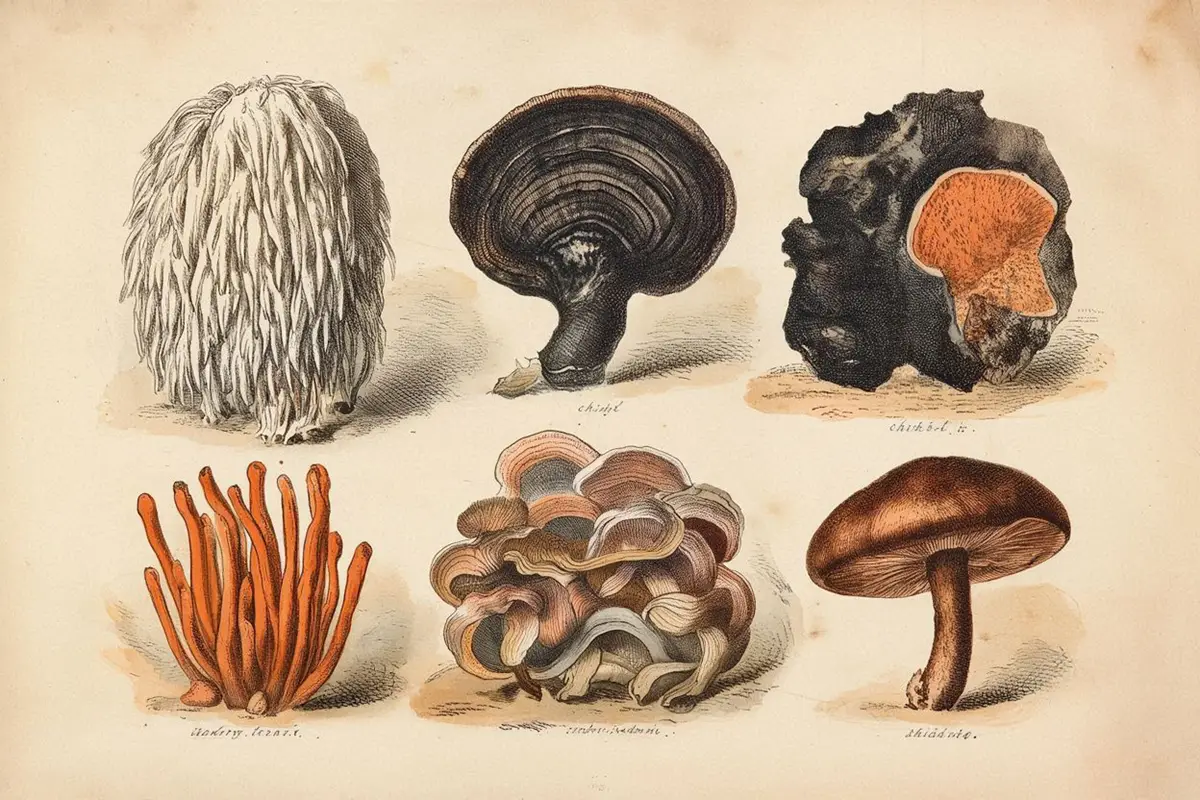
This post covers six functional mushrooms — Lion’s Mane, Reishi, Chaga, Cordyceps, Turkey Tail, Shiitake, and Maitake — with links to the actual peer-reviewed studies. The goal is to give you an accurate picture of what is known, what is not yet known, and what claims to be skeptical of.
The Active Compounds: What Makes a Mushroom “Functional”
Before looking at individual species, it is worth understanding the compounds that researchers believe are responsible for the health effects.
Beta-glucans are polysaccharides found in the cell walls of all fungi. They are the primary subject of immunological research on medicinal mushrooms. Beta-glucans bind to receptors on immune cells — particularly macrophages, natural killer cells, and dendritic cells — and modulate immune activity. They are not identical across species: the specific molecular structure (branching patterns, chain length) varies and affects biological activity.
Triterpenes are fat-soluble compounds found particularly in Reishi and Chaga. They have demonstrated anti-inflammatory and adaptogenic properties in laboratory studies. They are not water-soluble, which is why dual extraction (hot water plus alcohol) is recommended for Reishi products.
Polysaccharopeptides (PSP and PSK) are protein-bound polysaccharides found specifically in Turkey Tail. These have been the most extensively studied compounds in clinical oncology settings, and PSK is an approved medicine in Japan.
Cordycepin is an adenosine analogue found in Cordyceps species, particularly Cordyceps militaris. It is one of the subjects of research into exercise performance and energy metabolism.
Erinacines and hericenones are unique bioactive compounds found only in Lion’s Mane. They can cross the blood-brain barrier and have been shown in laboratory studies to stimulate the production of Nerve Growth Factor (NGF), a protein involved in the growth and maintenance of neurons.
Lion’s Mane — Hericium erinaceus
Primary areas of research: Cognitive function, mood, neuroprotection, nerve growth factor stimulation.
Lion’s Mane is distinctive in appearance — white, with cascading spines resembling a mane — and distinctive in its chemistry. The erinacines and hericenones found in its mycelium and fruiting body are the only known natural compounds that cross the blood-brain barrier and stimulate Nerve Growth Factor production, making it of significant interest to neuroscience.
What the research shows:
A 2023 randomized, double-blind, placebo-controlled pilot study published in Nutrients tested 1.8g of Lion’s Mane daily in 41 healthy adults aged 18–45. Participants who received Lion’s Mane performed faster on the Stroop cognitive task after a single dose, and showed a trend toward reduced subjective stress after 28 days of supplementation (p = 0.051 — approaching but not reaching statistical significance). → Study: Docherty et al., Nutrients 2023
A 2026 randomized, double-blind, crossover study in healthy adults aged 18–35 tested an acute dose of 3g Lion’s Mane fruiting body extract. Results showed that benefits, if present, may be task- or domain-specific, and that chronic supplementation warrants further investigation. → Study: Surendran et al., Frontiers in Nutrition 2026
A 2026 systematic review across 34 human studies in Neuroscience & Biobehavioral Reviews concluded that epidemiological studies show benefit of mushroom-inclusive dietary patterns on cognition and mood, while intervention studies (primarily on Lion’s Mane) showed mixed results, with more consistent positive findings in middle-aged and older adults. → Review: Cha et al., Neurosci Biobehav Rev 2026
Honest assessment: Results are promising but inconsistent. Most trials have been small and short. The neurological mechanism is biologically plausible and well-supported in laboratory models. Large, long-term randomized controlled trials in healthy populations are still needed. Lion’s Mane is not a treatment for dementia or cognitive decline.
Reishi — Ganoderma lucidum
Primary areas of research: Immune modulation, adaptogenic/stress effects, antioxidant activity, sleep quality.
Reishi is one of the most studied medicinal mushrooms in the world, with a history of use in traditional Chinese and Japanese medicine spanning over 2,000 years. Its Latin name, lucidum, means “shining” — a reference to the varnished appearance of its cap.
What the research shows:
A 2023 randomized, double-blind, placebo-controlled trial published in Foods (MDPI) tested purified Reishi beta-glucan in healthy adults aged 18–55 for 84 days. The intervention group showed significant enhancement in multiple immune markers including natural killer cell cytotoxicity and serum immunoglobulin A levels. No adverse effects on kidney or liver function were observed. → Study: MDPI Foods 2023
A comprehensive review in PMC (2026) covering Reishi’s bioactive components confirmed immunomodulation, antioxidant activity, anti-inflammatory effects, and liver-protective properties, while noting that clinical evidence for some claimed benefits (particularly in healthy populations) requires further large-scale investigation. → Review: Ganoderma lucidum — PMC 2026
Memorial Sloan Kettering Cancer Center maintains a regularly updated reference on Reishi that summarizes clinical trial data and potential drug interactions. → Reference: MSKCC Integrative Medicine — Reishi
Important safety note: Reishi has demonstrated antiplatelet and anticoagulant activity in laboratory studies. Anyone taking blood thinners (warfarin, aspirin, clopidogrel) or preparing for surgery should consult their doctor before use.
Honest assessment: Reishi has among the strongest evidence base of any functional mushroom for immune modulation. The adaptogenic and stress-related claims are traditionally well-supported but require more robust human trial data. It is not a cancer treatment.
Chaga — Inonotus obliquus
Primary areas of research: Antioxidant activity, immune modulation, anti-inflammatory effects.
Chaga is not technically a mushroom — it is a sclerotium, a dense mass of mycelium that forms on birch trees in cold northern climates (Siberia, Scandinavia, Canada, northern Russia). Its dark exterior is caused by high melanin content; the interior is orange-gold. It has been used as a medicinal tea in Russia since at least the 16th century.
Chaga is notable for having the highest antioxidant activity of any measured functional mushroom, significantly exceeding Reishi and Shiitake in laboratory assays. → Study comparing commercial tinctures: PMC Antioxidant Properties 2026
A 2018 randomized clinical trial with healthy adults using 2g/day of Chaga extract for 8 weeks found significant improvements in antioxidant markers and reductions in inflammatory markers.
Important note on sourcing: Chaga cultivated on grain substrate (rather than wild-harvested from birch) does not develop the sclerotium structure and lacks the key birch-derived medicinal compounds including betulin and betulinic acid. If buying Chaga supplements, wild-harvested or birch-grown products are biochemically more complete.
Important safety note: Chaga contains high levels of oxalates. Regular, high-dose consumption has been linked to oxalate nephropathy (kidney damage from oxalate accumulation) in case reports. It should not be consumed in large quantities over extended periods, particularly by anyone with kidney disease or a history of kidney stones.
Honest assessment: The antioxidant evidence is strong at the laboratory level. Human clinical data is limited compared to Reishi and Turkey Tail. Promising, but requires more human research. Not a cancer treatment.
Cordyceps — Cordyceps militaris / Ophiocordyceps sinensis
Primary areas of research: Exercise performance, oxygen utilization (VO₂ max), energy metabolism, fatigue reduction.
Cordyceps is a parasitic fungus — in nature, Ophiocordyceps sinensis grows from insect larvae at high altitudes in the Himalayas, making wild-harvested specimens extraordinarily expensive (up to $20,000/kg). The commercially available form used in supplements is almost always Cordyceps militaris, a cultivated species with comparable active compound profiles.
What the research shows:
A randomized, double-blind, placebo-controlled trial published in PMC tested a Cordyceps militaris-containing mushroom blend in 28 healthy adults. After 3 weeks of supplementation, VO₂ max significantly improved in the mushroom group (+4.8 ml/kg/min) compared to placebo (+0.9 ml/kg/min). Time to exhaustion also improved after both 1 and 3 weeks. → Study: Hirsch et al., PMC 2017
A 2016 meta-analysis of 6 randomized clinical trials in healthy adults found that Cordyceps significantly improved VO₂ max and reduced fatigue scores.
The NCBI Bookshelf’s comprehensive review of Cordyceps covers its pharmacological profile, traditional use, and the evidence base for energy, fatigue, and respiratory applications. → Reference: Cordyceps — NCBI Bookshelf
Honest assessment: Cordyceps has some of the most consistent human trial evidence of any functional mushroom for a specific, measurable outcome — exercise performance and oxygen utilization. The effect sizes in trials are moderate rather than dramatic. It is not a replacement for training, and its effects on sedentary individuals may differ from athletes.
Turkey Tail — Trametes versicolor
Primary areas of research: Immune modulation, gut microbiome, adjunctive support during cancer treatment (not a cancer treatment itself).
Turkey Tail has the most extensive clinical evidence base of any functional mushroom in relation to immune function. Its polysaccharopeptides — PSK (Krestin, Japan) and PSP (China) — have been studied in thousands of patients since the 1970s. PSK is an approved adjunctive cancer treatment in Japan, used alongside conventional chemotherapy and radiotherapy.
What the research shows:
A Phase 1 clinical trial at the University of Minnesota tested Turkey Tail preparations in women with breast cancer following radiotherapy. The preparation was safe at doses up to 9g/day and showed dose-related increases in CD8+ T cells and NK cell activity. → Study: Torkelson et al., PMC 2012
A PubMed-indexed randomized clinical trial demonstrated that PSP from Turkey Tail acts as a prebiotic, producing clear and consistent changes in the gut microbiome of healthy volunteers, distinct from the microbiome disruption caused by antibiotics. → Study: Pallav et al., PubMed 2014
The US National Cancer Institute maintains a detailed clinical summary of Turkey Tail research, covering PSK’s clinical use in Japan in thousands of gastric, breast, and colorectal cancer patients. → Reference: NCI Medicinal Mushrooms PDQ
A comprehensive review in PMC covers Turkey Tail’s polysaccharide pharmacology in detail. → Review: Trametes versicolor Polysaccharides in Cancer Therapy, PMC 2020
Critical distinction: PSK is used in Japan as an adjunct to chemotherapy and radiotherapy — meaning alongside conventional treatment, not instead of it. Turkey Tail is not a cancer treatment. No responsible naturopath or integrative oncologist uses it as a replacement for conventional oncology.
Honest assessment: The strongest evidence base of all functional mushrooms for immune support. The prebiotic effect on gut microbiome has solid human trial support. The adjunctive oncology data is well-documented. Still not a standalone treatment for any condition.
Shiitake & Maitake — Lentinula edodes / Grifola frondosa
Primary areas of research: General immune support, antioxidant activity, metabolic health.
Shiitake and Maitake occupy an interesting middle ground — they are both widely consumed culinary mushrooms and subjects of naturopathic interest. Their beta-glucan content is lower than some of the more concentrated functional species, but they are backed by substantial nutritional value and a long history of safe consumption.
Shiitake contains lentinan, a beta-glucan that has been studied as an immunomodulatory compound. A randomized dietary intervention study published in the Journal of the American College of Nutrition found that consuming shiitake mushrooms daily for 4 weeks resulted in improved immunity, including increased proliferation of gamma delta T-cells and natural killer T-cells, improved gut immunity markers, and reduced inflammatory markers. Participants experienced no adverse effects.
Maitake (Grifola frondosa) contains a specific beta-glucan fraction known as D-fraction, which has been studied for immune modulation. A study referenced in two functional mushroom research databases found that Maitake displayed the second-highest antioxidant activity after Chaga among commonly studied functional mushrooms.
Honest assessment: Both are genuinely nutritious foods with measurable immunological activity at culinary doses. The evidence supports their inclusion in a healthy diet. Concentrated supplement extracts may offer more potent effects, but clinical trial evidence for supplement-level doses is thinner than for Reishi, Turkey Tail, or Cordyceps.
How to Buy: What to Look for in Functional Mushroom Supplements
The functional mushroom supplement market is large and inconsistent. Product quality varies enormously. Here is what to look for:
Fruiting body vs. mycelium on grain: The majority of clinical research has been conducted on fruiting body preparations. Many North American supplement products use mycelium grown on grain (rice or oats), which may contain significant starch content and lower concentrations of active compounds. Prefer products that specify “fruiting body extract.”
Beta-glucan percentage: The best products state the beta-glucan percentage on the label. A meaningful beta-glucan content is generally considered to be 20% or above for a powdered extract. Products that list only “polysaccharides” without specifying beta-glucans may be including starch in that figure.
Dual extraction for Reishi and Chaga: Beta-glucans are water-soluble. Triterpenes are not. To get both classes of active compounds from Reishi or Chaga, look for dual-extracted products (hot water + alcohol extraction).
Third-party testing: Reputable suppliers test for heavy metals, pesticides, and active compound concentrations. Look for products with certificates of analysis from independent labs.
Form: Capsules are convenient and allow dosing control. Powders can be added to coffee or tea (traditionally appropriate for many of these species). Tinctures (alcohol or dual extraction) offer good bioavailability but often lower dose per serving. Teas are traditional and appropriate for daily use, though less concentrated.
Sourcing: For Chaga specifically, wild-harvested from birch is biochemically distinct from cultivated grain-grown product. For Cordyceps, Cordyceps militaris (cultivated) is the standard commercial form and the species most studied in human trials.
Regulatory Context: What You Can and Cannot Claim
This section is important for anyone writing about or selling functional mushroom products.
United States (FDA): Functional mushrooms sold as supplements are regulated under the Dietary Supplement Health and Education Act (DSHEA). Supplements do not require pre-market FDA approval. However, no health claim that implies treatment, cure, or prevention of a specific disease is permitted without FDA approval. Structure/function claims (“supports immune function”) are permitted if accompanied by the required disclaimer: “This statement has not been evaluated by the Food and Drug Administration. This product is not intended to diagnose, treat, cure, or prevent any disease.” → Reference: Vicente LLP — Functional Mushroom Regulation
European Union (EFSA): Botanical health claims in the EU are regulated under Regulation (EC) No 1924/2006. As of 2026, most botanical health claims — including those for medicinal mushrooms — are still “on hold” pending EFSA scientific review. This means that specific health claims for mushroom supplements cannot be legally made on EU product labels unless they have been formally approved. The European Parliament adopted a resolution in January 2026 urging EFSA to expedite review of these on-hold botanical claims. → Reference: EFSA Food Supplements
For content creators and bloggers: Informational and educational content about scientific research is distinct from product health claims and is generally permissible. However, content that functions as a de facto recommendation for a specific product’s therapeutic use may attract regulatory attention in some jurisdictions. Always present the science accurately, include appropriate disclaimers, and never imply that any supplement replaces medical treatment.
Practical Takeaways
The functional mushroom field is one of the most interesting intersections of traditional knowledge and modern science in nutritional research. The evidence is real but uneven. Here is what is supported by current research and what is not.
Reasonably well-supported by human clinical data: Reishi beta-glucans for immune modulation. Cordyceps for exercise performance and oxygen utilization. Turkey Tail PSK as an adjunct in oncology settings (used alongside, never instead of, conventional treatment). Turkey Tail PSP as a prebiotic for gut microbiome health.
Promising but requiring more human data: Lion’s Mane for cognitive function and mood (particularly in older or cognitively impaired populations). Chaga for antioxidant defense. Maitake and Shiitake for general immune support at supplement doses.
Not supported by current evidence: Any functional mushroom as a standalone cancer treatment. Any functional mushroom as a replacement for medical care.
The traditional use of these mushrooms as daily tonics — incorporated into food, tea, and diet over long periods — is consistent with the emerging science. They appear to work as support, not as cure. That is, perhaps, the most honest summary of what two thousand years of traditional use and two decades of clinical research have produced together.
Frequently Asked Questions
See the FAQ section above for answers to the most common questions about functional mushroom supplements, safety, forms, and regulation.
Scientific Literature and Further Reading
All clinical studies linked in this post are peer-reviewed and accessible via PubMed, PubMed Central (PMC), or the National Cancer Institute.
Primary clinical studies cited:
- Docherty S. et al. (2023). “The Acute and Chronic Effects of Lion’s Mane Mushroom Supplementation on Cognitive Function, Stress and Mood in Young Adults.” Nutrients 15(22): 4842. https://pubmed.ncbi.nlm.nih.gov/38004235/
- Surendran S. et al. (2026). “Acute effects of a standardised extract of Hericium erinaceus on cognition and mood in healthy younger adults.” Frontiers in Nutrition. https://pmc.ncbi.nlm.nih.gov/articles/PMC12018234/
- Cha S. et al. (2026). “A review of the effects of mushrooms on mood and neurocognitive health across the lifespan.” Neuroscience & Biobehavioral Reviews 158: 105548. https://pubmed.ncbi.nlm.nih.gov/38246232/
- Henao S.L.D. et al. (2018). “Randomized Clinical Trial for the Evaluation of Immune Modulation by Yogurt Enriched with β-Glucans from Ganoderma lucidum in Children.” International Journal of Medicinal Mushrooms. https://pubmed.ncbi.nlm.nih.gov/30317947/
- MDPI Foods (2023). “Evaluation of Immune Modulation by β-1,3;1,6 D-Glucan Derived from Ganoderma lucidum in Healthy Adult Volunteers.” Foods 12(3): 659. https://www.mdpi.com/2304-8158/12/3/659
- Hirsch K.R. et al. (2017). “Cordyceps militaris improves tolerance to high intensity exercise after acute and chronic supplementation.” Journal of Dietary Supplements. https://pmc.ncbi.nlm.nih.gov/articles/PMC5236007/
- Torkelson C.J. et al. (2012). “Phase 1 Clinical Trial of Trametes versicolor in Women with Breast Cancer.” ISRN Oncology. https://pmc.ncbi.nlm.nih.gov/articles/PMC3369477/
- Pallav K. et al. (2014). “Effects of polysaccharopeptide from Trametes versicolor and amoxicillin on the gut microbiome of healthy volunteers: a randomized clinical trial.” Gut Microbes. https://pubmed.ncbi.nlm.nih.gov/25006989/
Institutional references:
- National Cancer Institute — Medicinal Mushrooms PDQ: https://www.ncbi.nlm.nih.gov/books/NBK424937/
- Memorial Sloan Kettering Cancer Center — Reishi Mushroom: https://www.mskcc.org/cancer-care/integrative-medicine/herbs/reishi-mushroom
- NCBI Bookshelf — Cordyceps as an Herbal Drug: https://www.ncbi.nlm.nih.gov/books/NBK92758/
- Alzheimer’s Drug Discovery Foundation — Lion’s Mane Cognitive Vitality: https://www.alzdiscovery.org/uploads/cognitive_vitality_media/Lions-Mane-Cognitive-Vitality-For-Researchers.pdf
- PMC — Medicinal Mushrooms: Bioactive Components and Nutritional Value (2023): https://pmc.ncbi.nlm.nih.gov/articles/PMC10384337/
Regulatory references:
- US FDA / DSHEA framework — Functional Mushroom Regulation: https://vicentellp.com/insights/functional-mushrooms-regulations-food-additive-dietary-supplement/
- EU EFSA Food Supplements: https://www.efsa.europa.eu/en/topics/topic/food-supplements
- EU Health Claims Register: https://food.ec.europa.eu/food-safety/labelling-and-nutrition/nutrition-and-health-claims/eu-register-health-claims_en
Full disclaimer: This post is for informational and educational purposes only. It does not constitute medical advice and must not be used as a basis for medical decisions. Functional mushrooms are not approved medicines in the EU or US for the treatment of any disease. The research cited is presented accurately but represents a field in active development; findings may be revised as new evidence emerges. Always consult a qualified healthcare professional before starting any supplement, especially if you are taking prescription medication, are pregnant, breastfeeding, or have a diagnosed medical condition. The authors accept no responsibility for decisions made based on this content.
Attic Recipes — digitizing and adapting Central European home cooking from the early twentieth century.