Almond Hazelnut Date Torte
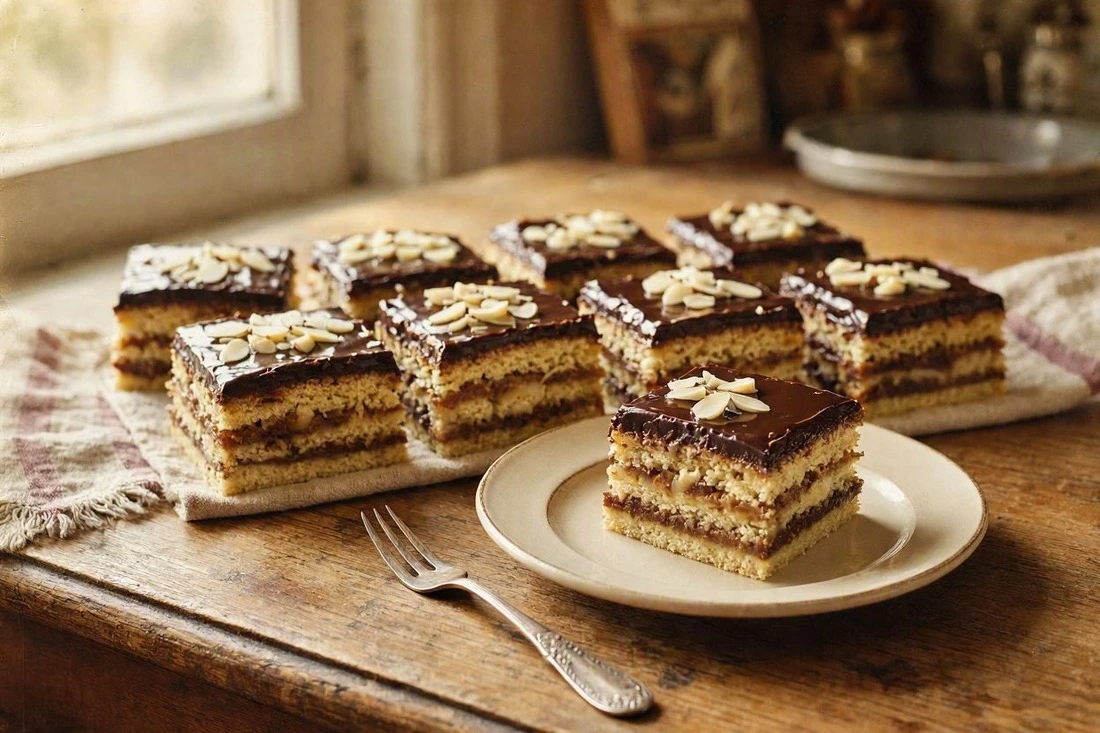
A flourless torte of ground almonds, hazelnuts, and dates, sliced into layers and coated in a chocolate and butter filling.
Quick Summary
This flourless Central European torte features a three-layer sponge of ground almonds, hazelnuts, and dates coated in a rich chocolate-butter filling. Taking 85 minutes to make, it relies on whipped egg whites for structure and sliced almonds for a crunchy finish.
This recipe uses How to Blanch Almonds: The Technique Behind the White Kernel — prepare it in advance if you haven't already.
Historical recipe
Modernised adaptation of an early 20th‑century source. Not independently kitchen-tested by Attic Recipes. Quantities, temperatures, and food safety guidance have been updated for a contemporary kitchen — results may vary and errors may exist. Nutritional values, where provided, are estimates only and have not been laboratory tested. Always follow current food safety guidelines for your region. If you have a health condition, allergy, or dietary requirement, consult a qualified professional before preparing this recipe.
Use of this recipe is entirely at your own risk and subject to our Terms of Service and Privacy Policy. Attic Recipes accepts no liability for any adverse outcome.
- Eggs
- Tree Nuts
- Dairy
- Gluten
Additional notes
-
Warning
The filling is made with egg yolks cooked with sugar and chocolate. Cook over a bain-marie, stirring constantly, until the mixture reaches at least 74°C (165°F) to ensure the eggs are fully cooked. This is especially important for pregnant women, young children, older adults, and immunocompromised individuals.
-
Note
Contains almonds and hazelnuts. Those with nut allergies should avoid this recipe.
-
Note
This is a rich, high-fat and high-sugar dessert due to the butter-based filling. Those managing fat or sugar intake may want to serve smaller portions.
- 1
Whip the egg whites to stiff peaks. Gradually fold in the caster sugar, then fold in the ground almonds, ground hazelnuts, sliced dates, vanilla sugar, and lemon zest until evenly combined.
Tip Fold gently to keep as much air in the whites as possible — this sponge relies on the whipped egg whites for structure. - 2
Grease a narrow loaf pan generously with the butter and dust with the flour, tapping out any excess. Pour in the batter.
- 3
Bake at 170°C (340°F) until golden and set, about 40 minutes.
Tip A skewer inserted in the center should come out clean; the top should be evenly golden brown. - 4
Turn the sponge out of the pan onto a cutting board while still warm, and slice it widthwise into 3 equal layers. Let cool completely.
- 5
Meanwhile, make the filling: in a heatproof bowl set over a pan of gently simmering water, combine the egg yolks, sugar, and chopped chocolate. Stir constantly until thickened and the mixture reaches 74°C (165°F).
Tip Using a bain-marie rather than direct heat keeps the egg yolks from scrambling while the chocolate melts evenly into the custard. - 6
Remove the filling from the heat and continue stirring until it cools to room temperature.
- 7
Gradually beat in the softened butter, a little at a time, until fully incorporated and smooth.
- 8
Spread a layer of filling between each of the 3 sponge layers and stack them. Coat the top, sides, and ends of the assembled torte with the remaining filling.
- 9
Sprinkle the sliced almonds over the top and sides of the torte.
- 10
Chill until completely cool and set, then cut into squares or bars to serve.
Nutrition Information per 1 square (approx 65g, based on 14 squares)
Nutritional values are approximate estimates and may vary based on specific ingredients used, preparation methods, and portion sizes.
Serving Suggestions
Serve chilled, in small squares — this torte is rich and pairs well with black coffee or tea.
About This Recipe
This torte builds its structure entirely from whipped egg whites and ground nuts, studded with thinly sliced dates that turn soft and jammy once baked. Once cooled, the sponge is sliced into three layers and filled with a rich cooked chocolate filling enriched with butter — the same filling then coats the outside, so every square ends up wrapped in it. A final layer of sliced almonds adds a bit of crunch against the soft interior.
It’s a project cake, built in stages over an afternoon, but most of that time is passive: cooling the sponge, cooling the filling, then chilling the whole assembled torte before it’s ready to slice.
Why It Works
Without flour to lean on, the sponge depends entirely on whipped egg whites for its lift and structure, with the ground almonds and hazelnuts adding body and a fine, slightly dense crumb once baked. Slicing the loaf into layers while it’s still warm — rather than after it’s fully cooled — makes it easier to cut cleanly without crumbling.
The filling works similarly to a cooked buttercream: the egg yolks and sugar are cooked with the chocolate until thickened, which pasteurizes the eggs and lets the chocolate melt in smoothly, and only once that base has cooled is the butter beaten in. Adding butter to a warm mixture would cause it to melt and separate rather than emulsify into a spreadable filling.
Modern Kitchen Tips
Don’t skip the bain-marie for the filling — cooking egg yolks and chocolate directly over a flame makes it very easy to end up with sweet scrambled eggs instead of a smooth custard.
If the torte’s layers seem fragile when slicing, chill the whole sponge for 20-30 minutes before cutting into layers — it firms up and slices much more cleanly cold.
A classic of early 20th century home cooking, preserved and adapted for the modern kitchen.
The Story Behind This Recipe
Historical Context
Early 20th century tortes of this kind built their structure from whipped egg whites and ground nuts rather than flour, with a narrow loaf pan giving the baked sponge its shape before it was sliced into layers. A cooked egg yolk and chocolate filling, enriched with butter once cooled, was a common way to fill and coat a layered cake of this type — the same base used across many period recipes for chocolate creams and fillings.
Modern Kitchen Adaptation
The sponge and layering method are unchanged from the original approach. The filling has been adapted for both safety and texture: the original method calls for cooking the egg yolks, sugar, and chocolate directly over heat, which carries a real risk of the eggs scrambling before the mixture thickens. Cooking the mixture over a bain-marie instead, to a target temperature of 74°C (165°F), gives the same result with far less risk of curdling. Chocolate quantity, given in the original as '2 bars,' has been converted to weight based on a standard period bar size. Pan greasing and dusting quantities were not specified and have been estimated. Oven temperature and bake time were also not given and have been estimated for a sponge of this volume in a narrow loaf pan.
This recipe is an independent modern adaptation developed from historical sources in the public domain. It is provided for informational and educational purposes only and does not constitute professional dietary, nutritional, or medical advice. Food preparation involves inherent risks. The reader assumes full responsibility for safe food handling, ingredient sourcing, and adherence to current local food safety guidelines. The site operator accepts no liability for outcomes resulting from the preparation or consumption of this recipe.
One recipe.
Every week.
You Might Also Like
More recipes you'll enjoy
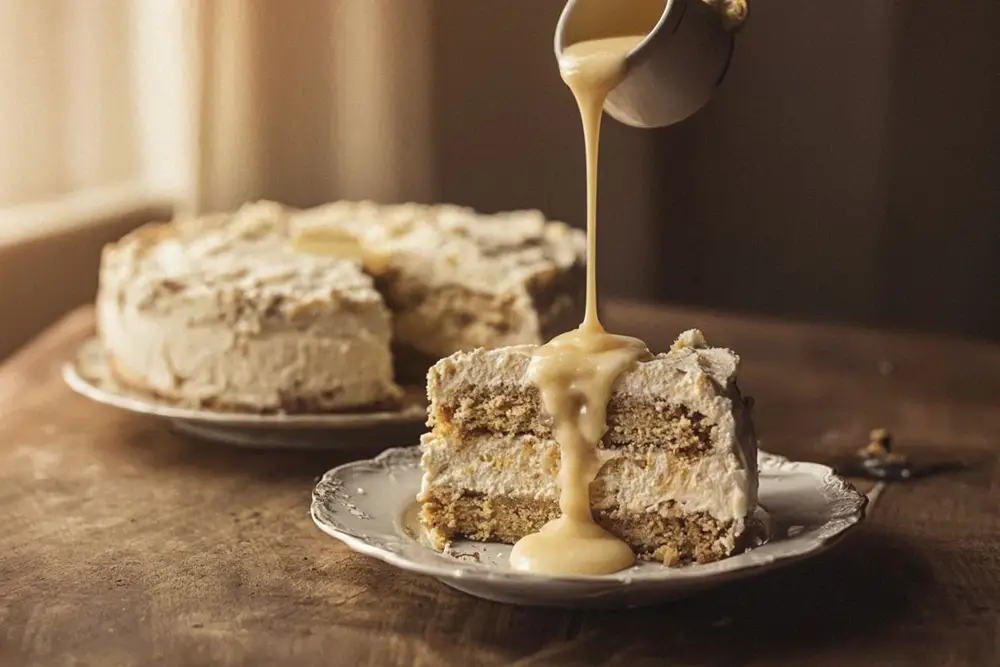
Almond Cream Biscuit Torte
A light sponge layered with almond buttercream and finished with a poured chilled custard sauce — a classic of early 20th century Central European pastry.
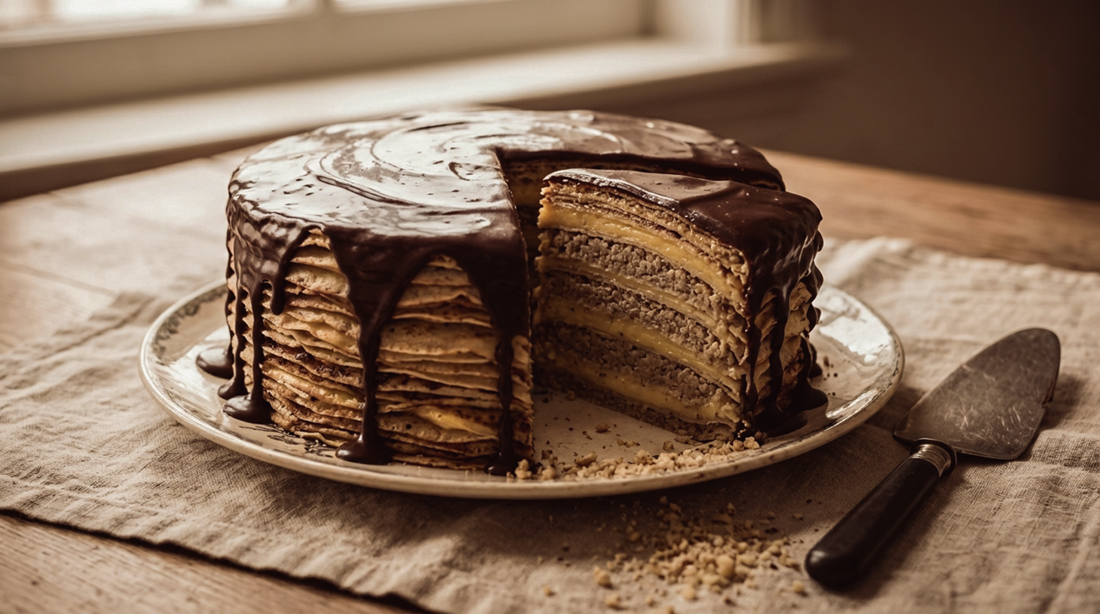
Walnut and Custard Crêpe Torte
Sixteen crêpes layered with a baked vanilla custard filling, walnuts, and biscuit crumbs, then glazed with chocolate for a rich, sliceable torte.
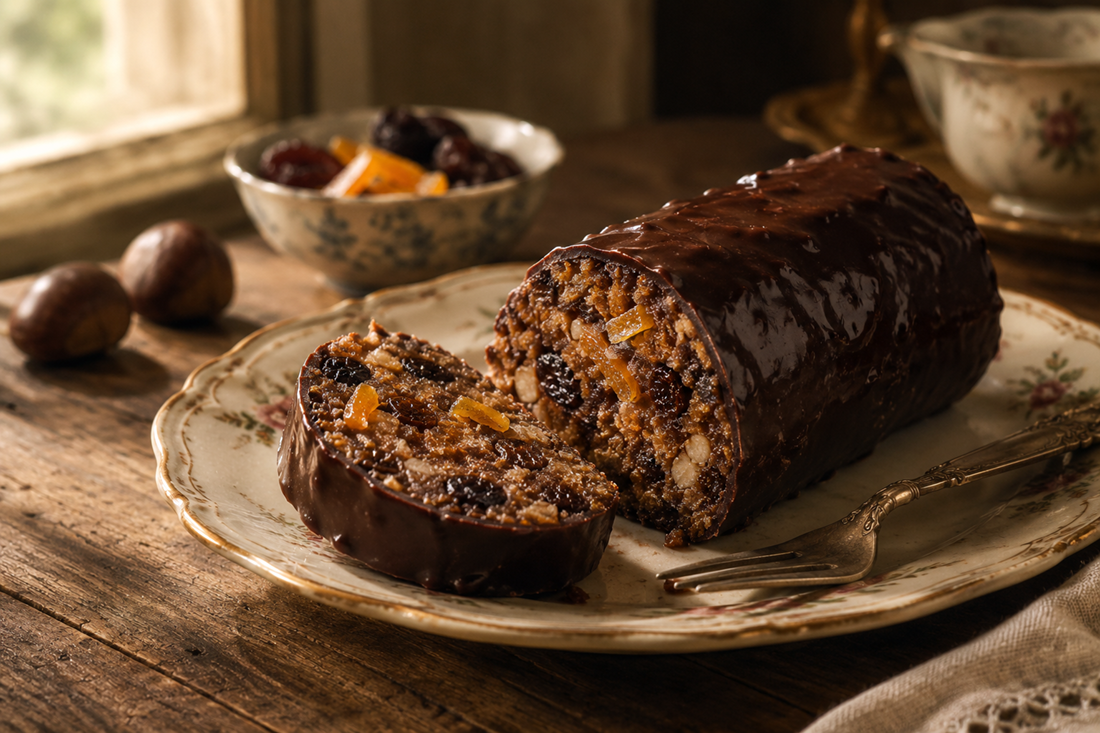
Chestnut Roll with Chocolate Glaze
A dense, no-bake chestnut confection studded with candied citrus peel, dates, and raisins, and finished with a glossy dark chocolate glaze.