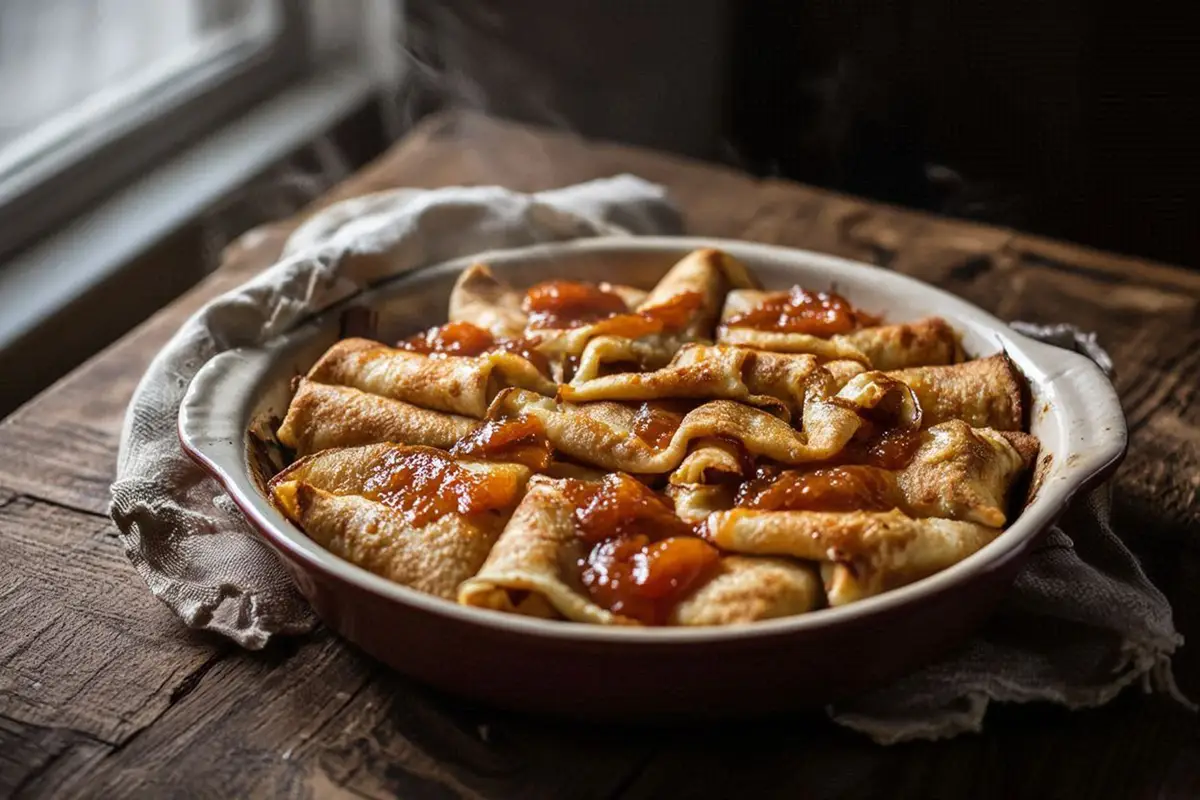
Baked Apricot and Rice Trumpet Pancakes
Delicate pancakes filled with creamy rice porridge and layered with rich apricot marmalade, baked in a sweet milk custard.
Quick Summary
Baked Apricot and Rice Trumpet Pancakes is a Central European dessert made of thin pancakes filled with sweet rice, layered with apricot marmalade, and baked in a milk custard. It takes about 75 minutes to prepare, with a layered, cake-like texture.
Historical recipe
Modernised adaptation of an early 20th‑century source. Not independently kitchen-tested by Attic Recipes. Quantities, temperatures, and food safety guidance have been updated for a contemporary kitchen — results may vary and errors may exist. Nutritional values, where provided, are estimates only and have not been laboratory tested. Always follow current food safety guidelines for your region. If you have a health condition, allergy, or dietary requirement, consult a qualified professional before preparing this recipe.
Use of this recipe is entirely at your own risk and subject to our Terms of Service and Privacy Policy. Attic Recipes accepts no liability for any adverse outcome.
- Dairy
- Eggs
- Gluten
- Sulphites
Additional notes
-
Warning
High sugar content (52g per serving in the reduced-sugar version; up to 88g if the original 500g sugar quantity is used). Not suitable for those managing diabetes or insulin sensitivity.
Reduce sugar in the marmalade further, or substitute a small amount of honey for a less concentrated sweetness.
-
Caution
The custard topping contains egg yolks. Although the dish is baked, ensure the internal temperature reaches at least 71°C (160°F) before serving. Do not serve to pregnant women, children under 5, elderly individuals, or immunocompromised persons without verifying the temperature.
Use pasteurized egg yolks for the custard and rice filling if serving to vulnerable groups.
-
Note
Contains dairy (milk, butter), eggs, and gluten (flour). Raisins may contain sulphites (E220/E228) — check the packaging of commercially dried raisins if sulphite sensitivity is a concern.
- 1
Make the apricot marmalade: Combine the peeled, pitted apricots, sugar, and lemon juice in a heavy-bottomed saucepan. Cook over medium heat, stirring frequently, until the mixture thickens to a dense, spreadable jam — about 20 minutes. Set aside to cool slightly.
Tip The marmalade can be made a day ahead and refrigerated. Bring to room temperature before using. - 2
Make the rice filling: Combine the rice and 500ml of milk in a saucepan. Cook over medium-low heat, stirring regularly, until the rice is fully tender and has absorbed the milk into a thick, creamy porridge — about 20 minutes. Stir in the sugar and raisins. Remove from heat and stir in the 2 egg yolks immediately. Allow to cool to room temperature before filling the pancakes.
Tip The rice must be fully cooked before adding the egg yolks. Adding yolks off the heat prevents them from scrambling. - 3
Make the pancake batter: Whisk the 3 whole eggs with the sifted flour, a pinch of salt, and the 400ml of milk until you have a smooth, thin batter with no lumps. Allow to rest for 10 minutes.
Tip Resting the batter allows the flour to hydrate fully and produces more pliable, less rubbery pancakes. - 4
Fry the pancakes: Heat a lightly greased non-stick or crepe pan over medium-high heat. Pour a small ladle of batter and tilt to coat the pan thinly. Cook until the edges lift and the underside is lightly golden, about 1 minute. Flip and cook 30 seconds more. Stack on a plate. You will need approximately 8–10 pancakes, plus 1 plain pancake for the top.
- 5
Fill and roll: Spread a portion of the cooled rice mixture along the centre of each pancake and roll tightly into a 'trumpet' shape. Do not overfill — the rice will expand slightly during baking.
- 6
Assemble the dish: Grease the baking dish thoroughly with butter. Place a single layer of filled pancakes in the dish. Spread a generous layer of apricot marmalade over them. Repeat with a second layer of pancakes and marmalade. Finish with the single plain, flat pancake laid over the top — this acts as a protective layer during baking.
- 7
Make the custard: Whisk the 2 egg yolks with the sugar and the 200ml of milk in a small saucepan. Warm over low heat, stirring constantly, until the mixture is just warm to the touch — do not allow to boil. Pour evenly over the assembled dish.
Tip Warming the custard before pouring ensures it distributes evenly through the layers rather than sitting on top. - 8
Bake: Place in a preheated oven at 180°C / 350°F (conventional) or 160°C / 325°F (fan-assisted). Bake for 20–25 minutes until the custard is fully set and the top is golden. A knife inserted in the centre should come out clean. Remove the top protective pancake before serving.
Tip For food safety, ensure the internal temperature of the dish reaches at least 71°C (160°F). Use a kitchen thermometer if serving to vulnerable groups.
Nutrition Information per 1 portion (approx. 250g)
Nutritional values are approximate estimates and may vary based on specific ingredients used, preparation methods, and portion sizes.
Serving Suggestions
Serve warm directly from the baking dish. A dollop of unsweetened whipped cream or a spoonful of cold sour cream cuts through the sweetness of the apricot layers. Dust lightly with icing sugar just before serving.
About This Recipe
This elegant dessert transforms simple pancakes into a structured, layered cake. By combining the creaminess of rice porridge with the sharp tang of apricot marmalade, it offers a textural contrast that was highly prized in early 20th century households. Three separate preparations — the marmalade, the rice filling, and the pancake batter — come together in a single baking dish for a result that is more than the sum of its parts.
Why It Works
The trumpet rolling technique ensures the rice filling stays moist during the second bake. The layers of marmalade between the pancake rolls melt slightly in the oven, binding the layers together and infusing the custard with apricot flavor. The plain protective pancake on top prevents the surface from drying out and shields the delicate edges of the filled rolls below.
On the Sugar
The original recipe calls for equal weights of fruit and sugar in the marmalade — a ratio designed for long shelf life, not balanced flavor. This version uses half the sugar. If you want to experience the dish as it would have appeared on an early 20th century table, use the full 500g. The result is considerably sweeter and more intensely preserved in character — closer to confectionery than fruit.
A classic of early 20th century home cooking, preserved and adapted for the modern kitchen.
The Story Behind This Recipe
Historical Context
This dish is a classic example of early 20th century Central European resourcefulness — rice, preserved fruit, and eggs combined into a structured, festive dessert. Layered baked pancake dishes (rakott palacsinta in Hungarian, schichtpfannkuchen in German-speaking households) appeared regularly in middle-class cookbooks as Sunday lunch desserts, transforming everyday pantry staples into something worthy of guests.
Modern Kitchen Adaptation
The original recipe uses a full 1:1 ratio of fruit to sugar for the marmalade (500g each), which produces an intensely sweet, very firm preserve. This version reduces the sugar to 250g for a more fruit-forward result closer to modern taste. The lemon juice is a modern addition — it was not in the original but balances the sweetness and helps the marmalade set at the lower sugar level. If you prefer the original firmness and sweetness, return to 500g sugar and omit the lemon.
This recipe is an independent modern adaptation developed from historical sources in the public domain. It is provided for informational and educational purposes only and does not constitute professional dietary, nutritional, or medical advice. Food preparation involves inherent risks. The reader assumes full responsibility for safe food handling, ingredient sourcing, and adherence to current local food safety guidelines. The site operator accepts no liability for outcomes resulting from the preparation or consumption of this recipe.
One recipe.
Every week.
You Might Also Like
More recipes from the same category
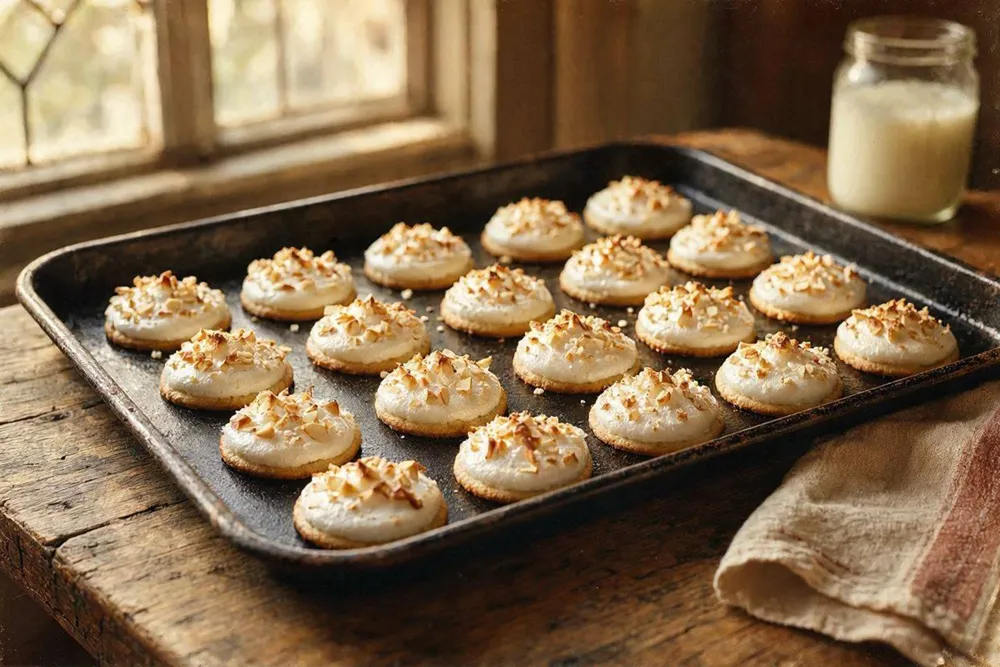
Almond Gurabije Cookies
Small lemon-scented cookies made with lard and egg yolk, indented in the center, coated in whipped egg white, and rolled in sugar and chopped almonds.
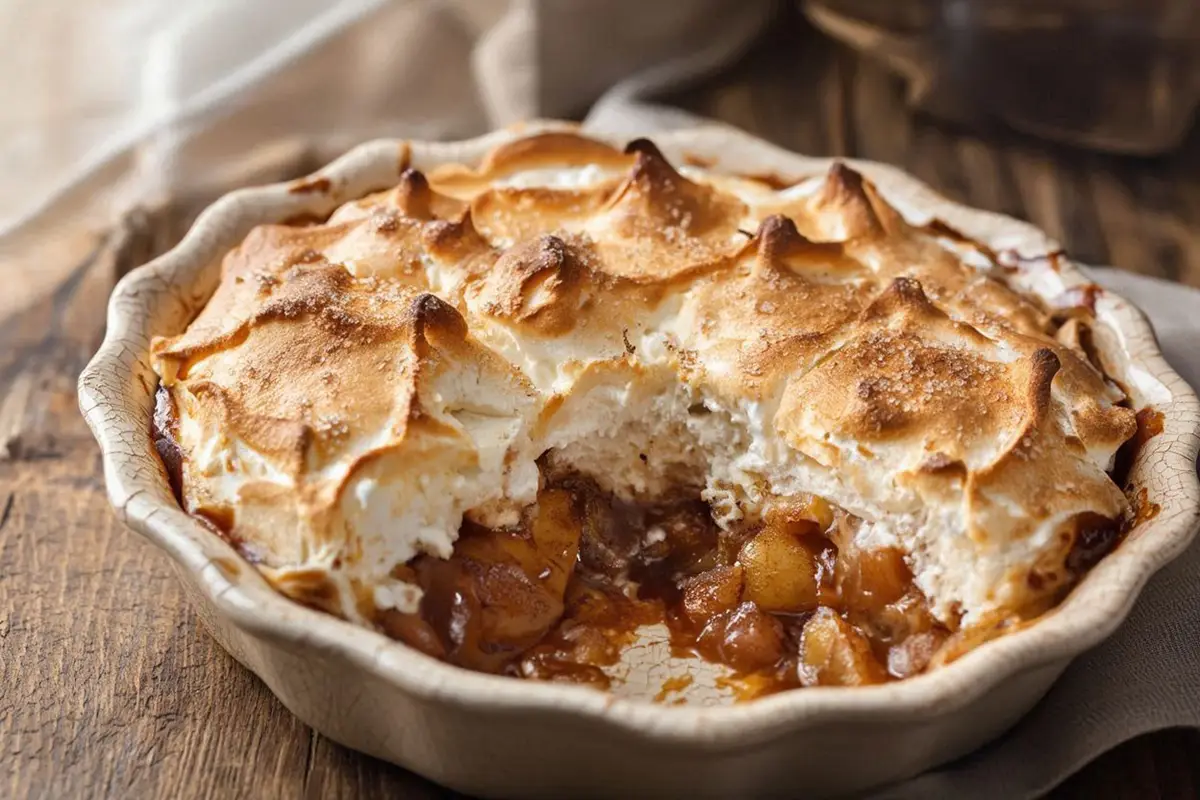
Velvet Apple & Meringue Gratin
A decadent vintage dessert featuring apples slow-cooked in a butter-sugar syrup, topped with a cloud of lemon-scented meringue.
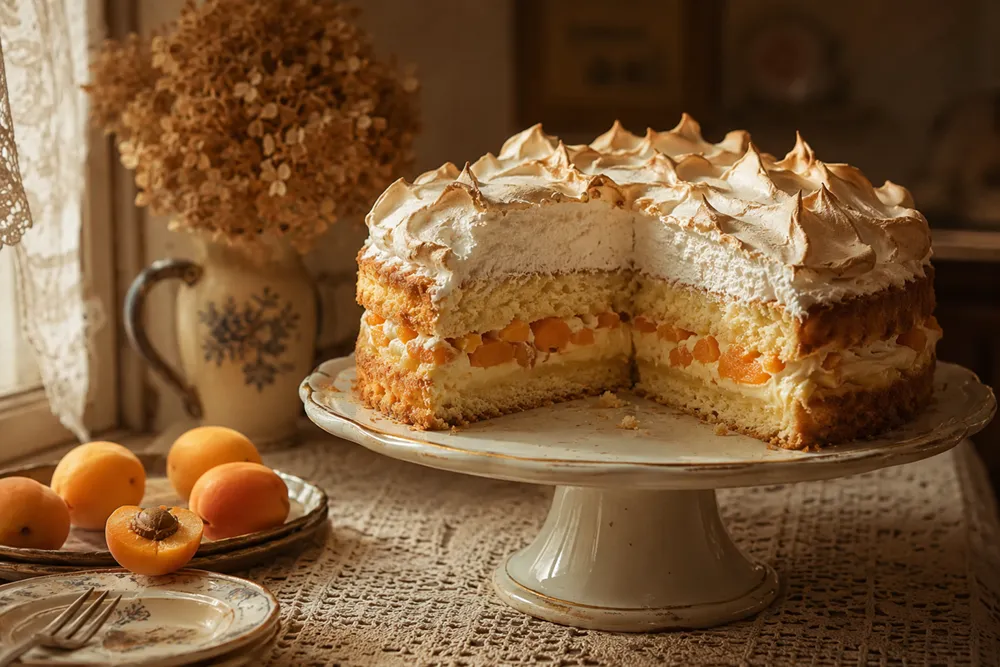
Apricot Cream Torte
Traditional apricot cream cake combining sponge, vanilla custard, and meringue for a timeless European flavor.