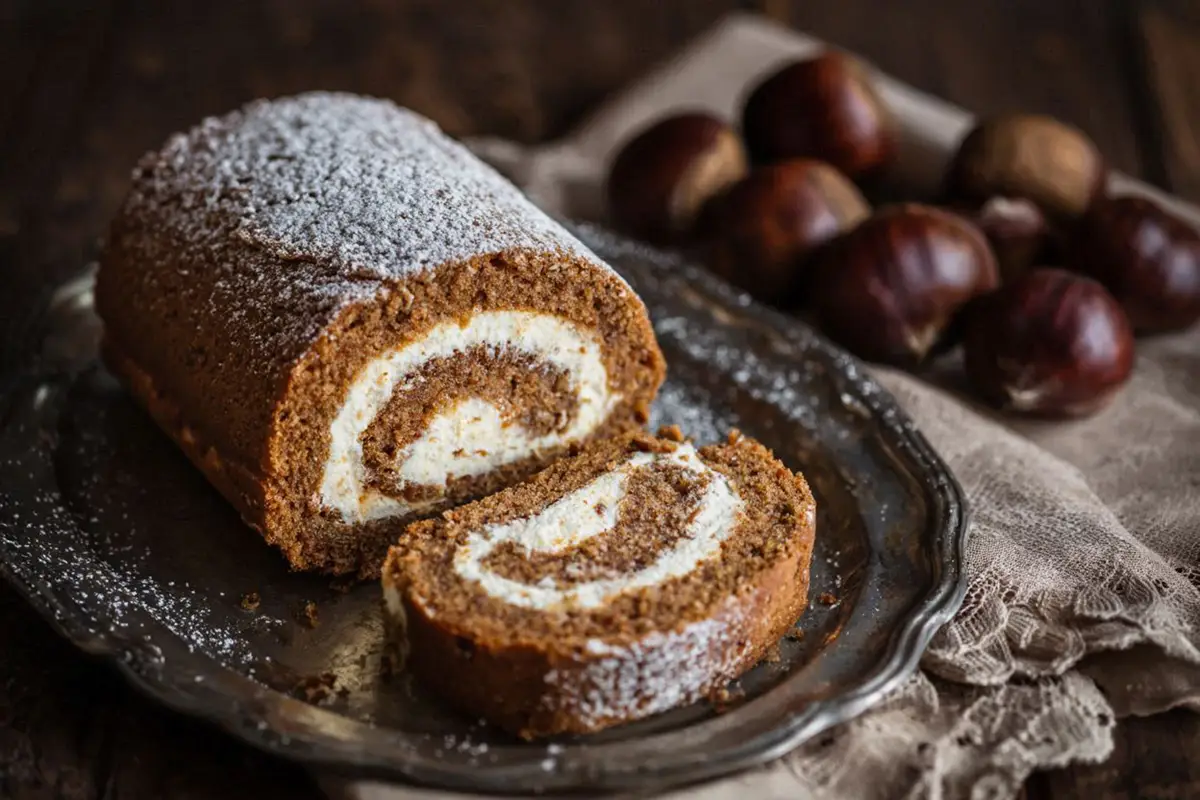
Velvet Chestnut Roulade
A sophisticated, flourless chestnut sponge cake filled with a delicate whipped chestnut butter cream. A true 1920s classic.
Quick Summary
A sophisticated, flourless chestnut sponge cake filled with a delicate whipped chestnut butter cream. A true 1920s classic.
Historical recipe
Modernised adaptation of an early 20th‑century source. Not independently kitchen-tested by Attic Recipes. Quantities, temperatures, and food safety guidance have been updated for a contemporary kitchen — results may vary and errors may exist. Nutritional values, where provided, are estimates only and have not been laboratory tested. Always follow current food safety guidelines for your region. If you have a health condition, allergy, or dietary requirement, consult a qualified professional before preparing this recipe.
Use of this recipe is entirely at your own risk and subject to our Terms of Service and Privacy Policy. Attic Recipes accepts no liability for any adverse outcome.
- Dairy
- Eggs
Additional notes
-
Note
This recipe is naturally gluten-free as written. Ensure your chestnut puree does not contain added wheat-based thickeners if serving to those with celiac disease or gluten intolerance.
-
Caution
Chestnuts are not classified as tree nuts under EU Regulation 1169/2011 or FALCPA, but individuals with tree nut allergies should exercise caution and consult their physician before consuming chestnut products.
-
Note
Egg whites are whipped to stiff peaks — use a scrupulously clean, grease-free bowl and whisk. Any trace of fat will prevent the whites from aerating properly.
- 1
Preheat your oven to 180°C conventional (160°C fan-assisted). Grease a large rectangular baking sheet with butter and line it with parchment paper.
- 2
Prepare the sponge base: In a deep bowl, beat the 6 egg yolks with 6 tablespoons of sugar until pale and foamy. Fold in the 90g of finely pureed chestnuts.
- 3
Whisk the egg whites in a separate clean bowl until foamy. Add the cream of tartar (or lemon juice) and continue whisking until stiff peaks form. Gently fold the whites into the chestnut mixture using a spatula, being careful not to deflate the air.
- 4
Pour the batter onto the prepared sheet. Spread it evenly using a long knife or offset spatula. Bake for 12–15 minutes or until the sponge is springy to the touch.
- 5
Remove from the oven. Carefully slide the parchment paper with the cake onto a cooling rack or board. Let it cool completely.
- 6
Make the Chestnut Buttercream: Whisk the softened butter, vanilla sugar, and 20g of pureed chestnuts together until light, fluffy, and pale.
- 7
Assemble: Flip the cooled cake onto a clean kitchen towel dusted with sugar. Peel off the parchment paper. Spread the filling evenly across the surface.
- 8
Carefully roll the cake tightly using the towel to guide you. Sprinkle with extra vanilla sugar and slice with a damp knife before serving.
Nutrition Information per 1 slice (1/10 of recipe)
Nutritional values are approximate estimates and may vary based on specific ingredients used, preparation methods, and portion sizes.
Serving Suggestions
Serve with a dollop of unsweetened whipped cream on the side to balance the richness of the buttercream. A glass of aged dessert wine or a strong espresso is the perfect accompaniment.
The Secret to a Perfect Roll
The key to preventing your roulade from cracking is to work with the cake once it has reached room temperature, but not while it’s dry. If your kitchen is very warm, place a slightly damp (not wet!) towel over the cake as it cools to keep the sponge supple.
Why Vanilla Sugar?
In the early 20th century, vanilla beans were often kept in jars of sugar to create vanilla-scented sugar. This provides a more delicate and integrated aroma than modern liquid extracts, which can sometimes overwhelm the subtle, earthy sweetness of the chestnuts.
A timeless celebration of the chestnut season, captured in a delicate, velvety roll.
The Story Behind This Recipe
Historical Context
Chestnut-based desserts were the height of elegance in the Danube monarchy and surrounding regions. This flourless version is particularly prized for its light, almost melt-in-the-mouth texture, which was a favorite in high-society tea rooms.
Modern Kitchen Adaptation
If you cannot find fresh chestnuts to boil, high-quality canned unsweetened chestnut puree works perfectly. Ensure it is smooth and not the sweetened chestnut spread used for toppings.
This recipe is an independent modern adaptation developed from historical sources in the public domain. It is provided for informational and educational purposes only and does not constitute professional dietary, nutritional, or medical advice. Food preparation involves inherent risks. The reader assumes full responsibility for safe food handling, ingredient sourcing, and adherence to current local food safety guidelines. The site operator accepts no liability for outcomes resulting from the preparation or consumption of this recipe.
One recipe.
Every week.
You Might Also Like
More recipes from the same category
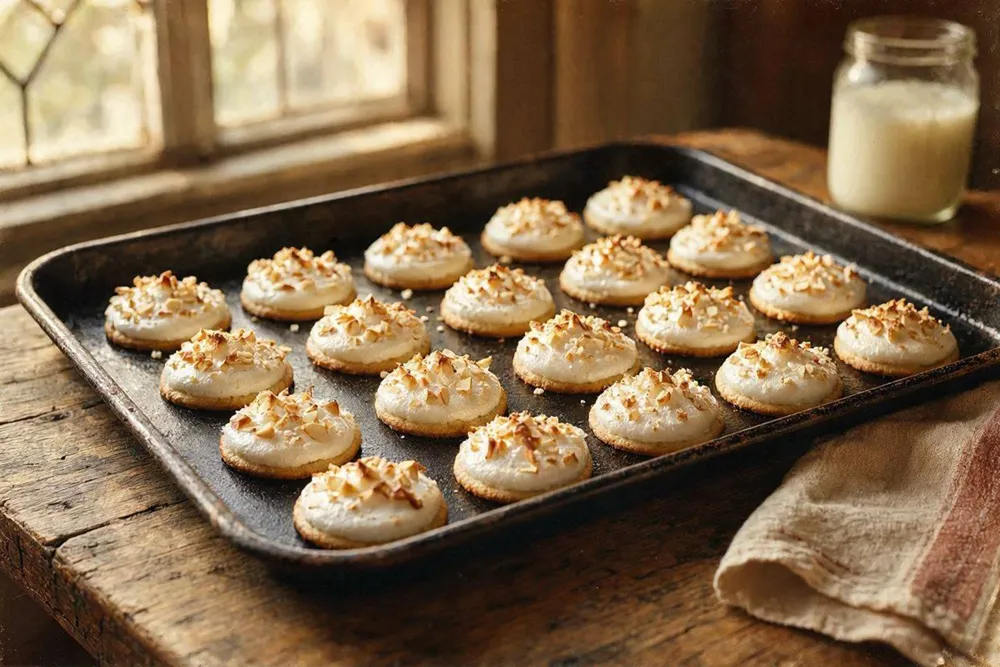
Almond Gurabije Cookies
Small lemon-scented cookies made with lard and egg yolk, indented in the center, coated in whipped egg white, and rolled in sugar and chopped almonds.
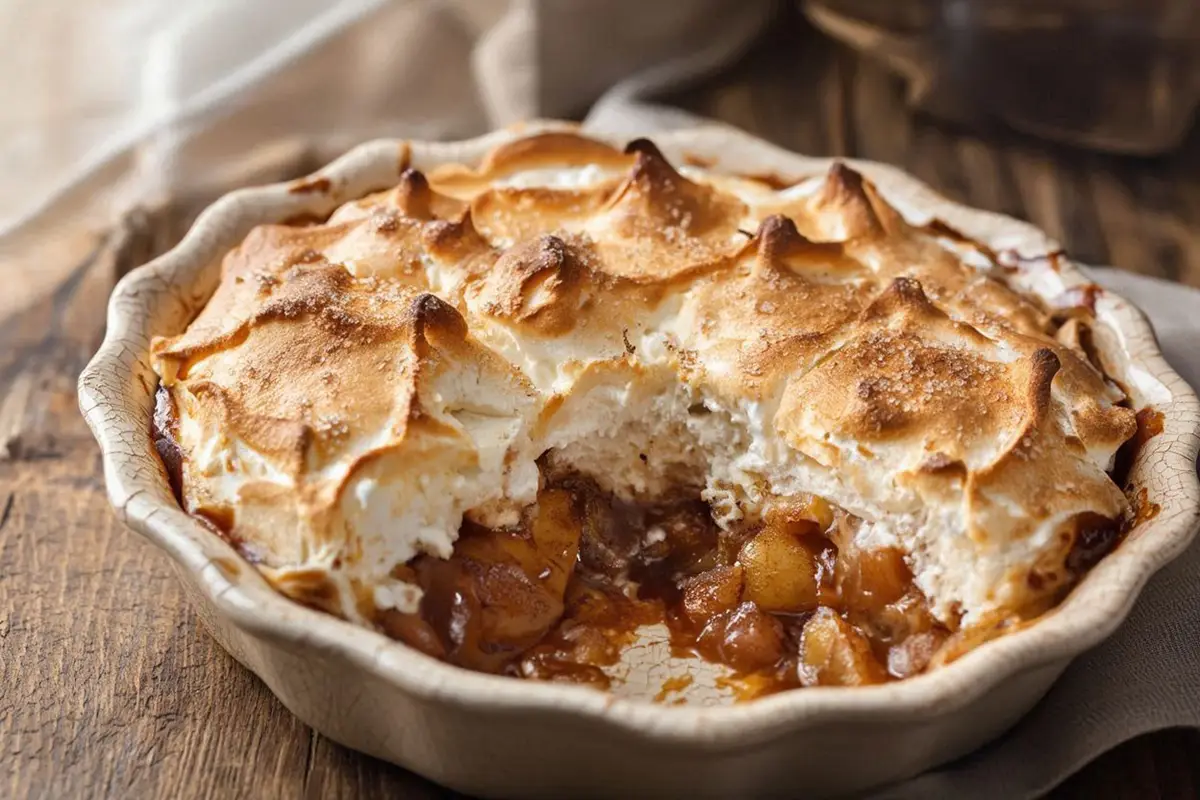
Velvet Apple & Meringue Gratin
A decadent vintage dessert featuring apples slow-cooked in a butter-sugar syrup, topped with a cloud of lemon-scented meringue.
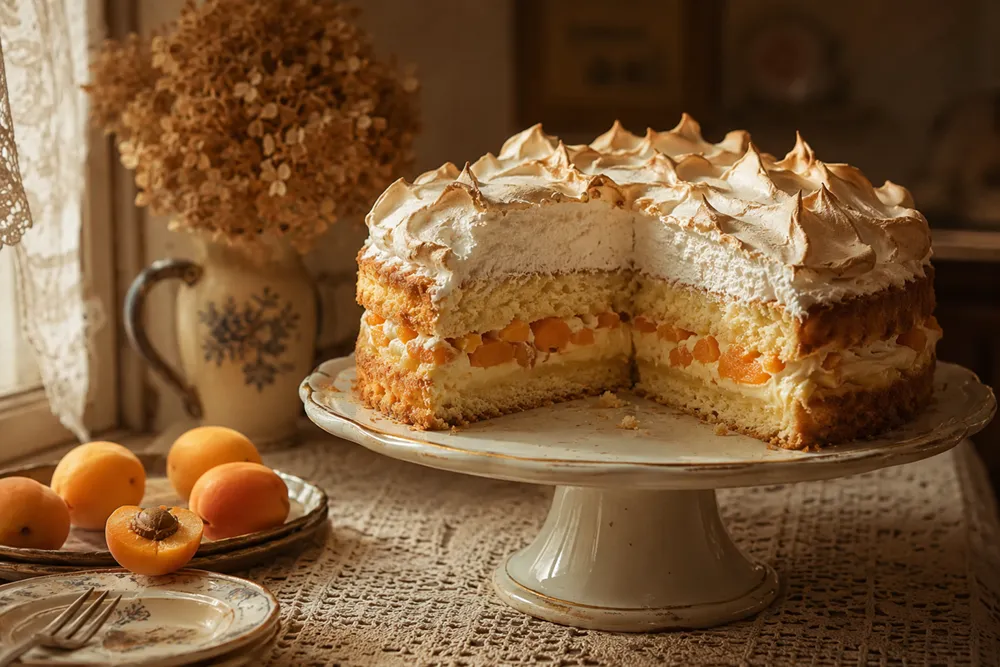
Apricot Cream Torte
Traditional apricot cream cake combining sponge, vanilla custard, and meringue for a timeless European flavor.