Chicken in Fresh Tomato Sauce
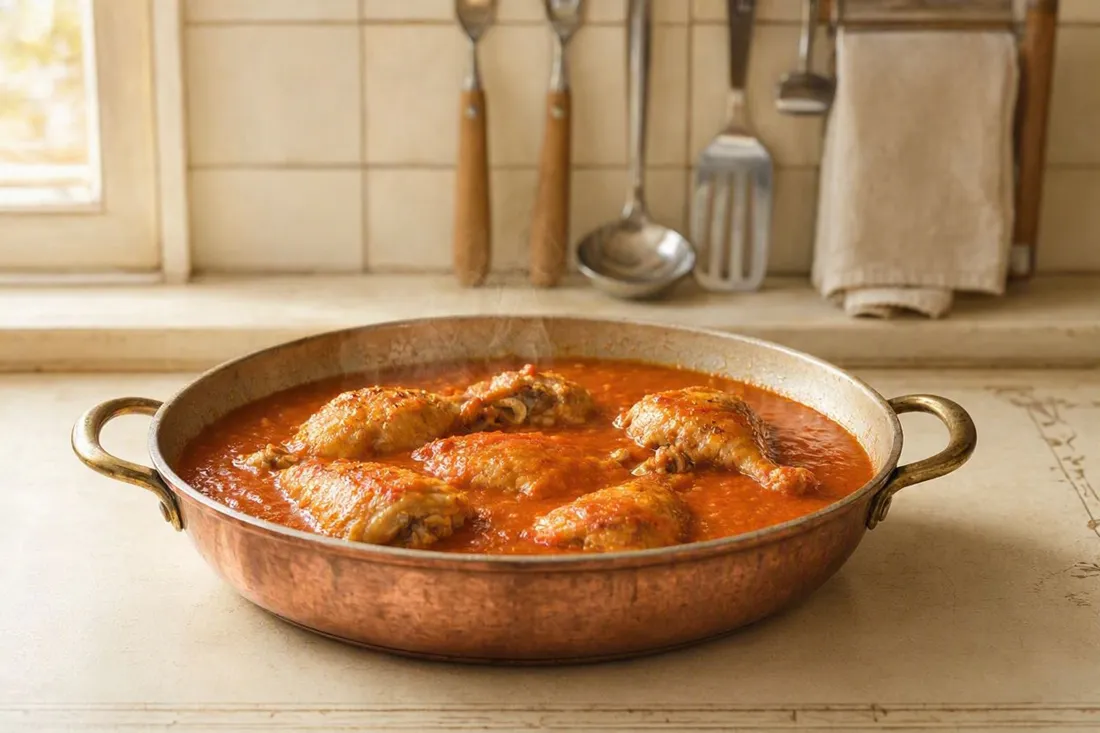
Young chicken poached until tender, then finished in a silky sauce made from fresh tomato passata and a light roux — a comforting one-pot classic.
Quick Summary
This Central European dish poaches tender young chicken pieces before simmering them in a smooth, roux-thickened fresh tomato passata. Taking 95 minutes to prepare, it relies on sieved whole tomatoes and herbs for a rich, silky sauce.
Historical recipe
Modernised adaptation of an early 20th‑century source. Not independently kitchen-tested by Attic Recipes. Quantities, temperatures, and food safety guidance have been updated for a contemporary kitchen — results may vary and errors may exist. Nutritional values, where provided, are estimates only and have not been laboratory tested. Always follow current food safety guidelines for your region. If you have a health condition, allergy, or dietary requirement, consult a qualified professional before preparing this recipe.
Use of this recipe is entirely at your own risk and subject to our Terms of Service and Privacy Policy. Attic Recipes accepts no liability for any adverse outcome.
- Gluten
- Dairy
Additional notes
-
Warning
Chicken must reach a minimum internal temperature of 74°C (165°F) before serving. This is especially important for pregnant women, young children, older adults, and immunocompromised individuals.
- 1
Rinse the chicken pieces and place them in a large pot. Cover with the cold water, add 1 tsp salt, and bring to a gentle simmer over medium heat.
Tip Skim any foam that rises to the surface in the first 10 minutes for a cleaner broth. - 2
Meanwhile, in a separate pot, combine the quartered tomatoes with 120ml water, the onions, sweet pepper, celery leaves, and parsley leaves, plus 0.5 tsp salt. Cover and simmer until the tomatoes fully break down, about 30-35 minutes.
- 3
Pass the cooked tomato mixture through a food mill or fine sieve to remove skins and seeds, pressing to extract as much pulp as possible. Set the puree aside.
Tip This step replaces canned tomato puree entirely — the sieved mixture is your passata. - 4
Continue simmering the chicken until nearly tender, about 45 minutes total from when it started cooking.
- 5
In a wide rondeau or deep skillet, melt the butter over medium heat. Whisk in the flour and cook, stirring constantly, for 2-3 minutes until a light golden roux forms.
Tip Keep the heat moderate — the roux should stay pale, not brown, or it will dull the tomato flavor. - 6
Gradually whisk the tomato puree into the roux, then whisk in the 300ml reserved chicken broth until smooth.
- 7
About 30 minutes before serving, lift the chicken pieces out of the poaching liquid and transfer them into the tomato sauce. Simmer gently, uncovered.
Tip Keep the simmer low — a hard boil at this stage is what causes young chicken to fall apart. - 8
Continue simmering until the chicken reaches an internal temperature of 74°C (165°F) and the sauce has thickened slightly, about 25-30 minutes. Adjust salt to taste before serving.
Nutrition Information per 1 portion (approx 380g)
Nutritional values are approximate estimates and may vary based on specific ingredients used, preparation methods, and portion sizes.
Serving Suggestions
Serve with boiled potatoes, rice, or crusty bread to soak up the sauce.
About This Recipe
This is a dish built on a method rather than a shortcut: instead of simmering chicken directly in canned tomatoes, the two components are cooked separately and only combined near the end. The chicken poaches gently in plain water while a full pot of fresh tomatoes, onion, sweet pepper, and herbs reduces down into a rustic sauce base of its own.
The result is a sauce with real depth — built the same way a proper veloute would be, with a roux thickening a flavorful liquid — but made entirely from fresh, whole ingredients rather than stock cubes or paste. It’s a dish that rewards a bit of patience over two separate pots, and repays it with a sauce that tastes distinctly homemade.
Why It Works
The two-stage cooking is what makes this dish work. Poaching the chicken separately keeps the meat from breaking down too early, while the tomato base gets its full cooking time to reduce and develop flavor without the chicken pieces disintegrating alongside it. Only in the final 25-30 minutes are the two brought together, by which point the chicken is tender enough to finish gently without needing much more time — and sturdy enough to survive the transfer intact.
The roux plays a structural role too: without it, the sauce would stay thin and watery no matter how long the tomatoes cooked. A small amount of flour cooked briefly in fat gives the sauce enough body to cling to the chicken and to whatever starch it’s served alongside.
Modern Kitchen Tips
Use a food mill if you have one — it makes quick work of separating tomato skins and seeds from the pulp without the extra step of blanching and peeling beforehand. If you don’t, a fine mesh sieve and a wooden spoon or ladle to press the mixture through works just as well, if a little slower.
Keep an eye on the heat once the chicken goes into the finished sauce. A gentle simmer, not a boil, is what keeps young chicken pieces whole through the final cooking stage.
A classic of early 20th century home cooking, preserved and adapted for the modern kitchen.
The Story Behind This Recipe
Historical Context
Early 20th century recipes for this dish called specifically for young chicken, since the finishing method — simmering already-cooked meat directly in sauce — depended on it staying intact rather than falling apart. The tomato base was made from scratch, cooked down with aromatics and passed through a sieve, standard practice before canned tomato products were common in home kitchens. A light roux, built the same way as for other sauces of the period, gave the finished dish its body.
Modern Kitchen Adaptation
The original method is largely unchanged here, since the technique itself remains sound: poaching the chicken separately, building a fresh tomato base, and finishing everything together in a roux-thickened sauce. The roux is made with unsalted butter rather than the lard used traditionally, for a lighter flavor and easier sourcing in a modern kitchen; lard remains a valid substitute for a more period-accurate result. Chicken weight and the poaching water quantity were not specified in the original and have been estimated based on standard portions for this format. All poultry should reach a minimum internal temperature of 74°C (165°F) before serving.
This recipe is an independent modern adaptation developed from historical sources in the public domain. It is provided for informational and educational purposes only and does not constitute professional dietary, nutritional, or medical advice. Food preparation involves inherent risks. The reader assumes full responsibility for safe food handling, ingredient sourcing, and adherence to current local food safety guidelines. The site operator accepts no liability for outcomes resulting from the preparation or consumption of this recipe.
One recipe.
Every week.
You Might Also Like
More recipes you'll enjoy
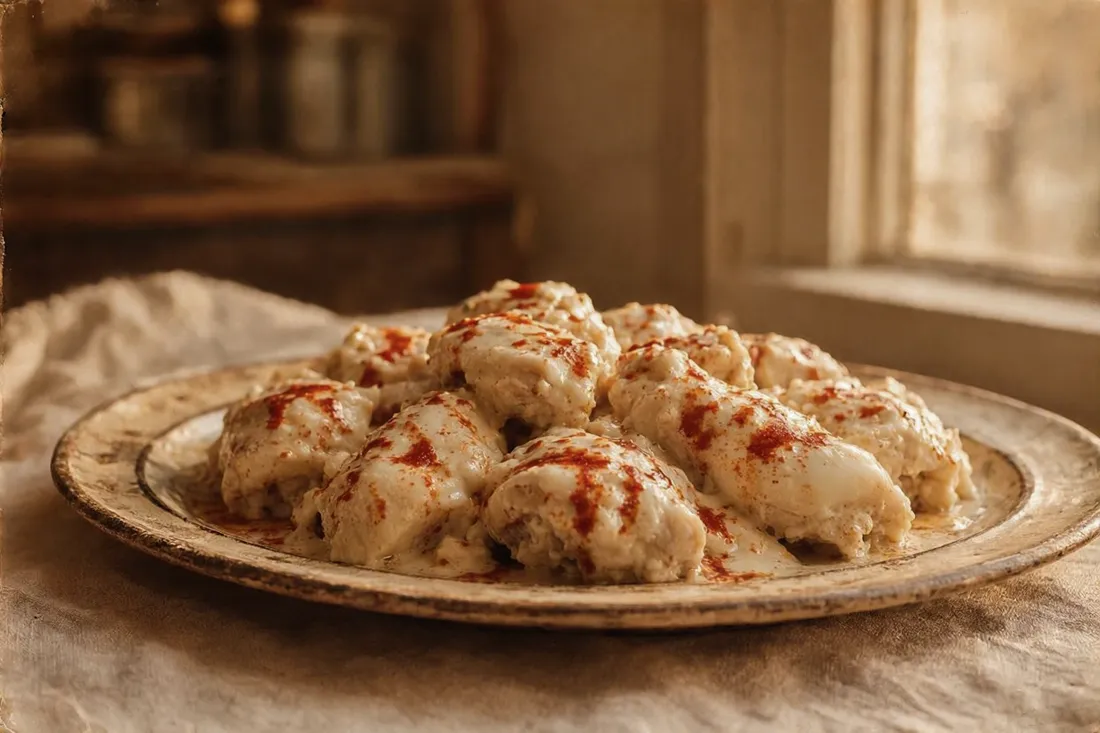
Poached Chicken in Buttermilk-Egg Sauce with Paprika Butter
Tender poached chicken pieces draped in a thick, tangy buttermilk-egg sauce and finished with a paprika butter drizzle — a rich, old-fashioned main dish.
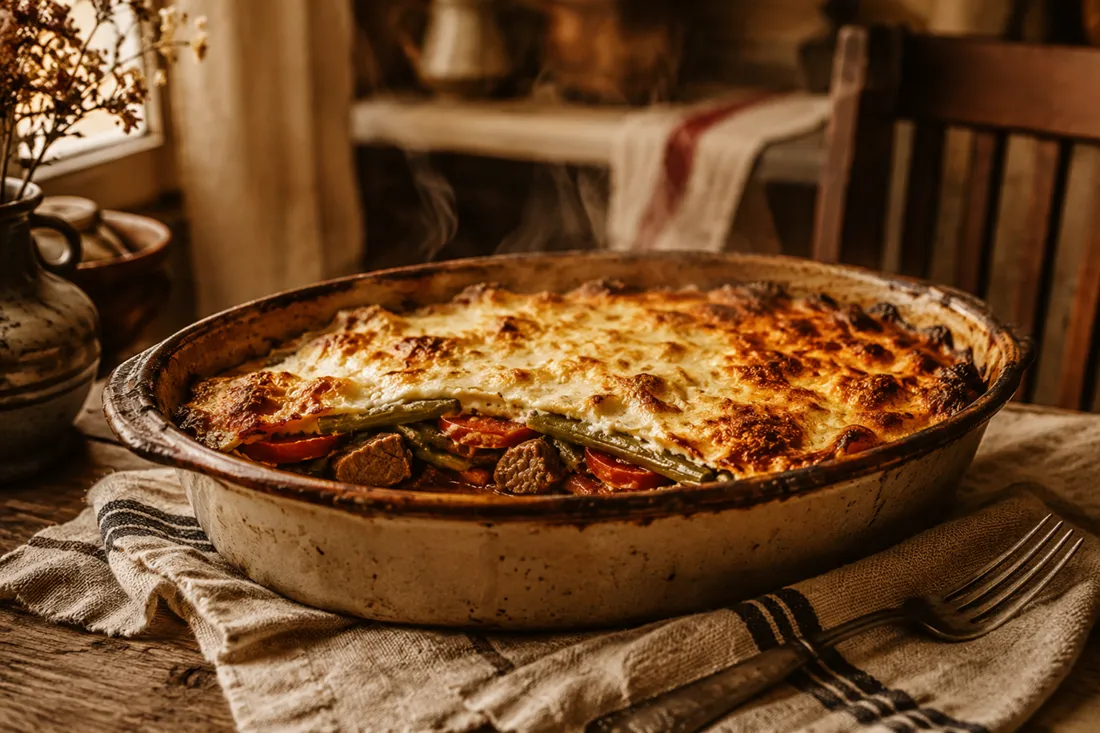
Baked Lamb and Green Bean Casserole
Layers of green beans and sliced tomatoes topped with lamb breast and a baked sour cream topping, finished in the oven until golden.
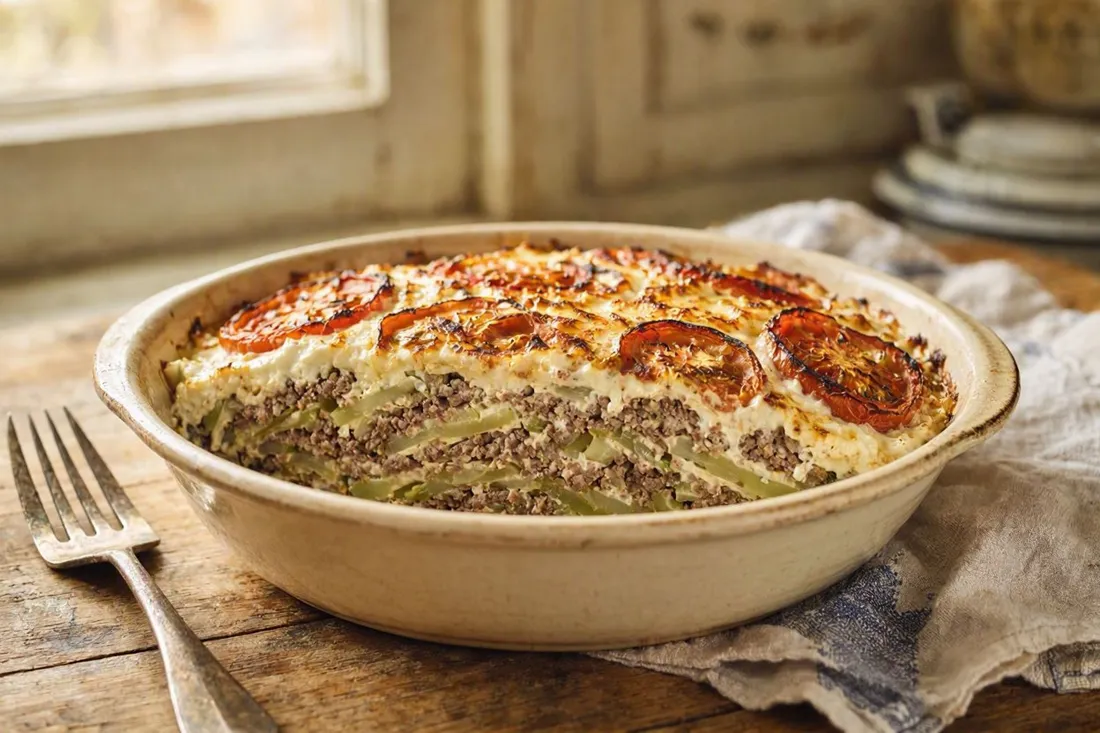
Kohlrabi and Veal Musaka
A layered casserole of braised kohlrabi and seasoned ground veal, baked under sour cream and tomato - a comforting vintage Central European dish.