Chicken Stew with Quince
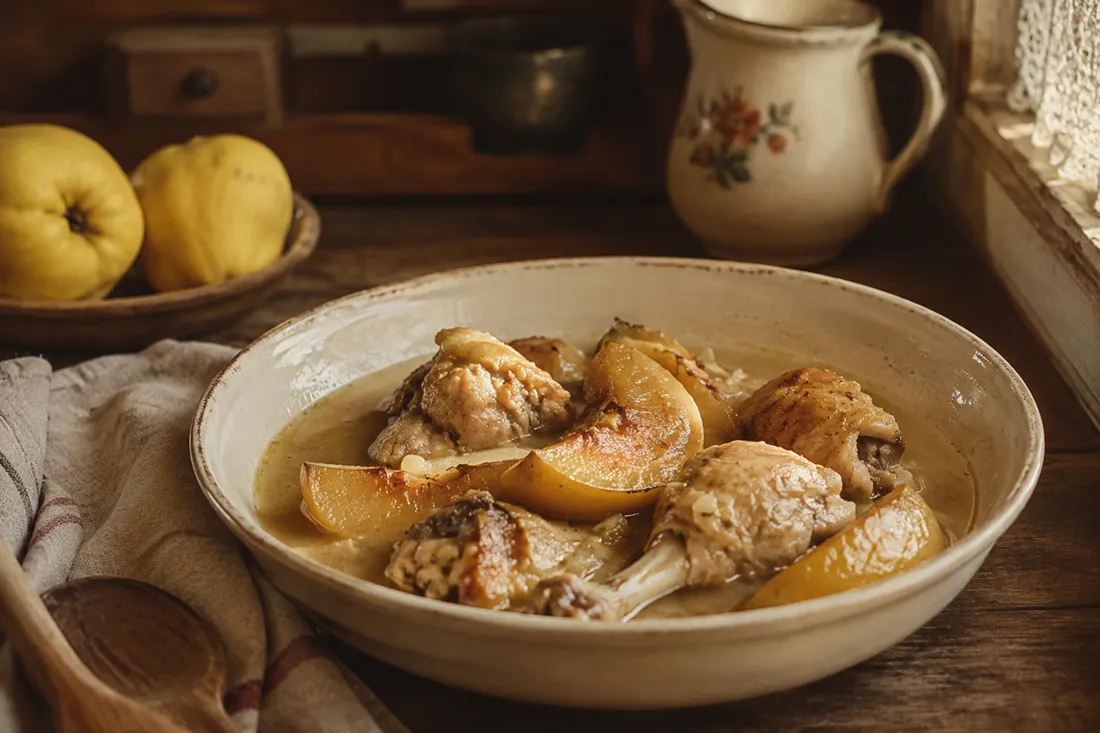
Chicken simmered with sugar-caramelized quince wedges in a light, roux-thickened broth, lightly seasoned with white pepper.
Quick Summary
This Central European chicken stew takes 75 minutes to prepare and cook. The dish features chicken simmered in a light, roux-thickened broth with sugar-caramelized quince wedges. It stands out for its unique combination of savory meat and sweet, lightly fried fruit.
Historical recipe
Modernised adaptation of an early 20th‑century source. Not independently kitchen-tested by Attic Recipes. Quantities, temperatures, and food safety guidance have been updated for a contemporary kitchen — results may vary and errors may exist. Nutritional values, where provided, are estimates only and have not been laboratory tested. Always follow current food safety guidelines for your region. If you have a health condition, allergy, or dietary requirement, consult a qualified professional before preparing this recipe.
Use of this recipe is entirely at your own risk and subject to our Terms of Service and Privacy Policy. Attic Recipes accepts no liability for any adverse outcome.
- Gluten
Additional notes
-
Warning
This chicken is cooked in two separate stages. Confirm the thickest piece reaches 74°C (165°F) with a meat thermometer before serving, especially important for pregnant women, children under 18, the elderly, and immunocompromised individuals.
- 1
Cut the cleaned chicken into pieces. Place in a pot with the 500ml water, without salting, and simmer until about half cooked, roughly 15 minutes.
- 2
While the chicken simmers, wash the quinces and cut them into wedges, as you would a watermelon. Remove the core and seeds, but leave the skin on.
Tip The skin helps the quince wedges hold together and not fall apart during cooking. - 3
Heat the 60ml olive oil in a separate pan. Roll each quince wedge in the 60g sugar, shaking off the excess, then fry in the hot oil until lightly caramelized on all sides, about 8-10 minutes.
- 4
Remove the quince wedges from the oil and set aside.
- 5
In the same oil, stir in the 20g flour and cook briefly, stirring constantly, until it forms a light, pale roux — do not let it brown.
- 6
Return the fried quince wedges to the pot with the roux.
- 7
Pour in the partially cooked chicken along with its cooking broth.
- 8
Season with the 6g salt and 0.5g white pepper, using just enough pepper that it is barely noticeable.
- 9
Cover and simmer until the chicken is fully cooked through, about 20-25 minutes.
- 10
Check doneness with a meat thermometer — the thickest piece of chicken should read 74°C (165°F) before serving.
Tip Because this chicken is cooked in two stages, it can be easy to misjudge doneness by eye alone — checking with a thermometer removes the guesswork.
Serving Suggestions
Serve warm in bowls, on its own or with crusty bread to soak up the broth.
About This Recipe
This chicken stew pairs tender simmered meat with quince wedges that are rolled in sugar and fried until lightly caramelized before joining the pot. The result sits somewhere between a savory stew and a fruit compote — sweet enough to notice, but grounded by a light roux-thickened broth and a barely-there hint of white pepper.
Fruit-and-meat stews like this one were once a regular feature of home cooking, in an era before condiments like mayonnaise and tartar sauce became the default way to dress up a simple piece of meat. The technique of caramelizing fruit in sugar before adding it to a savory broth is what gives the dish its distinctive character.
Why It Works
Cooking the chicken unsalted in its first stage keeps the broth clean, with salt added only once everything comes together at the end. Coating the quince wedges in sugar before frying caramelizes their surface and mellows their natural tartness, while leaving the skin on holds the wedges together through two rounds of simmering. The light roux thickens the broth just enough to bring everything together without masking the fruit.
Modern Kitchen Tips
- Choose quinces that are firm and deeply fragrant — overripe fruit will fall apart during the second simmer.
- If the roux starts to brown too quickly, pull the pan off the heat for a few seconds before continuing; a pale roux keeps the broth light in color.
- Leftovers keep well and the flavor deepens overnight, making this a good make-ahead dish.
A classic of early 20th century home cooking, preserved and adapted for the modern kitchen.
The Story Behind This Recipe
Historical Context
Early 20th century recipes describe this as an already old-fashioned dish by the time they were written down, one that had grown less common on everyday tables. Quince was traditionally paired with chicken, though period versions also made it with lamb or mutton, or left the meat out entirely. Home cooks of the era browned the quince in either lard or olive oil, with olive oil noted as the preferred option when available.
Modern Kitchen Adaptation
No chicken weight, initial simmering time, or final cooking time was specified in the period approach; these have been estimated based on standard chicken stew cooking times. Olive oil has been kept as the primary fat, matching the period preference noted for it over lard, though lard can be substituted in equal quantity for a more traditional flavor. Because the chicken is partially cooked twice — first alone, then again with the quince — checking internal temperature with a thermometer is recommended rather than judging doneness by appearance alone.
This recipe is an independent modern adaptation developed from historical sources in the public domain. It is provided for informational and educational purposes only and does not constitute professional dietary, nutritional, or medical advice. Food preparation involves inherent risks. The reader assumes full responsibility for safe food handling, ingredient sourcing, and adherence to current local food safety guidelines. The site operator accepts no liability for outcomes resulting from the preparation or consumption of this recipe.
One recipe.
Every week.
You Might Also Like
More recipes from the same category
Asparagus Tip Soup
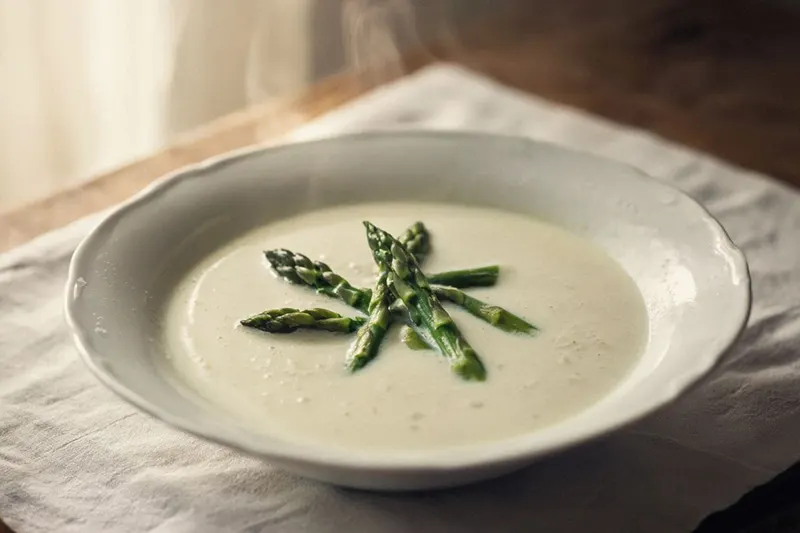
A silky, cream-enriched asparagus soup built on a white roux and finished with tempered egg yolks — an elegant first course from early 20th century cooking.
Beef Broth with Stuffed Dough Dumplings
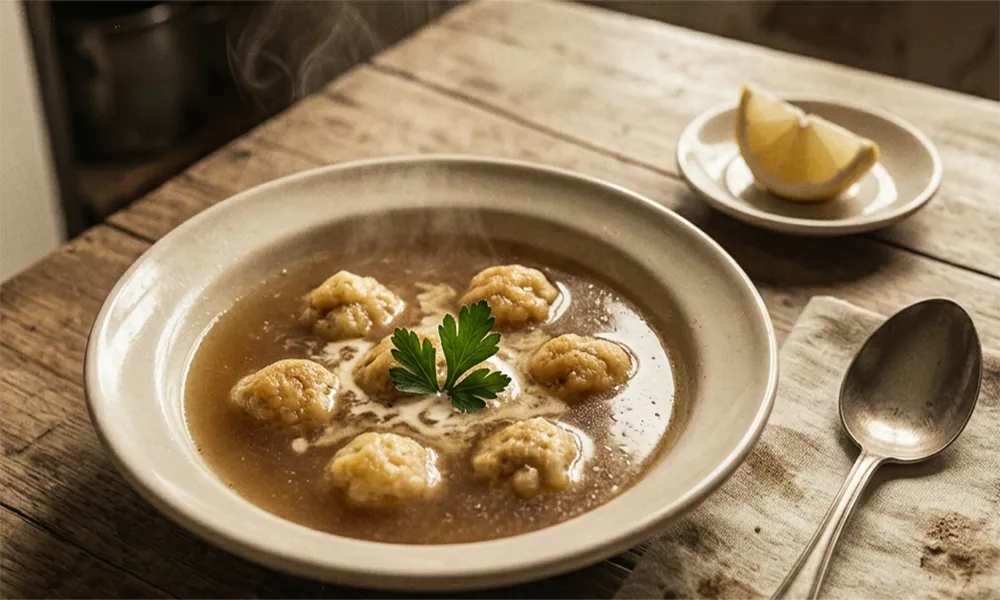
Rich beef bone broth simmered with golden pan-fried dumplings stuffed with seasoned ground beef, finished with a light roux and fresh lemon juice.
Bean Soup Cooked with Beef
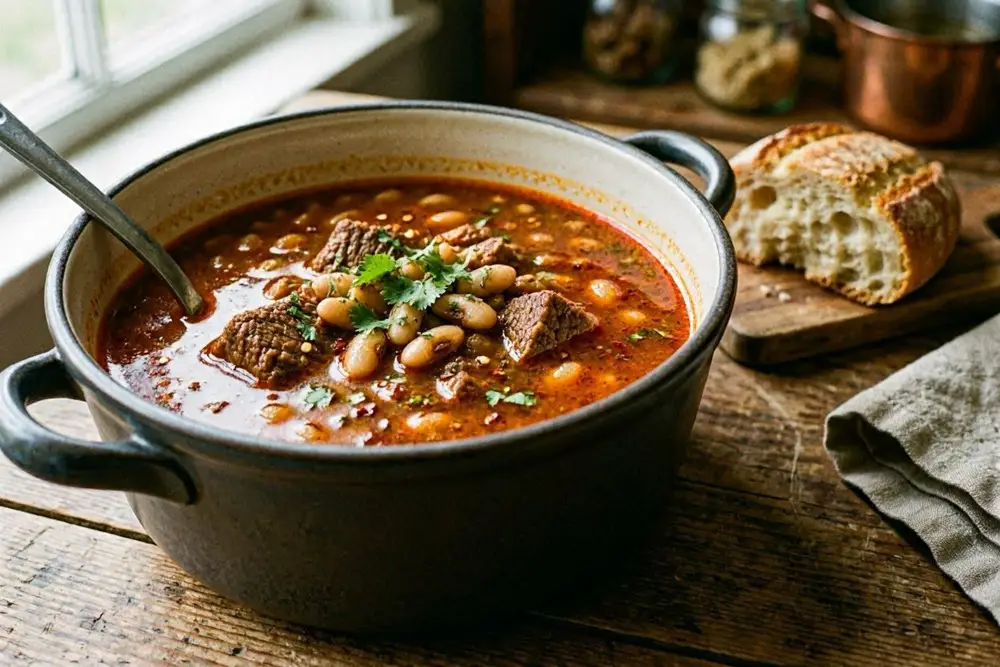
White beans and beef shoulder slow-simmered with a bouquet garni, finished in the oven with a paprika-spiced pan roux. A deeply satisfying one-pot meal.