Classic Jam-Filled Crepes
Thin, delicate egg crepes with very little flour, pan-fried and rolled around jam, finished with vanilla sugar — a simple Central European classic.
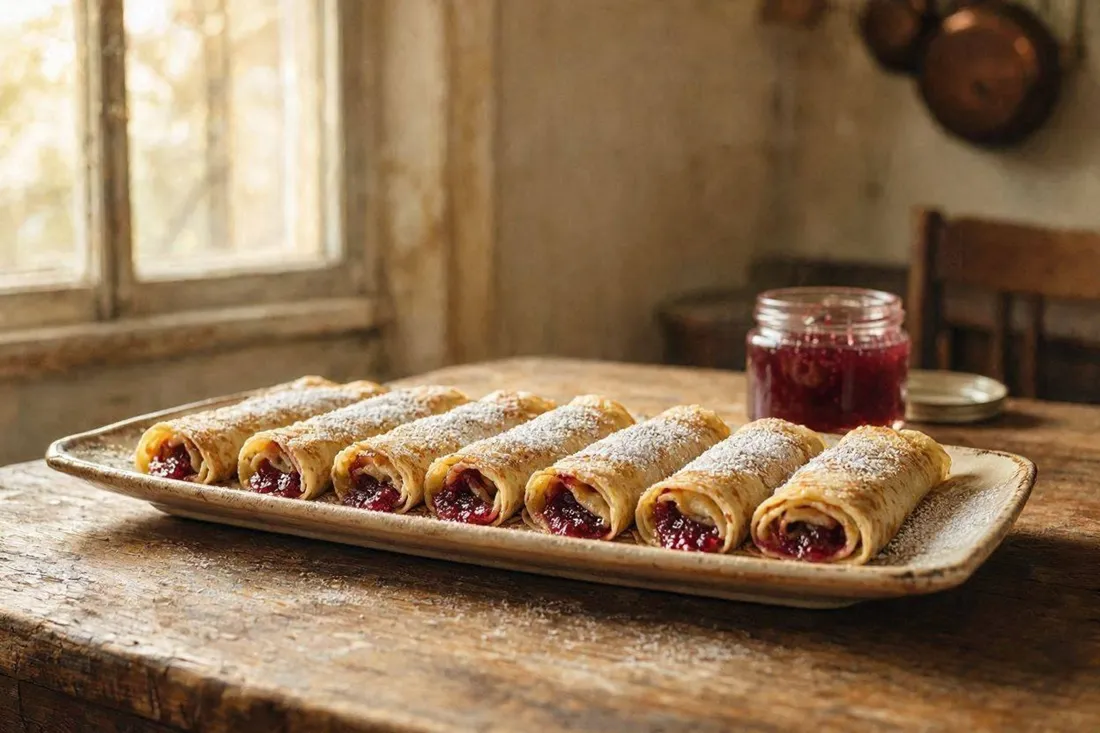
Quick Summary
Thin, delicate egg crepes made with very little flour, cooked quickly in a hot pan and rolled around jam. The batter comes together in minutes; the only real skill is working fast once the pan is hot.
Historical recipe
Modernised adaptation of an early 20th‑century source. Not independently kitchen-tested by Attic Recipes. Quantities, temperatures, and food safety guidance have been updated for a contemporary kitchen — results may vary and errors may exist. Nutritional values, where provided, are estimates only and have not been laboratory tested. Always follow current food safety guidelines for your region. If you have a health condition, allergy, or dietary requirement, consult a qualified professional before preparing this recipe.
Use of this recipe is entirely at your own risk and subject to our Terms of Service and Privacy Policy. Attic Recipes accepts no liability for any adverse outcome.
- Eggs
- Dairy
- Gluten
- 1
In a deep bowl, beat the 3 eggs well until smooth.
- 2
Add the 3 tbsp flour and the 0.25 tsp salt, mixing thoroughly into the eggs until no lumps remain.
- 3
Add the 500ml milk gradually, a little at a time, whisking constantly until the batter is smooth and thin.
Tip Adding the milk slowly and whisking constantly is what keeps the thin batter lump-free. - 4
Heat a frying pan over fairly high heat and lightly brush it with the neutral oil using a pastry brush.
- 5
Once the pan is hot, ladle in a small amount of batter — about half a soup spoon — and quickly swirl the pan to coat the bottom in a thin, even layer.
- 6
Fry until the underside is set and lightly golden, then flip carefully with a knife or thin spatula and cook the other side briefly.
- 7
Transfer to a plate and repeat with the remaining batter, brushing the pan lightly with oil again whenever it looks dry.
- 8
While still warm, spread each crepe with a portion of the 200g jam, roll it into a log, and arrange the rolls on a long serving platter.
- 9
Dust the rolled crepes with the 25g vanilla sugar just before serving. Serve warm.
Nutrition Information per 1 filled crepe
Nutritional values are approximate estimates and may vary based on specific ingredients used, preparation methods, and portion sizes.
Serving Suggestions
Serve warm, ideally right after rolling. A dollop of whipped cream or a scoop of vanilla ice cream alongside turns this into a more substantial dessert.
About This Recipe
There’s a particular kind of crepe that relies almost entirely on eggs for its structure, with just enough flour to hold everything together. This is that style: a thin, delicate batter that fries up quickly in a hot pan and rolls easily around a simple jam filling. It’s the kind of recipe that comes together in the time it takes the pan to heat, which makes it as suited to a weekday breakfast as to a quick dessert.
Because the batter is so thin, the technique matters more than usual — working fast once the pan is hot, and using just enough batter to coat the bottom, are what separate a delicate crepe from a torn one.
Why It Works
With so little flour in the mix, the eggs do most of the structural work, coagulating quickly in the hot pan to set the crepe before it has a chance to fall apart. That’s also why the pan needs to be properly hot before the batter goes in — a pan that’s too cool lets the thin batter spread and thin out further before it sets, making it much harder to flip cleanly. Brushing on a light layer of fat rather than pouring in more than needed keeps the crepes from turning greasy, since there’s very little batter to begin with.
Modern Kitchen Tips
A ladle or a small measuring cup makes it much easier to portion consistent amounts of batter than eyeballing it by spoon. If the first crepe tears or sticks, that’s normal — it usually takes one to properly season the pan and dial in the right amount of batter. Keep finished crepes covered with a clean kitchen towel while you work through the batch, so they stay warm and pliable for rolling.
A classic of early 20th century home cooking, preserved and adapted for the modern kitchen.
The Story Behind This Recipe
Historical Context
Early 20th century recipes for these crepes used only a small amount of flour relative to the milk and eggs, producing a very thin, delicate batter — a style distinct from thicker, more flour-heavy pancakes. Home cooks of the period fried the crepes in rendered fat, judged the pan by feel rather than a thermometer, and flipped each crepe with a knife rather than a spatula.
Modern Kitchen Adaptation
The rendered fat traditionally used for frying has been replaced with a neutral oil, lightly brushed onto the pan with a pastry brush between crepes rather than added in larger amounts — this produces a lighter result with significantly less added fat than the traditional method. The salt quantity, crepe yield, jam amount, and vanilla sugar amount are estimated, since the traditional approach specified none of these precisely.
This recipe is an independent modern adaptation developed from historical sources in the public domain. It is provided for informational and educational purposes only and does not constitute professional dietary, nutritional, or medical advice. Food preparation involves inherent risks. The reader assumes full responsibility for safe food handling, ingredient sourcing, and adherence to current local food safety guidelines. The site operator accepts no liability for outcomes resulting from the preparation or consumption of this recipe.
One recipe.
Every week.
You Might Also Like
More recipes from the same category
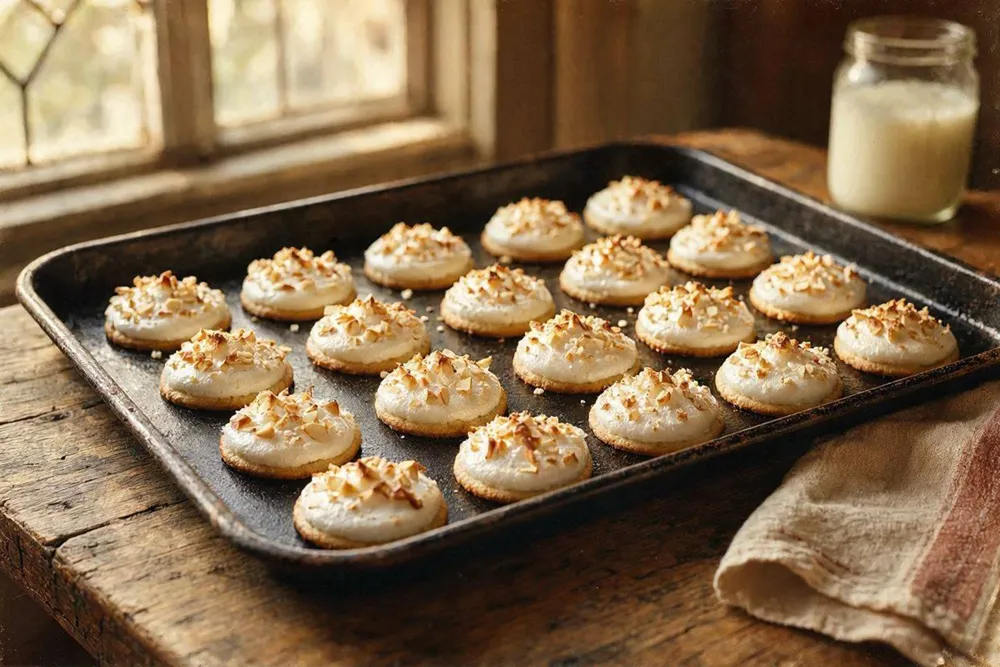
Almond Gurabije Cookies
Small lemon-scented cookies made with lard and egg yolk, indented in the center, coated in whipped egg white, and rolled in sugar and chopped almonds.
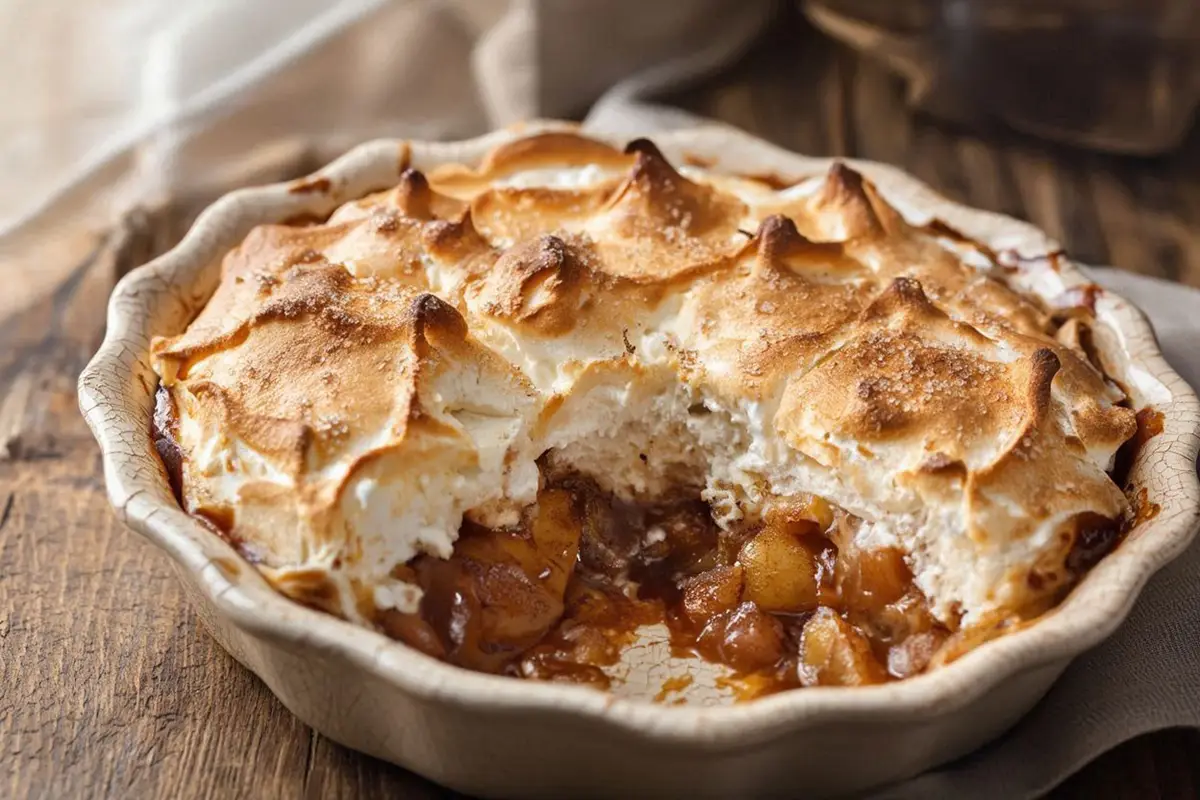
Velvet Apple & Meringue Gratin
A decadent vintage dessert featuring apples slow-cooked in a butter-sugar syrup, topped with a cloud of lemon-scented meringue.
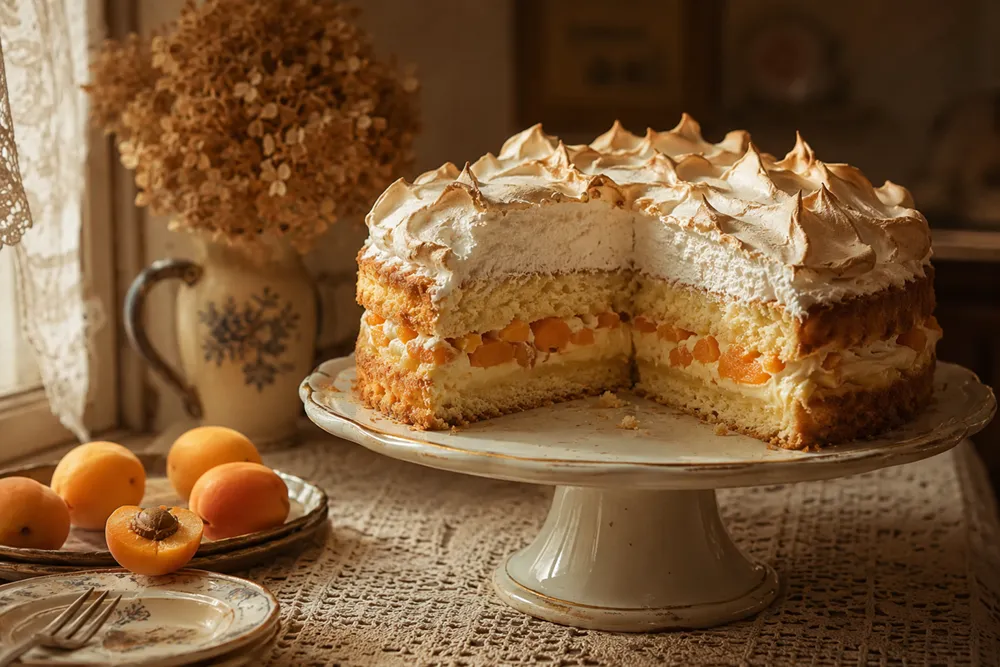
Apricot Cream Torte
Traditional apricot cream cake combining sponge, vanilla custard, and meringue for a timeless European flavor.