Golden Cream Noodle Nests
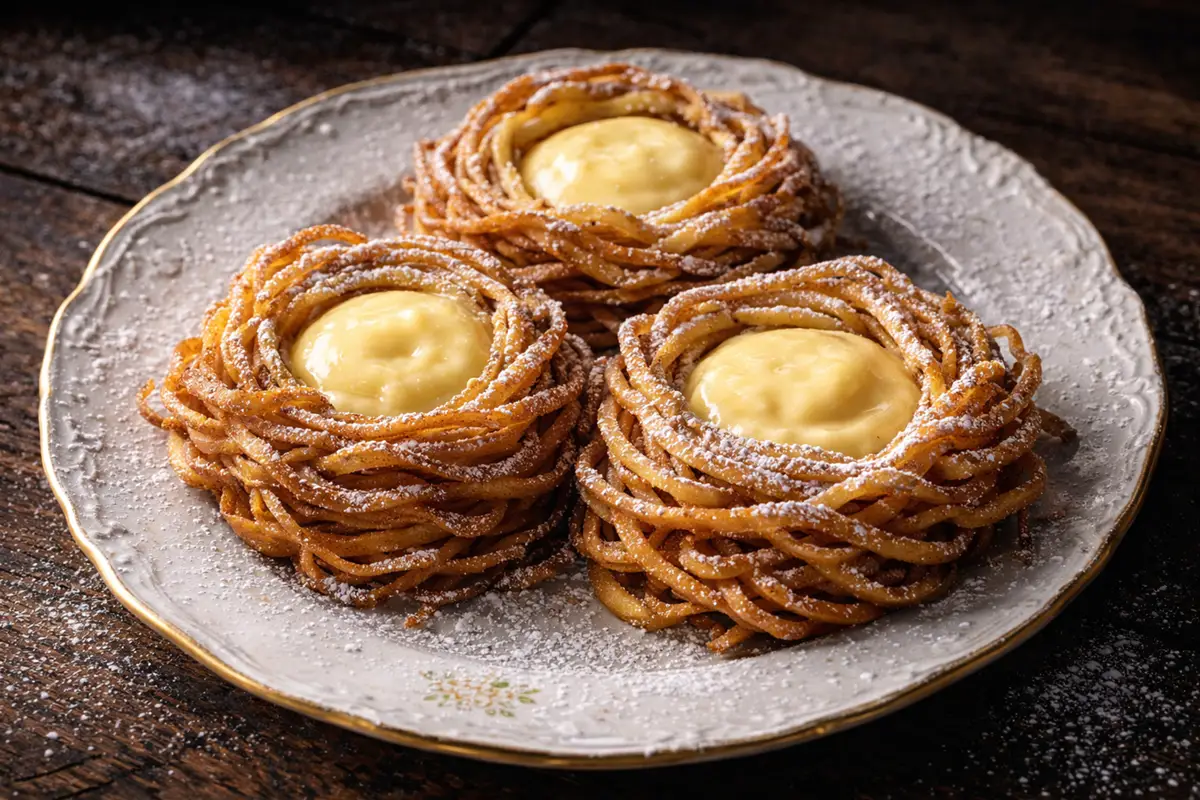
A brilliant and economical vintage dessert: crispy homemade noodle 'nests' filled with a thick semolina custard and deep-fried to perfection.
Quick Summary
A brilliant and economical vintage dessert: crispy homemade noodle 'nests' filled with a thick semolina custard and deep-fried to perfection.
Historical recipe
Modernised adaptation of an early 20th‑century source. Not independently kitchen-tested by Attic Recipes. Quantities, temperatures, and food safety guidance have been updated for a contemporary kitchen — results may vary and errors may exist. Nutritional values, where provided, are estimates only and have not been laboratory tested. Always follow current food safety guidelines for your region. If you have a health condition, allergy, or dietary requirement, consult a qualified professional before preparing this recipe.
Use of this recipe is entirely at your own risk and subject to our Terms of Service and Privacy Policy. Attic Recipes accepts no liability for any adverse outcome.
- Dairy
- Eggs
- Gluten
Additional notes
-
Warning
Deep frying with fresh noodles: the moisture content of freshly made noodles will cause the hot oil to bubble vigorously when the nests are added. Lower each nest slowly and gently using a long-handled spatula. Keep your face and hands clear. Never leave hot frying oil unattended.
Use a deep pan with high sides and a splatter screen if available.
-
Caution
The semolina cream filling retains significant heat after frying. Allow nests to rest at least 3–5 minutes before serving and test the filling temperature before giving to children.
-
Note
The double-boiler custard must reach 74°C (165°F) to fully cook the eggs. Use a thermometer if unsure — the cream should be thick and hold its shape when cooled before it is used as filling.
- 1
Prepare the semolina cream: In a heat-proof bowl, beat 2 whole eggs, 1 egg yolk, and 1 tablespoon of sugar until foamy. Whisk in the semolina flour, vanilla sugar, and 3 tablespoons of cold milk until smooth.
- 2
Cook the cream over a double boiler: place the bowl over a pot of gently simmering water. Stir constantly until the mixture thickens into a dense custard and reaches 74°C (165°F) — this ensures the eggs are fully cooked through. Remove from heat and let cool completely before using.
Tip The cream must be completely cold before it goes into the nests — warm cream will cause the noodle walls to soften before frying. - 3
Make the noodle dough: Beat 1 whole egg and 1 egg white together. Gradually work in flour until you have a stiff, dry dough similar to soup pasta. Do not add water. Roll out slightly thicker than standard soup noodles.
- 4
Let the dough sheet dry for 10 minutes. Roll the dough sheet into a tight cylinder and cut into ribbons 0.5 cm wide. Unroll the ribbons and dust lightly with flour to prevent sticking.
- 5
Assemble the nests: Divide the noodles into 12–14 small mounds. Shape each into a circular nest on a floured surface, leaving a small cavity in the center. Carefully spoon a portion of the cooled cream into each cavity.
- 6
Heat a generous amount of lard or oil in a deep pan to 170–175°C (340–345°F). Carefully lift each nest using a wide spatula and lower it gently into the hot fat. The oil should reach halfway up the side of the nest.
Tip Fresh noodles contain moisture — lower each nest slowly and gently to prevent vigorous oil splatter. Use a long-handled spatula and keep your face and hands clear of the pan. - 7
Do not flip the nests. The hot oil will cook and crisp the bottom and sides while the steam cooks the cream-filled center. Fry until the noodle edges are deep golden brown — approximately 3–4 minutes.
- 8
Drain on paper towels. Allow to rest 3–5 minutes before serving — the cream filling retains significant heat. Arrange on a shallow dish and dust generously with powdered sugar while warm.
Nutrition Information per 2 noodle nests
Nutritional values are approximate estimates and may vary based on specific ingredients used, preparation methods, and portion sizes.
Serving Suggestions
Serve immediately while the noodles are shatteringly crisp and the cream is soft — these do not hold well. They pair well with a cup of strong black coffee or a glass of dessert wine.
The Art of the No-Flip Fry
The magic of this recipe lies in the frying technique. By not turning the nests over, you allow the noodles to create a basket that holds the custard in place. The bottom becomes deeply crunchy; the top stays slightly softer; the cream inside remains set and distinct. It is a dual-texture effect that is genuinely rare and genuinely good.
Why Semolina?
Semolina in the cream gives the filling a slight graininess and superior structural stability. This prevents the cream from soaking into the noodles and softening them before they reach the frying pan — the filling needs to be thick enough to hold its shape when spooned into the raw nest cavity.
Egg Count — Read Before You Start
This recipe uses more eggs than the ingredient list immediately suggests. You will need 3 whole eggs plus 1 additional egg that you separate: the yolk goes into the cream alongside the 2 whole eggs, and the white goes into the dough alongside the 1 whole dough egg. Crack and separate before you begin.
Preserving the ingenuity of the early 20th-century kitchen, where simple ingredients and skilled technique produced results that looked far more extravagant than they cost.
The Story Behind This Recipe
Historical Context
This recipe is a masterclass in the economical kitchen tradition of the early 20th century — transforming basic pantry staples like eggs, flour, and a little milk into something that looks far more elaborate than its ingredients suggest. The technique of frying without flipping is a traditional approach for preserving the integrity of soft fillings in shaped fried doughs, and appears in various forms across Central European pastry traditions.
Modern Kitchen Adaptation
The original dough contains no salt — this is intentional and produces a neutral wrapper that does not compete with the sweet cream filling. If the cream feels too thin after cooking, add an extra teaspoon of semolina during the double-boiler stage. The egg count requires attention: the recipe uses 3 whole eggs total plus 1 additional separated egg (yolk for cream, white for dough). Read the ingredient list carefully before starting. A zest of lemon in the cream is a simple modern variation.
This recipe is an independent modern adaptation developed from historical sources in the public domain. It is provided for informational and educational purposes only and does not constitute professional dietary, nutritional, or medical advice. Food preparation involves inherent risks. The reader assumes full responsibility for safe food handling, ingredient sourcing, and adherence to current local food safety guidelines. The site operator accepts no liability for outcomes resulting from the preparation or consumption of this recipe.
One recipe.
Every week.
You Might Also Like
More recipes from the same category
Almond Gurabije Cookies
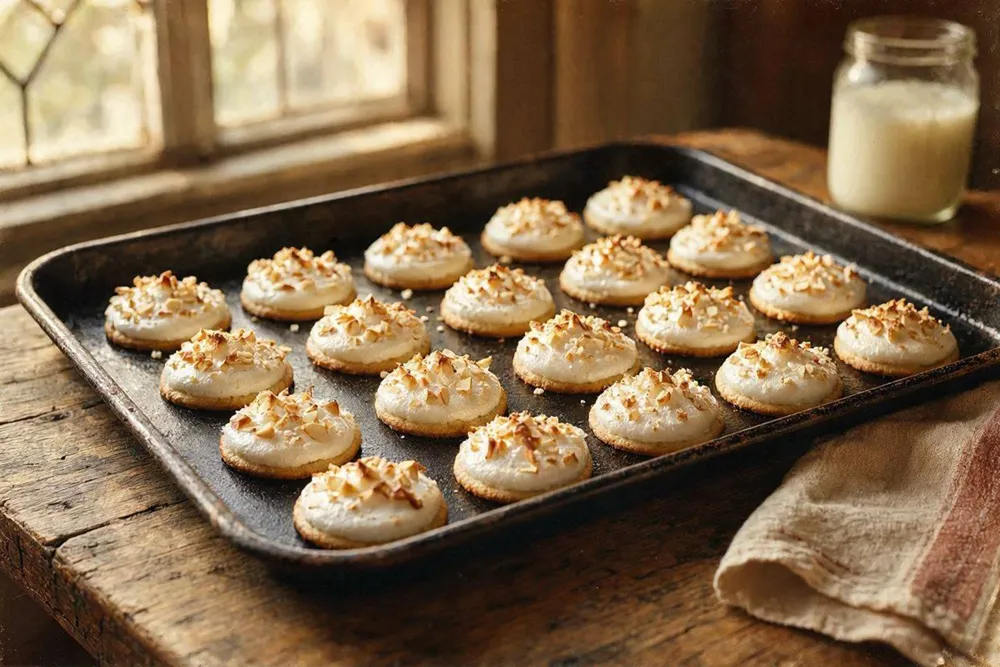
Small lemon-scented cookies made with lard and egg yolk, indented in the center, coated in whipped egg white, and rolled in sugar and chopped almonds.
Velvet Apple & Meringue Gratin
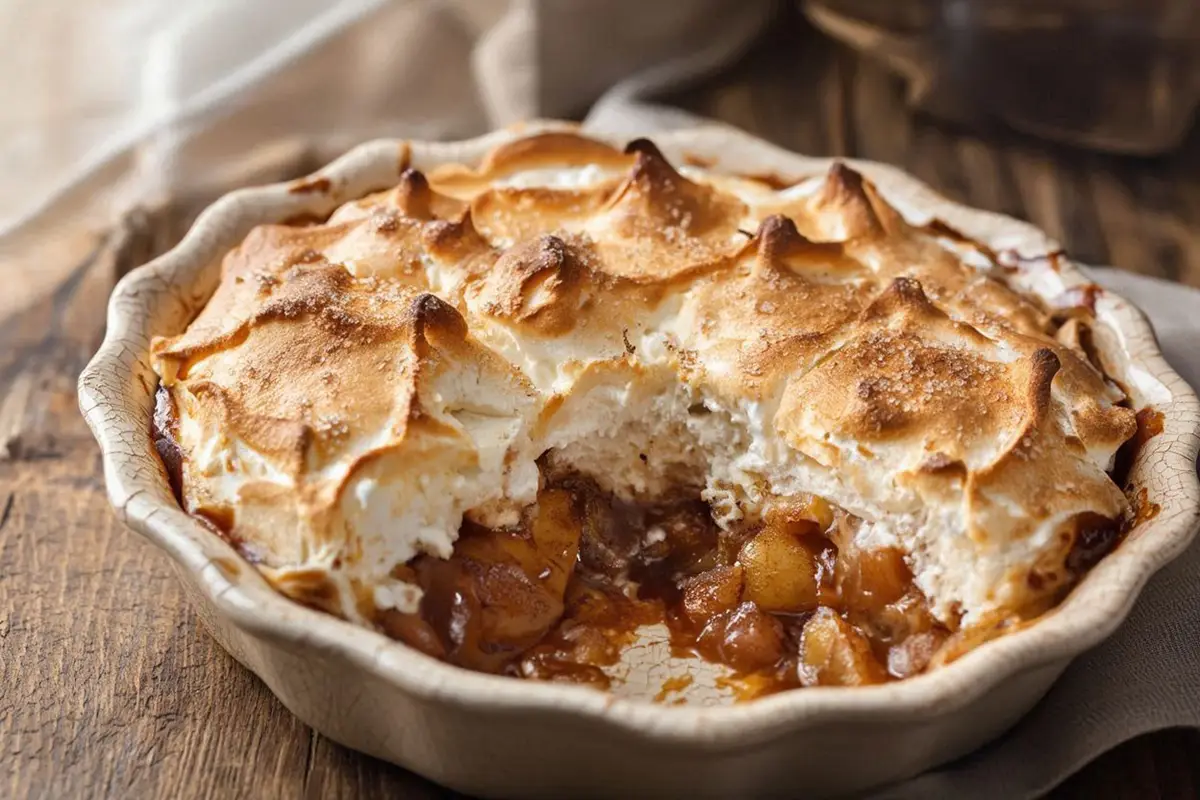
A decadent vintage dessert featuring apples slow-cooked in a butter-sugar syrup, topped with a cloud of lemon-scented meringue.

Apricot Cream Torte
Traditional apricot cream cake combining sponge, vanilla custard, and meringue for a timeless European flavor.