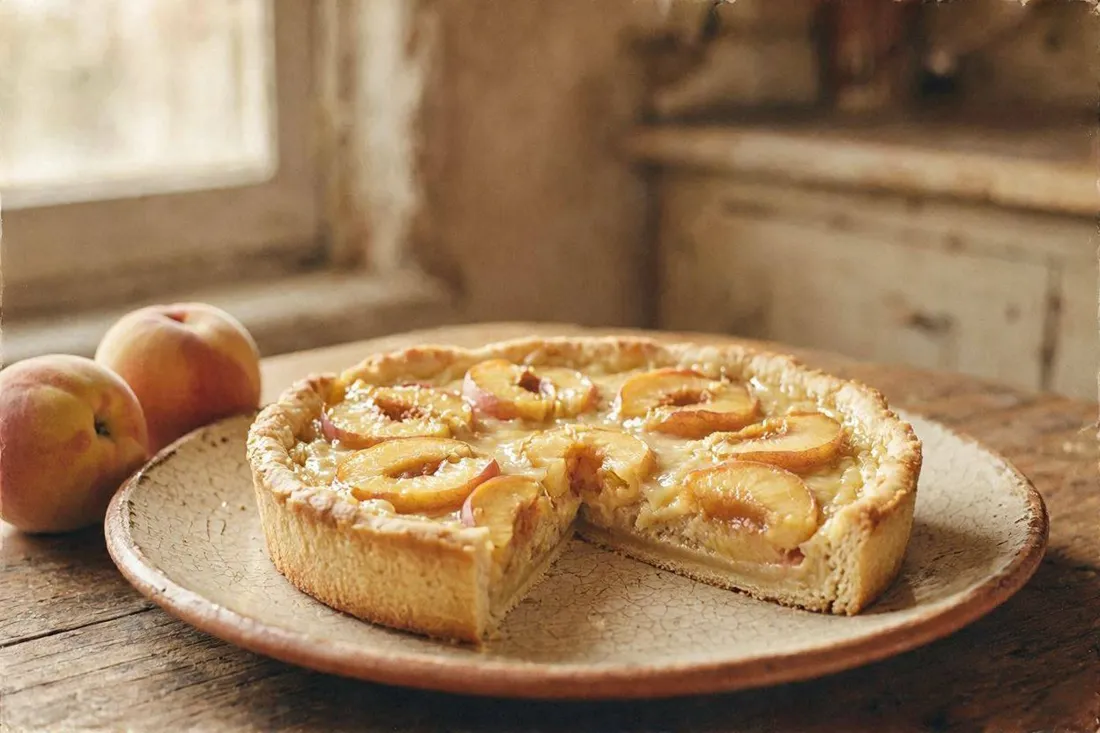
Fresh Peach Tart with Almond Custard Cream
A pale pastry crust topped with fresh peaches and a chilled almond custard cream, cooked over a double boiler — a light Central European fruit dessert.
Quick Summary
A pale, unbrowned pastry crust topped with fresh peach halves and a hand-whisked almond custard cream cooked over a double boiler. Chilled rather than baked after assembly, it needs about two hours of refrigeration before serving.
This recipe uses How to Blanch Almonds: The Technique Behind the White Kernel — prepare it in advance if you haven't already.
Historical recipe
Modernised adaptation of an early 20th‑century source. Not independently kitchen-tested by Attic Recipes. Quantities, temperatures, and food safety guidance have been updated for a contemporary kitchen — results may vary and errors may exist. Nutritional values, where provided, are estimates only and have not been laboratory tested. Always follow current food safety guidelines for your region. If you have a health condition, allergy, or dietary requirement, consult a qualified professional before preparing this recipe.
Use of this recipe is entirely at your own risk and subject to our Terms of Service and Privacy Policy. Attic Recipes accepts no liability for any adverse outcome.
- Eggs
- Dairy
- Gluten
- Tree Nuts
Additional notes
-
Warning
The cream is made with egg yolks cooked over a bain-marie. Whisk constantly and cook to at least 74°C (165°F) to ensure the eggs are fully set; undercooked egg-based creams carry a risk of foodborne illness, particularly for pregnant women, young children, the elderly, and immunocompromised individuals.
-
Note
This tart is high in saturated fat (14g per serving), largely from the butter in the crust and the heavy cream in the topping. Those managing saturated fat intake, including people with cardiovascular risk factors, may want to serve smaller portions.
-
Caution
Because this dessert is not baked after the cream and fresh peaches are added, it should be kept refrigerated at all times and eaten within 1-2 days for food safety and best quality.
- 1
On a board or in a bowl, work the 180g softened butter with the 3 egg yolks, 100g sugar, and 250g flour into a smooth dough.
- 2
Butter and flour a 30x20cm baking pan. Press or roll the dough evenly into the pan, about a finger's thickness.
- 3
Bake at 180°C (350°F) / 160°C fan for 20-25 minutes, until the crust is set but still pale — it should not brown.
- 4
Cool the crust completely in the pan, about 30 minutes, then carefully transfer it to a serving plate or leave it in the pan for serving.
Tip Handle the cooled crust gently when unmolding — it is delicate and can crack easily. - 5
Arrange the 6 peeled and pitted peach halves cut-side down over the crust, covering the surface completely.
- 6
For the cream, whisk the 300ml heavy cream in a heatproof bowl, then gradually whisk in the 4 tbsp sugar, 8g vanilla sugar, 3 egg yolks, and 30g ground almonds.
- 7
Set the bowl over a pot of gently simmering water (bain-marie), making sure the bowl does not touch the water, and whisk constantly until the mixture thickens and reaches 74°C (165°F).
Tip Constant whisking prevents the yolks from scrambling; the cream is ready when it thickly coats the back of a spoon. - 8
Remove the cream from the heat and, while it is still warm and pourable, spoon it evenly over the peaches so they are fully coated.
- 9
Refrigerate the assembled tart for at least 2 hours, until the cream is fully set and cold, before slicing and serving.
Serving Suggestions
Serve chilled, straight from the refrigerator, ideally the same day it is assembled while the peaches are at their best. A light dusting of extra vanilla sugar just before serving adds a nice finishing touch.
About This Recipe
This tart sits at the boundary between baking and confectionery: only the crust ever sees the inside of an oven. Once it’s baked pale and cooled, fresh peach halves are arranged over the top and coated in a hand-whisked almond custard cream, and the whole thing goes into the refrigerator to set rather than back into the heat. The result is a dessert that feels light and fresh despite the rich cream, since the fruit stays raw and vivid rather than cooked down.
It’s a particularly good showcase for peaches at their peak, when the fruit needs almost nothing done to it beyond peeling and pitting.
Why It Works
Baking the crust pale, rather than golden, keeps it tender and slightly short rather than crisp, which matters here since it’s never baked again after the topping is added — a browned, harder crust would fight against the soft cream and fruit rather than complementing them. Cooking the almond cream over a bain-marie, whisking constantly, thickens the egg yolks gently and evenly without curdling them, producing a smooth, pourable cream that coats the peaches rather than sliding off. Chilling the assembled tart afterward firms the cream into a sliceable layer while keeping the peaches raw and fresh-tasting.
Modern Kitchen Tips
If peaches aren’t at their best, nectarines make a good substitute and don’t need peeling. To peel peaches easily, score a small X on the bottom of each, blanch in boiling water for 30 seconds, then transfer to ice water — the skins should slip off cleanly. Use the freshest almonds you can for grinding, since pre-ground almond meal can taste stale and dull the flavor of the cream.
A classic of early 20th century home baking, preserved and adapted for the modern kitchen.
The Story Behind This Recipe
Historical Context
Early 20th century recipes for this tart called for the crust to be baked pale rather than golden, a visual cue used before oven thermostats made temperature control precise. The cream was traditionally cooked and whisked over simmering water without a fixed target temperature, judged instead by thickness. Rather than baking, the assembled dessert was kept on ice until serving, a practical solution before household refrigeration was common.
Modern Kitchen Adaptation
The oven temperature (180°C / 350°F), pan size, peach count, and almond quantity are estimated, since the traditional approach specified none of these precisely. The sugar for the cream, given as a 3-4 tablespoon range, has been standardized to 4 tablespoons for consistency. The cream is cooked to a specific safe temperature (74°C / 165°F) with constant whisking, which reduces the risk of the eggs scrambling or remaining undercooked. The crust uses only egg yolks, as in the traditional method; the three leftover egg whites can be reserved and used for meringues or another recipe. "On ice until use" has been adapted to refrigeration, which achieves the same effect more reliably in a modern kitchen.
This recipe is an independent modern adaptation developed from historical sources in the public domain. It is provided for informational and educational purposes only and does not constitute professional dietary, nutritional, or medical advice. Food preparation involves inherent risks. The reader assumes full responsibility for safe food handling, ingredient sourcing, and adherence to current local food safety guidelines. The site operator accepts no liability for outcomes resulting from the preparation or consumption of this recipe.
One recipe.
Every week.
You Might Also Like
More recipes from the same category
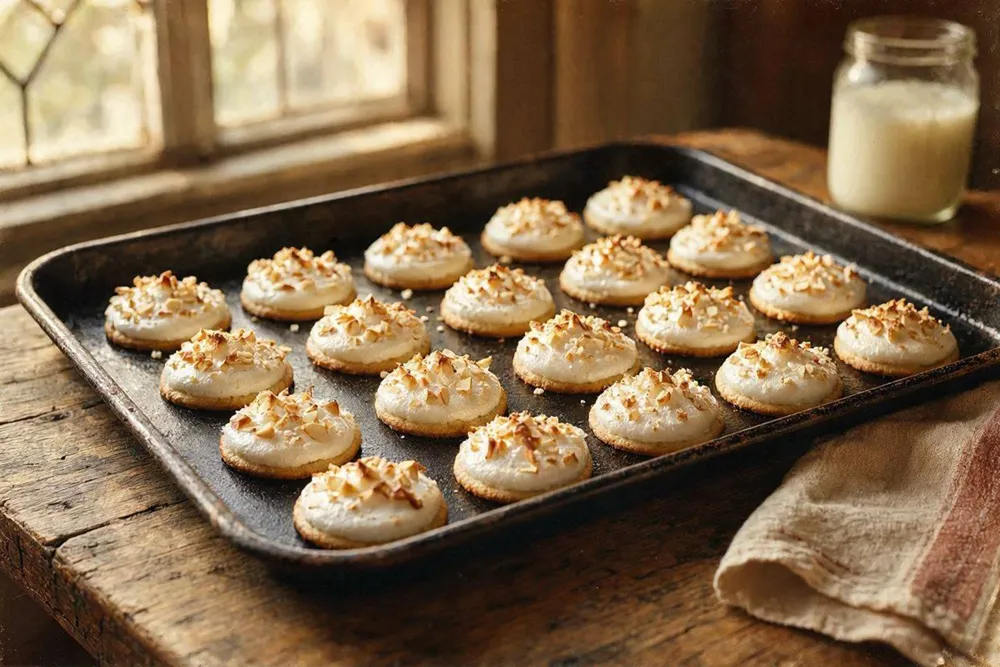
Almond Gurabije Cookies
Small lemon-scented cookies made with lard and egg yolk, indented in the center, coated in whipped egg white, and rolled in sugar and chopped almonds.
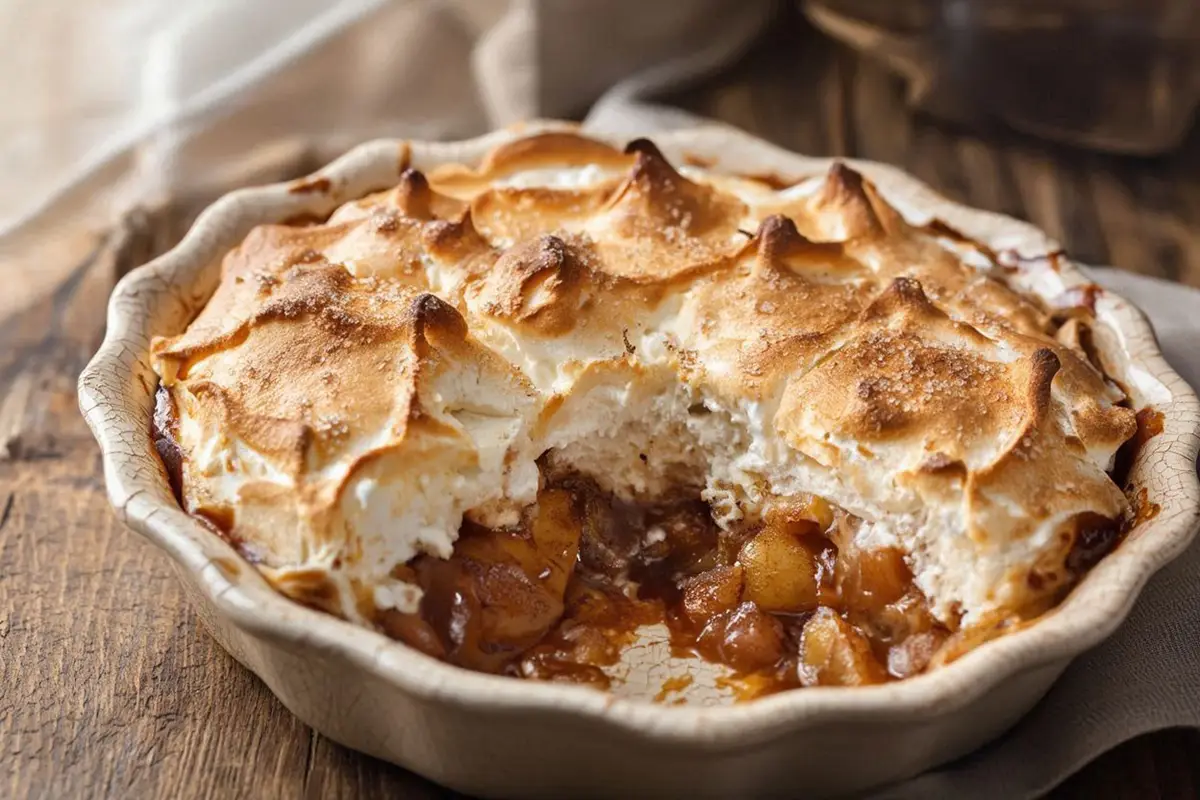
Velvet Apple & Meringue Gratin
A decadent vintage dessert featuring apples slow-cooked in a butter-sugar syrup, topped with a cloud of lemon-scented meringue.
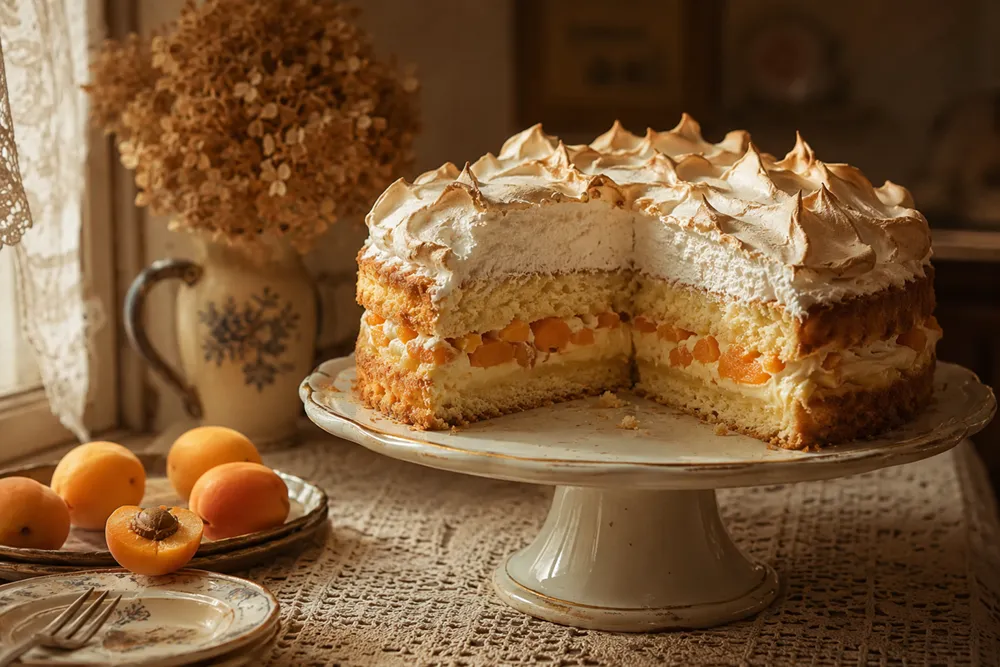
Apricot Cream Torte
Traditional apricot cream cake combining sponge, vanilla custard, and meringue for a timeless European flavor.