Cake with Pears and Wine Cream
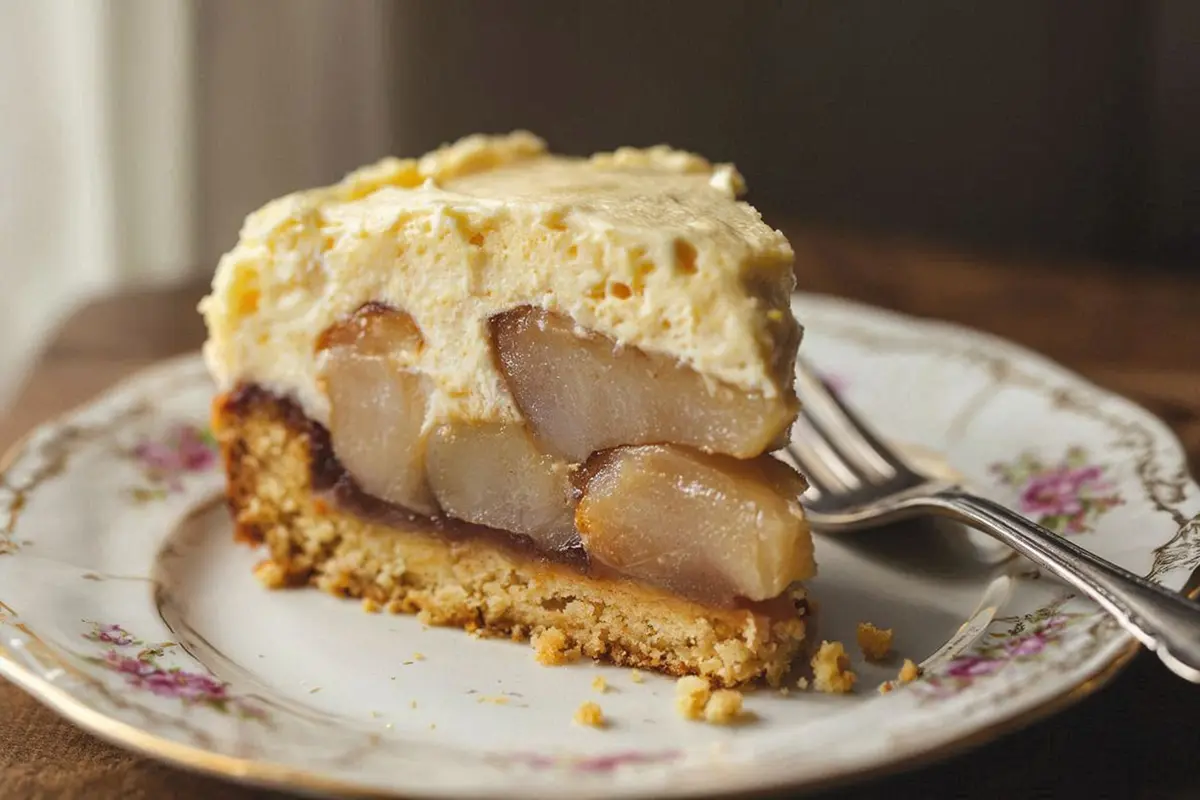
Elegant Central European dessert: buttery shortcrust pastry layered with wine-poached pears and silky wine custard cream. Make-ahead and party-ready.
Quick Summary
Elegant Central European dessert: buttery shortcrust pastry layered with wine-poached pears and silky wine custard cream. Make-ahead and party-ready.
Historical recipe
Modernised adaptation of an early 20th‑century source. Not independently kitchen-tested by Attic Recipes. Quantities, temperatures, and food safety guidance have been updated for a contemporary kitchen — results may vary and errors may exist. Nutritional values, where provided, are estimates only and have not been laboratory tested. Always follow current food safety guidelines for your region. If you have a health condition, allergy, or dietary requirement, consult a qualified professional before preparing this recipe.
Use of this recipe is entirely at your own risk and subject to our Terms of Service and Privacy Policy. Attic Recipes accepts no liability for any adverse outcome.
- Dairy
- Eggs
- Gluten
- Sulphites
Additional notes
-
Warning
This recipe contains significant alcohol from white wine in both the poaching liquid and custard. The custard is heated but not to temperatures that fully eliminate alcohol. Not suitable for children, pregnant women, or those avoiding alcohol.
Substitute white wine with white grape juice plus 1 tbsp lemon juice for an alcohol-free version. The custard technique remains identical.
-
Caution
The wine custard contains raw egg that is cooked during heating. Whisk constantly and ensure the mixture reaches 74°C (165°F) to pasteurize the egg — a food thermometer is the only reliable way to confirm this.
Use commercially pasteurized eggs if serving to elderly, pregnant, or immunocompromised guests.
Original: The pastry should be baked to pale gold — not browned. 180°C / 160°C fan for 20–25 minutes gives the right result in a modern oven.
- 1
Preheat oven to 180°C / 160°C fan (350°F). Make the shortcrust: combine flour and salt in a bowl. Add cold butter cubes and rub with fingertips until mixture resembles breadcrumbs.
Original “Place butter on a mixing board, add flour, then knead the dough with one egg.”
Tip Cold butter is essential for flaky pastry — work quickly so it does not melt from hand warmth. - 2
Add beaten egg and mix until dough comes together. If too dry, add cold water one tablespoon at a time. Form into a disk, wrap in plastic, and refrigerate for 20 minutes.
Tip Do not overwork — overworked shortcrust turns tough. - 3
On a floured surface, roll dough to about 1cm thickness. Grease a 23–25cm springform or tart pan with butter and dust with flour.
Original “Roll it out to a thickness of one centimeter. Grease a cake pan with butter, sprinkle with flour.”
- 4
Transfer dough to the pan, pressing into the bottom and slightly up the sides. Prick the bottom all over with a fork.
Tip Pricking prevents the pastry from puffing during baking. - 5
Bake for 20–25 minutes until pale golden — not browned. Remove and cool slightly.
Original “Bake the dough in the oven until it is pale in color.”
Tip Pale gold is correct — the crust should be fully cooked through but light in color. - 6
While still warm, spread marmalade evenly over the baked crust. Sprinkle biscuit crumbs over the marmalade. Transfer to a deep serving plate or cake stand.
Original “Spread it with apricot or currant marmalade. Place biscuit crumbs over the spread dough. Place the cake prepared in this way on a deep glass plate.”
- 7
Make the poached pears: combine 750ml white wine and 1/2 cup sugar in a saucepan. Bring to a boil, stirring until sugar dissolves.
- 8
Peel, core, and dice pears into 2cm cubes. Add to the boiling wine with cinnamon stick and lemon peel.
Original “Add peeled and diced pears, a piece of cinnamon and a little lemon peel.”
- 9
Reduce heat and simmer 15–20 minutes until pears are completely soft and translucent. Stir occasionally.
Tip Pears should be tender but still hold their shape — not mushy. - 10
Drain pears well with a slotted spoon, reserving poaching liquid. Arrange pears evenly over the prepared crust.
Original “Drain them of their juice and spread them over the baked and buttered crust.”
Tip Well-drained pears are critical — excess liquid will make the custard watery. - 11
Make the wine custard: pour 350ml white wine into a saucepan and bring to a boil over medium heat. Simmer for 2–3 minutes to cook off some alcohol — this improves both texture and the custard's ability to set.
Tip Do not skip this step. Alcohol inhibits starch gelatinization and the custard will be too thin if wine goes in cold and raw. - 12
Remove from heat and let cool for 2 minutes. In a bowl, whisk together sugar, egg, cornstarch, and lemon juice until completely smooth. Gradually whisk the warm wine into the egg mixture.
Original “Place sugar, a whole egg, starch flour, lemon juice and white wine. Beat all this well with a whisk.”
Tip Whisk out every cornstarch lump before heating — lumps do not disappear once cooking starts. - 13
Return mixture to the saucepan over medium heat. Whisk constantly and continuously. After 5–7 minutes it will begin to thicken. Continue until it reaches a thick custard consistency that coats the back of a spoon.
Original “Place the saucepan on the stove, beat continuously with the whisk until the cream thickens.”
Tip Never stop whisking. The custard thickens suddenly in the last 1–2 minutes — watch carefully. - 14
Pour hot wine custard evenly over the poached pears. Cool to room temperature then refrigerate for at least 3 hours, ideally overnight.
Original “Pour it over the cooked pears, which have already been arranged on the cake.”
Tip The custard sets further as it chills. Overnight gives the best texture. - 15
Serve chilled. Garnish with a strip of lemon peel or light dusting of cinnamon. Best consumed within 2 days.
Nutrition Information per 1 slice (1/11 of cake)
Nutritional values are approximate estimates and may vary based on specific ingredients used, preparation methods, and portion sizes.
Pro Tips
- Use a firm pear variety — Bosc or Anjou hold their shape during poaching; ripe soft pears turn to mush
- Drain poached pears thoroughly before arranging — wet pears make the custard watery
- Cook off the wine before making custard — alcohol prevents proper thickening
- Never stop whisking the custard — constant motion prevents scrambling
- If custard does not thicken, mix 1 tbsp cornstarch with 2 tbsp cold water and whisk in
- This dessert improves overnight — make it a day ahead
- Save the poaching liquid — reduce by half for a syrup
Serving Suggestions
Serve chilled with a glass of the same dry white wine used in the recipe. Pairs well with whipped cream or vanilla ice cream. Ideal make-ahead dinner party dessert — prepare the day before and refrigerate overnight.
About This Recipe
Three layers, each with white wine running through it. The pears are poached in wine with cinnamon and lemon peel. The custard cream is made with wine, set with cornstarch, and poured hot over the cooled pears. The shortcrust base underneath is the only wine-free element, and even that is spread with fruit marmalade before assembly.
The result is subtle rather than boozy — the alcohol cooks off during poaching and custard-making, leaving behind the wine’s acidity and fruit notes. This is an elegant dessert that tastes more complex than the ingredient list suggests.
The Measurement Problem
This recipe came with a systematic quantity problem — 4kg butter, 4kg flour, 4L wine, 4L wine again. The pattern suggests either a commercial bakery source scaled for large production, or a typesetting error that introduced the same number repeatedly across multiple ingredients. All quantities have been scaled to a standard home cake serving 10–12.
The one adjustment beyond simple scaling is the wine quantity in the custard: reduced to 350ml from what a straight scaling would suggest, because alcohol inhibits starch gelatinization. At higher wine volume the custard sets poorly. See step 11 for why cooking off the wine first matters.
Make-Ahead Strategy
This dessert is genuinely better the day after assembly. The custard firms, the pears settle into the crust, and the flavors from three wine applications meld into something unified.
Day 1 — bake crust, poach pears, make custard, assemble. Refrigerate overnight. Day 2 — serve.
That is the entire plan. Nothing rushed, nothing last-minute.
A classic of early 20th century home cooking, preserved and adapted for the modern kitchen.
The Story Behind This Recipe
Historical Context
This cake belongs to the wine-custard dessert tradition of early 20th century Central European baking, closely related to Austro-Hungarian torte culture. Poaching fruit in wine and finishing with a cooked custard was a marker of refined home baking — reserved for celebrations and special occasions. The wine appears in three layers: poaching liquid, custard cream, and optionally as a pairing at the table, creating a harmonious depth across the entire dessert.
Modern Kitchen Adaptation
Cooking off the wine briefly before making the custard is a modern adjustment — it significantly improves set and texture. The wine quantity in the custard has been reduced to 350ml to ensure proper starch gelatinization; higher wine volume produces a custard that sets poorly. Refrigeration time of 3+ hours is essential; the dessert was designed for a cool pantry environment. Reserve the pear poaching liquid — reduced by half it makes an elegant syrup for cocktails or pancakes.
This recipe is an independent modern adaptation developed from historical sources in the public domain. It is provided for informational and educational purposes only and does not constitute professional dietary, nutritional, or medical advice. Food preparation involves inherent risks. The reader assumes full responsibility for safe food handling, ingredient sourcing, and adherence to current local food safety guidelines. The site operator accepts no liability for outcomes resulting from the preparation or consumption of this recipe.
One recipe.
Every week.
You Might Also Like
More recipes from the same category
Almond Gurabije Cookies
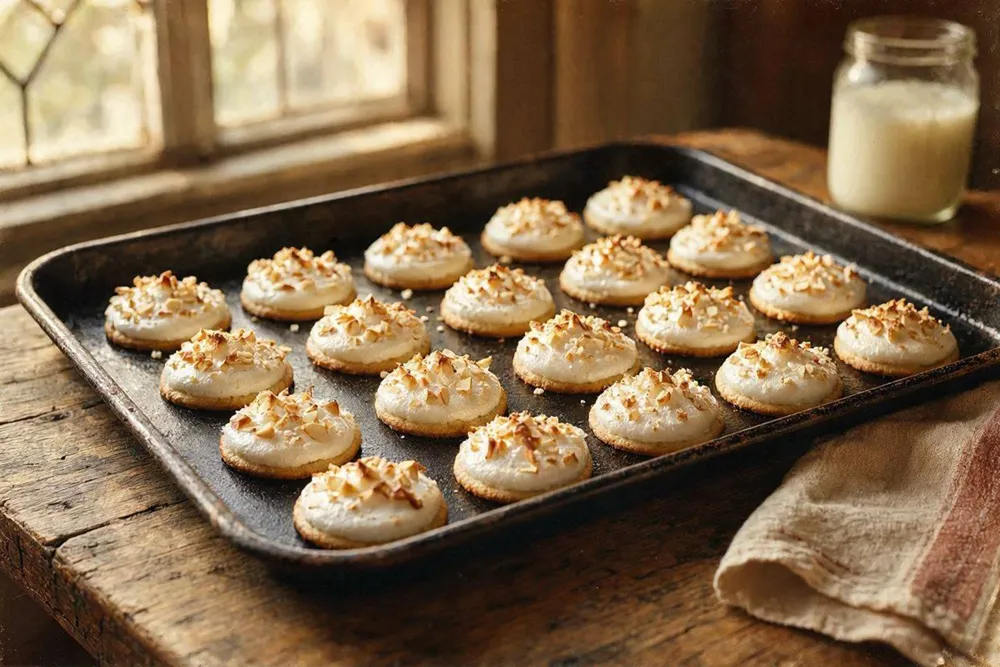
Small lemon-scented cookies made with lard and egg yolk, indented in the center, coated in whipped egg white, and rolled in sugar and chopped almonds.
Velvet Apple & Meringue Gratin
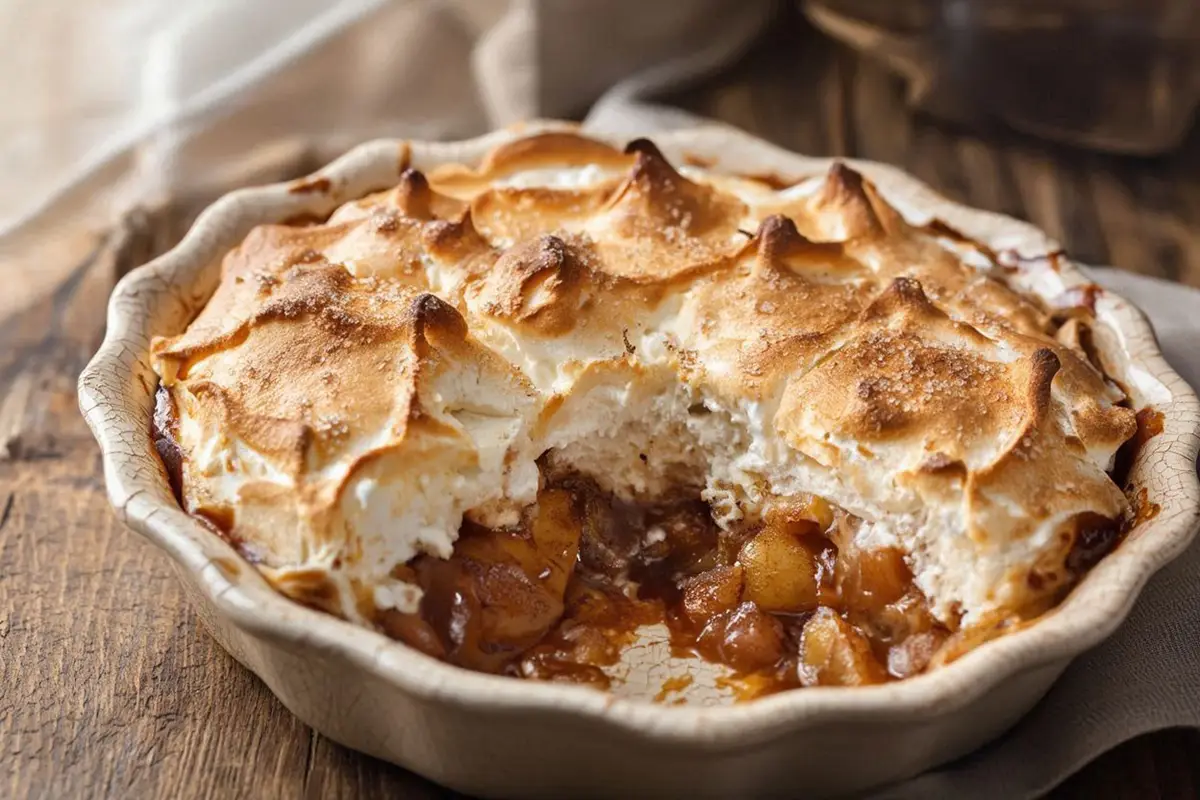
A decadent vintage dessert featuring apples slow-cooked in a butter-sugar syrup, topped with a cloud of lemon-scented meringue.
Apricot Cream Torte
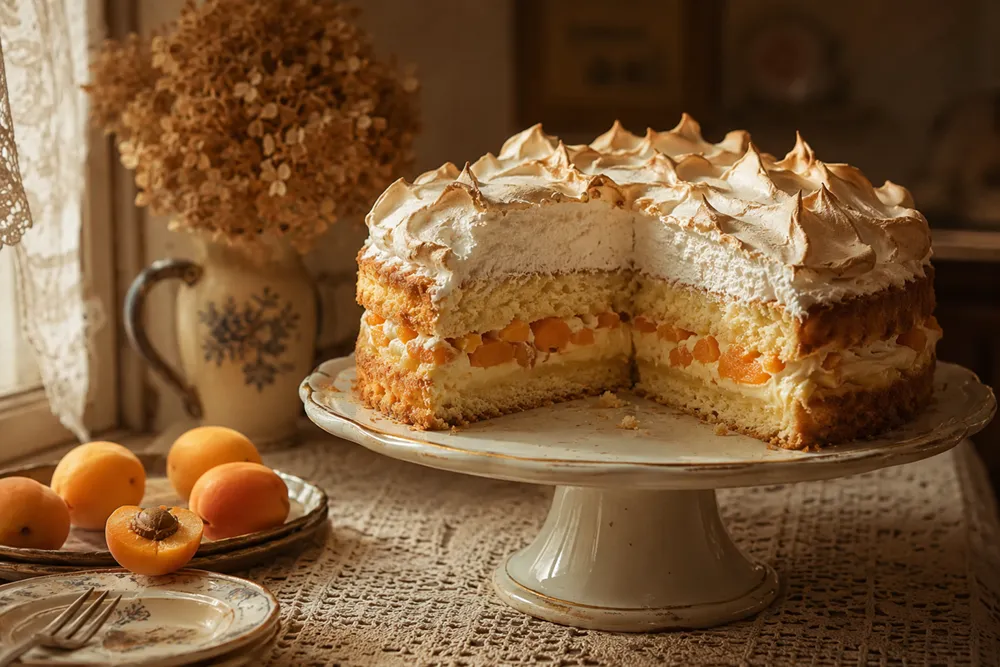
Traditional apricot cream cake combining sponge, vanilla custard, and meringue for a timeless European flavor.