Schubert's Cake
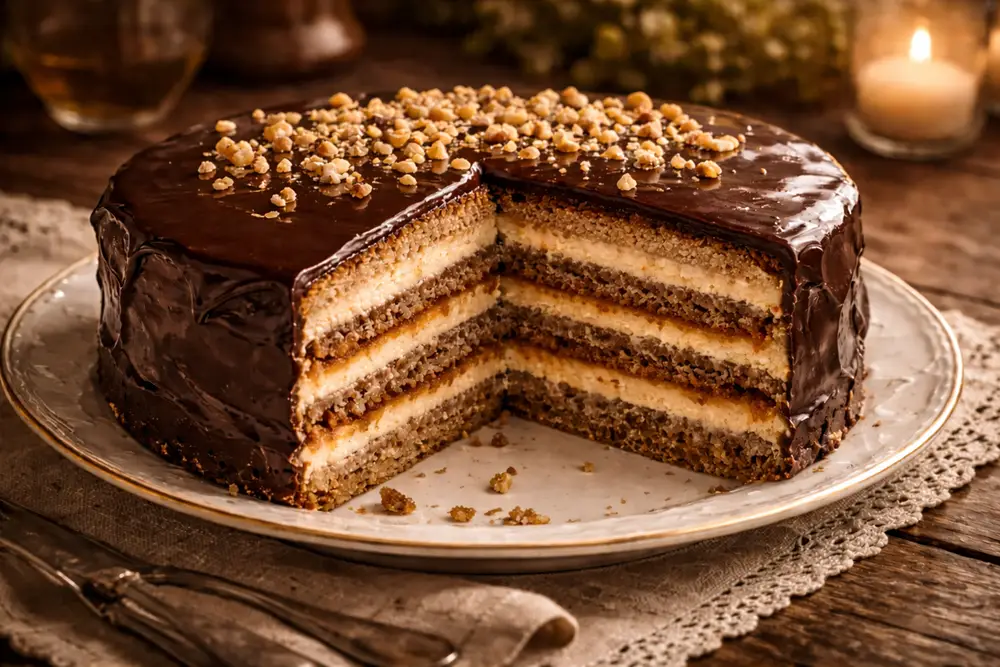
Two contrasting sponge layers, almond-chocolate and walnut, cut and stacked with apricot jam and a cooked vanilla buttercream, finished with chocolate glaze.
Historical recipe
Modernised adaptation of an early 20th‑century source. Not independently kitchen-tested by Attic Recipes. Quantities, temperatures, and food safety guidance have been updated for a contemporary kitchen — results may vary and errors may exist. Nutritional values, where provided, are estimates only and have not been laboratory tested. Always follow current food safety guidelines for your region. If you have a health condition, allergy, or dietary requirement, consult a qualified professional before preparing this recipe.
Use of this recipe is entirely at your own risk and subject to our Terms of Service and Privacy Policy. Attic Recipes accepts no liability for any adverse outcome.
- Eggs
- Dairy
- Tree Nuts
- Gluten
Additional notes
-
Warning
The filling contains raw egg yolks cooked over a double boiler. It must reach at least 74°C (165°F) during cooking to ensure the eggs are safely cooked, particularly important for pregnant women, young children, elderly people, and immunocompromised individuals.
-
Note
This cake is high in saturated fat, with over 10g per serving from the butter used in both sponges, the filling, and the glaze. Individuals managing saturated fat intake, including pregnant women and those with cardiovascular conditions, may wish to enjoy this cake in smaller portions.
- 1
Make the almond-chocolate sponge: beat the butter (100g) in a bowl until light and fluffy. Add the egg yolks (4) and sugar (70g) and beat well together.
- 2
Stir in the ground almonds (80g), grated chocolate (60g), and salt (1/8 tsp).
- 3
In a separate bowl, beat the egg whites (4) to stiff peaks, then gently fold them into the almond-chocolate mixture.
- 4
Pour the batter into a greased and lined 24cm springform pan. Bake at 180°C (350°F) / 160°C fan for 20-25 minutes, until set and lightly golden. Let cool completely, then remove from the pan.
- 5
Make the walnut sponge: beat the whole egg (1), egg yolks (4), and sugar (100g) together in a bowl until pale and thick.
- 6
Stir in the ground walnuts (80g), biscuit crumbs (20g), and salt (1/8 tsp).
- 7
In a separate bowl, beat the egg whites (4) to stiff peaks, then gently fold them into the walnut mixture.
- 8
Pour the batter into the same 24cm springform pan (cleaned and re-lined). Bake at 180°C (350°F) / 160°C fan for 20-25 minutes, until set. Let cool completely, then remove from the pan.
- 9
Make the filling: in a heatproof bowl, whisk together the sugar (100g), egg yolks (4), and sweet cream (125ml). Set the bowl over a pot of simmering water (double boiler) and cook, stirring constantly, until the mixture thickens and reaches at least 74°C (165°F).
- 10
Remove from the heat, stir in the vanilla extract (1 tsp), and let the mixture cool completely to room temperature.
- 11
In a separate bowl, beat the butter (140g) until fluffy. Gradually add the cooled custard mixture, one tablespoon at a time, beating well after each addition until a smooth, velvety buttercream forms.
- 12
Cut each cooled sponge in half horizontally to create two almond-chocolate sheets and two walnut sheets, four sheets in total.
- 13
Place the first almond-chocolate sheet on a serving plate. Spread with 1 tablespoon of apricot jam, then spread a layer of the buttercream filling over the jam.
- 14
Place the first walnut sheet on top. Spread a thin layer of apricot jam (1 tablespoon) over it, then spread another layer of buttercream filling.
- 15
Place the second almond-chocolate sheet on top. Spread with 1 tablespoon of apricot jam, then spread another layer of buttercream filling.
- 16
Place the second walnut sheet on top as the final layer. Use the remaining buttercream filling to coat the sides of the cake evenly.
- 17
Make the glaze: melt the dark chocolate (100g) and butter (50g) together gently, either over a double boiler or in short bursts in the microwave, stirring until smooth.
- 18
Pour the glaze over the top of the cake, spreading it evenly to the edges.
- 19
Chill the assembled cake in the refrigerator for at least 8 hours, preferably overnight, before slicing and serving.
Nutrition Information per 1 slice (approx. 110g, cake cut into 10-12 slices)
Nutritional values are approximate estimates and may vary based on specific ingredients used, preparation methods, and portion sizes.
Serving Suggestions
Slice with a sharp knife after the cake has chilled and set fully. Serve cold, directly from the refrigerator, for the cleanest slices.
About This Recipe
Schubert’s Cake is a study in contrasts: two distinct sponge layers, one rich with ground almonds and grated chocolate, the other built around walnuts and biscuit crumbs, baked separately and then cut and restacked into a four-layer torte. Between each layer sits a cooked vanilla buttercream and a thin coat of apricot jam, with the whole cake finished in a glossy chocolate glaze.
This is a cake that rewards patience — both sponges need to bake and cool fully before they can be cut and assembled, and the finished cake needs a long rest in the refrigerator before it’s ready to slice. The result is a dense, rich torte where the almond-chocolate and walnut layers each bring their own texture and flavor, tied together by the smooth buttercream and the bright cut of apricot jam.
Why It Works
Folding stiffly beaten egg whites into each sponge batter gives both layers enough lift to bake into a tender, cake-like texture despite their dense nut content. Baking both sponges in the same mold, one after the other, was a practical solution in households with a single suitable pan, and ensures both layers end up the same size for stacking. Cooking the filling slowly over a double boiler allows the egg yolks to thicken the mixture gently without scrambling, and beating in softened butter afterward turns the custard into a stable, spreadable buttercream that won’t melt or separate at room temperature. The long chilling time at the end allows the layers to settle and the flavors to meld, while also making the cake much easier to slice cleanly.
Modern Kitchen Tips
Line your springform pan with parchment paper for both bakes, which makes removing each sponge much easier without breaking it. When cutting the cooled sponges in half horizontally, use a long serrated knife and a gentle sawing motion, working slowly to keep each layer level. If the buttercream looks like it’s separating while you’re adding the custard to the butter, don’t worry — keep beating, as it will come back together into a smooth texture. Allow the full chilling time before slicing; this cake is much easier to cut neatly once it has had time to firm up.
A classic of early 20th century home cooking, preserved and adapted for the modern kitchen.
The Story Behind This Recipe
Historical Context
Early 20th century recipes for this cake called for two separate doughs to be baked, one based on almonds and grated chocolate and the other on ground walnuts, each baked in the same mold one after the other. Home cooks of the period filled and layered the cut sheets with a cooked custard-based filling enriched with butter, apricot jam between the layers, and a chocolate glaze over the top, without specifying an oven temperature, baking time, mold size, or exact quantities for the jam, vanilla, or glaze.
Modern Kitchen Adaptation
The oven temperature, baking time, and mold size were not specified in the original and have been set at 180°C (350°F) / 160°C fan for 20-25 minutes per layer, baked in a standard 24cm springform pan. The quantity of apricot jam and vanilla were not specified and have been estimated at 3 tablespoons of jam (divided across three applications) and 1 teaspoon of vanilla extract. The chocolate glaze was referenced in the original without a recipe and has been added as a simple mixture of dark chocolate and butter, melted together. A small pinch of salt has been added to each sponge, standard practice for balancing sweetness in baked goods, though it was not specified in the original. The filling, traditionally cooked over a double boiler with raw egg yolks, is specified to reach 74°C (165°F) to ensure it is safely cooked.
This recipe is an independent modern adaptation developed from historical sources in the public domain. It is provided for informational and educational purposes only and does not constitute professional dietary, nutritional, or medical advice. Food preparation involves inherent risks. The reader assumes full responsibility for safe food handling, ingredient sourcing, and adherence to current local food safety guidelines. The site operator accepts no liability for outcomes resulting from the preparation or consumption of this recipe.
One recipe.
Every week.
You Might Also Like
More recipes from the same category
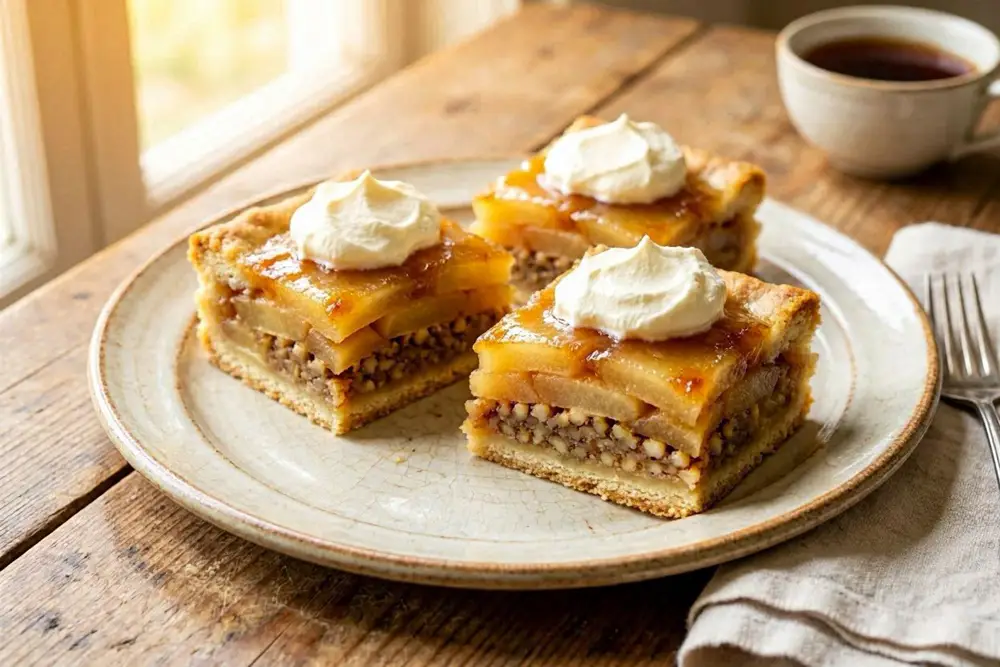
Apple Pie with Whipped Cream
A crisp almond shortcrust base layered with ground walnuts, poached apples, apricot jam, and a thick cloud of sweetened whipped cream.
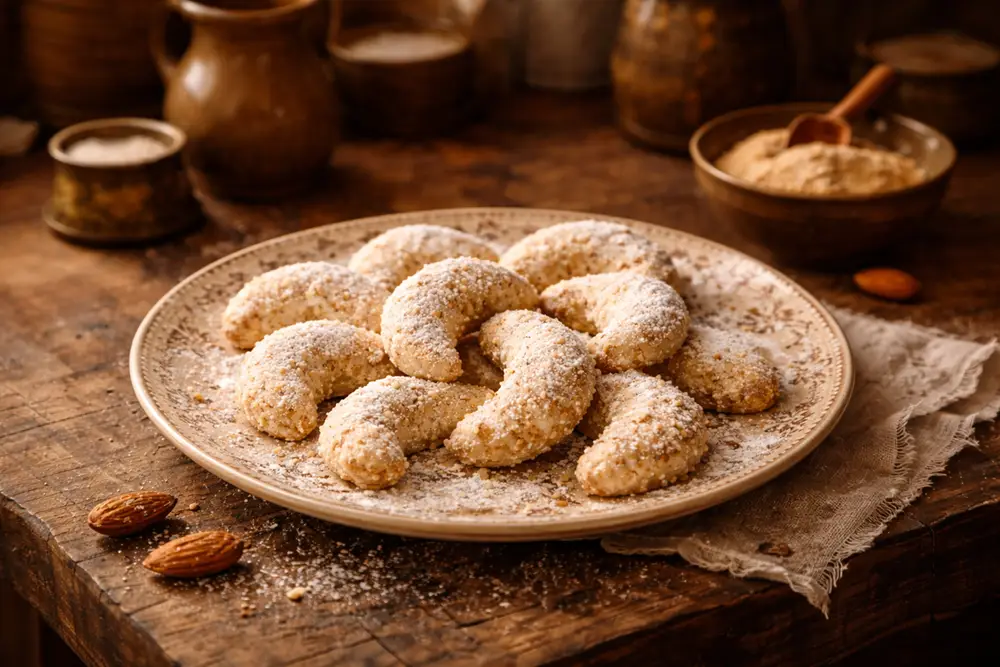
Almond Meringue Crescents
Crisp Central European confections of Swiss meringue shaped into crescents, coated in ground almonds, oven-dried until white and firm.
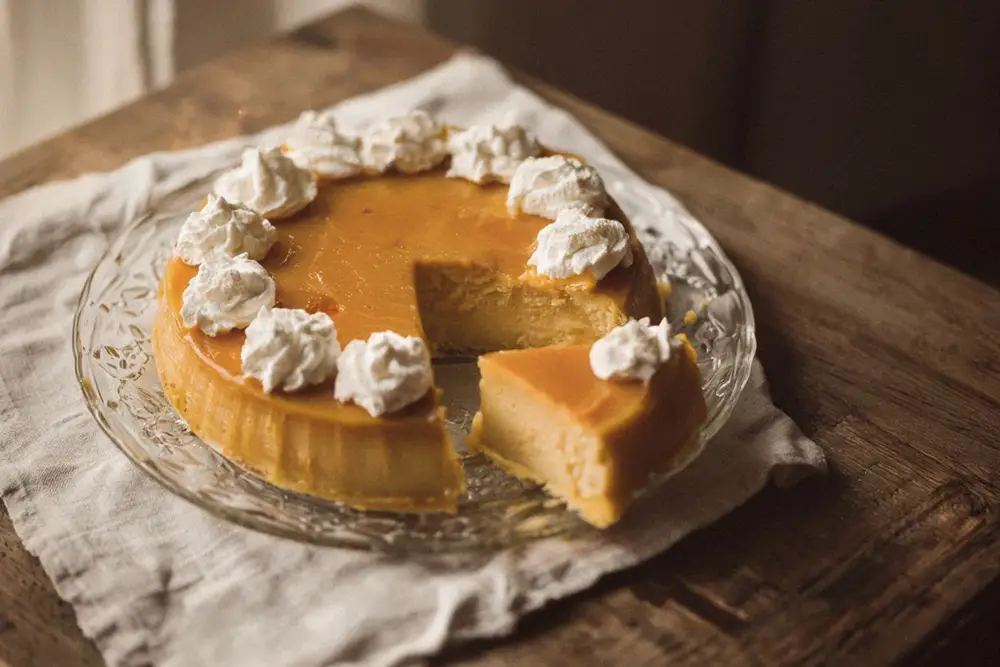
Apricot Cream
A rich chilled cream of apricot marmalade, egg yolks, sugar, and gelatin, set in a mould and served unmoulded with whipped cream.