Strawberry Jelly with Rum
A refreshing no-bake strawberry jelly set with gelatin and lightly flavoured with rum, served unmoulded with whipped sweetened sour cream and biscuits.
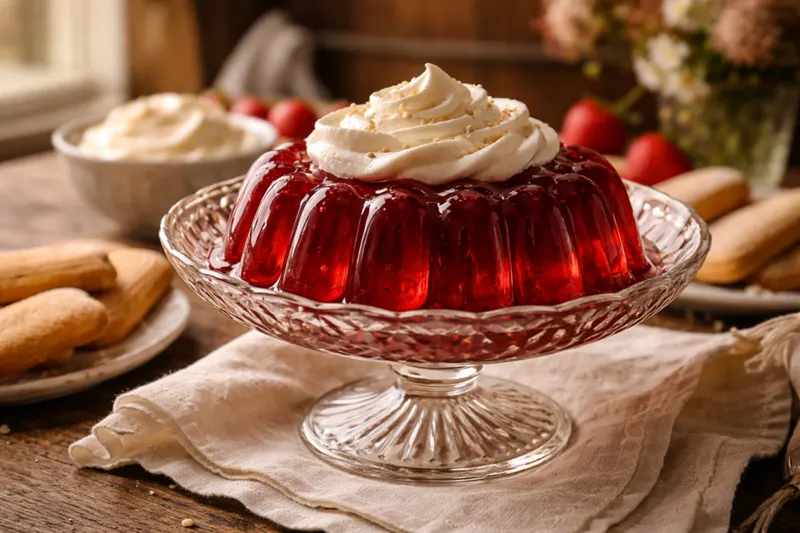
Quick Summary
A refreshing no-bake strawberry jelly set with gelatin and lightly flavoured with rum, served unmoulded with whipped sweetened sour cream and biscuits.
Historical recipe
Modernised adaptation of an early 20th‑century source. Not independently kitchen-tested by Attic Recipes. Quantities, temperatures, and food safety guidance have been updated for a contemporary kitchen — results may vary and errors may exist. Nutritional values, where provided, are estimates only and have not been laboratory tested. Always follow current food safety guidelines for your region. If you have a health condition, allergy, or dietary requirement, consult a qualified professional before preparing this recipe.
Use of this recipe is entirely at your own risk and subject to our Terms of Service and Privacy Policy. Attic Recipes accepts no liability for any adverse outcome.
- Gluten
Additional notes
-
Note
This recipe contains rum (alcohol). Suitable alternatives include a few drops of vanilla extract or a small amount of orange juice. Not suitable for pregnant women, children under 18, or individuals avoiding alcohol.
Replace the 30ml of rum with 1 teaspoon of pure vanilla extract or 30ml of fresh orange juice for an alcohol-free version.
- 1
Bloom the gelatin: place the 20g of gelatin powder in a small bowl and cover with cold water. Let it sit for 5 minutes until fully swollen. If using gelatin sheets, submerge them in cold water for the same time.
Tip Do not skip blooming — adding dry gelatin directly to hot liquid causes uneven dissolution and lumps. - 2
Make the syrup: combine the 200g of sugar with 200ml of water in a medium saucepan. Bring to a boil over medium heat and cook for 10 minutes, stirring occasionally, until the sugar is fully dissolved and the syrup has slightly thickened.
- 3
Prepare the strawberry base: hull and puree the 300g of strawberries until smooth. Add the juice of 1 lemon to the puree and stir to combine.
- 4
Combine syrup and puree: remove the syrup from the heat and allow it to cool for 2–3 minutes. Pour it into the strawberry-lemon puree and stir well.
- 5
Strain: pour the mixture through a fine-mesh sieve or white cheesecloth into a clean bowl, pressing or squeezing gently to extract as much liquid as possible. Discard the solids.
- 6
Dissolve the gelatin: drain the bloomed gelatin and dissolve it in 50ml of hot water (approximately 70°C — hot but not boiling). Stir until completely clear with no lumps.
- 7
Combine: pour the dissolved gelatin into the strained strawberry juice while both are still warm. Add the 30ml of rum and stir thoroughly to combine.
- 8
Set the jelly: rinse a 1-litre jelly mould or bowl with cold water and shake out the excess — do not dry it. Pour the jelly mixture into the mould. Place it in the refrigerator or over a bowl of ice and leave undisturbed for at least 60 minutes, until fully set.
Tip The original recipe sets the jelly on ice. A refrigerator works equally well — allow 60–90 minutes to be safe. - 9
Unmould: when the jelly is fully set, fill a large pan or bowl with hot water. Dip the base of the mould into the hot water for 5–10 seconds only — no longer. Run a thin knife around the edge if needed, then invert the mould onto a glass serving bowl or plate.
- 10
Prepare the whipped sour cream: just before serving, whip the 200g of sour cream with the 2 tablespoons of icing sugar until it holds soft peaks.
- 11
Serve the jelly immediately with the whipped sweetened sour cream and ladyfingers or plain butter biscuits alongside.
Nutrition Information per 1 porcija (approx 130g)
Nutritional values are approximate estimates and may vary based on specific ingredients used, preparation methods, and portion sizes.
Serving Suggestions
Serve chilled in a glass bowl with whipped sweetened sour cream and ladyfingers or plain butter biscuits. A few fresh strawberries placed alongside add colour. The jelly can also be portioned individually into glasses before chilling, eliminating the need to unmould.
About This Recipe
Moulded jellies were a staple of the elegant middle-class table in early 20th century Central Europe — light, jewel-coloured, and technically straightforward enough for a home cook with patience and a good piece of cheesecloth. This strawberry version is built on a classic sugar syrup base, strained to clarity, and set with gelatin. The rum is a small but deliberate addition: present as a background note rather than a dominant flavour, lifting the strawberry without competing with it.
The technique of pressing the pureed fruit through cheesecloth rather than simply blending it into the jelly distinguishes this from a modern fruit jelly. The result is translucent rather than opaque — closer to a consommé in texture than a fruit smoothie set solid. It is a dessert made to be looked at as much as eaten.
Served unmoulded onto a glass bowl with a cloud of whipped sour cream alongside, it reads as both archival and genuinely appealing for a summer table.
Why It Works
The two-stage liquid approach — syrup made separately, then combined with raw puree — serves two functions. First, it ensures the sugar is fully dissolved before it meets the acid in the lemon juice and strawberry, which can slow dissolution. Second, it gently warms the puree without cooking it, preserving the fresh strawberry flavour rather than pushing it toward jam.
The cheesecloth straining step is not just aesthetic. Removing the fruit solids gives the gelatin a clean liquid to work with, producing a more uniform set and a texture that is smooth and trembling rather than grainy. The gelatin concentration — approximately 3.6% of total liquid mass — is deliberately high for a moulded jelly, which is what allows it to hold its shape when unmoulded at room temperature for the duration of a dessert course.
Modern Kitchen Tips
Bloom the gelatin before dissolving it, even if using powder. This means covering it with cold water for five minutes first — it hydrates the protein chains and ensures even, lump-free dissolution when the hot water is added. Add the dissolved gelatin while both the gelatin liquid and the strawberry juice are still warm; if either has cooled to the point of beginning to gel, you will get streaks and an uneven set.
For individual portions, pour the mixture into glasses or ramekins before chilling — this gives you a cleaner presentation and eliminates the potentially anxious unmoulding step.
A classic of early 20th century home cooking, preserved and adapted for the modern kitchen.
The Story Behind This Recipe
Historical Context
Early 20th century recipes of this type relied on gelatin as the primary setting agent, with the jelly set on ice rather than in a mechanical refrigerator. Home cooks of the period used a single large spoonful of rum without specifying a volume — a small quantity intended to perfume rather than flavour outright. The technique of straining the puree through cheesecloth was standard practice, producing a clearer, more refined result than a direct-puree jelly. The serving of moulded jellies with whipped sour cream and biscuits was a common presentation in middle-class Central European households of the era.
Modern Kitchen Adaptation
The original recipe specified 'a large spoonful' of rum with no volume. This has been standardised to 30ml (2 tablespoons), which is proportionate to the total volume and consistent with period dessert practice. The gelatin is bloomed in cold water before dissolving — a step not explicitly stated in the original — to ensure even dissolution and a smooth set. Dissolving temperature is specified at approximately 70°C to avoid weakening the gelatin's setting power, which boiling water can cause. The ice-setting method is retained in the instructions but refrigerator chilling is noted as the modern equivalent. Sour cream for whipping is specified at 200g; the original gave no quantity for the accompaniment.
This recipe is an independent modern adaptation developed from historical sources in the public domain. It is provided for informational and educational purposes only and does not constitute professional dietary, nutritional, or medical advice. Food preparation involves inherent risks. The reader assumes full responsibility for safe food handling, ingredient sourcing, and adherence to current local food safety guidelines. The site operator accepts no liability for outcomes resulting from the preparation or consumption of this recipe.
One recipe.
Every week.
You Might Also Like
More recipes from the same category
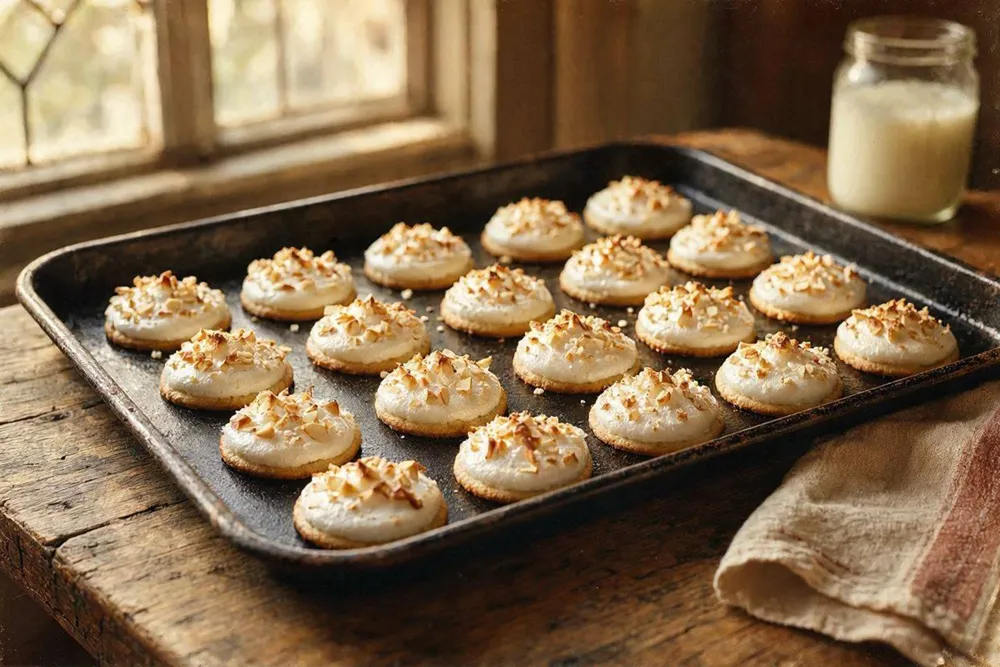
Almond Gurabije Cookies
Small lemon-scented cookies made with lard and egg yolk, indented in the center, coated in whipped egg white, and rolled in sugar and chopped almonds.
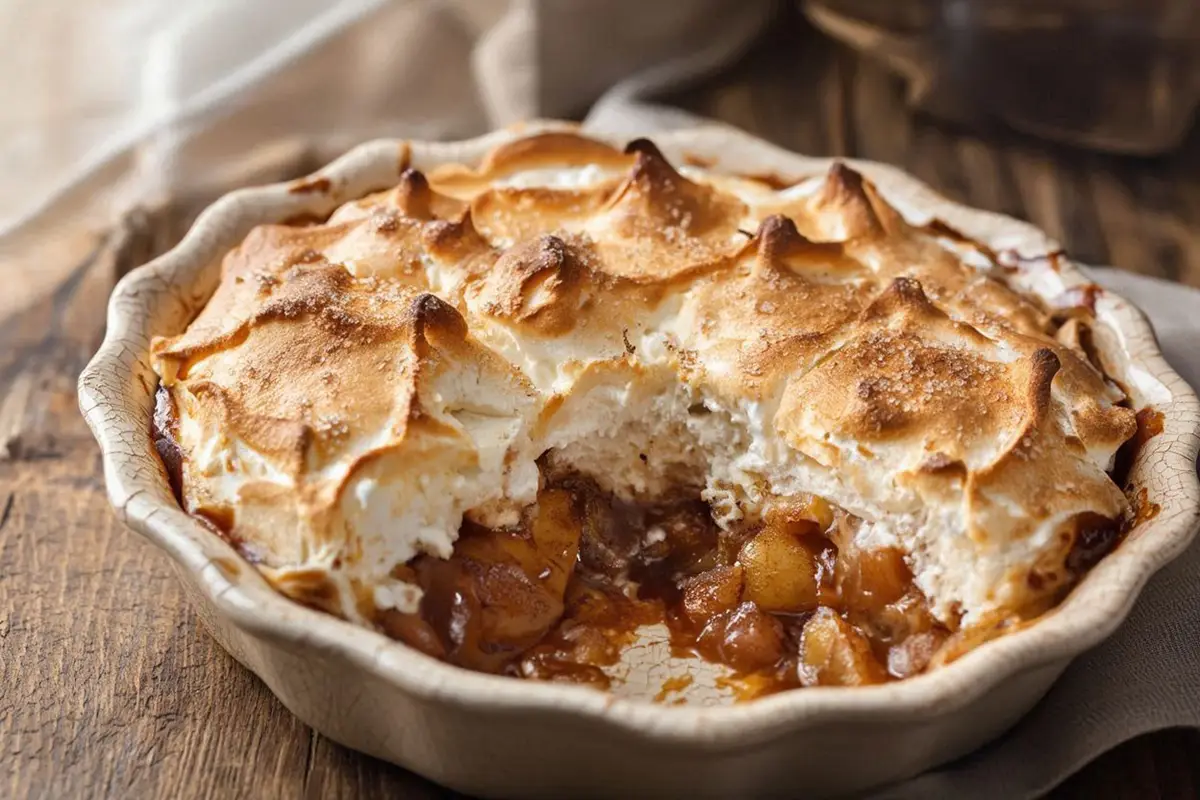
Velvet Apple & Meringue Gratin
A decadent vintage dessert featuring apples slow-cooked in a butter-sugar syrup, topped with a cloud of lemon-scented meringue.
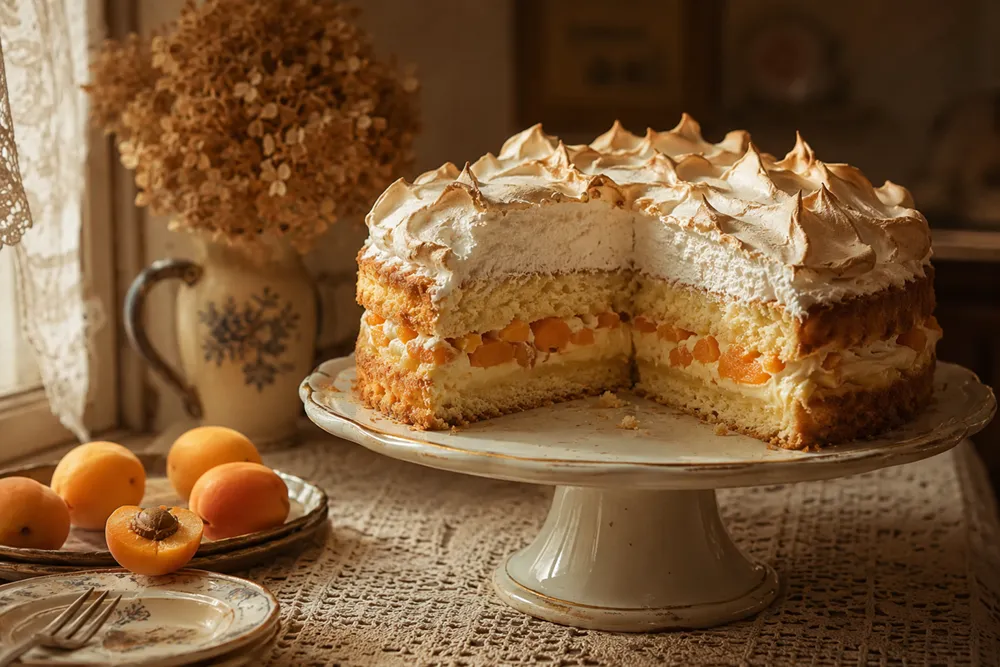
Apricot Cream Torte
Traditional apricot cream cake combining sponge, vanilla custard, and meringue for a timeless European flavor.