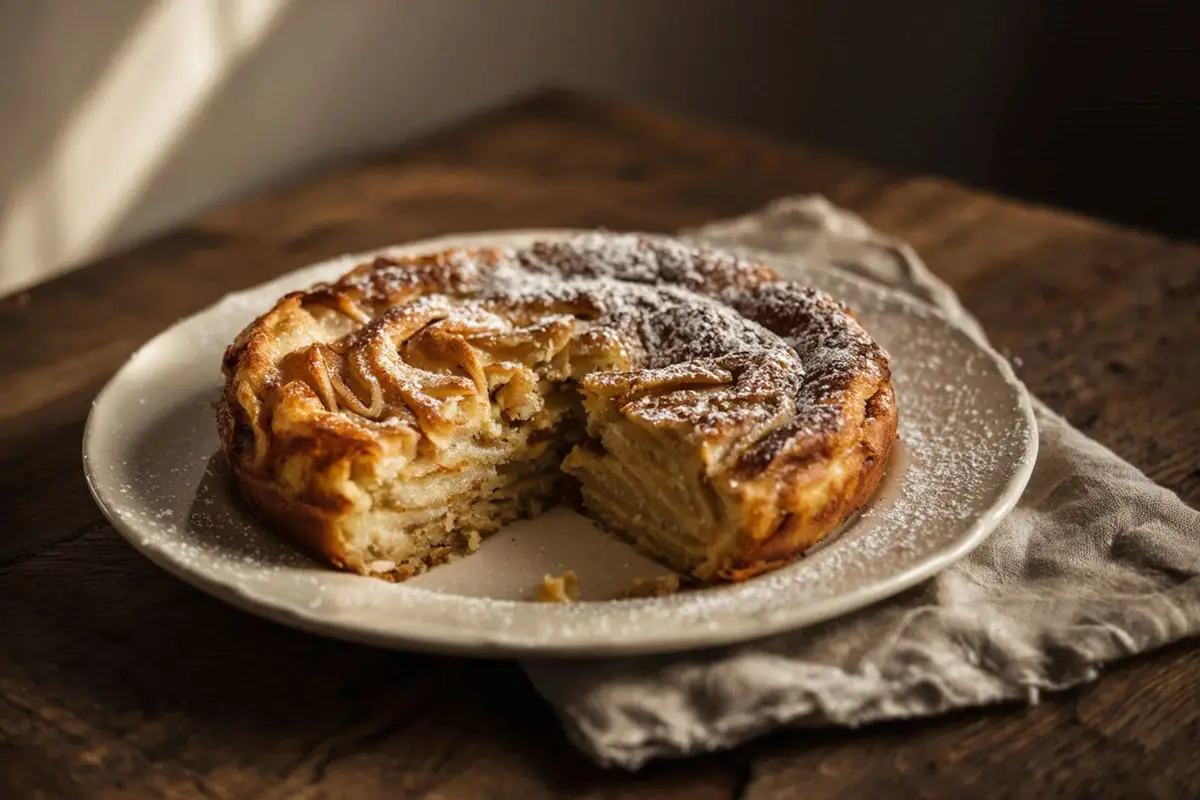
Sweet Steamed Pancake Pudding
Rolled pancake ribbons layered in a mold, soaked in almond custard, and gently steamed into a silky, old-world pudding.
Quick Summary
Rolled pancake ribbons layered in a mold, soaked in almond custard, and gently steamed into a silky, old-world pudding.
Historical recipe
Modernised adaptation of an early 20th‑century source. Not independently kitchen-tested by Attic Recipes. Quantities, temperatures, and food safety guidance have been updated for a contemporary kitchen — results may vary and errors may exist. Nutritional values, where provided, are estimates only and have not been laboratory tested. Always follow current food safety guidelines for your region. If you have a health condition, allergy, or dietary requirement, consult a qualified professional before preparing this recipe.
Use of this recipe is entirely at your own risk and subject to our Terms of Service and Privacy Policy. Attic Recipes accepts no liability for any adverse outcome.
- Dairy
- Eggs
- Gluten
- Tree Nuts
Additional notes
-
Warning
This recipe contains egg yolks in the custard that are cooked during steaming. Ensure the custard reaches an internal temperature of 75°C (167°F) before serving. Pregnant women, young children, elderly individuals, and immunocompromised persons should confirm the custard is fully set and not runny before consuming.
Use a kitchen thermometer to verify the center of the pudding reaches 75°C.
-
Caution
Contains gluten (wheat flour), dairy (milk, butter), eggs, and tree nuts (almonds). Not suitable for those with nut allergies or lactose intolerance without substitutions.
Ground sunflower seeds can replace almonds for nut-free versions. Plant-based milk (oat or soy) works reasonably well in both the batter and custard, though the custard will be slightly less rich.
-
Note
Cholesterol content is moderately elevated (~210mg/serving) due to whole eggs and egg yolks. Those managing cardiovascular conditions or following a low-cholesterol diet should be aware.
- 1
Whisk together 500g flour, 3 eggs, 500ml milk, 1 pinch salt, and 1 tbsp sugar into a smooth, thin batter. Let it rest for 10 minutes.
Tip The batter should coat the back of a spoon lightly. If it seems thick, add a splash more milk. - 2
Fry thin pancakes in a pan greased with a small amount of the 20g butter over medium heat. Stack them on a plate as you go.
Tip Aim for 10–12 pancakes. Thin crepe-style is better than thick — they roll more easily and absorb the custard well. - 3
Roll each pancake tightly and slice into finger-width ribbons, about 2cm wide.
- 4
Grease a pudding mold or deep heatproof bowl with 10g butter and dust with 1 tbsp flour. Layer the pancake ribbons inside, leaving about 3–4cm of space at the top.
Tip Don't pack too tightly — the custard needs to seep between the layers. - 5
Beat the 3 egg yolks with 3 tbsp sugar until pale and slightly thickened. Stir in 2 tbsp ground almonds and 500ml milk.
- 6
Slowly pour the custard over the pancakes in the mold. Let it settle for 2–3 minutes so it soaks into the layers.
- 7
Cover the mold tightly with foil or a lid. Place in a large pot with boiling water reaching halfway up the sides of the mold. Steam over medium-low heat for 35–40 minutes.
Tip Check water level halfway through — top up with hot water if needed. The pudding is done when the custard is just set and the internal temperature reaches 75°C (167°F). A knife inserted in the center should come out mostly clean. - 8
Remove from the steamer and let rest for 5 minutes. Run a knife around the edge and invert onto a serving plate. Serve warm.
Nutrition Information per 1/4 of pudding (~300g)
Nutritional values are approximate estimates and may vary based on specific ingredients used, preparation methods, and portion sizes.
Serving Suggestions
Serve warm with a spoonful of apricot jam, a dusting of powdered sugar, or a drizzle of warm vanilla sauce. A light sour cream on the side cuts through the richness well.
About This Recipe
Before reliable ovens were standard in every home, steaming was the preferred method for delicate egg-based desserts across Central European kitchens. This pudding layers rolled pancake ribbons with a lightly sweetened almond custard, then cooks them together into something between a soufflé and a bread pudding — soft, custardy, and quietly elegant. It is the kind of dessert that rewards patience and punishes rushing.
Why It Works
Steaming surrounds the mold with even, moist heat that never exceeds 100°C — ideal for egg custard, which curdles above ~85°C under dry oven heat. The pancake ribbons act like a sponge structure, absorbing the custard as it sets and preventing the pudding from collapsing when unmolded. Ground almonds add fat and a mild nutty flavor while slightly thickening the custard without starch.
Flour Matters: How Different Flour Types Affect This Recipe
The type of flour you use changes both the pancakes and the final texture of the pudding.
All-purpose flour (plain / glatko brašno, ~10–11% protein) The standard choice. Produces soft, pliable pancakes that roll without cracking and hold their shape after slicing. Custard absorption is even. This is the baseline for the recipe.
Cake flour / low-protein flour (~8% protein) Pancakes become more delicate and slightly more prone to tearing when rolled. The pudding will be noticeably softer and more yielding — almost spoonable at the edges. Good if you prefer a lighter texture; less ideal if you want clean slices.
Bread flour / strong flour (~13% protein) Pancakes turn slightly chewy and elastic. They resist custard absorption a little more, giving the pudding a firmer, more defined layer structure. Not traditional, but produces a tidier unmolded result.
Adding potato starch or cornstarch (replacing 20–30% of flour) A common Central European technique. Starch reduces gluten development significantly — pancakes become silky, thin, and almost lacey. They absorb custard faster and more completely, resulting in a more cohesive, pudding-like interior. The trade-off: they’re more fragile to handle before assembly.
Whole wheat or spelt flour Not period-appropriate for a dessert of this type, but usable. Adds a nutty, slightly bitter note that competes with the almond custard. Pancakes will be sturdier and less delicate. Use at most 30% whole grain substitution if experimenting.
Practical recommendation: For your first attempt, use standard all-purpose flour. If you want to experiment, try replacing 3–4 tbsp of flour with potato starch for noticeably silkier pancakes.
Make-Ahead Notes
The pancakes can be fried, rolled, sliced, and layered in the mold up to 24 hours in advance. Cover tightly and refrigerate. Prepare and pour the custard just before steaming, or refrigerate assembled (custard included) overnight and steam straight from the fridge — add 8–10 minutes to steaming time.
Troubleshooting
Custard didn’t set: Steam longer, checking every 5 minutes. The center should not wobble like liquid when you gently shake the mold. A knife inserted 2cm from the center should come out mostly clean.
Pudding collapsed when unmolded: Likely underdone or rested too briefly. Let it rest 5 minutes after removing from the steamer — the custard firms as it cools slightly.
Pancakes tore when rolling: Batter was too thick or pancakes were fried too long. Add a little more milk and keep the pan at medium heat.
A classic of early 20th century home cooking, preserved and adapted for the modern kitchen.
The Story Behind This Recipe
Historical Context
Steamed puddings were a staple of Central European middle-class home cooking in the early twentieth century, when a reliable oven was not always available or economical to run. Steaming over a pot of boiling water was a precise, fuel-efficient method that produced consistent, delicate results — particularly suited to egg-rich custard desserts that would curdle or dry out in uneven oven heat. The technique of rolling and slicing pancakes before embedding them in custard appears across the Austro-Hungarian culinary tradition, where layered textures and thrifty use of pantry staples were hallmarks of good household cooking.
Modern Kitchen Adaptation
Measurements have been scaled to a standard family portion (4 servings). A pudding mold, deep ceramic bowl, or even a loaf pan with foil sealed tightly all work well. If a steamer insert is unavailable, a trivet or folded kitchen towel at the bottom of the pot keeps the mold stable. Use a kitchen thermometer to confirm the center of the pudding reaches 75°C (167°F) before serving.
This recipe is an independent modern adaptation developed from historical sources in the public domain. It is provided for informational and educational purposes only and does not constitute professional dietary, nutritional, or medical advice. Food preparation involves inherent risks. The reader assumes full responsibility for safe food handling, ingredient sourcing, and adherence to current local food safety guidelines. The site operator accepts no liability for outcomes resulting from the preparation or consumption of this recipe.
One recipe.
Every week.
You Might Also Like
More recipes from the same category
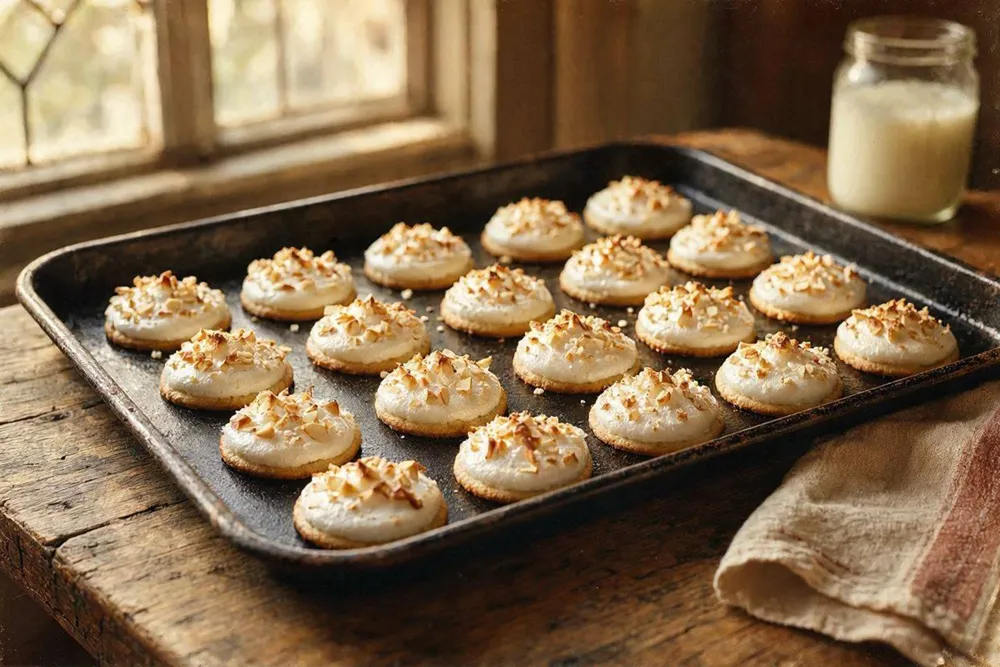
Almond Gurabije Cookies
Small lemon-scented cookies made with lard and egg yolk, indented in the center, coated in whipped egg white, and rolled in sugar and chopped almonds.
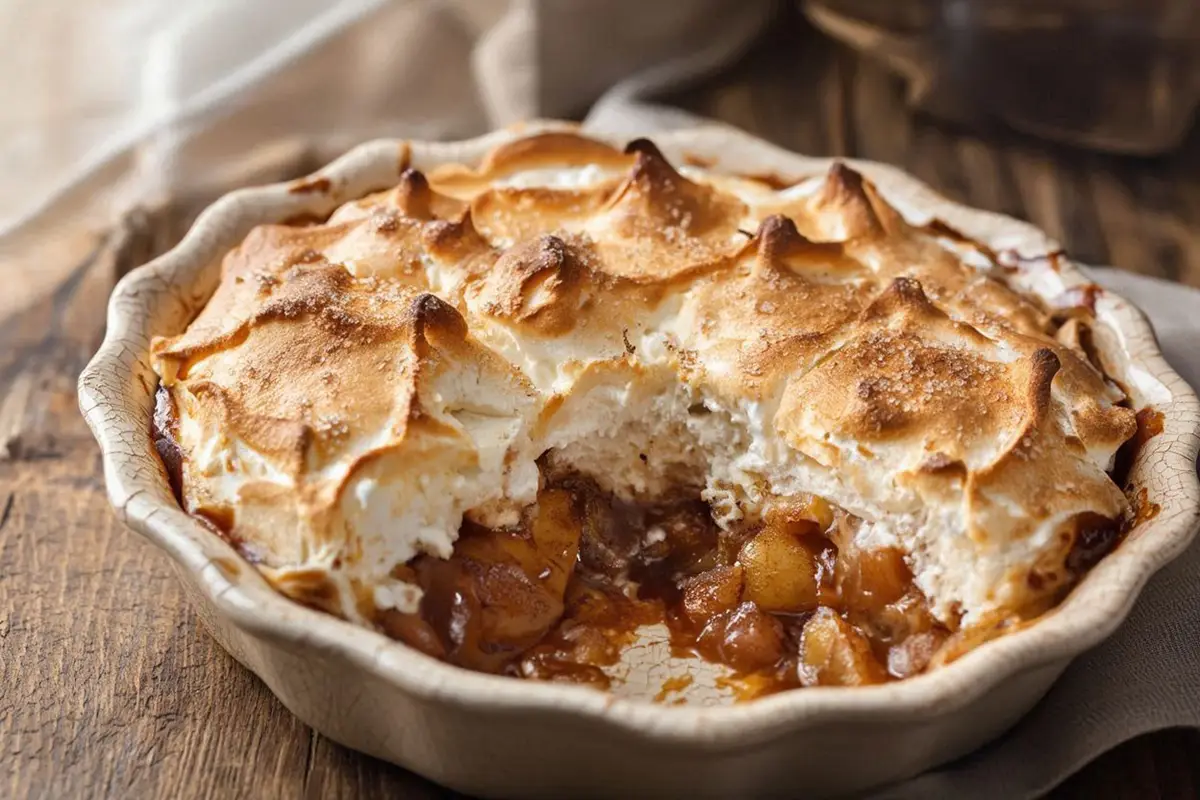
Velvet Apple & Meringue Gratin
A decadent vintage dessert featuring apples slow-cooked in a butter-sugar syrup, topped with a cloud of lemon-scented meringue.
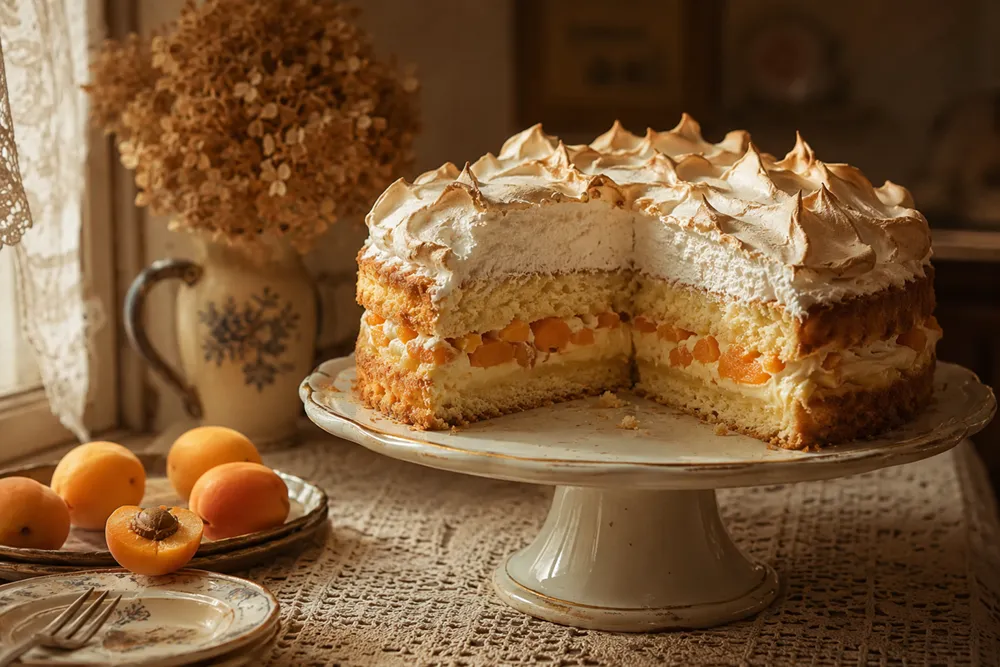
Apricot Cream Torte
Traditional apricot cream cake combining sponge, vanilla custard, and meringue for a timeless European flavor.