Tripe with Potatoes
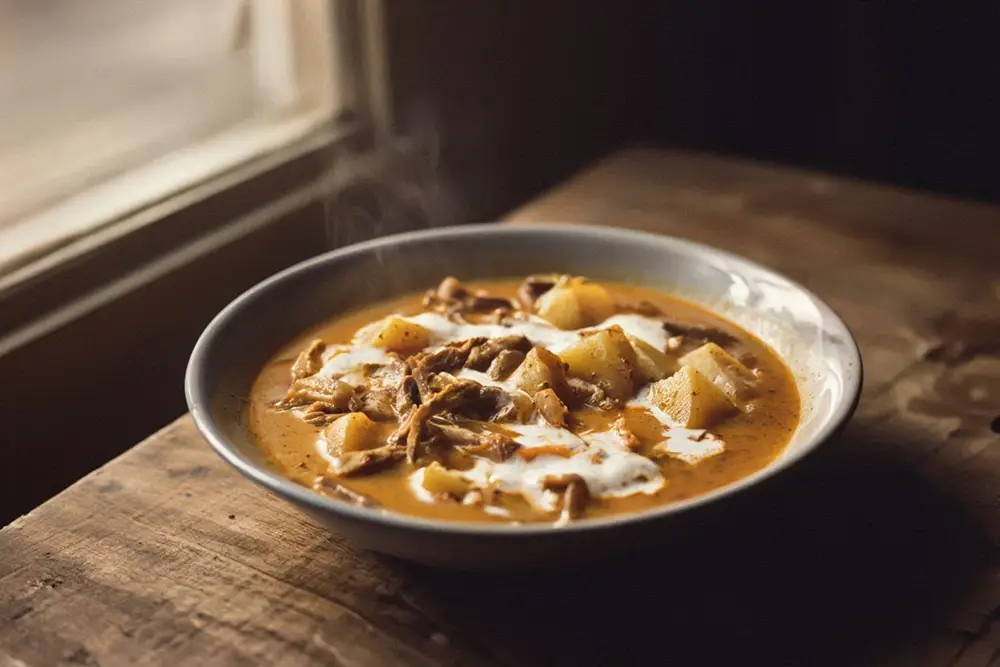
Slow-cooked tripe cut into strips, simmered with onion and sweet paprika, finished with sour cream.
Quick Summary
Slow-cooked tripe cut into strips, simmered with onion and sweet paprika, finished with sour cream.
Historical recipe
Modernised adaptation of an early 20th‑century source. Not independently kitchen-tested by Attic Recipes. Quantities, temperatures, and food safety guidance have been updated for a contemporary kitchen — results may vary and errors may exist. Nutritional values, where provided, are estimates only and have not been laboratory tested. Always follow current food safety guidelines for your region. If you have a health condition, allergy, or dietary requirement, consult a qualified professional before preparing this recipe.
Use of this recipe is entirely at your own risk and subject to our Terms of Service and Privacy Policy. Attic Recipes accepts no liability for any adverse outcome.
- Dairy
Additional notes
-
Warning
Tripe is organ meat and must be thoroughly cooked before consumption. Raw or pre-cleaned tripe must reach an internal temperature of at least 74°C (165°F) and be fully tender throughout — tough or rubbery tripe has not been cooked long enough and is not safe to eat. Always source tripe from a reputable butcher. Pre-cooked tripe should still be simmered for a minimum of 30 minutes before serving. This applies especially to pregnant women, elderly individuals, children under 18, and immunocompromised individuals.
-
Note
This dish contains approximately 8g of saturated fat per serving, primarily from lard and sour cream. Individuals managing cardiovascular health or dietary fat intake should note the portion size.
Substitute lard with neutral oil and replace sour cream with low-fat strained yogurt to reduce saturated fat to approximately 3g per serving.
- 1
If using raw tripe: place in a large pot, cover with cold salted water, and bring to a boil. Reduce heat and simmer for 2–3 hours until fully tender and soft throughout — raw tripe is tough and requires long cooking. Drain, reserving the cooking liquid. If using pre-cooked tripe from the butcher: rinse well, place in a pot with salted water, and simmer for 30–45 minutes until heated through and tender. Reserve the cooking liquid.
Tip Pre-cooked tripe is the practical modern choice and is widely available. It significantly reduces total cooking time without affecting the finished dish. - 2
Once the tripe is cooked and cool enough to handle, cut it into thin strips roughly the width and length of wide noodles — approximately 1 cm wide and 5–6 cm long.
- 3
Peel the 500g of potatoes and cut each one lengthwise into quarters or sixths depending on size. Cook in a separate saucepan of salted boiling water until just tender but still holding their shape — approximately 15–20 minutes. Drain and set aside.
Tip Test with a skewer: the potato should offer slight resistance at the centre. Overcooked potatoes will break apart during the final simmer. - 4
Heat the 30g of lard (or oil) in a large pot over medium heat. Add the 150g of finely chopped onion and sauté until soft and translucent, about 8–10 minutes. Do not allow it to brown.
- 5
Add the 5g of sweet paprika and stir immediately for 30 seconds. Do not allow the paprika to sit in the hot fat without stirring — it burns within seconds and will turn bitter.
Tip If the pot seems too dry when adding the paprika, add a splash of the reserved tripe liquid first to lower the temperature before the paprika goes in. - 6
Add the sliced tripe to the pot and stir to coat in the onion and paprika base. Add 200ml of the reserved tripe cooking liquid to create a thin sauce. Stir to combine and bring to a gentle simmer.
- 7
Simmer the tripe in the sauce for 10–15 minutes, stirring occasionally, until the sauce has reduced slightly and the tripe has absorbed the paprika flavour.
- 8
Add the separately cooked potato wedges to the tripe. Stir gently to combine without breaking the potatoes. Simmer together for a further 5 minutes.
- 9
Remove from heat. Taste and adjust salt. Stir in the 150g of sour cream gradually, stirring constantly to incorporate without curdling. Alternatively, use 15ml of lemon juice or white wine vinegar instead of sour cream for a sharper, leaner finish. Serve immediately.
Tip Add the sour cream off the heat or on the very lowest simmer — boiling after adding sour cream will cause it to curdle and separate.
Nutrition Information per 1 serving (approx. 380g)
Nutritional values are approximate estimates and may vary based on specific ingredients used, preparation methods, and portion sizes.
Serving Suggestions
Serve in deep bowls with a slice of crusty white bread for mopping the sauce. A small additional spoonful of cold sour cream on top at serving adds richness and visual contrast. This is a standalone dish — it does not benefit from side dishes beyond bread.
About This Recipe
Tripe is not a dish for the ambivalent. It has a particular smell when it cooks, a particular texture when it is done, and a particular flavour that no amount of sauce will disguise — which is exactly why it has been cooked this way for centuries. The paprika and onion base does not hide the tripe; it frames it. The sour cream at the end softens the edges. The potatoes, cooked separately and added at the last moment, provide the neutral ground that makes the whole thing coherent.
This is a dish of the practical kitchen. Tripe was cheap, filling, and required nothing more than time and water to become edible. The potatoes extended it. The sauce — thin, red with paprika, barely thickened — was the technique that turned two simple ingredients into something worth sitting down for. Middle-class households of the early twentieth century cooked this kind of dish regularly, not as a curiosity but as a staple.
The key instruction in this dish — cook the tripe and potatoes separately — is worth paying attention to. It is not a fussiness. Potatoes cooked directly in the tripe liquid become heavy and saturated with fat. Cooked apart in plain salted water and added only at the end, they stay light and distinct, which is what makes the dish work as a composition rather than a mash of textures.
Why It Works
The thin sauce — onion, paprika, tripe cooking liquid — is thickened by nothing other than the gelatin that has leached from the tripe during its long cooking. Tripe is high in collagen, which converts to gelatin during the boil and gives the cooking liquid a slight body that a plain stock does not have. This is why the recipe specifies the tripe cooking liquid rather than fresh water for the sauce: it carries both flavour and natural body.
Sweet paprika goes into hot fat for only 30 seconds before liquid is added. This is the standard technique for blooming ground paprika — fat carries the fat-soluble pigments and aromatic compounds out of the powder and distributes them through the dish. The risk is burning: paprika scorches faster than almost any other spice in hot fat. The moment it goes in, liquid must follow. A burnt paprika base cannot be salvaged and will make the entire dish bitter.
Sour cream is added off the heat for one reason: protein. The proteins in dairy begin to denature and separate at sustained high temperatures, causing the cream to curdle into white granules floating in a greasy liquid. Off the heat, stirred in gradually, the residual warmth of the dish is enough to incorporate it smoothly into the sauce without breaking it.
Modern Kitchen Tips
Pre-cooked tripe from the butcher is the practical starting point for most home cooks today. It has already been cleaned, blanched, and partially cooked — simmering it for 30–45 minutes in your own salted water is sufficient to finish it and produce a usable cooking liquid for the sauce. The result is indistinguishable from the full raw preparation in the finished dish.
If the sauce is thinner than you would like after the final simmer, remove the potatoes first with a slotted spoon, reduce the sauce briefly over medium heat for 3–4 minutes, then return the potatoes. Do not reduce with the potatoes in the pot — they will break apart.
Leftover tripe with potatoes reheats well the following day, when the flavours have had time to deepen. Reheat gently in a covered saucepan with a small splash of water. Do not boil. Add fresh sour cream only when reheating is complete and the pot is off the heat.
Long-cooked tripe, a thin paprika sauce, and potatoes kept separate until the last moment: the logic of the practical kitchen.
The Story Behind This Recipe
Historical Context
Tripe with potatoes belongs to a broad family of Central European offal dishes in which variety cuts were made palatable through long cooking and a paprika-and-onion sauce base. The combination of organ meat with potatoes was a practical economic strategy in early 20th century household cooking — both were inexpensive, filling, and available year-round. The finishing with milerama (sour cream) rather than a flour-thickened sauce is characteristic of the region and gives the dish a lighter, slightly acidic finish that balances the richness of the tripe. Home cooks of the period cooked the tripe and potatoes in separate vessels as a matter of course, combining them only at the end — a technique that preserved the distinct texture of each component. Quantities for the sauce base, sour cream, and liquid were not specified in the original; the instruction was simply to prepare a thin sauce and season to taste.
Modern Kitchen Adaptation
All quantities for lard, onion, paprika, cooking liquid, and sour cream were absent in the original and are estimated here, marked accordingly. The original referred to 'millerami' — a regional transcription of milerama, meaning sour cream — which was listed alongside lemon juice and wine vinegar as alternative finishers. Sour cream is used here as the primary option, with the acid alternatives noted. Lard is the historically correct fat; neutral oil is a direct substitute. A food safety note on tripe handling and cooking temperature has been added as this was not addressed in the original.
This recipe is an independent modern adaptation developed from historical sources in the public domain. It is provided for informational and educational purposes only and does not constitute professional dietary, nutritional, or medical advice. Food preparation involves inherent risks. The reader assumes full responsibility for safe food handling, ingredient sourcing, and adherence to current local food safety guidelines. The site operator accepts no liability for outcomes resulting from the preparation or consumption of this recipe.
One recipe.
Every week.
You Might Also Like
More recipes from the same category
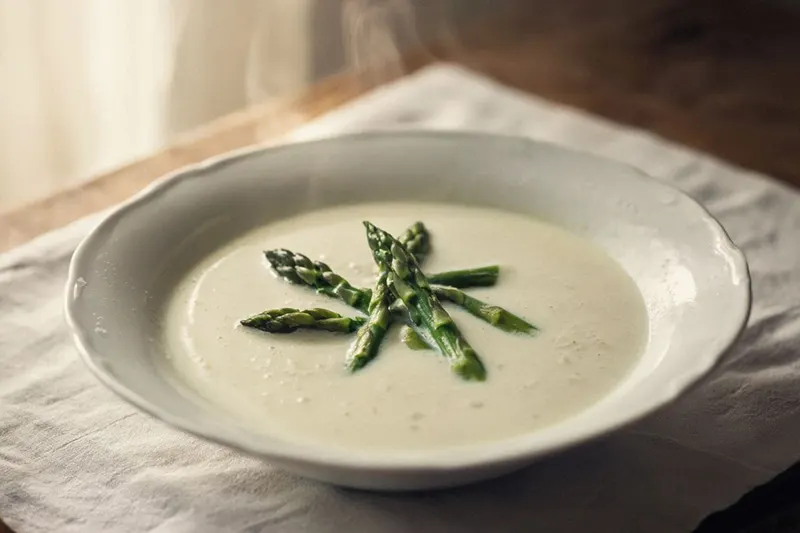
Asparagus Tip Soup
A silky, cream-enriched asparagus soup built on a white roux and finished with tempered egg yolks — an elegant first course from early 20th century cooking.
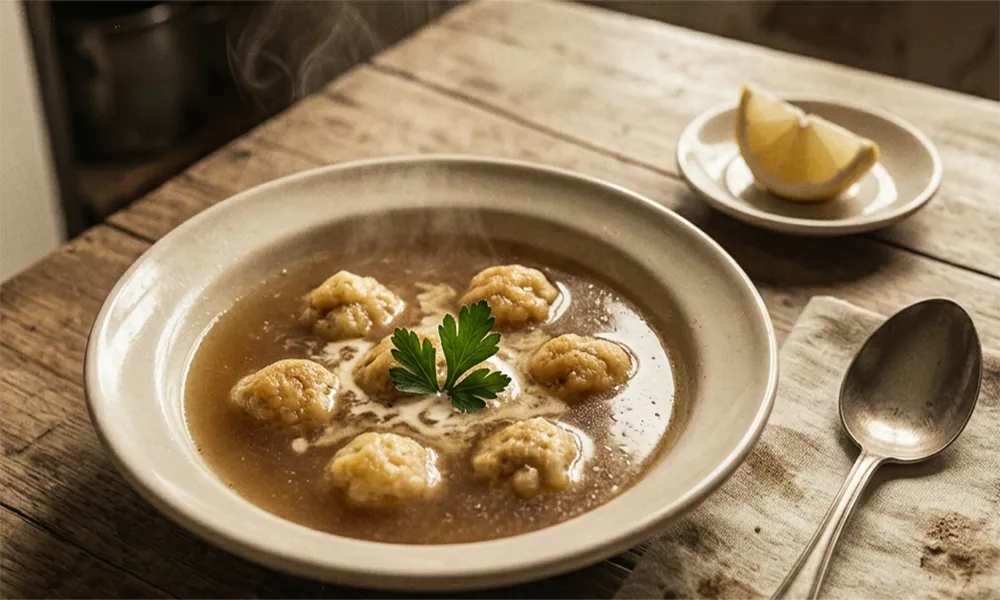
Beef Broth with Stuffed Dough Dumplings
Rich beef bone broth simmered with golden pan-fried dumplings stuffed with seasoned ground beef, finished with a light roux and fresh lemon juice.
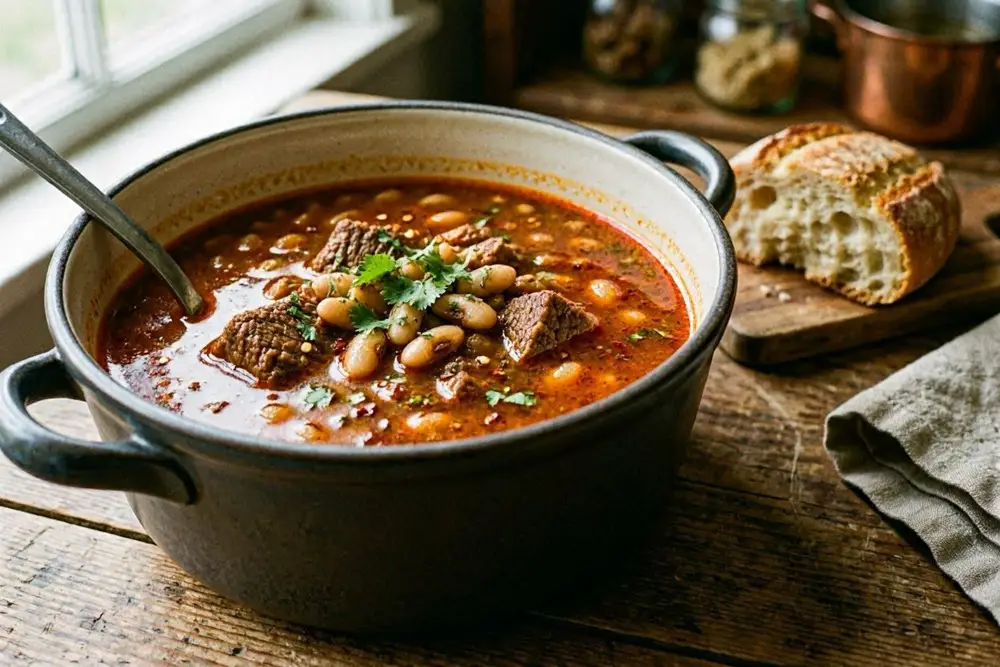
Bean Soup Cooked with Beef
White beans and beef shoulder slow-simmered with a bouquet garni, finished in the oven with a paprika-spiced pan roux. A deeply satisfying one-pot meal.