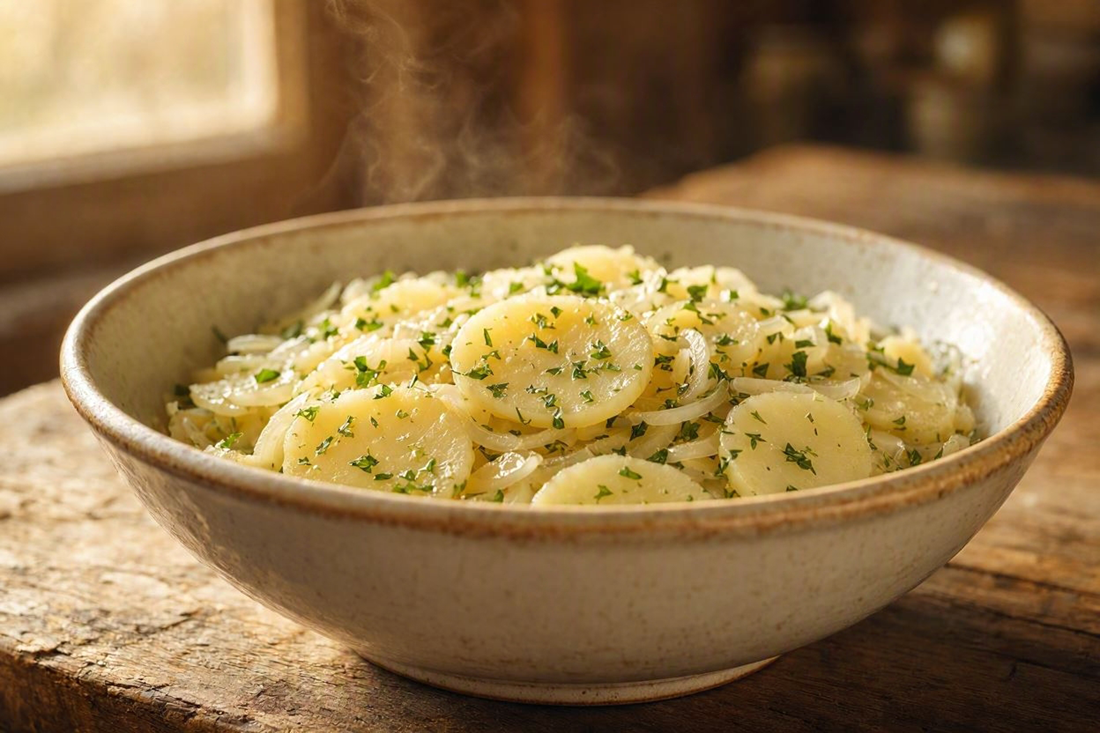
Warm Potato Salad with Oil and Vinegar (No Mayo)
A simple potato salad dressed in oil and vinegar while still warm, with onion and fresh parsley — no mayonnaise needed.
Quick Summary
Warm boiled potatoes are sliced and tossed with onion, then dressed while hot in oil and vinegar diluted with water. Finished with salt, pepper, and parsley, this mayo-free potato salad relies on warm potatoes to soak up the dressing..
This recipe uses Waxy vs. Floury Potatoes: Choosing the Right One for Potato Salad — prepare it in advance if you haven't already.
Historical recipe
Modernised adaptation of an early 20th‑century source. Not independently kitchen-tested by Attic Recipes. Quantities, temperatures, and food safety guidance have been updated for a contemporary kitchen — results may vary and errors may exist. Nutritional values, where provided, are estimates only and have not been laboratory tested. Always follow current food safety guidelines for your region. If you have a health condition, allergy, or dietary requirement, consult a qualified professional before preparing this recipe.
Use of this recipe is entirely at your own risk and subject to our Terms of Service and Privacy Policy. Attic Recipes accepts no liability for any adverse outcome.
Additional notes
-
Caution
This salad has no preservative-heavy dressing, so refrigerate any leftovers promptly and eat within a day or two for the best quality and safety.
- 1
Wash the potatoes and boil them whole until tender.
- 2
While still warm, peel the potatoes and cut them into thin rounds; place them in a deep bowl.
Tip Dress the potatoes while they're still hot — warm potatoes absorb the oil and vinegar far better than cooled ones. - 3
Slice the onions into thin half-moons, rinse, and drain well, then add them to the sliced potatoes.
- 4
While the potatoes are still hot, pour the oil over them, followed by the vinegar diluted with the water.
- 5
Gently toss everything in the bowl until well combined, being careful not to break up the potato slices.
- 6
Transfer the salad carefully to a serving dish, arranging it neatly, then season with the salt, pepper, and finely chopped parsley.
Nutrition Information per 1 serving (approx 250g)
Nutritional values are approximate estimates and may vary based on specific ingredients used, preparation methods, and portion sizes.
Serving Suggestions
Serve warm or at room temperature, alongside grilled or roasted meats, or as part of a spread of simple vegetable sides.
About This Recipe
This is potato salad stripped down to its essentials: warm potatoes, thin-sliced onion, and a simple oil-and-vinegar dressing that gets poured on while everything is still hot. There’s no mayonnaise, no boiled eggs, no elaborate mix-ins — just a handful of ingredients and one key piece of timing that makes the whole thing work.
The technique matters more than the ingredient list here. Warm potatoes soak up dressing in a way that cooled ones simply don’t, so the window for making this salad well is really about working while the potatoes are still hot from the pot, not about anything more complicated than that.
Why It Works
Potatoes are more porous when warm, and their surface starch is still soft enough to absorb liquid rather than resist it. Pouring the oil and diluted vinegar over the potatoes while they’re hot lets the dressing work its way into the slices instead of just coating the outside, which is why the same salad made with cold, day-old potatoes tastes noticeably flatter.
Modern Kitchen Tips
Choose a waxy or all-purpose potato rather than a floury baking variety — this single choice affects the salad’s texture more than any other ingredient in the recipe. Toss gently rather than stirring vigorously once the dressing goes on, since warm, freshly boiled potato slices break apart more easily than you’d expect.
A classic of early 20th century home cooking, preserved and adapted for the modern kitchen.
The Story Behind This Recipe
Historical Context
Dressing potatoes while they're still hot, rather than waiting for them to cool, was standard practice in early 20th century home cooking — warm potatoes take on oil and vinegar far more readily than cold ones, giving the salad more flavor throughout rather than just on the surface. An oil-and-vinegar dressing, diluted with a little water, was the typical approach in this style of cooking, rather than the mayonnaise-based dressings that became more common later.
Modern Kitchen Adaptation
The original doesn't specify a potato variety, but the choice matters more today than it once did, since supermarkets now carry many more types than a generic 'boiling potato.' A waxy or all-purpose variety (Yukon Gold, red potatoes, Charlotte) holds its shape when boiled and tossed; a starchy, floury variety (Russet, King Edward, Maris Piper) tends to break down and turn the salad mushy — worth checking the label or asking, since names and availability vary by country. Oil, vinegar, water, salt, and pepper amounts are all estimated, since the original leaves these to taste and to how much liquid the potatoes seem to need.
This recipe is an independent modern adaptation developed from historical sources in the public domain. It is provided for informational and educational purposes only and does not constitute professional dietary, nutritional, or medical advice. Food preparation involves inherent risks. The reader assumes full responsibility for safe food handling, ingredient sourcing, and adherence to current local food safety guidelines. The site operator accepts no liability for outcomes resulting from the preparation or consumption of this recipe.
One recipe.
Every week.
You Might Also Like
More recipes you'll enjoy
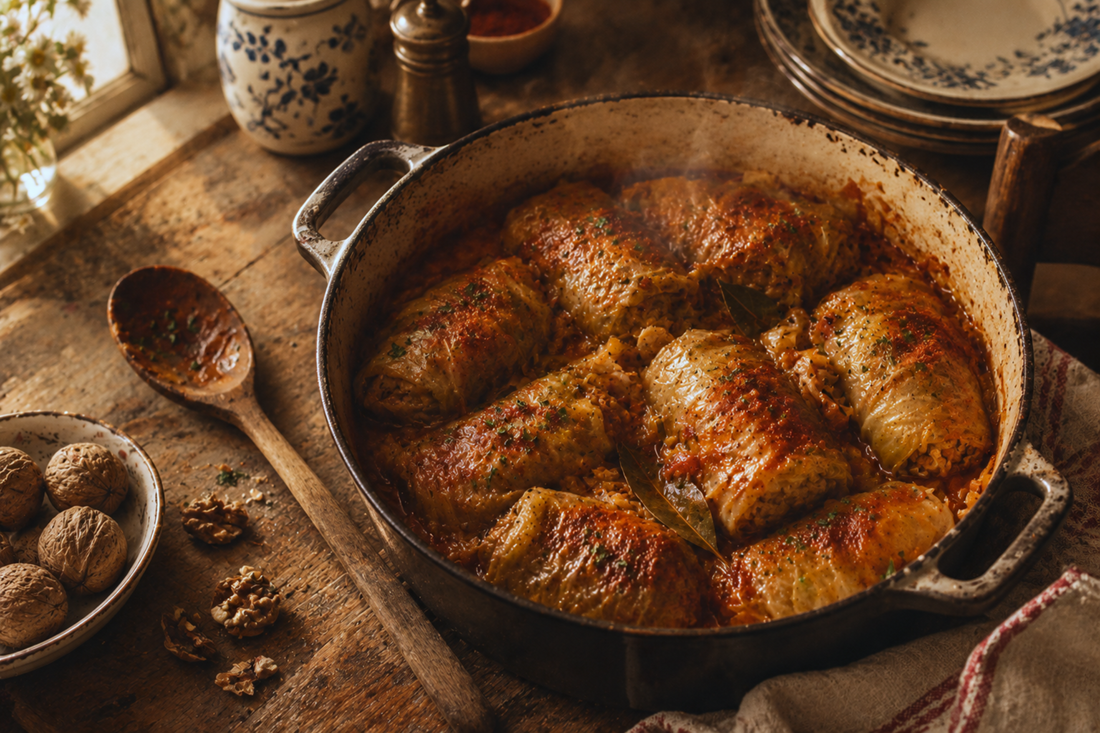
Vegan Cabbage Rolls with Rice and Walnuts (Sarma)
Vegan stuffed cabbage rolls filled with rice, onion, and walnuts, simmered slowly in a paprika roux — no meat, no dairy.
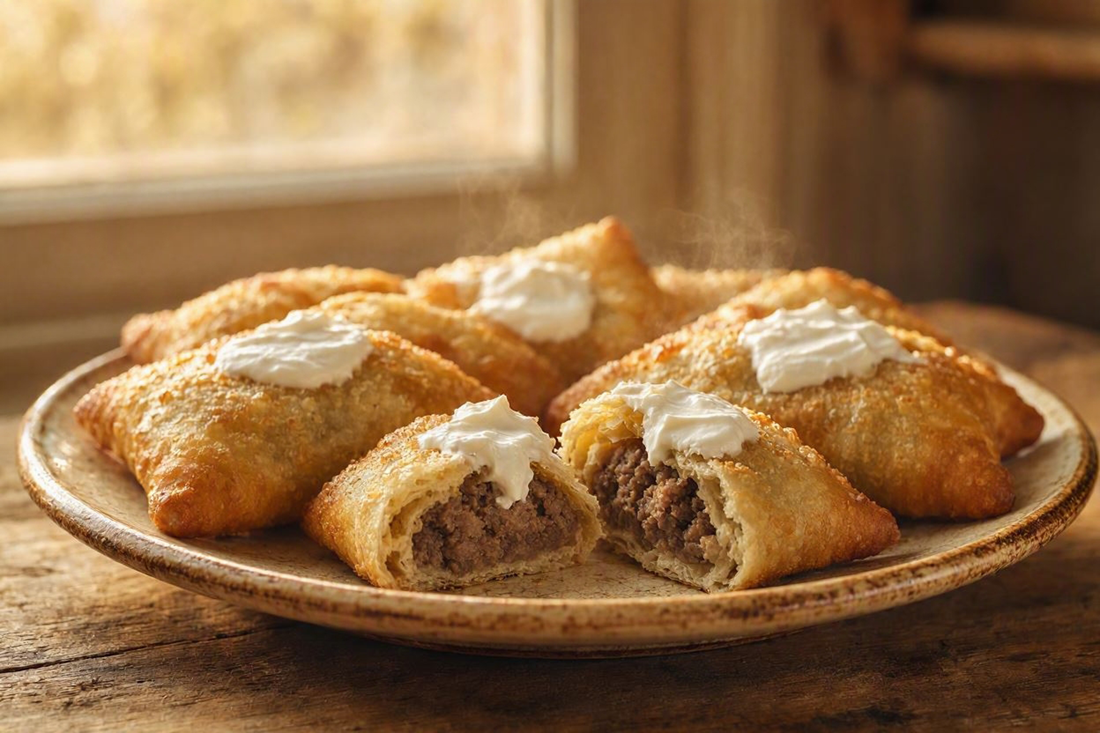
Golden Fried Meat Pastries Baked in Sour Cream
Crispy egg-pasta pockets filled with savory pork, fried golden, then baked under a blanket of sour cream.
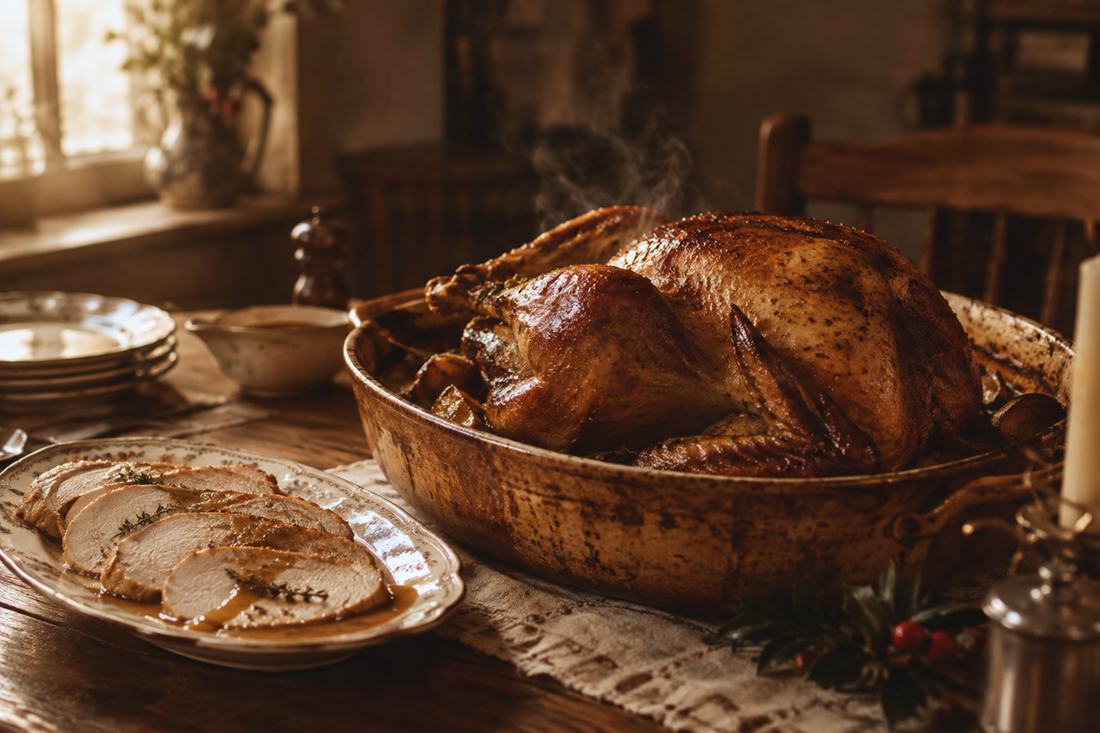
Traditional Roast Turkey with Pan Juices
A whole turkey salted the day before, roasted until golden, and basted throughout with its own pan drippings.