Why Fresh Peas Taste Different Every Time
Fresh peas convert sugar to starch within hours of harvest. Here is the science, what to look for at the market, and when frozen peas are the better choice.
Introduction
If you have ever made the same recipe twice — once with peas picked that morning, once with peas from the supermarket — you will have noticed something: they are not the same ingredient. The garden peas cook faster, taste sweeter, and have a softer, more yielding texture. The supermarket peas taste heavier, take longer to soften, and have a faint mealiness that no amount of butter entirely disguises.
This is not your imagination, and it is not a quality difference between producers. It is chemistry — specifically, one of the fastest and most dramatic postharvest transformations in the vegetable kingdom. The moment a pea pod is separated from the vine, a clock starts running. And unlike most things in the kitchen, this one cannot be paused.
What Is Actually Happening: Sugar to Starch
A pea seed, while still attached to the plant, is metabolically active. It uses photosynthesis-derived sugars — primarily sucrose — as its immediate energy currency. When the pod is harvested, photosynthesis stops. But the metabolic processes inside the seed do not. The enzymes that were already converting sugars into storage starch continue working, and now there is no new sugar coming in to replace what is being converted.
The key enzymes involved are ADP-glucose pyrophosphorylase (AGPase), starch synthases, and starch-branching enzymes (SBEs). Together, they take sucrose, break it down to glucose units, and polymerise those units into long chains of amylose and amylopectin — the two components of starch. The pea, in effect, keeps trying to prepare itself for dormancy long after it has left the plant.
The rate of this conversion is striking. Postharvest research on green peas documents that a significant portion of the available sugars can convert to starch within just a few hours, even under refrigeration — with conversion accelerating at room temperature. Green pea is a highly respiring commodity that can be stored at temperatures near 0°C for a maximum of two weeks, but optimal sweetness is a much shorter window than that.
For the cook, the practical implication is clear: for optimal sweetness, peas should be used within 24 hours of picking.
Why Wrinkled Peas Are Sweeter (And What Mendel Has to Do With It)
Not all fresh peas are equally vulnerable to this conversion. If you have ever noticed that some varieties taste sweeter and hold their sweetness longer, there is a specific genetic explanation.
The wrinkled-seed mutant of pea arose through mutation of the gene encoding starch-branching enzyme isoform I (SBE1) by insertion of a transposon-like element into the coding sequence. In plain terms: wrinkled peas carry a broken copy of the gene responsible for assembling branched starch. Without functional SBE1, the pea cannot efficiently convert sucrose into amylopectin. As a result, the level of sucrose in the wrinkled line is nearly two-fold that of the round line.
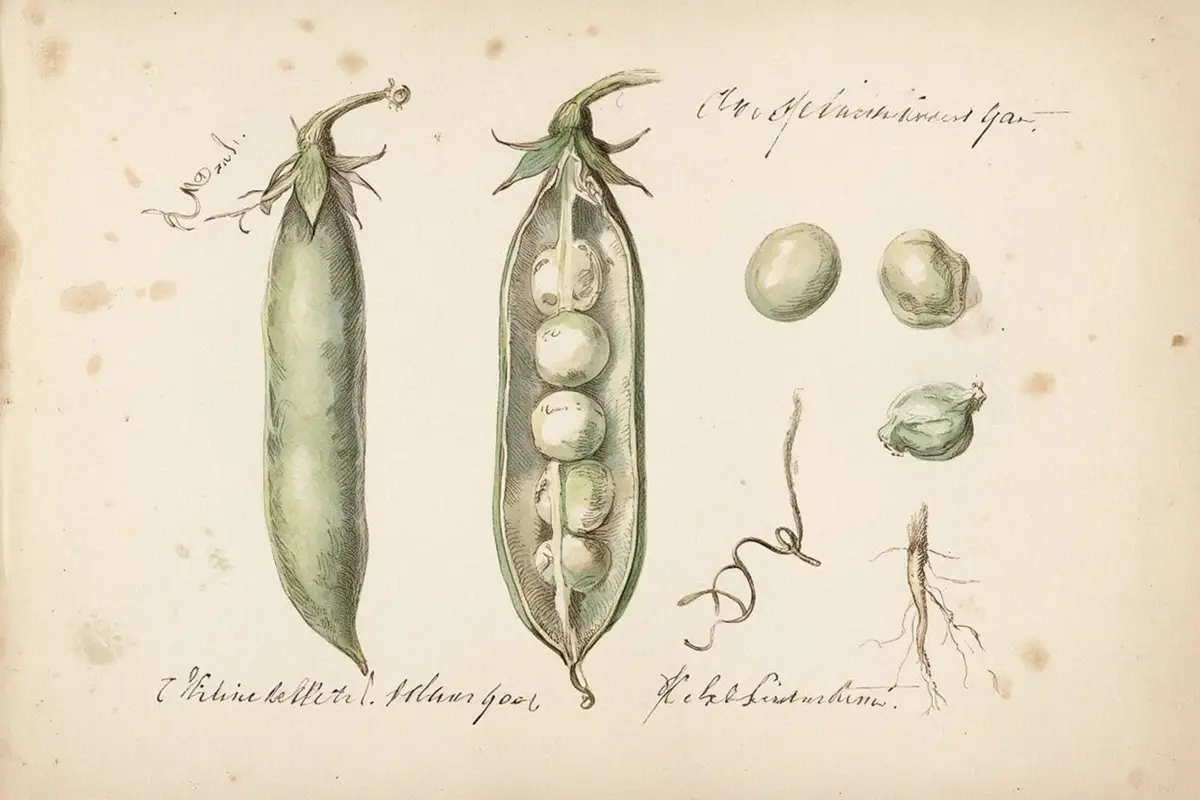
This is precisely the trait Gregor Mendel was tracking in his 1860s experiments — round vs. wrinkled seeds — without knowing the biochemical mechanism. He was, unknowingly, documenting starch-branching enzyme genetics. The wrinkled shape itself is a secondary effect: sweeter peas accumulate higher water content because the sugar in them makes them hypertonic, drawing more water into the seed. When they later dry out, the sweeter peas lose that extra water, making them wrinkle.
For the kitchen, the takeaway is this: wrinkled-seed varieties (petits pois, many heritage cultivars, ‘Sugar Ann’, ‘Lincoln’) retain sweetness longer and tolerate a day or two of refrigeration better than smooth round varieties. When buying fresh peas at the market, wrinkled varieties are the safer choice if you cannot cook them immediately.
The Counterintuitive Truth About Frozen Peas
Most cooks assume that fresh automatically means better. With peas, this assumption is wrong more often than it is right.
Commercial frozen peas — particularly petits pois — are processed at the farm within hours of harvest. They are blanched briefly to deactivate the enzymes driving sugar-to-starch conversion, then frozen immediately. The result is a pea locked at near-peak sweetness. A supermarket fresh pea, by contrast, may have spent one to three days in transit and on display before reaching your bag, during which conversion has continued at refrigeration temperatures the entire time.
This does not mean fresh peas are never worth using — a pea picked from a garden that morning and cooked within the hour is a genuinely different, superior ingredient. But between a day-old fresh pea and a quality frozen petit pois, the frozen pea will frequently win on sweetness and texture. If possible, purchase frozen peas over canned: frozen peas typically contain no added salt and taste noticeably fresher.
How to Assess a Fresh Pea at the Market
Since you cannot know exactly when market peas were harvested, here is how to assess them before buying:
The pod should be bright, glossy, and firm — not matte, rubbery, or hollow-sounding when shaken. A pod that yields a slight squeak when squeezed, with seeds you can feel but not easily compress through the shell, indicates peas that are full but not yet starchy. Pods that feel loose and rattle suggest peas that have already started to desiccate and convert. If the vendor will let you taste one raw, a sweet, almost milky flavour means the sugars are still intact. A starchy, floury taste means conversion is already well advanced.
Pick peas early in the morning when sugars are highest — avoid hot afternoons. If buying at market, look for sellers who keep their peas on ice or in cool shade. Once home, refrigerate peas in their pods within two hours. Shell them only when you are ready to cook.
What This Means for Older Recipes
Many Central European recipes from the early 20th century specify “young fresh peas” and give what seem like unusually short cooking times. These were instructions written for peas cooked within hours — sometimes minutes — of picking, in a time when vegetables moved from garden to kitchen the same day.
When adapting these recipes today, cooking time is variable by necessity: a truly fresh pea may need only 15–20 minutes of gentle braising; a market pea from the day before may need 35–40 minutes to reach the same softness. Taste frequently and adjust. The recipe time is a guide, not a guarantee.
Practical Takeaways
- Sugar-to-starch conversion begins immediately after harvest and continues even under refrigeration. The process accelerates significantly at room temperature.
- Wrinkled-seed varieties are genetically sweeter and hold their sweetness longer than smooth round varieties. Look for them when buying fresh.
- Quality frozen petits pois are often sweeter than supermarket fresh peas. For recipes outside the short spring season, they are frequently the better choice.
- Buy fresh peas as close to harvest as possible, refrigerate immediately in their pods, and cook within 24 hours for best results.
- In older recipes specifying “young peas,” treat the cooking time as a minimum and taste regularly. The pea decides when it is ready.
Further Reading
- University of Illinois Extension — Preparing Peas
- UC Davis Postharvest Technology Center — Snow & Snap Pea Postharvest Facts
- PMC / NCBI — Storage quality of shelled green peas under modified atmosphere packaging
- PMC / NCBI — Understanding Starch Metabolism in Pea Seeds
- Springer Plant Molecular Biology — The importance of starch biosynthesis in the wrinkled seed shape character of peas studied by Mendel
- EvoEd — Pea Taste Cell Biology (Mendel’s Peas)
Attic Recipes — digitizing and adapting Central European home cooking from the early twentieth century.
Frequently Asked Questions
01Are frozen peas sweeter than fresh peas from the supermarket?▶
Often, yes. Commercial frozen peas are blanched and frozen within hours of harvest, locking in their sugars before starch conversion begins. Supermarket fresh peas may be one to three days old by the time they reach you. The exception is peas bought directly from a farm stand on the day of picking.
02How quickly do fresh peas lose their sweetness?▶
Conversion begins immediately after harvest. Research on postharvest pea quality shows that a significant portion of sugar can convert to starch within just a few hours, even under refrigeration. The process slows significantly at near-freezing temperatures but never stops entirely — which is why peas bought on Monday taste different from the same peas on Thursday.
03How can I tell if my peas are at peak sweetness?▶
Harvest or buy them when the pods are plump and firm but still bright green. If the pods start to look dull or feel slightly spongy, they are likely past their prime and the sugar conversion is well underway.
04What is the difference between round and wrinkled peas?▶
Wrinkled peas carry a mutation in the gene encoding starch-branching enzyme I (SBE1), which reduces their ability to convert sugars into branched starch. The result is higher residual sugar, sweeter flavour, and — because the extra sugar draws in water — a wrinkled appearance when dried.
05Is there a difference between shelling peas and snap peas?▶
Yes. Shelling peas (also called English peas) have tough, inedible pods and must be removed before eating. Snap peas — including sugar snap and snow peas — have been bred to have tender, edible pods. Always check your seed packet or label to confirm which type you are growing or buying.
06How should I store fresh peas to keep them sweet?▶
Refrigerate unwashed peas in perforated bags within two hours of purchase, at 0–4°C. Do not shell them until you are ready to cook — the pod provides some protection against moisture loss. They will stay fresh for about three to five days, but flavor will gradually diminish as sugars continue converting to starch. Cook them within 24 hours for optimal sweetness.
07Can I freeze peas without losing their sweetness?▶
Yes. Blanch the peas in boiling water for one to two minutes, then immediately plunge them into an ice-water bath before freezing. This locks in the sweetness and prevents them from becoming mushy during storage. Commercial frozen petits pois are processed this way within hours of harvest, which is why they often outperform out-of-season fresh peas.
08Can I use frozen peas in recipes that call for fresh young peas?▶
Yes, and in many cases frozen petits pois are preferable to out-of-season or older fresh peas. Add them without pre-boiling — simply incorporate at the stage where the recipe calls for already-tender fresh peas, or in the final few minutes of cooking.