The Golden Liver: Why Every 1920s Household Raised Geese
Before foie gras became a restaurant luxury, it was a farmwife's seasonal prize. The forgotten Central European culture of goose fattening.
Introduction
If you flip through a household cookbook from the early 1900s, you might be shocked to find recipes for 800-gram goose livers nestled between simple stews and everyday breads. Today, foie gras is the pinnacle of expensive fine dining, often associated with Parisian bistros and hefty price tags. A century ago in the Pannonian Basin and across Central Europe, this ingredient was a standard feature of the late autumn harvest.
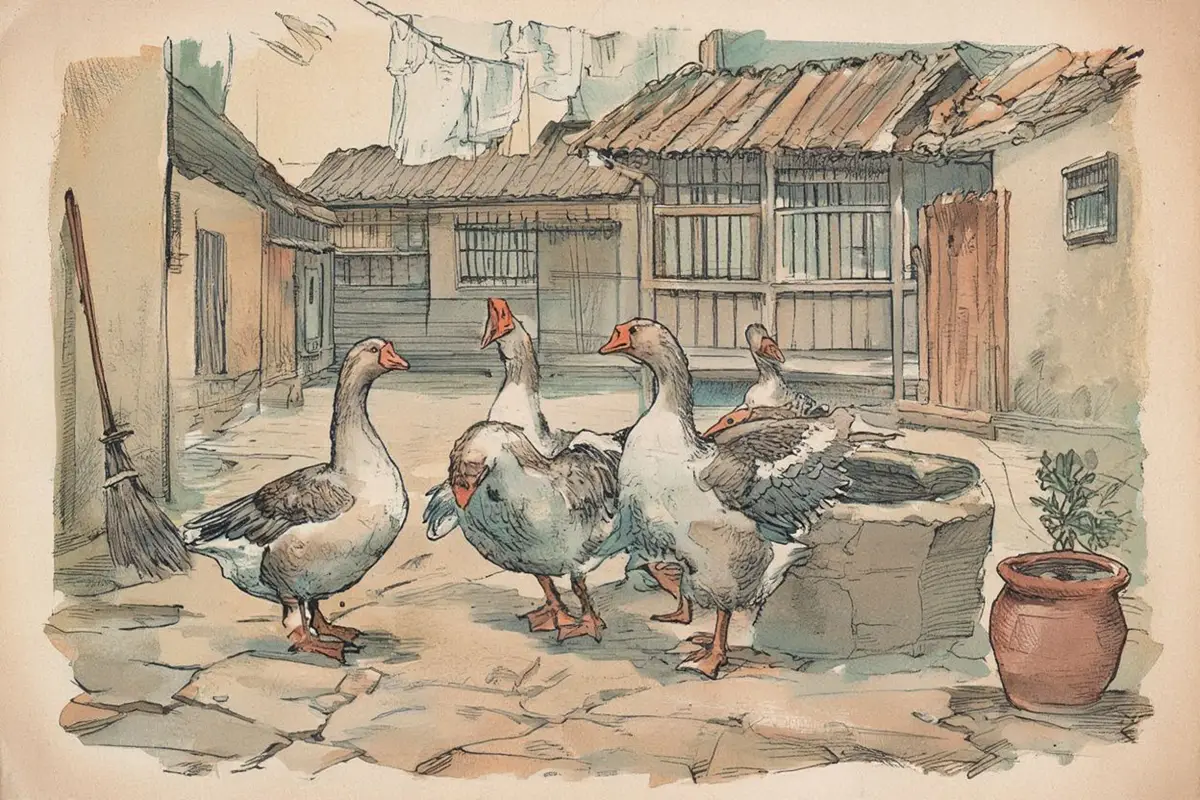
Raising geese was a masterclass in domestic economy. Every part of the bird was utilized: the down for pillows, the meat for winter salting, the fat as the primary cooking medium, and the oversized liver as the season’s ultimate culinary prize. Understanding this history changes how we view these recipes — they weren’t about indulgence so much as about making full use of months of careful, skilled work.
The Culture of Kljukanje
In the traditional village structure, the process of fattening geese — known locally as kljukanje, from the same root as the French gavage — was almost exclusively the domain of the farmwife. Starting in late autumn, geese were hand-fed corn to enlarge their livers and increase their fat reserves. This wasn’t merely for the sake of the liver itself; goose fat was among the most prized cooking fats in the kitchen, valued for its flavor, its smooth texture, and a range of attributed medicinal uses that were part of the folk knowledge of the period.
A goose liver weighing 800 grams was a badge of honor. It signaled that the bird had been healthy and the caretaker diligent. During the winter months, these livers were often traded at local markets or served as the centerpiece of a family feast — braised in wine or preserved in their own fat as a form of confit.
From the Farm to the Palace
While the farmers raised the geese, the urban middle class and the aristocracy refined the recipes. This is where we see the influence of French technique merging with local ingredients. The addition of truffles and fortified wines like Madeira turned a rustic farm product into a sophisticated dish suitable for a Sunday banquet.
The cleaning process was equally vital. Soaking the liver first in cold water for two hours, then in milk for a further two hours — a technique still used today — was a standard household practice. It ensures that the final dish is ivory-pale and free of the metallic bitterness that raw liver carries. The fact that this step appears consistently across period household manuals suggests that home cooks of the era understood the chemistry intuitively, even without the vocabulary to describe it.
Practical Takeaways
- Respect the source. Historical goose liver recipes are a testament to nose-to-tail eating where nothing was wasted and every part of the animal earned its place.
- Technique matters. The traditional soak — cold water first, then milk, two hours each — remains the best preparation for any high-quality liver and is still standard practice in professional kitchens.
- Read luxury ingredients historically. When you encounter an apparently extravagant ingredient in an old household cookbook, it is worth asking whether it was a seasonal, home-grown product rather than an expensive import.
- Safety first. Always soak liver in the refrigerator. The original technique was sound; the food safety standards that govern temperature control were not yet formalized, but the cold cellar served the same purpose.
Attic Recipes — digitizing and adapting Central European home cooking from the early twentieth century.
Frequently Asked Questions
01Why was goose liver so common in old recipes?▶
Before industrial farming, many households raised and hand-fattened geese for their fat and feathers, making the large liver a natural byproduct of the winter harvest.
02Is historical goose liver the same as modern foie gras?▶
In principle yes — both result from liver hypertrophy through gavage — though historical examples varied widely in size, preparation, and consistency compared to today's standardized product.
03What was the purpose of soaking liver in milk?▶
Soaking draws out excess blood and bitterness, resulting in a lighter color and a much creamier, more delicate flavor profile.
04Why did households stop raising and fattening geese?▶
A combination of factors ended the tradition. Industrial farming after the Second World War made commercially raised poultry far cheaper than home-reared birds. Urbanization reduced access to land and livestock. And across much of Europe, force-feeding practices were gradually restricted or banned outright — the EU prohibited gavage in 1999, with exceptions still granted to France, Hungary, and a handful of others where the tradition carries protected status. What was once a seasonal household ritual became either illegal, impractical, or simply unnecessary.