Chestnut Purée with Whipped Cream
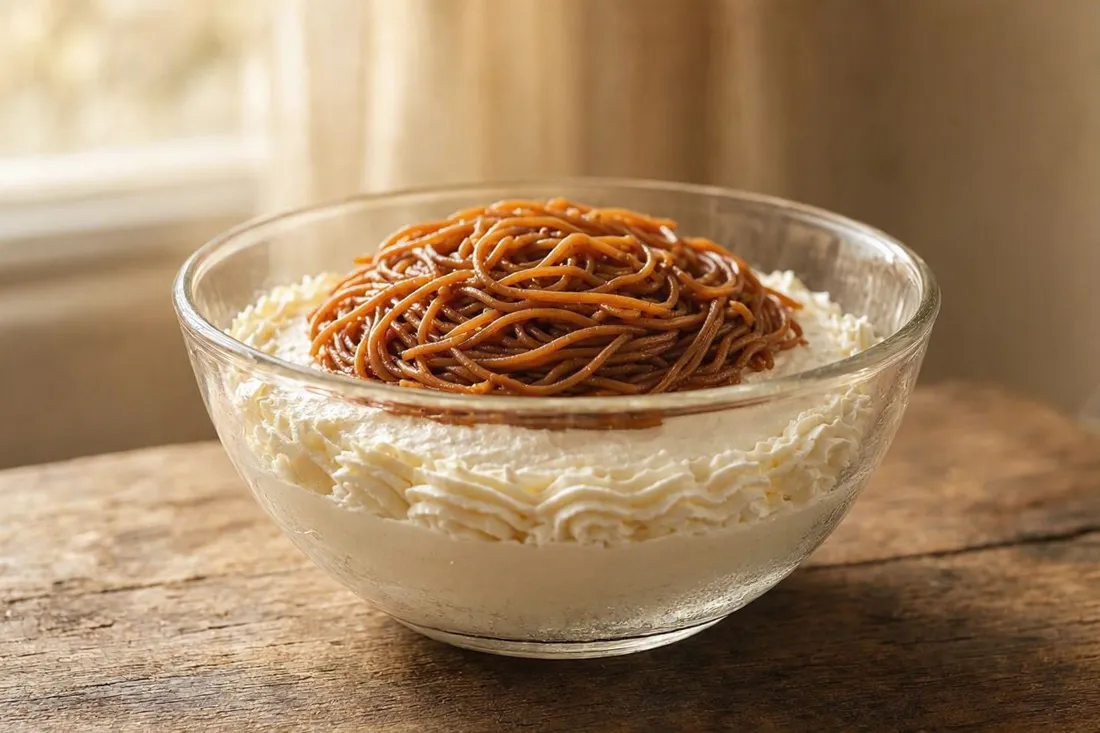
Sweetened chestnut puree is pressed through a ricer over whipped cream and finished with a piped border of cream — a rich chestnut dessert.
Quick Summary
Boiled chestnuts are sieved while warm, sweetened with sugar and vanilla, then pressed into strands over a base of whipped cream and finished with a piped border of more cream. A rich, chilled Central European chestnut dessert, best served cold.
Historical recipe
Modernised adaptation of an early 20th‑century source. Not independently kitchen-tested by Attic Recipes. Quantities, temperatures, and food safety guidance have been updated for a contemporary kitchen — results may vary and errors may exist. Nutritional values, where provided, are estimates only and have not been laboratory tested. Always follow current food safety guidelines for your region. If you have a health condition, allergy, or dietary requirement, consult a qualified professional before preparing this recipe.
Use of this recipe is entirely at your own risk and subject to our Terms of Service and Privacy Policy. Attic Recipes accepts no liability for any adverse outcome.
- Tree Nuts
- Dairy
Additional notes
-
Note
This dessert is high in saturated fat and sugar per serving from the whipped cream and added sugar. Those with cardiovascular concerns or diabetes, pregnant women, and older adults may wish to moderate portion size.
-
Note
Contains chestnuts, which are tree nuts; not suitable for those with tree nut allergies.
- 1
Wash the chestnuts, put them in a pot, cover with water, and boil until tender.
- 2
Remove the pot from the heat and let the chestnuts sit in the hot cooking water so they stay warm while you work.
- 3
Working in small batches so the chestnuts don't cool, remove them from the water, cut in half, and scoop the flesh out of the shell with a small spoon. Pass each batch through a fine sieve or ricer while still warm.
Tip Keeping the chestnuts warm as you peel and sieve them makes the flesh much easier to press through — it firms up and becomes harder to work once fully cooled. - 4
Transfer the sieved chestnut purée to a work surface. Gradually work in the powdered sugar and a little of the vanilla sugar, kneading gently just until combined — the mixture should hold together without cracking. Do not add milk. Set the chestnut mixture aside.
- 5
In a separate bowl, whip the chilled cream until soft peaks form, sweetening it to taste with the remaining sugar and vanilla sugar.
- 6
Spoon a layer of the whipped cream into the bottom of a glass serving bowl.
- 7
Press the chestnut mixture through a potato ricer directly over the cream, building it up into a mound.
- 8
Transfer the remaining whipped cream to a piping bag fitted with a star tip, and pipe a ring of cream around the base of the chestnut mound.
- 9
Serve immediately, or keep chilled on ice until ready to serve.
Nutrition Information per 1 portion (approx 230g, based on 8 servings)
Nutritional values are approximate estimates and may vary based on specific ingredients used, preparation methods, and portion sizes.
Serving Suggestions
Serve chilled, straight from the refrigerator or from ice as the source suggests — the whipped cream base is best kept cold until just before serving, especially in warm weather.
About This Recipe
This dessert turns a pot of plain boiled chestnuts into something genuinely elegant, using nothing more than sugar, vanilla, and whipped cream. The chestnuts are peeled and sieved while still warm, worked with sugar into a firm paste, then pressed through a ricer directly over a bed of whipped cream so it falls into fine, tangled strands rather than a smooth purée. A final border of piped cream around the base finishes it into something that looks far more elaborate than its short ingredient list would suggest.
No baking is involved at any point — the only real technique is timing, since chestnuts need to be peeled and pressed while they’re still warm, before the starch firms up and makes the flesh difficult to work.
Why It Works
Chestnuts start to firm up quickly once they cool, so peeling and sieving them in small batches straight from the hot water keeps the flesh soft enough to pass cleanly through a sieve or ricer. Kneading in the sugar afterward, rather than mixing it in wet, keeps the paste firm enough to hold its shape once pressed into strands, and skipping the milk that might seem like a natural addition keeps the mixture from turning gluey. The whipped cream underneath and around the chestnut mound does double duty, adding richness while also softening the otherwise dense, starchy texture of the purée.
Modern Kitchen Tips
Score each chestnut shell before boiling to make peeling faster, and keep the pot of chestnuts covered and off the heat so they stay hot while you work through them in batches. A potato ricer with small holes gives the closest result to the fine strands described in the source; press directly over the cream so the strands fall loosely rather than compacting into a dense mound. Chill the finished dessert if it won’t be served right away — the whipped cream holds its shape better cold, and the dish is meant to be eaten cool.
A classic of early 20th century home cooking, preserved and adapted for the modern kitchen.
The Story Behind This Recipe
Historical Context
Pressing sweetened chestnut purée through a ricer to form fine strands over whipped cream was a well-established way of turning a plain, starchy ingredient into an elegant dessert without any baking involved. Keeping the chestnuts in their cooking water while peeling them in small batches was a practical necessity — cooled chestnuts firm up and become far harder to scoop out of the shell and press smoothly.
Modern Kitchen Adaptation
The source gives no quantities for the sugar worked into the chestnut mixture, the vanilla sugar, or the sugar used to sweeten the cream — all are estimated here and can be adjusted to taste, as the original suggests. The starting weight of 1kg is for chestnuts still in their shells; expect roughly 800–850g of purée once peeled, since 15–20% of the weight is lost to the shells and inner skins. A ricer stands in for the wire-mesh sieve described in the source, and a piping bag with a star tip for the cloth piping bag mentioned there — both achieve the same fine, textured strands.
This recipe is an independent modern adaptation developed from historical sources in the public domain. It is provided for informational and educational purposes only and does not constitute professional dietary, nutritional, or medical advice. Food preparation involves inherent risks. The reader assumes full responsibility for safe food handling, ingredient sourcing, and adherence to current local food safety guidelines. The site operator accepts no liability for outcomes resulting from the preparation or consumption of this recipe.
One recipe.
Every week.
You Might Also Like
More recipes you'll enjoy
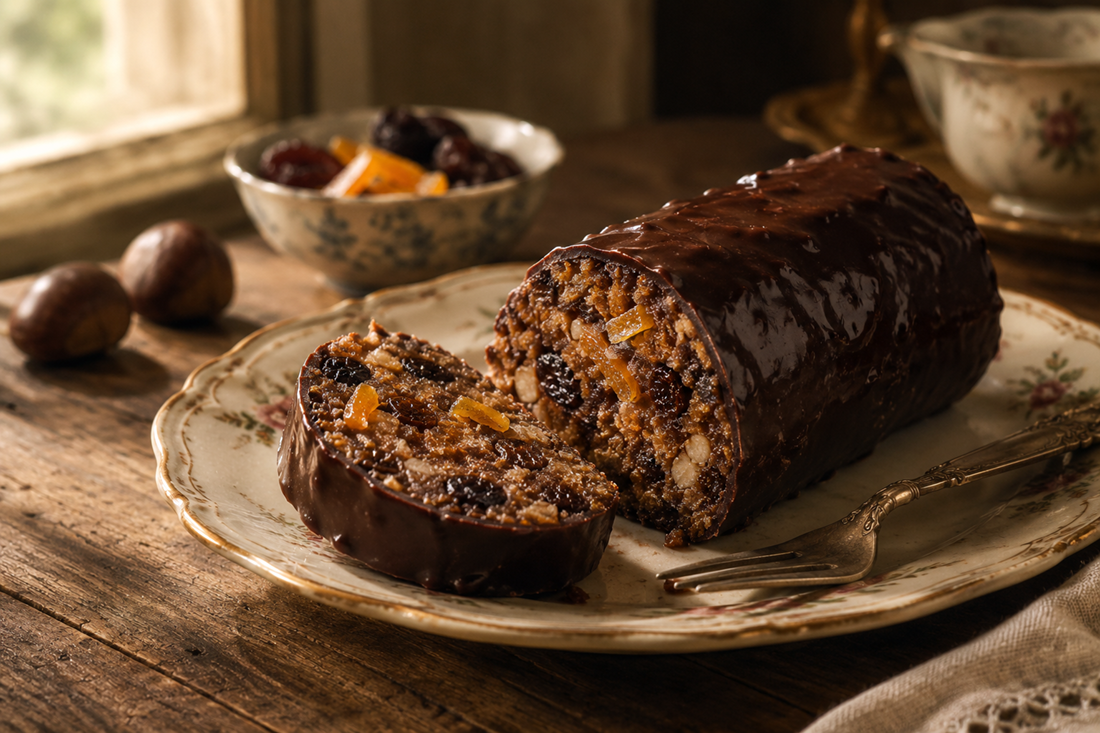
Chestnut Roll with Chocolate Glaze
A dense, no-bake chestnut confection studded with candied citrus peel, dates, and raisins, and finished with a glossy dark chocolate glaze.
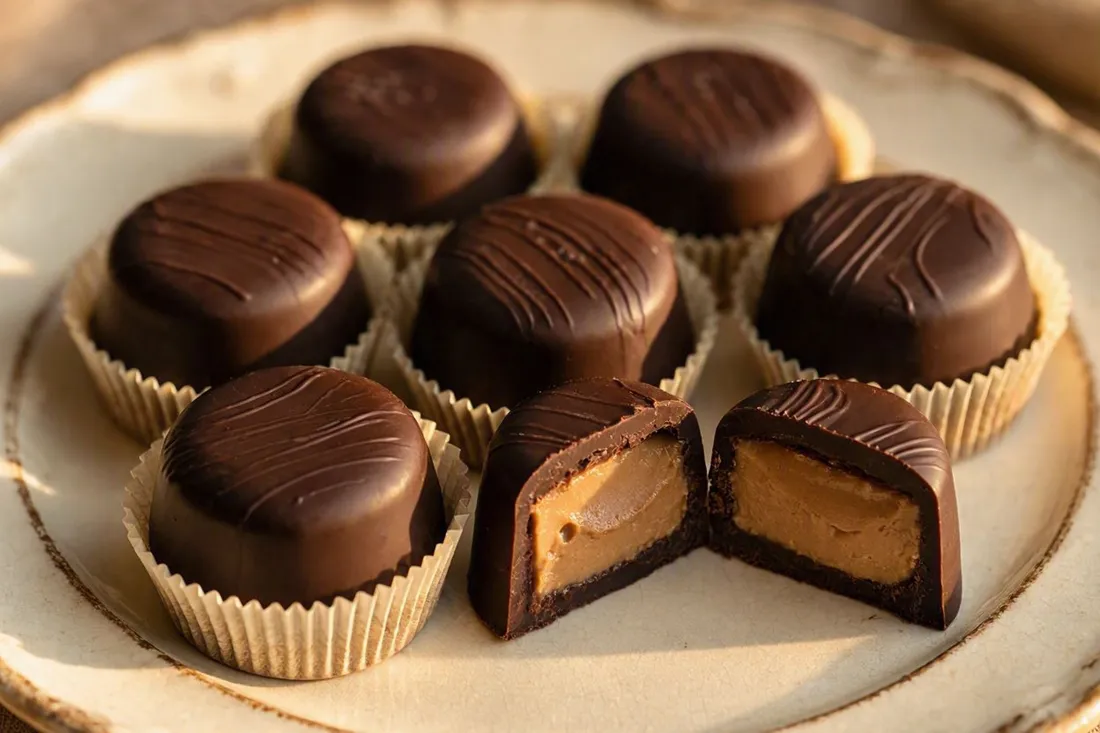
Coffee Cream Tartlets
Bite-sized chocolate-coated tartlets filled with silky coffee custard cream, unmolded like a bonbon. A no-bake Central European confection for dessert tables.
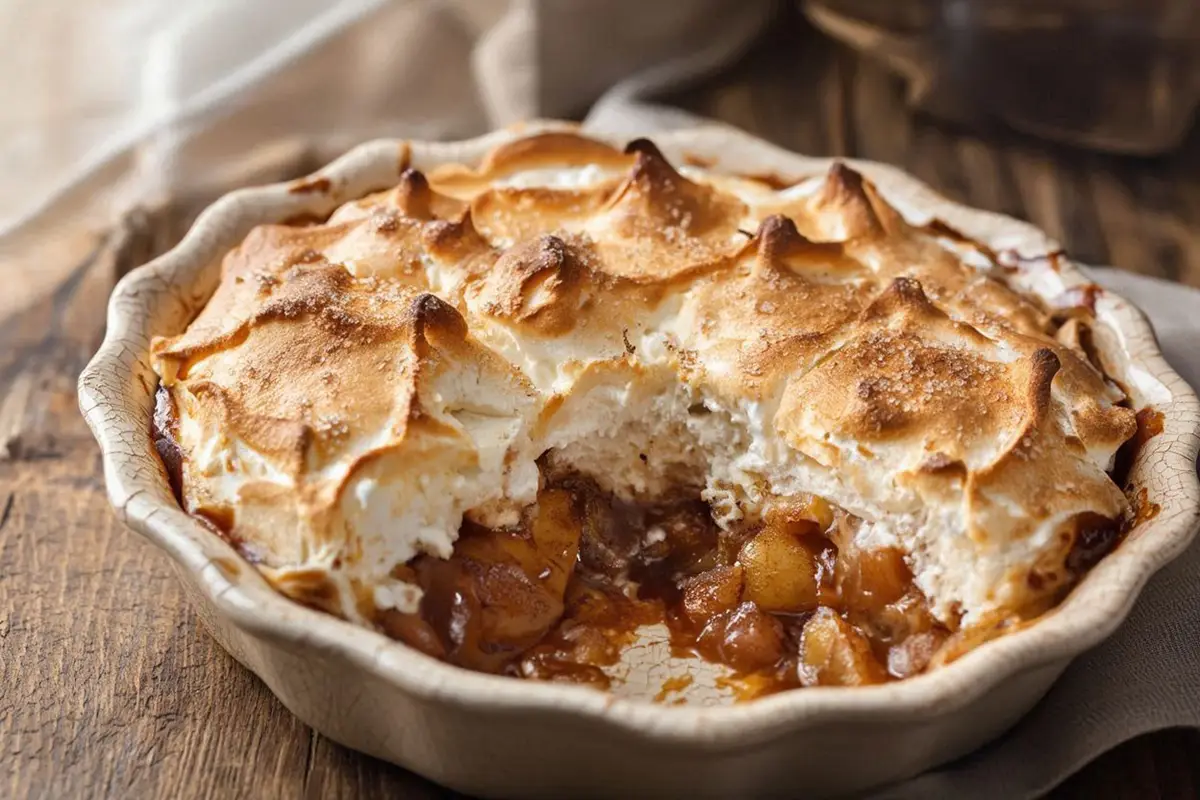
Velvet Apple & Meringue Gratin
A decadent vintage dessert featuring apples slow-cooked in a butter-sugar syrup, topped with a cloud of lemon-scented meringue.