Chicken and Cauliflower in Sour Cream Sauce
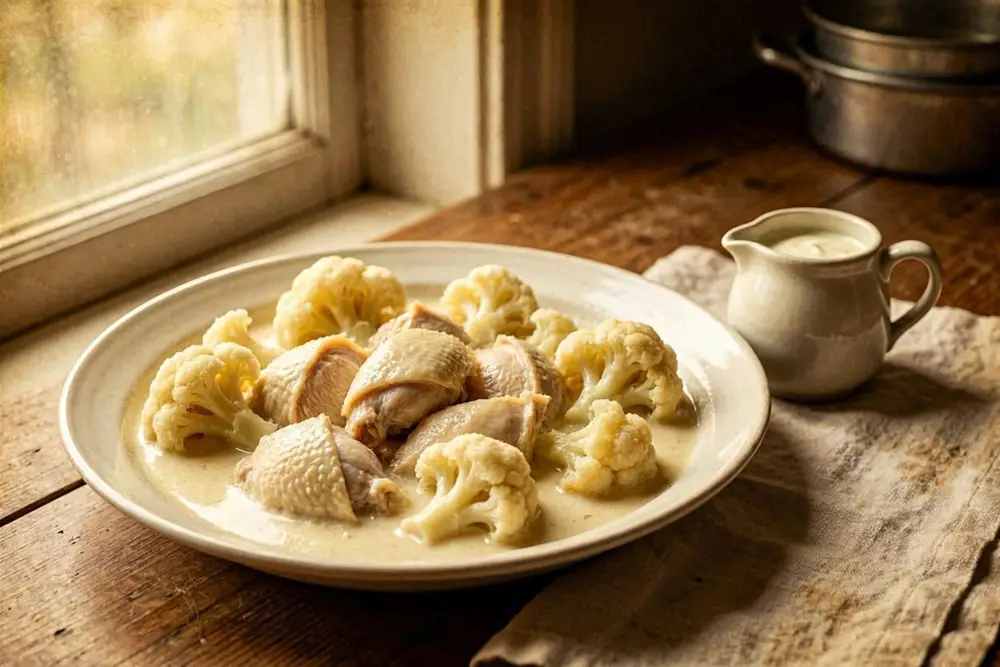
A quartered young chicken cooked in a white sour cream roux, served with boiled cauliflower florets arranged around the meat and the cooking sauce poured over.
Quick Summary
A quartered young chicken cooked in a white sour cream roux, served with boiled cauliflower florets arranged around the meat and the cooking sauce poured over.
Historical recipe
Modernised adaptation of an early 20th‑century source. Not independently kitchen-tested by Attic Recipes. Quantities, temperatures, and food safety guidance have been updated for a contemporary kitchen — results may vary and errors may exist. Nutritional values, where provided, are estimates only and have not been laboratory tested. Always follow current food safety guidelines for your region. If you have a health condition, allergy, or dietary requirement, consult a qualified professional before preparing this recipe.
Use of this recipe is entirely at your own risk and subject to our Terms of Service and Privacy Policy. Attic Recipes accepts no liability for any adverse outcome.
- Dairy
- Gluten
Additional notes
-
Note
This recipe uses lard as the cooking fat. Lard may be replaced with butter or a neutral vegetable oil in equal quantity. Those avoiding animal fats should use vegetable oil.
- 1
Clean and wash the chicken thoroughly. Cut into 4 pieces. Season all over with 1 tsp salt and set aside while you prepare the sauce.
- 2
Place a large saucepan over medium heat and melt the 15g lard. Add the 10g plain flour and stir continuously for 1–2 minutes, cooking the roux until it is smooth and lightly coloured — it should smell nutty but not brown.
- 3
Pour the 300ml cold water over the roux in a steady stream, whisking constantly to prevent lumps. Add the 60ml sour cream and whisk until the sauce is smooth and fully combined. Bring to a boil, stirring, and cook for 3–4 minutes until the sauce thickens slightly.
Tip Adding cold water (rather than hot) to a hot roux gives you more time to whisk out lumps before the starch gelatinises. - 4
Place the salted chicken pieces into the boiling sauce. Reduce heat to a low simmer, cover with a lid, and cook for 40–45 minutes, turning the pieces once halfway through, until the chicken is cooked through and the juices run clear when pierced at the thickest point.
- 5
While the chicken cooks, prepare the cauliflower. Remove the outer leaves and bring a separate pot of well-salted water to a boil. Add the whole 600g cauliflower head and boil for 12–15 minutes until completely tender when pierced with a knife. Drain thoroughly.
- 6
Break or cut the boiled cauliflower into large florets. Add the florets to the saucepan with the chicken and sauce. Bring back to a gentle boil and cook together for 3–5 minutes to allow the cauliflower to absorb some of the sauce.
- 7
Transfer the chicken pieces to a shallow serving bowl. Arrange the cauliflower florets around the meat. Ladle the cooking sauce generously over both and serve immediately.
Nutrition Information per 1 serving (approx. 1 chicken quarter + cauliflower portion + sauce)
Nutritional values are approximate estimates and may vary based on specific ingredients used, preparation methods, and portion sizes.
Serving Suggestions
Serve with crusty white bread to absorb the sauce, or over egg noodles or boiled potatoes. A simple cucumber salad dressed with wine vinegar alongside balances the richness of the cream sauce.
About This Recipe
This is a chicken dish without ceremony. A quartered bird goes into a white sauce made from lard, flour, water, and sour cream — a zaprška thinned to a pouring consistency — and simmers until cooked through. The cauliflower is boiled separately, broken into florets, and added to the sauce at the end. Everything is plated in a shallow bowl: meat in the centre, cauliflower arranged around it, sauce poured over both.
What makes this recipe worth attention is its restraint. There is no onion, no garlic, no paprika, no aromatics of any kind beyond the salt on the chicken. The sauce is pale, mildly sour from the cream, and carries the flavour of whatever fat was used to make the roux. The cauliflower absorbs it without competing with it. The result is a dish where the quality of the chicken is the point — nothing is there to compensate for a mediocre bird.
The name in the original includes the word “paprikash”, which is worth noting because the recipe contains no paprika. In the period, the term was used broadly for meat cooked in a flour-thickened sauce, not specifically a paprika-based one.
Why It Works
Cooking the chicken directly in the sauce rather than browning it first is a deliberate technique. Browning would add colour and a layer of Maillard flavour, but it would also seal the surface and slow the release of the chicken’s own juices into the sauce. Placing the raw, salted pieces directly into the simmering sauce allows the proteins to relax slowly, releasing moisture and gelatin into the liquid as they cook. The sauce thickens further and becomes richer without any additional intervention.
The roux — flour cooked briefly in fat before liquid is added — serves as both thickener and flavour base. Cooking the flour out for 1–2 minutes before adding water removes the raw starch taste and produces a sauce that is smooth rather than pasty. The sour cream added before the chicken goes in stabilises slightly during the long simmer, though it will not hold a vigorous boil without breaking — keep the heat gentle once the chicken is in.
Boiling the cauliflower separately rather than raw in the sauce is practical: a raw head of cauliflower would take 20–25 minutes to cook through in a covered pan, by which point the sauce would be over-reduced and the chicken potentially overcooked. The two-pot method keeps each component at its correct texture.
Modern Kitchen Tips
A whole young chicken cut into quarters gives uneven cooking times between the breast and leg portions. If using a standard supermarket chicken, consider removing the breast pieces 5–10 minutes before the legs and thighs — they cook faster and dry out more easily. Return them to the sauce for the final 5 minutes to warm through.
The sauce will seem thin when the chicken first goes in. It thickens progressively as the chicken releases its juices. Do not add more flour mid-cook — the final sauce, once the cauliflower has been added and everything has cooked together briefly, will be the right consistency.
For a version closer to what many people expect when they hear “paprikash”: add 1 tbsp sweet red paprika to the hot fat before the flour, and stir it into the roux before adding water. This gives the sauce a deep red colour and a sweet, smoky depth — but it is an adaptation, not the historic recipe.
A quiet chicken dish from early 20th century Central European home cooking — two pots, a handful of ingredients, and patience.
The Story Behind This Recipe
Historical Context
Home cooks of the period prepared this dish as a straightforward weekday main — a young chicken cooked directly in a white roux thinned with water and finished with sour cream. The title given to the recipe includes the word 'paprikash', yet the original contains no paprika of any kind. This reflects a period naming convention in which 'paprikaš' sometimes referred broadly to a meat dish cooked in a flour-thickened sauce rather than specifically to a paprika-spiced one. The cauliflower was boiled separately in salted water and added to the sauce at the end — a two-pot method that keeps the vegetable from disintegrating during the longer chicken cooking time. No quantities were given for the chicken, water, lard, flour, or cauliflower; only the sour cream (4 tablespoons) and the instruction to use one head of cauliflower were specific.
Modern Kitchen Adaptation
Lard may be replaced with an equal weight of unsalted butter or a neutral vegetable oil with no change to the method. All quantities except the sour cream and cauliflower are estimated from standard roux ratios and period practice; all are marked accordingly. The dish has not been renamed 'paprikash' in the modern adaptation — paprika does not appear in the original and adding it would change the character of the sauce. A tip in the instructions notes that sweet paprika may be added to the hot fat before the flour for those who prefer a red-hued version, but this is not part of the historic recipe.
This recipe is an independent modern adaptation developed from historical sources in the public domain. It is provided for informational and educational purposes only and does not constitute professional dietary, nutritional, or medical advice. Food preparation involves inherent risks. The reader assumes full responsibility for safe food handling, ingredient sourcing, and adherence to current local food safety guidelines. The site operator accepts no liability for outcomes resulting from the preparation or consumption of this recipe.
One recipe.
Every week.
You Might Also Like
More recipes from the same category
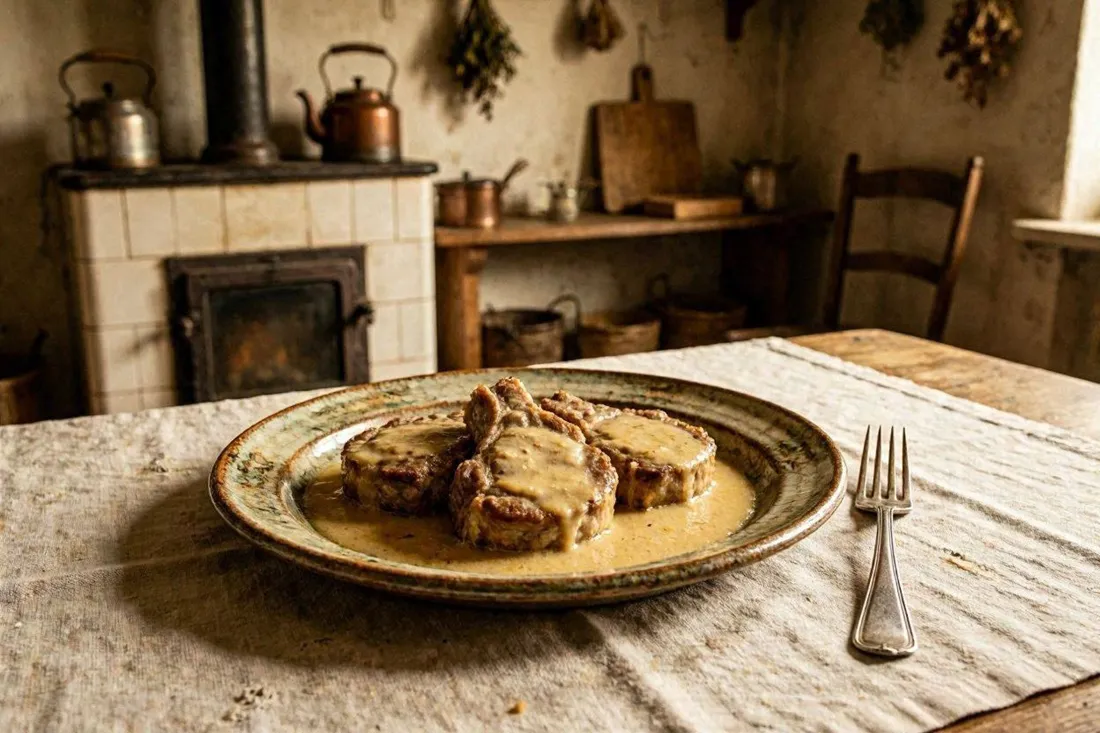
Braised Pork Chops in White Wine and Sour Cream Sauce
Pork loin chops braised with onion, carrot, parsley root, and celery root in white wine, then finished with a strained sour cream sauce.
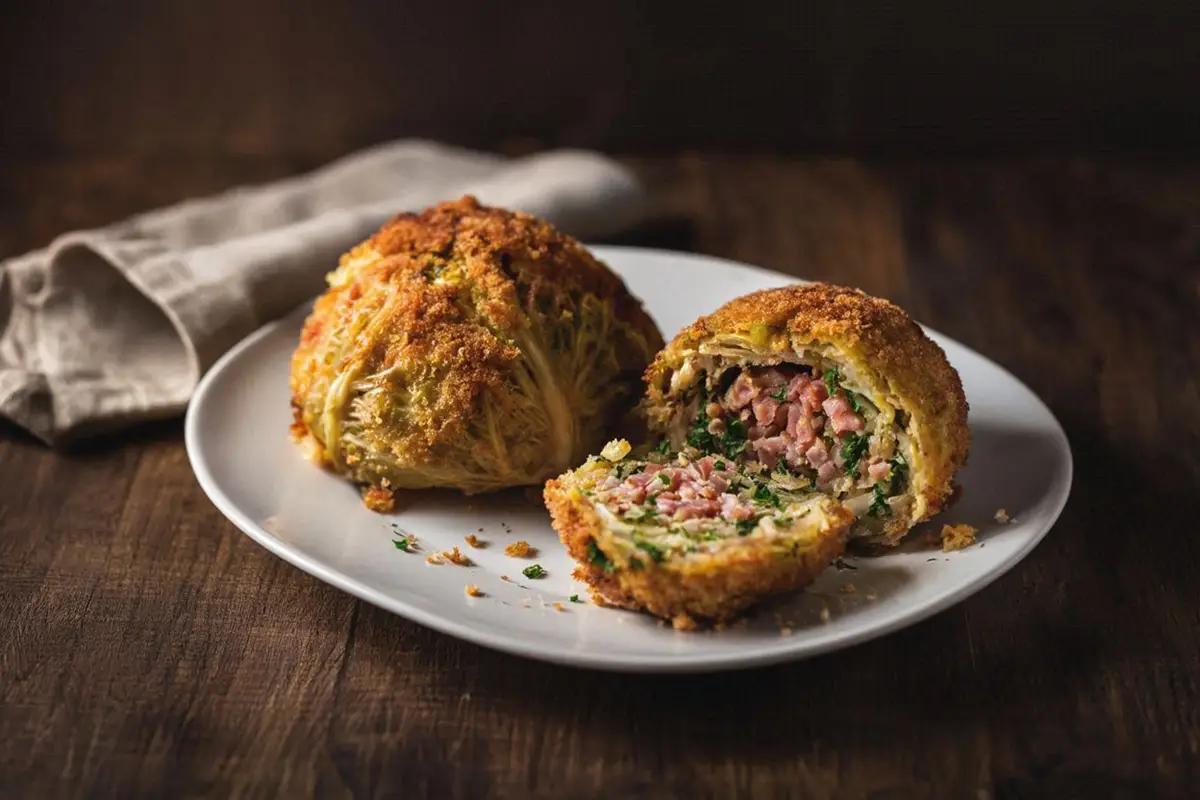
Breaded Savoy Cabbage Stuffed with Ham
Tender young savoy cabbage heads filled with ground ham, fried onion, and herbs, breaded and pan-fried until golden. A hearty Central European classic.
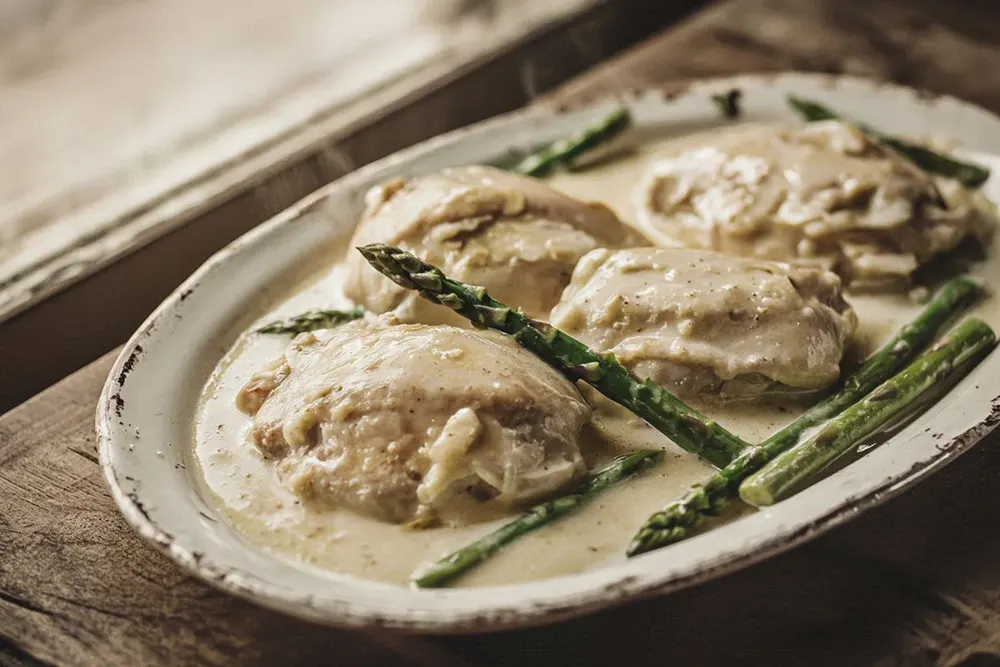
Chicken in Asparagus Sauce
A whole chicken poached in spiced broth, then finished in a silky velouté enriched with egg yolks and cream, garnished with tender asparagus tips.