Breaded Savoy Cabbage Stuffed with Ham
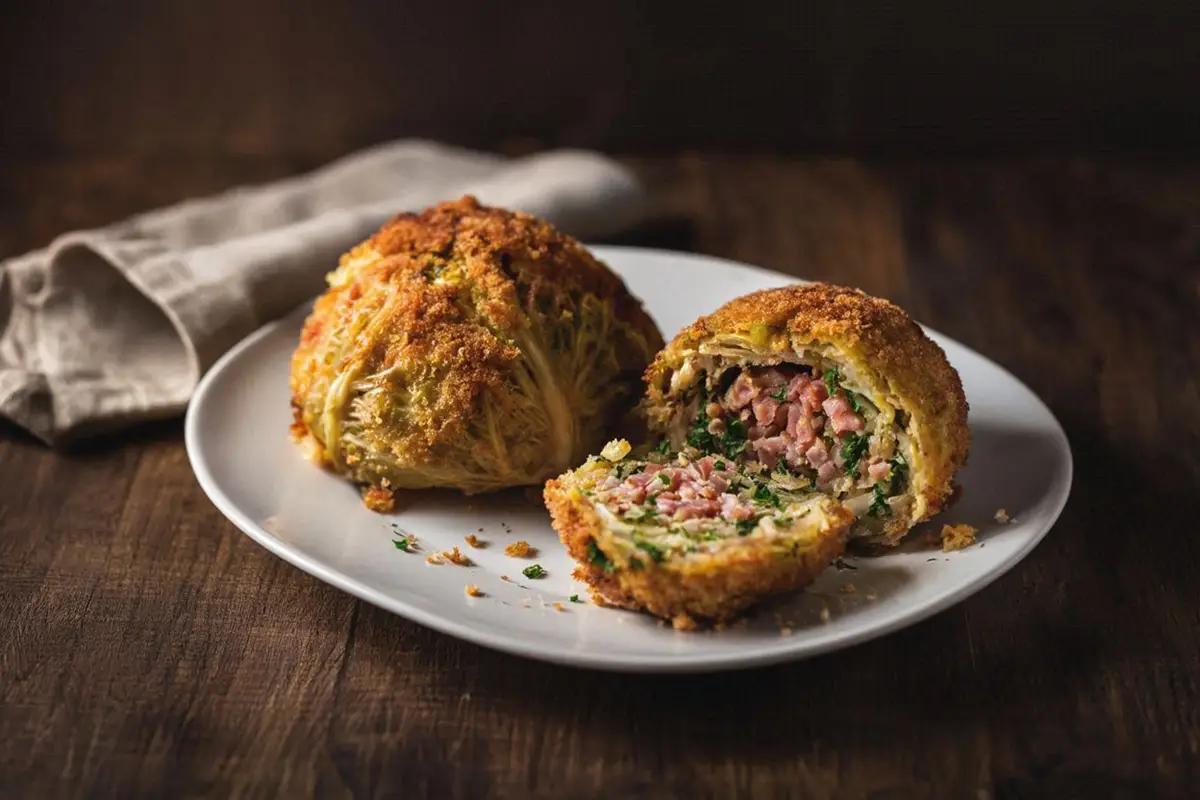
Tender young savoy cabbage heads filled with ground ham, fried onion, and herbs, breaded and pan-fried until golden. A hearty Central European classic.
Quick Summary
Breaded Savoy Cabbage Stuffed with Ham is a Central European dish of young savoy cabbage filled with ham, onions, herbs, and eggs, then breaded and pan-fried. It takes about 70 minutes, with boiled cabbage creating a crispy, flexible wrap.
Historical recipe
Modernised adaptation of an early 20th‑century source. Not independently kitchen-tested by Attic Recipes. Quantities, temperatures, and food safety guidance have been updated for a contemporary kitchen — results may vary and errors may exist. Nutritional values, where provided, are estimates only and have not been laboratory tested. Always follow current food safety guidelines for your region. If you have a health condition, allergy, or dietary requirement, consult a qualified professional before preparing this recipe.
Use of this recipe is entirely at your own risk and subject to our Terms of Service and Privacy Policy. Attic Recipes accepts no liability for any adverse outcome.
- Dairy
- Eggs
- Gluten
Additional notes
-
Warning
This recipe contains a raw egg in the filling. The internal temperature of the filling must reach at least 71°C (160°F) to be safe. Do not serve undercooked filling to pregnant women, children under 5, elderly individuals, or immunocompromised persons.
Use a kitchen thermometer to verify the internal temperature of the filling before serving. Alternatively, omit the raw egg and add an extra tablespoon of soaked bread to bind the filling.
-
Caution
Hot frying oil reaches 170–175°C and causes severe burns on contact. Keep children away from the stove during frying. Never leave the pan unattended. In case of an oil fire, cover the pan with a lid — do not use water.
-
Caution
Fried in lard or oil, this is a high-fat dish. Those with cardiovascular conditions or on low-fat diets should consider the air fryer or oven-baked alternative described in the modern adaptation notes.
-
Note
Contains gluten (breadcrumbs, flour, bread roll), eggs, dairy (milk), and pork. Not suitable for those with relevant allergies or dietary restrictions.
- 1
Remove any damaged outer leaves from the cabbage heads. Wash thoroughly. Bring a large pot of salted water to a boil and cook the cabbage heads until completely tender — about 15 to 20 minutes depending on size. They should yield easily when pressed.
Tip Cook gently at a simmer rather than a rolling boil to keep the leaves intact. - 2
Remove each head carefully and place on a cutting board. Allow to drain and cool completely before handling — at least 20 minutes.
- 3
Once cooled, cut each head in half lengthwise. Remove the core carefully, leaving four outer leaves attached to each half. These leaves will form the shell that holds the filling.
Tip Use a small sharp knife and work slowly — the goal is four intact outer leaves per head, hinged together. - 4
Soak the bread roll in the milk for 5 minutes until soft, then squeeze out excess milk thoroughly.
- 5
Combine the ground ham, fried onions, soaked and squeezed bread, hard-boiled eggs, fresh egg, parsley, pepper, and salt. Mix well until the filling is uniform and holds together. Taste and adjust salt — the ham may provide enough.
Tip The hard-boiled eggs add texture to the filling. They are ground in with the rest of the ingredients rather than left whole. - 6
Place a generous amount of filling on two of the four leaves of each cabbage half. Fold the remaining two leaves over the top to completely conceal the filling. Press and tuck the edges firmly all around so the filling cannot escape during frying.
- 7
Set up a breading station: flour in one shallow dish, beaten eggs in a second, breadcrumbs in a third. Roll each stuffed cabbage head first in flour, then coat in beaten egg, then press firmly into breadcrumbs to cover completely.
- 8
Heat the lard or oil in a wide frying pan over medium-high heat to approximately 170–175°C. Fry each stuffed head on both sides until deep golden brown — about 4 to 5 minutes per side. Do not rush; the filling needs time to heat through.
Tip Fry in batches if needed. Do not crowd the pan or the temperature will drop and the breading will absorb oil instead of crisping. - 9
Remove and drain briefly on paper towels. Serve warm.
Nutrition Information per 1 stuffed cabbage head
Nutritional values are approximate estimates and may vary based on specific ingredients used, preparation methods, and portion sizes.
Serving Suggestions
Serve warm as a substantial appetizer or alongside a simple roast. A spoonful of sour cream or a wedge of lemon on the side cuts through the richness. The original recipe notes both uses — appetizer and side — with the appetizer being more common.
About This Recipe
Small, young savoy cabbage heads — one per person — boiled until tender, carefully cored to leave four intact outer leaves, filled with a ground ham and herb mixture, then folded shut, breaded, and pan-fried until golden. The result is a self-contained, crispy package with a rich, savory filling inside: the bitterness of the cabbage against the saltiness of the ham, the crunch of the breadcrumb coat against the soft interior.
It works as a substantial appetizer or a main alongside something simple. Either way, it arrives at the table warm and satisfying.
Why It Works
The boiling step does two things: it softens the leaves enough to fold without cracking, and it mellows the cabbage’s raw bitterness into something sweeter and more yielding. Cooling completely before handling is not optional — warm cabbage tears. The core removal creates the pocket without weakening the structure.
The breading sequence — flour first, then egg, then breadcrumbs — is standard for a reason. The flour gives the egg something to grip. The egg seals the breadcrumbs. Without flour, the coating slides off in the pan.
Frying at the right temperature matters more than most people think. Too cool, and the breading absorbs fat and turns heavy. Too hot, and the outside burns before the filling heats through. 170–175°C is the target.
On Scaling
The original recipe is written to scale by headcount — one small cabbage head per person, filling adjusted proportionally. The quantities here serve 6. For 4 people, use 4 cabbage heads and approximately 170g of ham. The filling ratio stays roughly the same: about 40g of ham per head, plus the bread, onion, and eggs scaled down accordingly.
On the Hard-Boiled Eggs in the Filling
The original recipe calls for 2 hard-boiled eggs as part of the filling alongside a fresh raw egg. Their exact purpose is not explained — unusual for a filling that already has bread and raw egg as binders. Ground into the filling, they add density and a slightly firmer texture. They are included here as written, ground together with the ham and other ingredients.
Troubleshooting
Filling falls out during frying: The edges were not tucked tightly enough, or the cabbage leaves tore during coring. Press the edges firmly and use a toothpick to secure if needed — remove before serving.
Breading burns before filling heats through: Oil is too hot. Reduce heat and finish with a lid on the pan for the last 2 minutes to trap steam and heat the interior.
Cabbage falls apart when coring: It was not cooled long enough, or the heads were too large. Use the smallest heads available and cool fully before cutting.
A classic of early 20th century home cooking, preserved and adapted for the modern kitchen.
The Story Behind This Recipe
Historical Context
Stuffed and breaded vegetables were a marker of accomplished home cooking across Central Europe in the early 20th century — dishes that required patience and skill, served to demonstrate the cook's ability as much as to feed the household. Savoy cabbage, with its crinkled, pliable leaves, was particularly suited to this technique. Ham combined with bread, egg, and fried onion as a filling base appears consistently across the region's household cookbooks of this era, varying only in proportion and seasoning.
Modern Kitchen Adaptation
The original recipe scales entirely by headcount — one cabbage head per person, with filling proportions adjusted accordingly. The quantities here are calibrated for 6 servings. The recipe originally calls for lard as the frying fat, which remains the most flavourful option; neutral oil is a straightforward substitute. For a lighter result without sacrificing the crispy coating, an air fryer works well: cook at 200°C / 180°C fan for 12 to 15 minutes, turning halfway through. The breading crisps nicely with far less fat, though the colour will be slightly paler than pan-fried.
This recipe is an independent modern adaptation developed from historical sources in the public domain. It is provided for informational and educational purposes only and does not constitute professional dietary, nutritional, or medical advice. Food preparation involves inherent risks. The reader assumes full responsibility for safe food handling, ingredient sourcing, and adherence to current local food safety guidelines. The site operator accepts no liability for outcomes resulting from the preparation or consumption of this recipe.
One recipe.
Every week.
You Might Also Like
More recipes from the same category
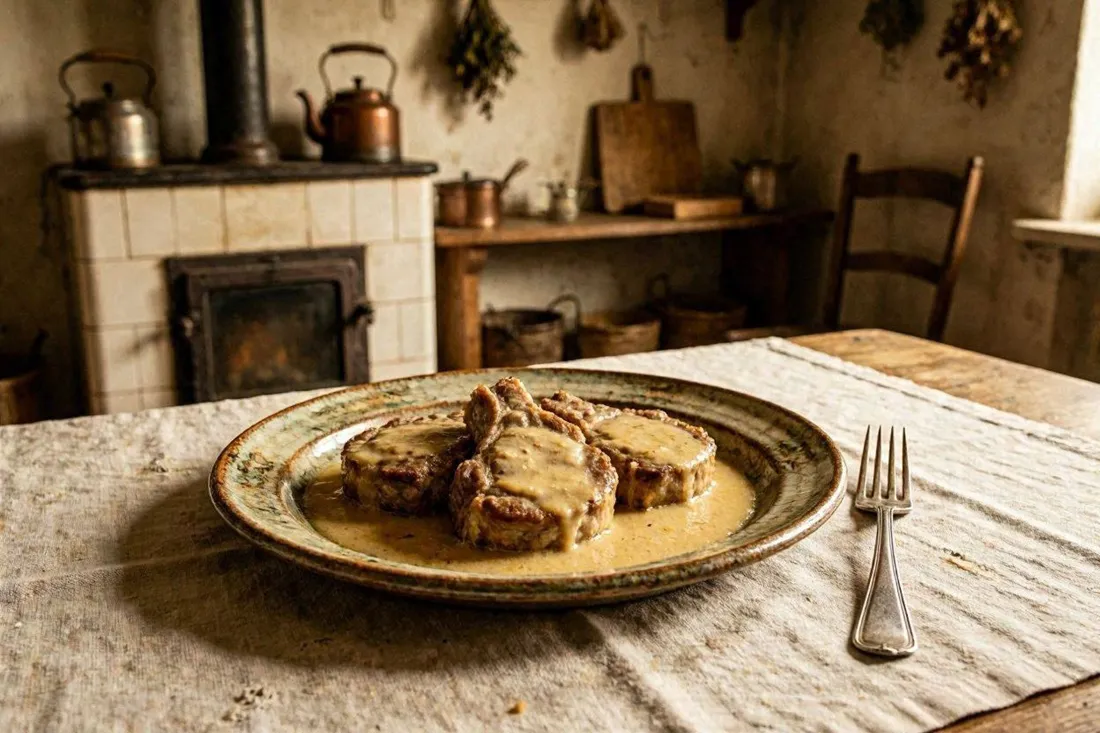
Braised Pork Chops in White Wine and Sour Cream Sauce
Pork loin chops braised with onion, carrot, parsley root, and celery root in white wine, then finished with a strained sour cream sauce.
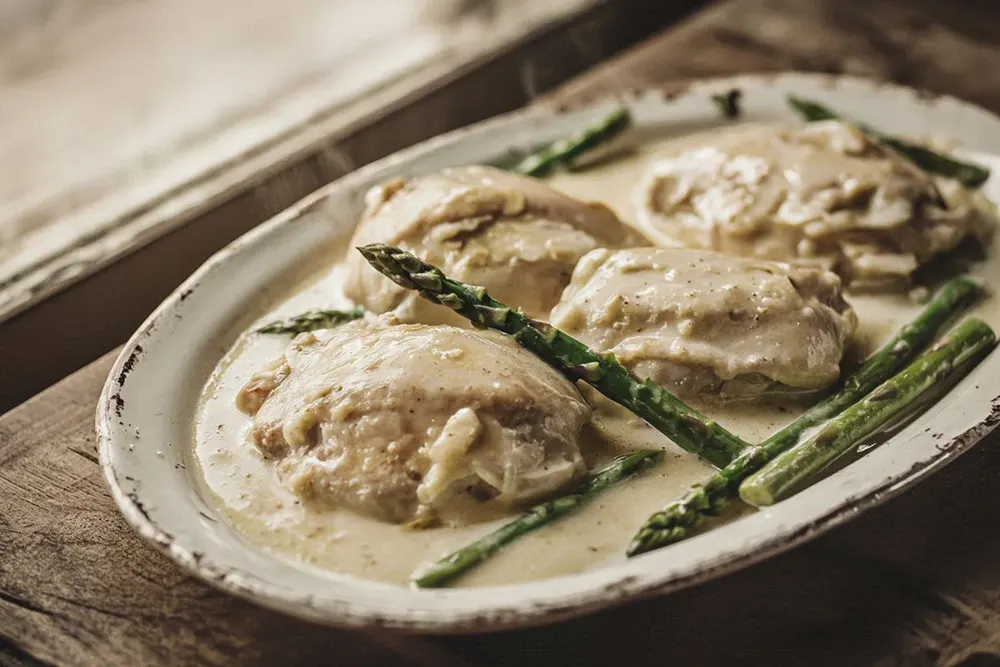
Chicken in Asparagus Sauce
A whole chicken poached in spiced broth, then finished in a silky velouté enriched with egg yolks and cream, garnished with tender asparagus tips.
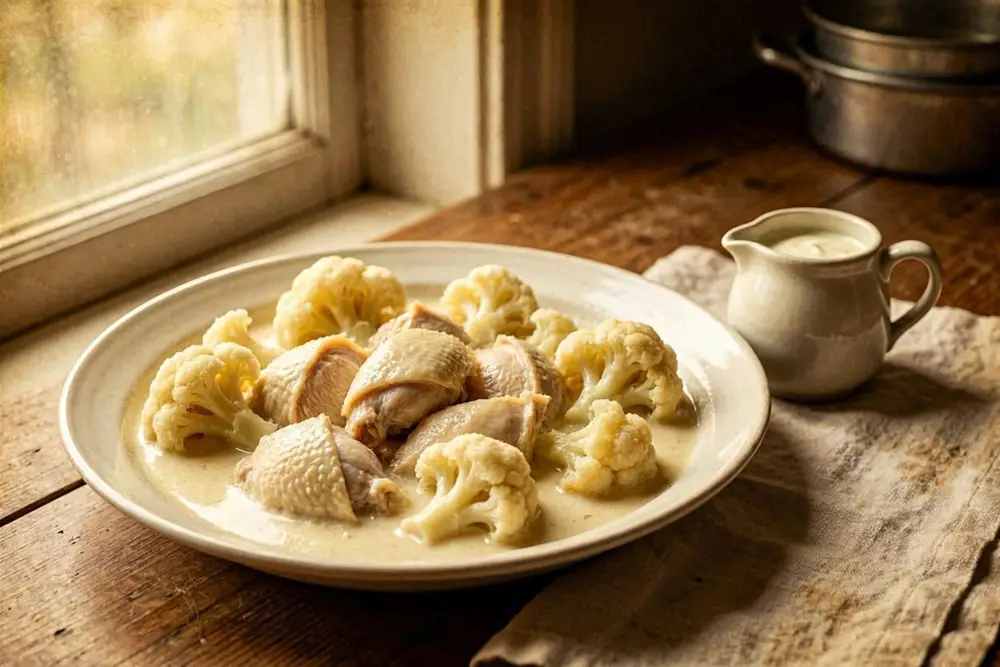
Chicken and Cauliflower in Sour Cream Sauce
A quartered young chicken cooked in a white sour cream roux, served with boiled cauliflower florets arranged around the meat and the cooking sauce poured over.