Beef Tongue in Mushroom Sauce
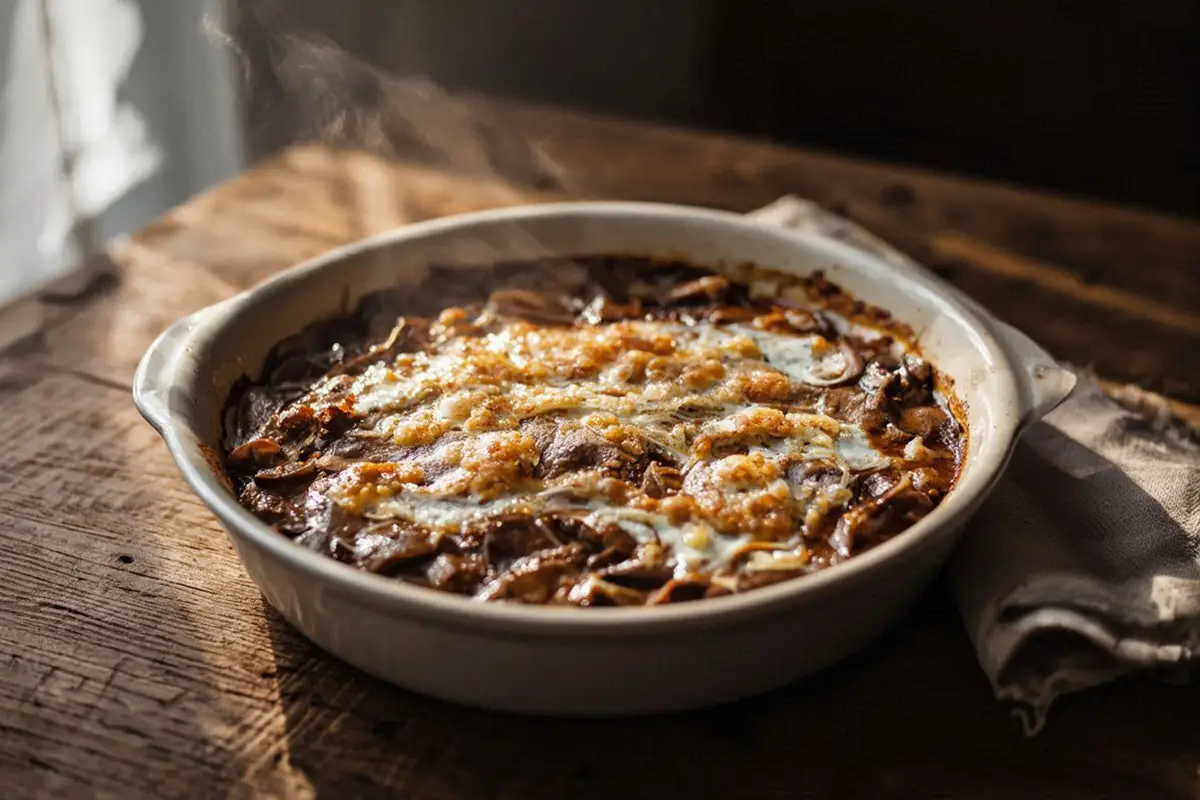
Tender sliced beef tongue layered in a rich dark mushroom sauce, finished with sour cream, Parmesan, and a golden oven crust.
Quick Summary
Beef Tail in Red Wine Sauce is a Central European dish of oxtail slow-braised in red wine with carrots, lemon zest, and horseradish, finished with a roux-thickened sauce. It takes about 205 minutes, yielding a smooth, glossy, aromatic sauce.
Historical recipe
Modernised adaptation of an early 20th‑century source. Not independently kitchen-tested by Attic Recipes. Quantities, temperatures, and food safety guidance have been updated for a contemporary kitchen — results may vary and errors may exist. Nutritional values, where provided, are estimates only and have not been laboratory tested. Always follow current food safety guidelines for your region. If you have a health condition, allergy, or dietary requirement, consult a qualified professional before preparing this recipe.
Use of this recipe is entirely at your own risk and subject to our Terms of Service and Privacy Policy. Attic Recipes accepts no liability for any adverse outcome.
- Dairy
- Gluten
Safety note
Beef tongue must reach a minimum internal temperature of 75°C (165°F) and must be completely tender throughout before peeling and slicing. Undercooked tongue poses a risk of foodborne illness. Test with a skewer or thin knife — it should pass through without resistance at every point.
Do not shorten the poaching time. 2.5–3 hours at a low simmer is the minimum for a tongue of 1–1.2kg.
Additional notes
-
Warning
High cholesterol: 245mg per serving, approaching the recommended daily limit of 300mg. Those managing cardiovascular disease or following a low-cholesterol diet should limit portion size or frequency.
Reduce portion size and serve with a larger side of vegetables. Skimming visible fat from the poaching broth before making the sauce also reduces overall fat content.
-
Warning
Sodium content is 720mg per serving, primarily from Parmesan and the reduced cooking broth. Those managing hypertension or kidney disease should monitor intake.
Reduce Parmesan to 25g total, or substitute with fresh mozzarella which has significantly lower sodium.
-
Note
Contains dairy (butter, sour cream, Parmesan) and gluten (flour in the roux). Beef tongue is also high in purines — those with gout or hyperuricemia should limit their intake.
For gluten-free: substitute plain flour with a 1:1 gluten-free flour blend or 1 tbsp cornstarch dissolved in 2 tbsp cold water. For dairy-free: use dairy-free butter, plant-based sour cream, and a dairy-free hard cheese alternative.
- 1
Place the beef tongue in a large pot and cover with cold water. Bring to a boil, skim the foam thoroughly, then add the halved onion, carrots, bay leaves, peppercorns, and salt. Reduce to a low simmer and cook for 2.5–3 hours until completely tender — a skewer should insert without resistance at any point.
Tip Starting in cold water and skimming the foam produces a cleaner, clearer broth that makes a better sauce base. Most foam appears in the first 20 minutes. - 2
Remove the tongue from the broth and allow to cool just enough to handle. Peel the skin while still warm — it comes away easily at this stage. Reserve the cooking broth. Once peeled, slice the tongue into finger-thick slices, approximately 1.5cm.
Tip Do not let the tongue cool completely before peeling — the skin becomes significantly harder to remove once cold. - 3
In a saucepan, melt 2 tbsp butter over medium heat. Add the finely chopped onion and sauté until soft and golden, approximately 8–10 minutes. Add the chopped mushrooms and cook until they release their moisture and become completely soft — about 10 minutes more.
- 4
Pass the cooked onion and mushroom mixture through a fine sieve or food mill, pressing firmly to extract as much purée as possible. Set aside.
Tip This integrates the mushroom flavor into the sauce evenly. A food processor gives a similar result if you do not have a sieve or food mill. - 5
Make the dark roux: In a separate saucepan, melt 2 tbsp butter over medium heat. Add the flour and stir constantly for 4–6 minutes until the mixture turns a deep golden-brown — the color of milk chocolate — and smells nutty. Reduce heat if needed. Do not let it burn.
Tip A dark roux is the backbone of this sauce. The color should progress from pale yellow to golden to deep amber to milk chocolate. At milk chocolate stage, remove from heat immediately and begin adding the broth. A burned roux cannot be rescued. - 6
Gradually ladle the strained tongue broth into the dark roux, whisking constantly to prevent lumps, until you have a smooth, medium-bodied sauce that coats the back of a spoon. Stir in the mushroom purée, parsley, lemon zest, and lemon juice. Simmer for 5 minutes. Taste and adjust seasoning.
- 7
Preheat the oven to 175°C / 350°F (conventional) or 155°C / 310°F (fan-assisted). In a deep ceramic or cast iron baking dish, arrange the sliced tongue in a single layer. Spoon the mushroom sauce generously over the top. Place 1 tablespoon of sour cream per person on the surface — distribute evenly but do not stir in.
Tip The sour cream sits independently on top of the dark sauce. It softens and swirls slightly in the oven, giving distinct layers of cream and sauce in every serving. - 8
Scatter the 45g of grated Parmesan evenly over the top. Drizzle with the melted butter. Bake for 30 minutes until the top is golden and bubbling.
- 9
Remove from the oven and serve immediately directly from the baking dish.
Nutrition Information per 1 portion (approx. 220g tongue + sauce + topping)
Nutritional values are approximate estimates and may vary based on specific ingredients used, preparation methods, and portion sizes.
Serving Suggestions
Serve directly from the baking dish with boiled or mashed potatoes, bread dumplings, or thick slices of crusty white bread. A simple green salad or pickled cucumber salad alongside cuts through the richness of the sauce.
About This Recipe
Beef tongue is one of the great misunderstood cuts. Properly cooked — poached low and slow until completely tender, peeled while still warm, sliced cleanly — it has a texture unlike anything else: dense but yielding, with a flavor that is deeply beefy without being heavy. Layered here with a dark mushroom sauce, finished with sour cream and a Parmesan crust, it becomes something genuinely elegant. This is not a difficult dish. It is a patient one.
Why It Works
The dark roux is the structural and flavor core of the sauce. Cooking the flour in butter past the pale stage — until it reaches the color of milk chocolate — removes the raw starch taste and develops a complex, slightly bitter nuttiness that balances the richness of the tongue and the sharpness of the sour cream. A pale roux would make the sauce taste flat and floury.
Puréeing the mushrooms before adding them to the sauce distributes mushroom flavor throughout every spoonful rather than concentrating it in chunks. The sauce becomes something more unified — earthier, smoother, more complex.
The sour cream is added last, independently, on top of the assembled dish rather than stirred into the sauce. In the oven it softens and swirls into the dark sauce without fully integrating — giving you both flavors in every bite.
On the Cheese
The original recipe offers a choice between Parmesan and a local yellow cheese — almost certainly a reference to kashkaval (kačkavalj), which was the standard hard yellow cheese of the region in the early 20th century.
Parmesan (Parmigiano Reggiano DOP): The best choice for this dish. It forms a deep golden, aromatic crust and adds a sharp, umami-rich counterpoint to the earthy sauce.
Kashkaval / Kačkavalj: More authentic to the period. It melts smoothly with a milder, saltier flavor. A good choice if you want to stay closer to the original.
Aged Pecorino Romano: Sharper than kashkaval, slightly more pungent than Parmesan. Excellent if available.
Gruyère: Melts beautifully and adds a nutty sweetness. Less traditional but very good.
Make-Ahead Notes
- Tongue: Poach up to 2 days ahead. Refrigerate in the cooking broth — it stays moist and slices more cleanly when cold.
- Sauce: Make the day before and refrigerate. Reheat gently before assembling.
- Assembly and bake: Do on the day of serving. The 30-minute bake creates the crust and cannot be done ahead.
A classic of early 20th century home cooking, preserved and adapted for the modern kitchen.
The Story Behind This Recipe
Historical Context
Beef tongue was among the most prized cuts in Central European middle-class cooking of the early 20th century — considered far more refined than it is today. Layered with a dark mushroom sauce and finished with sour cream and cheese in a hot oven, it was a Sunday dish, a guest dish, something made with care. The technique of puréeing the mushrooms into the sauce rather than leaving them whole is a distinctly old-fashioned touch that speaks to a culinary tradition that valued texture and integration above rustic presentation.
Modern Kitchen Adaptation
The original recipe calls for lard as the cooking fat. This has been updated to unsalted butter, which produces a cleaner, slightly more delicate flavor. If you prefer the traditional character, lard works equally well — use the same quantity. For the cheese, the original likely specified a local yellow cheese similar to kashkaval (kačkavalj) — mild, slightly salty, and good at melting. Parmesan is recommended here for its sharper, more aromatic profile and the golden crust it produces. See the cheese notes section for alternatives.
This recipe is an independent modern adaptation developed from historical sources in the public domain. It is provided for informational and educational purposes only and does not constitute professional dietary, nutritional, or medical advice. Food preparation involves inherent risks. The reader assumes full responsibility for safe food handling, ingredient sourcing, and adherence to current local food safety guidelines. The site operator accepts no liability for outcomes resulting from the preparation or consumption of this recipe.
One recipe.
Every week.
You Might Also Like
More recipes from the same category
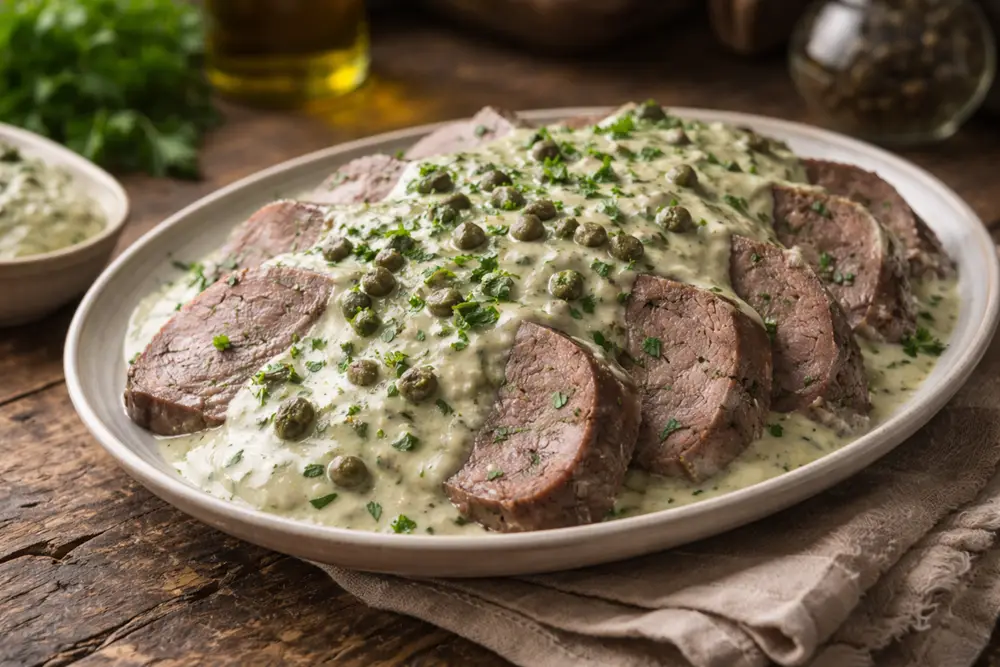
Baked Tongue in Green Sauce
Beef tongue braised with herbs, larded with bacon and roasted until golden, served in a green sauce of capers, anchovy, parsley and sour cream.
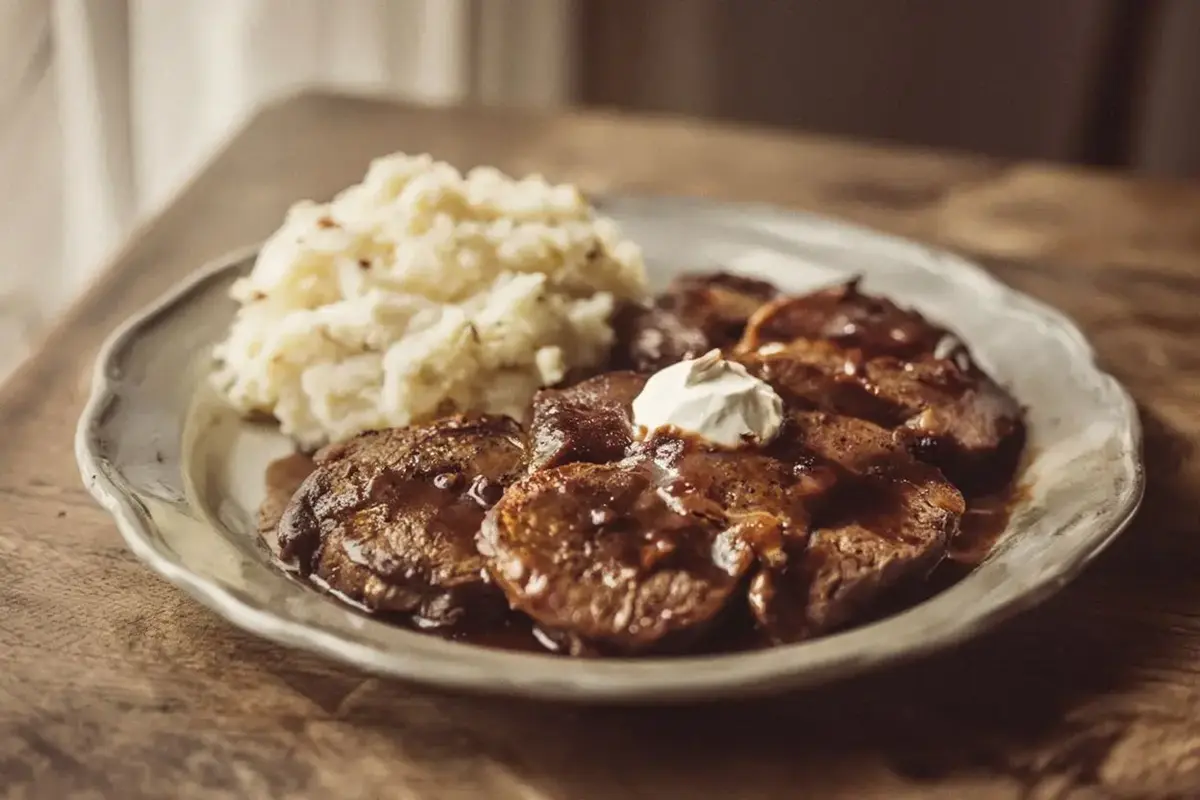
Beef Kidney with Wine
Beef kidney marinated in red wine, braised with herbs, finished with sour cream. Tender, rich, and deeply flavored.
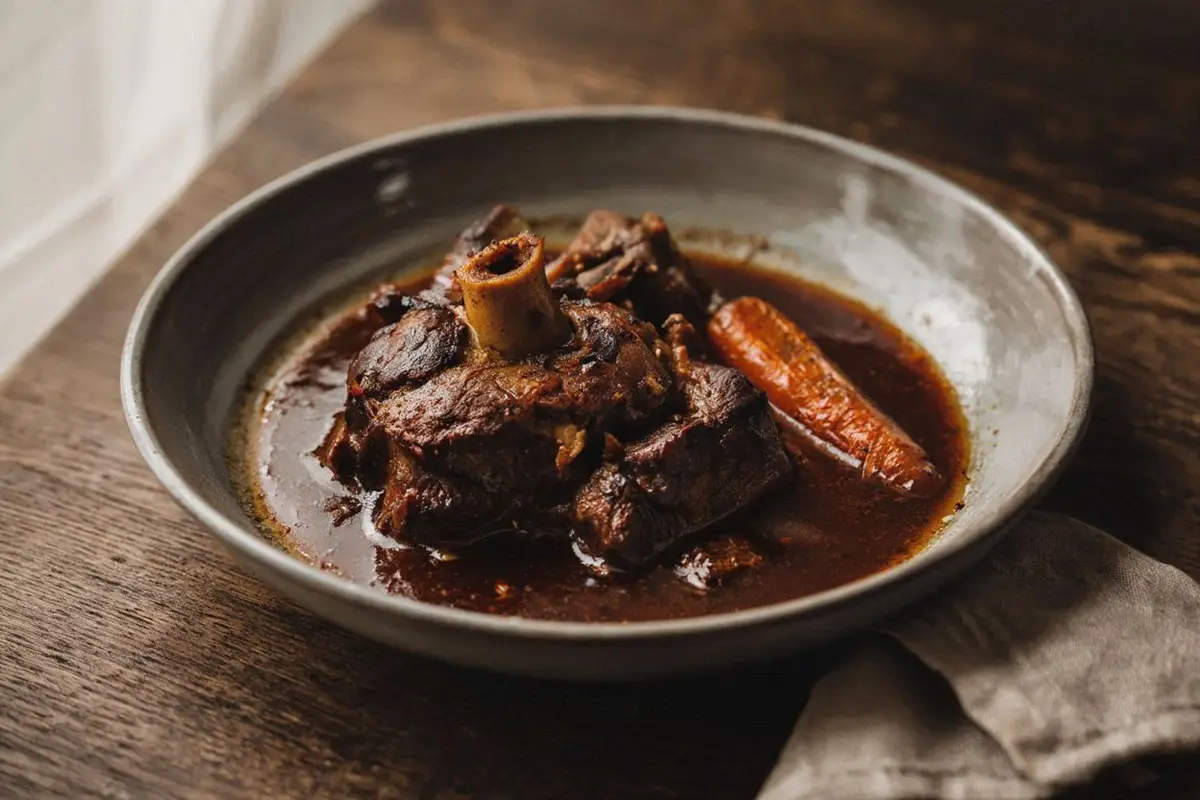
Beef Tail in Red Wine Sauce
Slow-braised oxtail in a rich red wine broth with carrots, lemon zest, and a silky roux-thickened sauce. A forgotten Central European classic.