Baked Fish with Tomatoes
Whole fish baked over ripe tomatoes with generous olive oil and lemon — a simple, fragrant Central European oven dish.
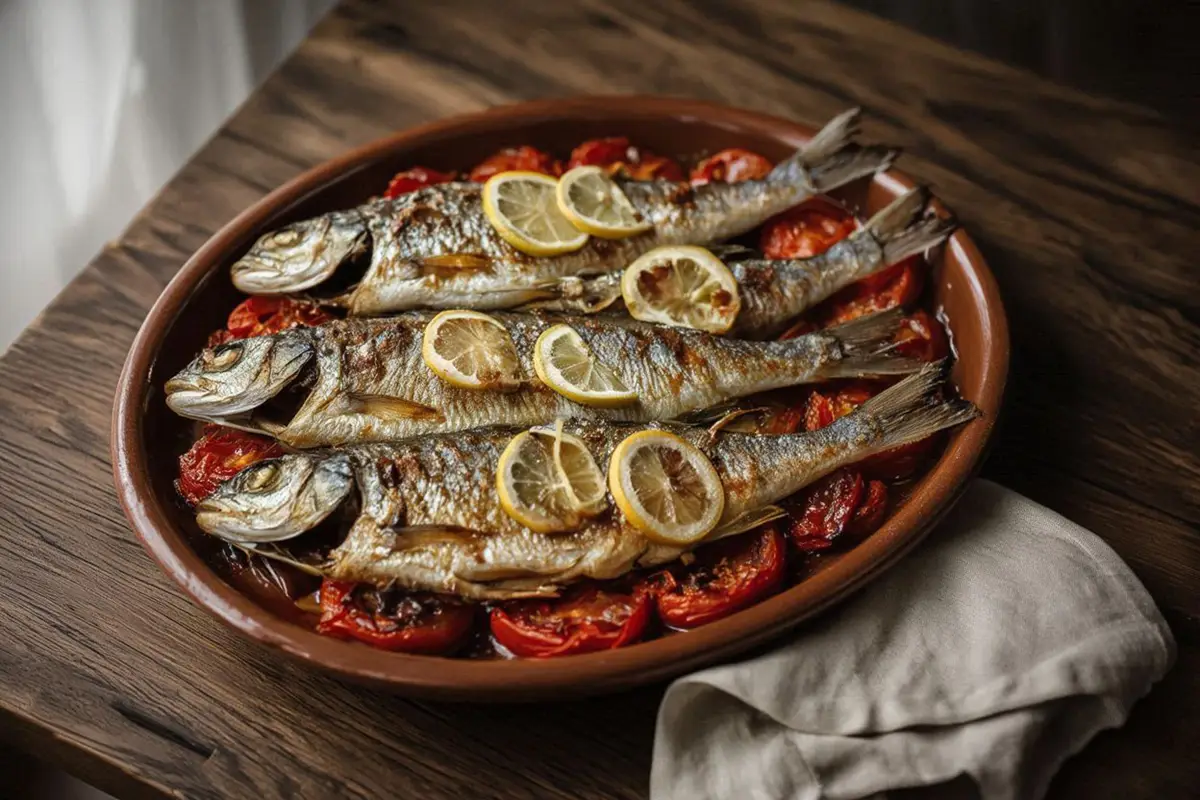
Quick Summary
Baked Fish with Tomatoes is a Central European dish of whole fish baked over ripe tomatoes, olive oil, and lemon slices. It takes about 40 minutes, with tomato juices emulsifying with oil to form a natural sauce.
Historical recipe
Modernised adaptation of an early 20th‑century source. Not independently kitchen-tested by Attic Recipes. Quantities, temperatures, and food safety guidance have been updated for a contemporary kitchen — results may vary and errors may exist. Nutritional values, where provided, are estimates only and have not been laboratory tested. Always follow current food safety guidelines for your region. If you have a health condition, allergy, or dietary requirement, consult a qualified professional before preparing this recipe.
Use of this recipe is entirely at your own risk and subject to our Terms of Service and Privacy Policy. Attic Recipes accepts no liability for any adverse outcome.
- Fish
Safety note
Whole fish must be cooked to an internal temperature of 63°C (145°F) at the thickest point. Undercooked fish presents a risk of foodborne illness. Always verify doneness with a thermometer or by checking that the flesh is fully opaque and flakes cleanly from the spine.
Use a probe thermometer inserted at the thickest point behind the head for a reliable reading.
Additional notes
-
Caution
Contains fish — a major allergen under EU Regulation 1169/2011 and FALCPA. Always declare to guests with fish or seafood allergies before serving.
No substitute — fish is the primary ingredient of this dish.
-
Note
Nutrition values are calculated using sea bass as a representative fish. Actual values will vary depending on the species used. Oily fish such as mackerel will have significantly higher fat and omega-3 content; lean white fish such as bream will be lower in fat.
- 1
Prepare the tomatoes: Peel the tomatoes — score a small cross at the base of each, lower into boiling water for 30 seconds, then transfer immediately to cold water; the skin slips off cleanly. Cut into small pieces and spread evenly across the bottom of an earthenware or ceramic baking dish. Drizzle with a little of the olive oil.
- 2
Arrange the fish: Place the whole fish on top of the tomato layer, head to tail, without crowding. Season with salt. Drizzle the remaining olive oil generously over the fish.
Tip The fish heads are left on deliberately — they contribute flavor and gelatin to the tomato sauce as the dish bakes, giving it a fuller body than fillets would produce. - 3
Add lemon: Arrange lemon slices over the fish. The heat of the oven draws the essential oils from the lemon peel into the dish, perfuming the fish from above.
- 4
Bake: Place in an oven preheated to 190°C / 375°F (conventional) or 170°C / 340°F (fan-assisted). Bake for 20–25 minutes, until the fish is cooked through and the flesh flakes easily when tested with a fork at the thickest point behind the head.
Tip Check at 20 minutes: the flesh should be fully opaque and pull cleanly from the spine. Do not overbake — the flesh should be just set, not dry. For a reliable reading, use a probe thermometer: the fish is done at 63°C (145°F) at the thickest point. - 5
Serve: Bring the earthenware dish directly to the table. Serve immediately in the same dish to retain the heat.
Nutrition Information per 1 whole fish + ¼ tomato base (approx. 350g)
Nutritional values are approximate estimates and may vary based on specific ingredients used, preparation methods, and portion sizes.
Serving Suggestions
Serve directly from the earthenware dish with crusty bread to mop up the tomato and olive oil juices. A simple green salad alongside is all that is needed. A chilled dry white wine — Assyrtiko, Malvasia, or any crisp Mediterranean white — is the natural pairing.
About This Recipe
There is almost nothing to this recipe — and that is precisely the point. Ripe tomatoes on the bottom, whole fish on top, olive oil, lemon, salt. The oven does everything else. It is a dish that belongs to a tradition of Mediterranean cooking where simplicity is not a shortcut but a philosophy: when the ingredients are good enough, the cook’s job is to get out of the way.
Why It Works
The tomatoes serve three functions simultaneously: they act as a bed that keeps the fish elevated above direct heat, they release their liquid and acidity during baking to create a natural sauce, and their sugars caramelize gently against the bottom of the earthenware dish, adding depth to what would otherwise be a very simple liquid. The olive oil, added in a quantity that might seem excessive to a modern eye, is the structural binder — it emulsifies with the tomato juice during baking and produces the characteristic glossy, silky sauce that makes this dish so satisfying to eat with bread. The lemon slices on top perfume the fish from above as the heat releases the essential oils from the peel.
Modern Kitchen Tips
- The earthenware dish: Worth using if you have one. Earthenware retains and distributes heat more evenly than metal and keeps the dish warm at the table significantly longer.
- Peeling the tomatoes: If you are short on time, skip the peeling — the skins will mostly dissolve into the sauce during baking. Peeling gives a smoother result but is not essential.
- Fish size: Four fish of approximately 300g each fit comfortably in a standard 30x20cm baking dish. If your fish are larger, adjust the baking time accordingly — roughly 10 minutes per 2.5cm of thickness at the thickest point.
- Testing doneness: The most reliable non-thermometer test is to insert a thin knife or skewer into the flesh at the thickest point for 5 seconds, then touch it to your wrist — it should feel hot, not just warm.
A classic of early 20th century home cooking, preserved and adapted for the modern kitchen.
The Story Behind This Recipe
Historical Context
This preparation belongs to the family of simple Mediterranean oven fish dishes where the fish is baked directly on a vegetable base rather than in a separately made sauce. The instruction to leave the heads on is characteristic of early 20th century cooking, where removing the head before baking was considered wasteful — the head contributes significantly to the flavor and body of the surrounding liquid. The note in the original that 'this stew has the necessary acidity from the tomatoes themselves' reflects the period's understanding that a well-chosen base ingredient can replace a more elaborate sauce entirely.
Modern Kitchen Adaptation
The original recipe specifies no particular fish — use whatever is freshest at your fishmonger that day. Sea bass, bream, red mullet, and mackerel are all excellent choices. For the tomatoes, ripe in-season plum tomatoes give the best result; out of season, good-quality canned whole tomatoes, drained, are preferable to fresh but flavorless ones. A few unpeeled garlic cloves tucked around the fish before baking is a natural modern addition that stays within the spirit of the original.
This recipe is an independent modern adaptation developed from historical sources in the public domain. It is provided for informational and educational purposes only and does not constitute professional dietary, nutritional, or medical advice. Food preparation involves inherent risks. The reader assumes full responsibility for safe food handling, ingredient sourcing, and adherence to current local food safety guidelines. The site operator accepts no liability for outcomes resulting from the preparation or consumption of this recipe.
One recipe.
Every week.
You Might Also Like
More recipes from the same category
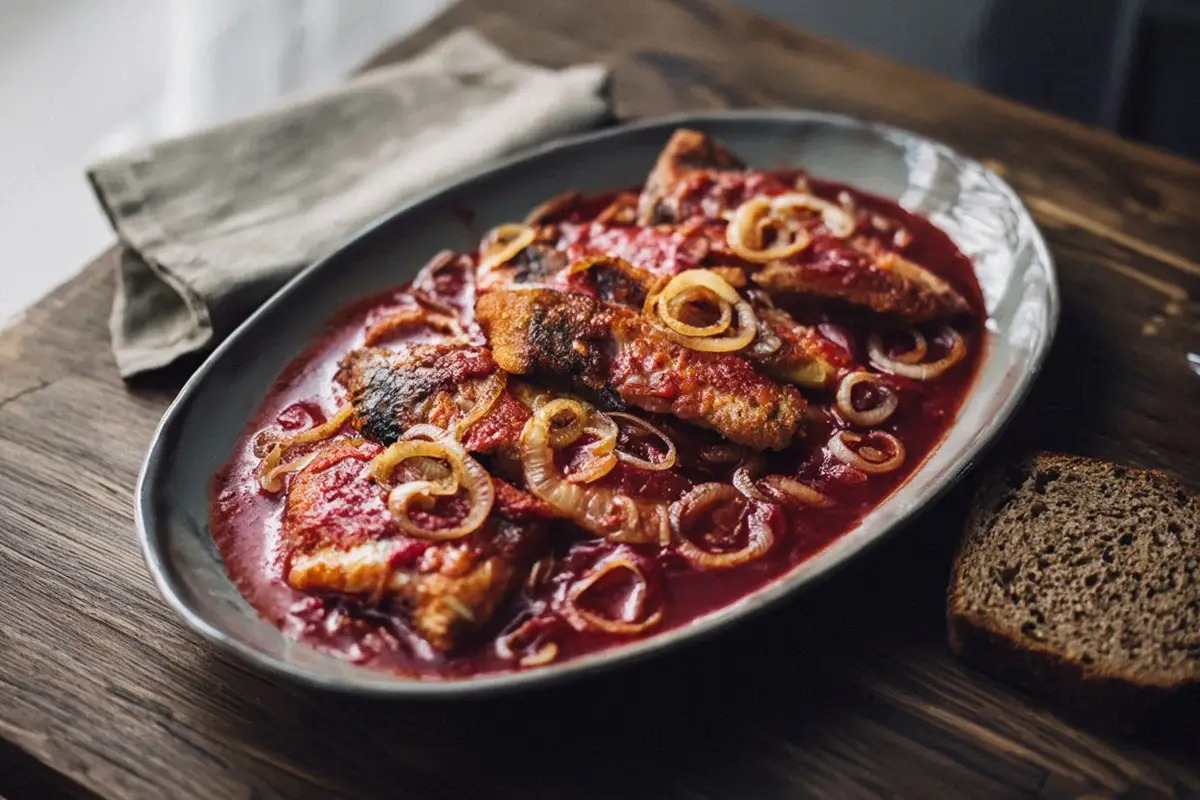
Cold Fish in Tomato and Beetroot Sauce
Fried carp or catfish marinated for hours in a vivid sauce of grated beetroot, root vegetables, and tomato. A Central European cold appetizer.
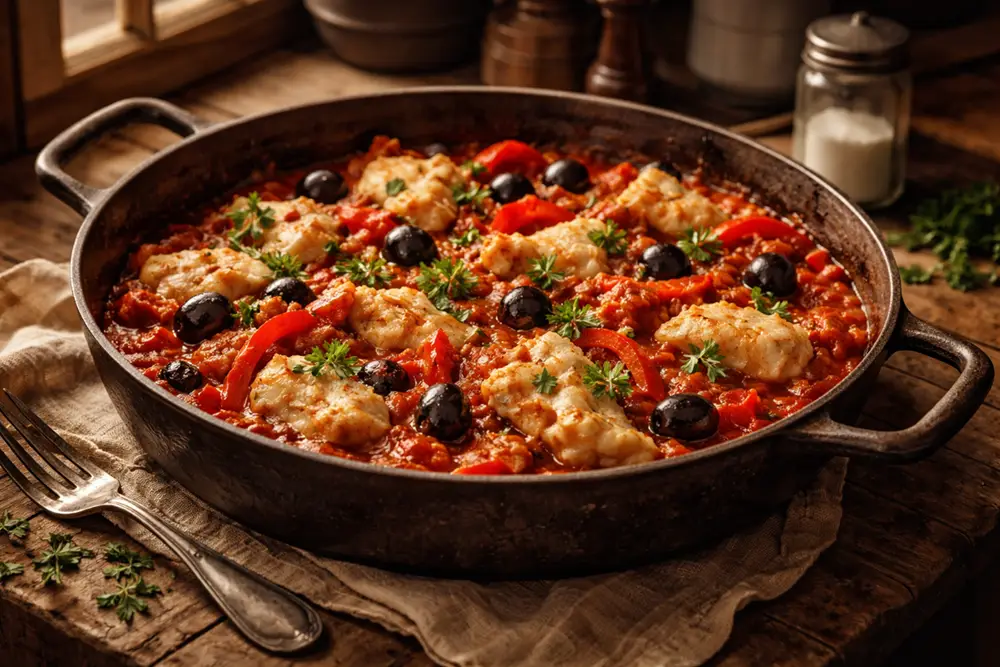
Cod with Tomatoes, Peppers and Black Olives
Salt cod braised with fresh tomatoes, red onion, garlic, bell peppers and black olives in olive oil.
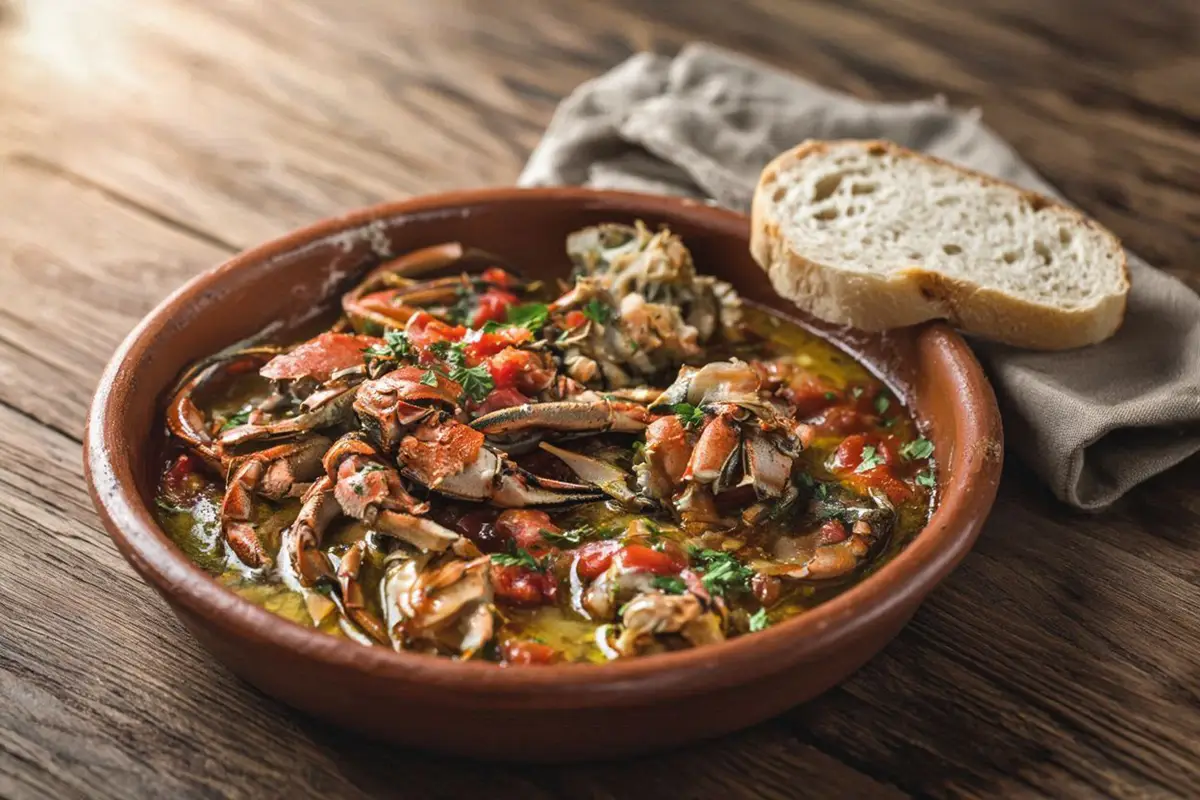
Dalmatian Sea Crabs in White Wine and Tomato
Adriatic spider crabs sautéed with olive oil, garlic, and parsley, simmered in Dalmatian white wine and tomato until the sauce reduces to a glossy concentrate.