Beef Kidney with Wine
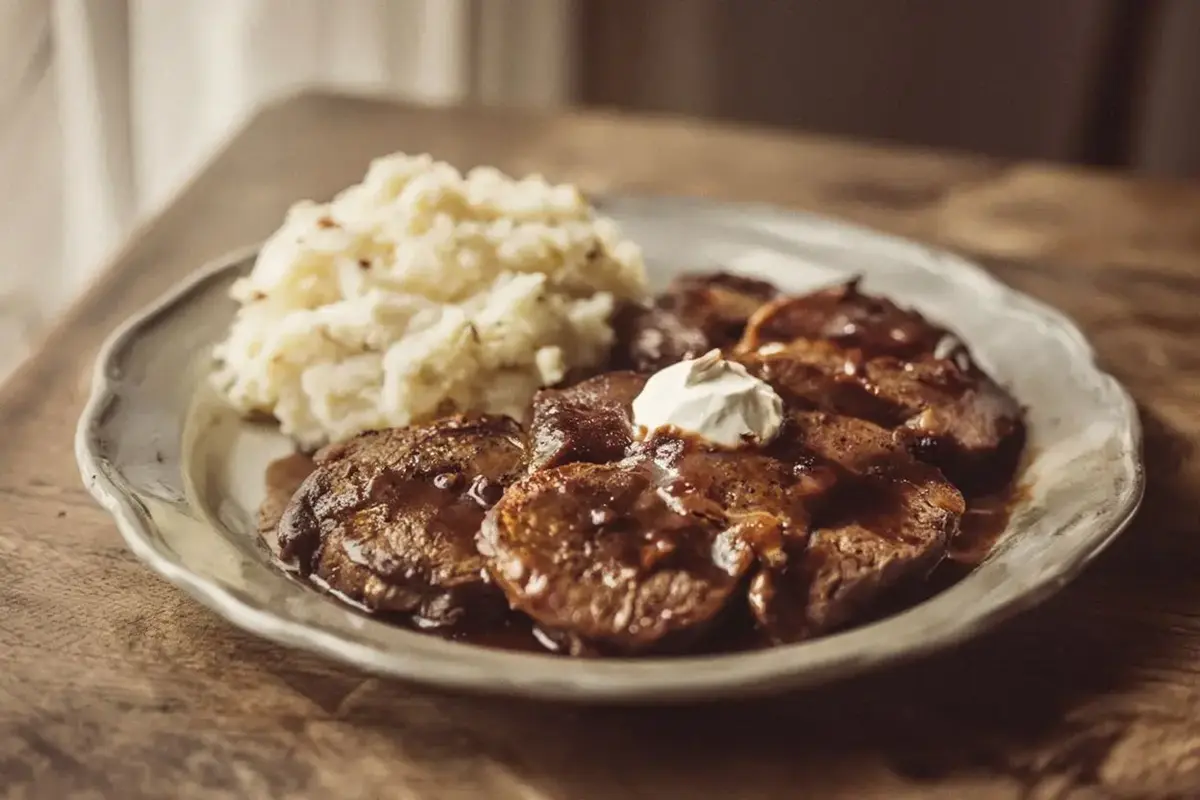
Beef kidney marinated in red wine, braised with herbs, finished with sour cream. Tender, rich, and deeply flavored.
Quick Summary
Beef Kidney with Wine is a Central European dish of beef kidney marinated in red wine, braised with herbs, and baked under a sour cream crust. It takes about 120 minutes plus 24 hours marinating, with a rich, tender, self-basting finish.
Historical recipe
Modernised adaptation of an early 20th‑century source. Not independently kitchen-tested by Attic Recipes. Quantities, temperatures, and food safety guidance have been updated for a contemporary kitchen — results may vary and errors may exist. Nutritional values, where provided, are estimates only and have not been laboratory tested. Always follow current food safety guidelines for your region. If you have a health condition, allergy, or dietary requirement, consult a qualified professional before preparing this recipe.
Use of this recipe is entirely at your own risk and subject to our Terms of Service and Privacy Policy. Attic Recipes accepts no liability for any adverse outcome.
- Dairy
- Sulphites
Safety note
Organ meats require a minimum internal temperature of 71°C (160°F) at the thickest point before serving. Undercooked kidney presents a serious risk of foodborne illness. Always verify with a meat thermometer — do not rely on visual inspection alone.
Insert the thermometer at the thickest point before slicing. At 71°C the kidney is safe and still moist.
Additional notes
-
Warning
Kidney is very high in cholesterol (520mg per serving) and purines. Those with gout, kidney disease, or cardiovascular conditions should consult their doctor before consuming organ meats regularly.
Serve as an occasional dish rather than a regular meal. Portion size can be reduced to 150g to lower cholesterol per serving.
-
Caution
Sour cream added to a hot acidic wine sauce can split if added too quickly or at too high a temperature. Whisk constantly and keep the heat moderate when combining.
Temper the sour cream by stirring a spoonful of hot sauce into it before adding to the pan. If the sauce splits, remove from heat and whisk in a tablespoon of cold butter.
-
Note
Contains dairy (sour cream, butter) and sulphites (red wine). Naturally gluten-free — no flour or starch is used in this recipe.
- 1
Prepare the kidney: Wash thoroughly under cold running water. Remove all membranes, hard fat, and the white core and tubes using a sharp knife. Pat completely dry with paper towels. Season generously with salt on all sides.
Tip Removing the white core and tubes is essential — they become bitter when cooked and cannot be rescued afterward. - 2
Marinate: Place the kidney in a clean enamel or glass container. Pour the red wine over it until completely submerged. Cover and refrigerate for 24 hours.
Tip The wine tenderizes the meat and draws out strong flavors. Do not shorten this step — 12 hours is the minimum, 24 hours gives the best result. - 3
Remove the kidney from the wine and reserve the marinade for the sauce. Pat the kidney completely dry with paper towels. Heat the lard or butter in a heavy-bottomed braising pan over medium heat.
- 4
Add the kidney to the hot fat along with the parsley, thyme, bay leaves, salt, and pepper. Braise over low-medium heat, turning occasionally, until the kidney is tender — about 45–60 minutes. Remove from heat and allow to cool to room temperature.
Tip Low and slow is essential. High heat makes kidney rubbery and tough. The kidney is done when a skewer passes through the thickest point without resistance. - 5
Preheat the oven to 180°C / 350°F (conventional) or 160°C / 325°F (fan-assisted). Grease a baking dish generously with lard or butter. Place the cooled kidney in the dish. Pour 150ml of sour cream evenly over the top.
- 6
Bake for 30–40 minutes until the kidney has absorbed the cream and developed a golden-brown crust. Check at 30 minutes — the interior should be moist, not dried out. Verify with a meat thermometer: internal temperature must reach 71°C (160°F) at the thickest point.
- 7
While the kidney bakes, make the sauce: strain the reserved wine marinade. In the original braising pan, combine the 4 tablespoons of sour cream with 240ml of the strained wine. Bring to a gentle boil over medium heat, whisking constantly. Reduce for 5 minutes. Strain through a fine mesh sieve.
Tip To prevent the sour cream from splitting, temper it first: stir a spoonful of the hot wine into the sour cream before adding it to the pan. Whisk constantly and keep the heat moderate. - 8
Remove the kidney from the oven and rest for 5 minutes. Slice thinly against the grain, 5–7mm thick. Arrange on a warmed serving platter. Pour the warm sauce over the slices and serve immediately.
Nutrition Information per approx. 200g (1/4 recipe)
Nutritional values are approximate estimates and may vary based on specific ingredients used, preparation methods, and portion sizes.
Serving Suggestions
Serve with creamy mashed potatoes, buttered rice pilaf, or roasted root vegetables. Pickled vegetables cut the richness well. Garnish with fresh flat-leaf parsley.
About This Recipe
Beef kidney with wine is a classic example of early 20th century home cooking at its most skilled — nothing wasted, and organ meat elevated to something genuinely impressive through patience and technique.
The 24-hour wine marinade is the heart of the recipe. It tenderizes the dense muscle fibers and draws out any strong gamey notes, leaving something much closer to a rich braise than what most people expect from kidney. The sour cream finish in the oven creates a golden crust while keeping the interior succulent.
Why This Recipe Works
The wine marinade breaks down tough proteins — acid and tannins in red wine act as a natural tenderizer, penetrating deep into the kidney tissue over 24 hours. Low-temperature braising prevents rubberiness: kidney has dense muscle fibers that seize when cooked too fast, and gentle heat keeps them relaxed and tender. The sour cream adds richness and creates the crust — dairy fat carries flavor and browns beautifully at 180°C. Fresh parsley and thyme balance the mineral iron note that puts some people off organ meat.
First Time with Kidney?
Fresh kidney should be deep burgundy in color — not gray — firm to the touch, with no ammonia smell. If it smells off at the butcher, do not buy it.
The flavor, once marinated and braised this way, is rich and mineral but not overwhelming. Think of it as halfway between beef liver and a well-braised short rib.
Make-Ahead Strategy
This dish suits advance preparation well:
Day 1 morning — start the wine marinade. Day 2 afternoon — braise the kidney, let cool completely. Day 2 evening — bake with sour cream, make sauce, serve.
The flavor improves after a night in the fridge. Reheat gently at 150°C.
Troubleshooting
Kidney is tough: Heat was too high or braising time too short. Lower the heat and add 15 minutes next time.
Sauce has split: Sour cream was added too fast to a hot pan. See the safety note for the tempering method. Whisking in a tablespoon of cold butter off the heat can also bring it back.
Sauce is too thin: Reduce for 10 minutes instead of 5, or finish with a small cornstarch slurry (1 tsp cornstarch dissolved in 2 tsp cold water).
Gamey flavor still present: Marinade time was too short or the kidney was not fresh enough. Always source from a trusted butcher.
A classic of early 20th century home cooking, preserved and adapted for the modern kitchen.
The Story Behind This Recipe
Historical Context
Kidney braised in wine and finished with sour cream belongs to a long tradition of Central European offal cookery that treated organ meats as a delicacy rather than a byproduct. In early 20th century bourgeois households, beef kidney prepared this way would have appeared at formal dinners alongside roasted meats — the extended wine marinade a mark of careful preparation, the sour cream finish a characteristic of the regional kitchen. The technique of reserving the braising liquid to build a sauce reflects the period's approach to economy and flavor: nothing wasted, everything contributing.
Modern Kitchen Adaptation
Today's beef kidney is considerably cleaner than older sources. Marinating time can be reduced to 12 hours if using very fresh kidney from a trusted butcher, though 24 hours gives the best result. Always use a meat thermometer — the internal temperature must reach 71°C (160°F) for safe doneness. If the sour cream sauce splits, remove from heat immediately and whisk in a tablespoon of cold butter to bring it back together.
This recipe is an independent modern adaptation developed from historical sources in the public domain. It is provided for informational and educational purposes only and does not constitute professional dietary, nutritional, or medical advice. Food preparation involves inherent risks. The reader assumes full responsibility for safe food handling, ingredient sourcing, and adherence to current local food safety guidelines. The site operator accepts no liability for outcomes resulting from the preparation or consumption of this recipe.
One recipe.
Every week.
You Might Also Like
More recipes from the same category
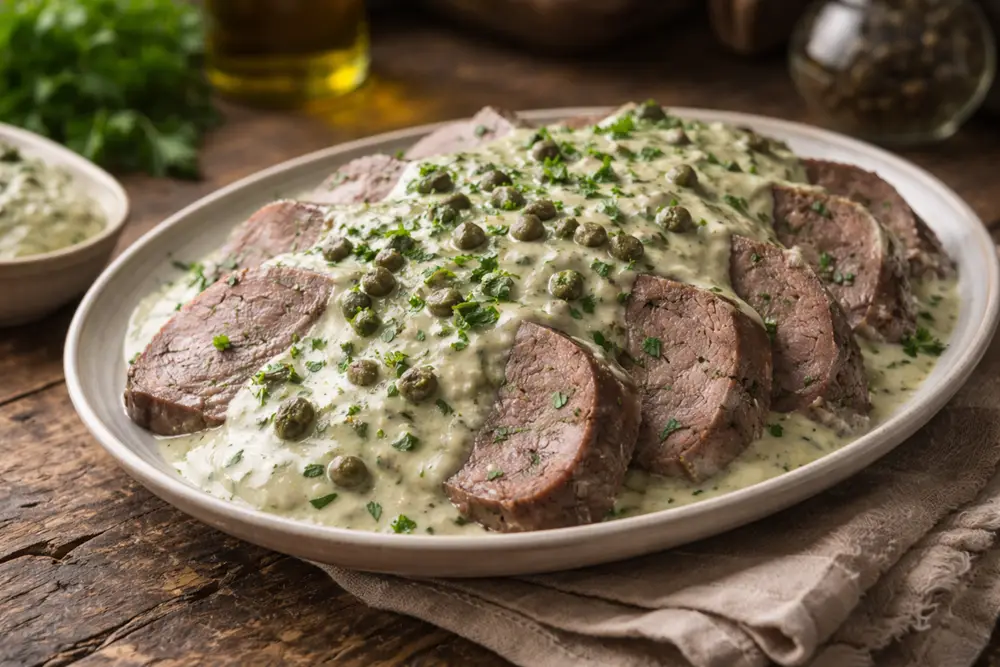
Baked Tongue in Green Sauce
Beef tongue braised with herbs, larded with bacon and roasted until golden, served in a green sauce of capers, anchovy, parsley and sour cream.
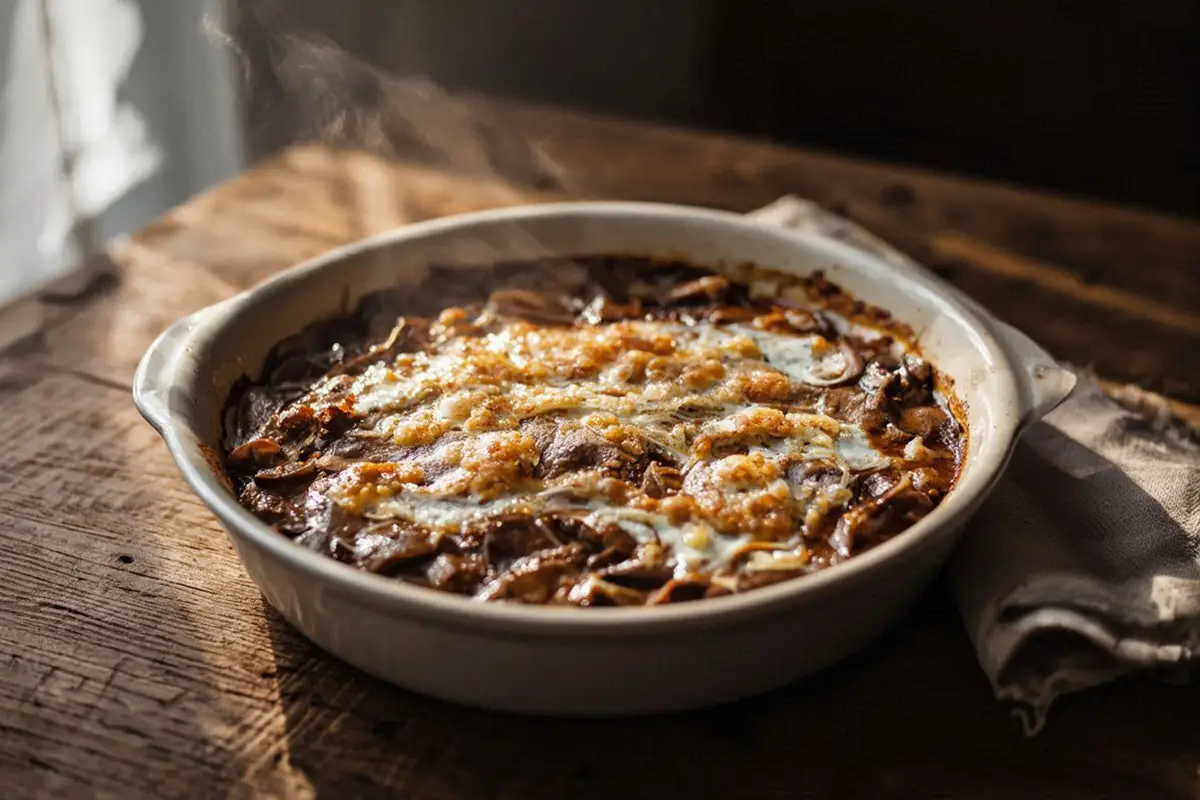
Beef Tongue in Mushroom Sauce
Tender sliced beef tongue layered in a rich dark mushroom sauce, finished with sour cream, Parmesan, and a golden oven crust.
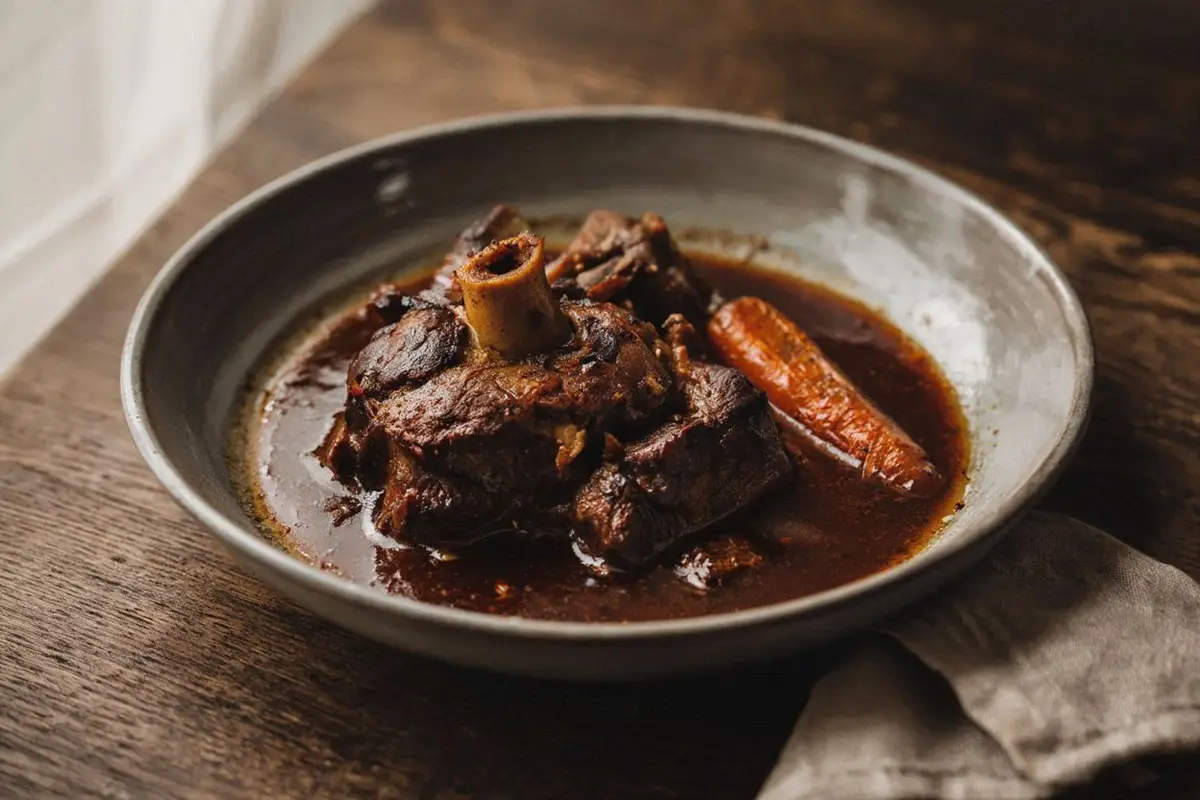
Beef Tail in Red Wine Sauce
Slow-braised oxtail in a rich red wine broth with carrots, lemon zest, and a silky roux-thickened sauce. A forgotten Central European classic.