Beef Tail in Red Wine Sauce
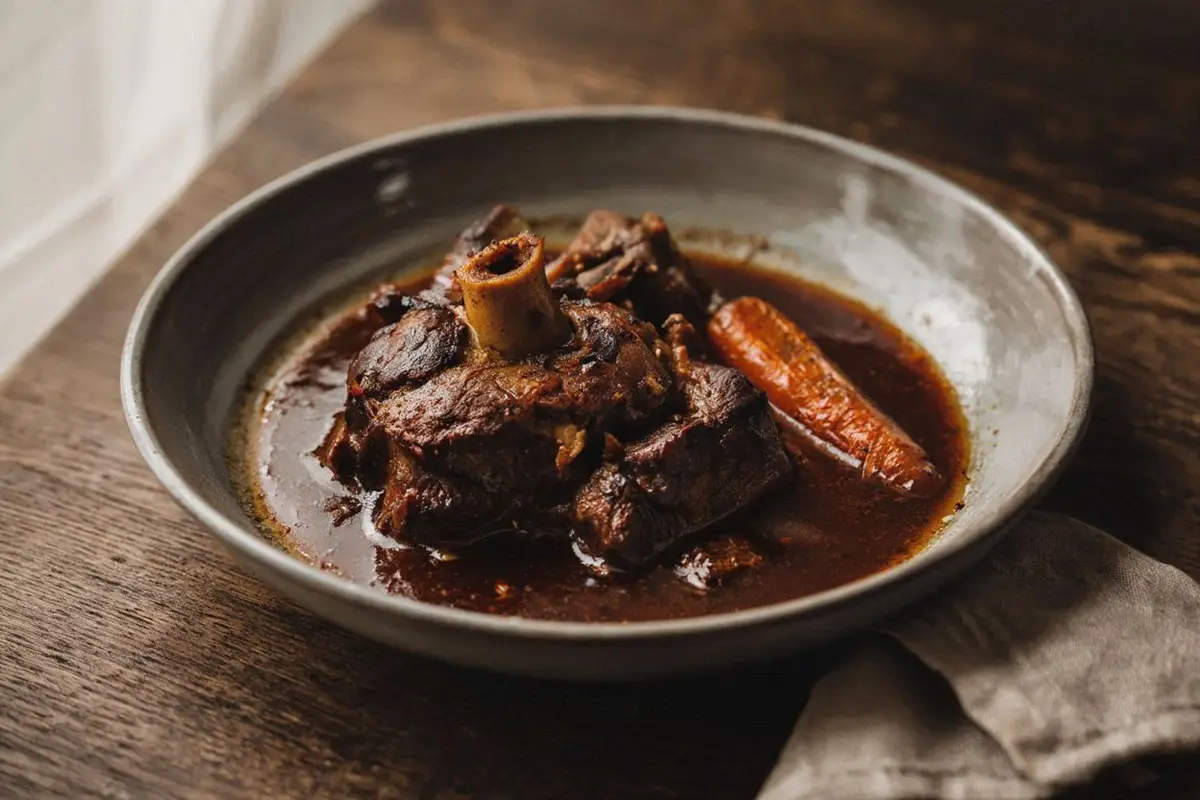
Slow-braised oxtail in a rich red wine broth with carrots, lemon zest, and a silky roux-thickened sauce. A forgotten Central European classic.
Quick Summary
Beef Tail in Red Wine Sauce is a Central European dish of oxtail braised in red wine with carrots, lemon zest, and horseradish, finished with a roux sauce. It takes about 205 minutes, with a smooth, glossy, aromatic finish.
Historical recipe
Modernised adaptation of an early 20th‑century source. Not independently kitchen-tested by Attic Recipes. Quantities, temperatures, and food safety guidance have been updated for a contemporary kitchen — results may vary and errors may exist. Nutritional values, where provided, are estimates only and have not been laboratory tested. Always follow current food safety guidelines for your region. If you have a health condition, allergy, or dietary requirement, consult a qualified professional before preparing this recipe.
Use of this recipe is entirely at your own risk and subject to our Terms of Service and Privacy Policy. Attic Recipes accepts no liability for any adverse outcome.
- Gluten
- Sulphites
Additional notes
-
Caution
Contains a significant amount of red wine. While most alcohol evaporates during the long braise, trace amounts remain. Not recommended for those avoiding alcohol entirely, including during pregnancy.
Replace the wine with full-bodied red grape juice or unsalted beef stock with 1 tablespoon of red wine vinegar for acidity.
-
Caution
Contains gluten — plain flour is used in the zaprška. Not suitable for those with coeliac disease or gluten intolerance.
Substitute with a 1:1 gluten-free flour blend, or use 1 tbsp cornstarch dissolved in 2 tbsp cold water stirred into the simmering sauce instead of a roux.
-
Note
Oxtail is moderately high in purines. Those with gout or hyperuricemia should limit their intake. Cholesterol is 135mg per serving — within normal daily limits for healthy adults.
- 1
Place the oxtail pieces in a large heavy-bottomed pot and cover with cold water. Bring to a boil over medium heat, then reduce to a steady simmer.
Tip Starting in cold water draws out more impurities gradually, giving you a cleaner broth to work with. - 2
Add the chopped onion, carrot rings, peppercorns, lemon zest, horseradish, bay leaves, and salt. Pour in the red wine. There should be enough liquid to fully submerge the meat — top up with cold water if needed.
- 3
Simmer over medium-low heat. As the liquid reduces, maintain the level by adding equal parts water and red wine. Skim off any foam that rises to the surface regularly.
Tip Skimming keeps the final sauce clear and clean-tasting rather than murky. Most foam appears in the first 30 minutes. - 4
After approximately 1.5 hours, when the meat is half-cooked and starting to soften but not yet falling from the bone, carefully remove the oxtail pieces and set aside. Strain the broth through a fine mesh sieve, discarding the solids. Reserve the broth.
- 5
Make the zaprška: In a separate saucepan, heat the oil or lard over medium heat. Add the flour and stir constantly for 2–3 minutes until the mixture turns golden and smells nutty.
Tip A properly cooked zaprška eliminates the raw flour taste and adds subtle depth to the sauce. Do not rush this step — pale roux tastes starchy. - 6
Gradually ladle the strained broth into the roux, whisking constantly to prevent lumps, until you have a smooth, slightly thickened sauce. Add enough broth to generously cover the meat when returned to the pot.
- 7
Return the oxtail pieces to the sauce. Cover and continue cooking over low heat for a further 1–1.5 hours, until the meat is completely tender and falling from the bone.
Tip The sauce should coat the back of a spoon. If too thin, uncover the pot for the final 20 minutes to reduce. Total cooking time from start is approximately 3 hours. - 8
Taste and adjust seasoning. Remove bay leaves. Serve immediately in deep bowls.
Nutrition Information per 1 portion (approx. 280g meat + sauce)
Nutritional values are approximate estimates and may vary based on specific ingredients used, preparation methods, and portion sizes.
Serving Suggestions
Serve with soft mashed potatoes, broad egg noodles, or crusty bread to absorb the sauce. A simple green salad dressed with lemon vinaigrette provides a clean counterpoint to the richness of the braise.
About This Recipe
Oxtail is one of the great forgotten cuts — patient, forgiving, and rewarding in a way that more expensive beef rarely is. This recipe follows a classic Central European method: a long, aromatic braise in red wine, finished with a zaprška (roux) that transforms the cooking liquid into a silky, glossy sauce. The lemon zest and horseradish in the broth are a distinctly regional touch — subtle, but they lift the entire dish.
Why It Works
Oxtail is rich in collagen, which breaks down into gelatin during the long, slow braise. This is what gives the sauce its characteristic body and the meat its fall-off-the-bone texture — something you cannot replicate with a quicker-cooking cut. The two-stage method (parboil in wine broth, finish in roux-thickened sauce) ensures the meat is fully tender before the sauce is assembled, and that the final sauce has a clean, deep flavor rather than a murky, over-reduced one.
The zaprška is the structural backbone of the sauce. By cooking the flour in fat before adding liquid, you eliminate the raw starch flavor and create a stable emulsion that holds through the final simmer.
Choosing Your Wine
Use a dry, medium-bodied red — nothing you would not drink. The wine cooks down significantly over three hours, so a heavily tannic or very acidic wine will concentrate those qualities unpleasantly. An everyday Merlot, Grenache, or Côtes du Rhône works perfectly well.
Avoid cooking wine (too much sodium), heavily oaked reds (becomes bitter when reduced), and sweet or semi-sweet wines (sauce becomes cloying).
Troubleshooting
Sauce too thin: Remove the lid for the final 20–30 minutes and allow the liquid to reduce. Alternatively, mix 1 tsp cornstarch with 2 tbsp cold water and whisk into the simmering sauce.
Meat still tough after 2 hours: Keep going — oxtail can take up to 3.5 hours at a very low simmer. Do not rush it with higher heat; the collagen needs time to fully convert.
Sauce tastes flat: A small squeeze of lemon juice added at the very end brightens the sauce considerably. A pinch of freshly grated horseradish at serving does the same.
A classic of early 20th century home cooking, preserved and adapted for the modern kitchen.
The Story Behind This Recipe
Historical Context
Braised working cuts — tail, shin, cheek — were a staple of Central European middle-class cooking in the early 20th century. Oxtail was affordable, widely available, and rewarded patience: long, slow cooking transforms the collagen-rich meat into something silky and deeply flavored. The addition of lemon zest and horseradish to the braise is a distinctly regional touch, cutting through the richness of the wine sauce in a way that feels both old-fashioned and surprisingly modern. The zaprška — fat and flour cooked together before liquid is added — was the standard thickening method for braised dishes across the region.
Modern Kitchen Adaptation
The original recipe calls for lard as the fat for the zaprška. Neutral oil reduces saturated fat and is used here as the default; high-quality rendered lard produces a noticeably richer, more authentic sauce if available. One bottle of wine (750ml) is listed as the base quantity; depending on pot size and simmer temperature, an additional 200–300ml may be needed to maintain the liquid level throughout the full cook. For a deeper sauce, brown the oxtail in hot fat before adding liquid — not in the original but a worthwhile modern addition.
This recipe is an independent modern adaptation developed from historical sources in the public domain. It is provided for informational and educational purposes only and does not constitute professional dietary, nutritional, or medical advice. Food preparation involves inherent risks. The reader assumes full responsibility for safe food handling, ingredient sourcing, and adherence to current local food safety guidelines. The site operator accepts no liability for outcomes resulting from the preparation or consumption of this recipe.
One recipe.
Every week.
You Might Also Like
More recipes from the same category
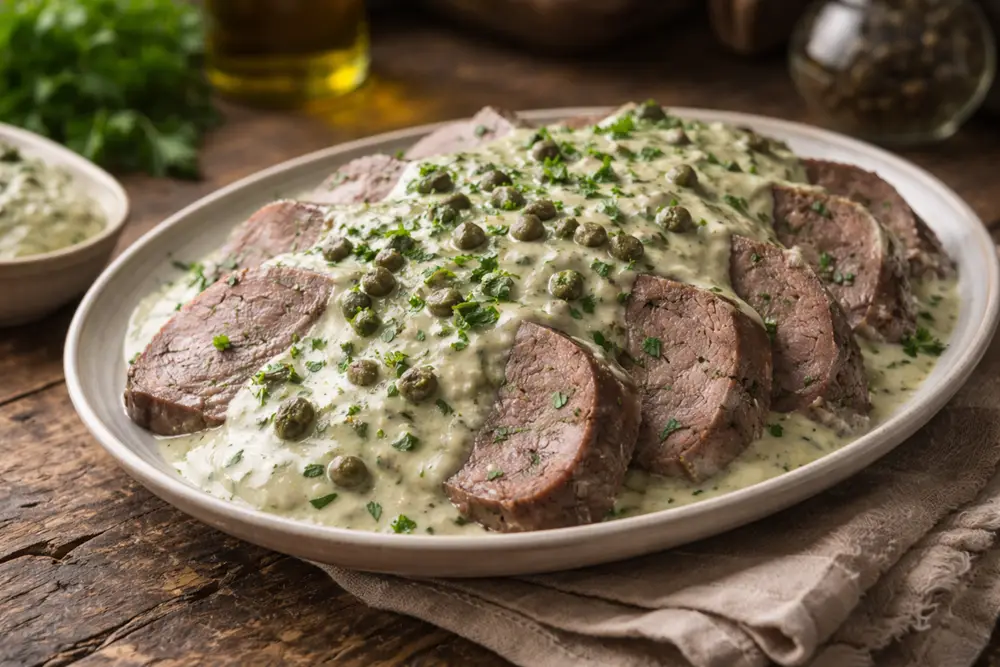
Baked Tongue in Green Sauce
Beef tongue braised with herbs, larded with bacon and roasted until golden, served in a green sauce of capers, anchovy, parsley and sour cream.
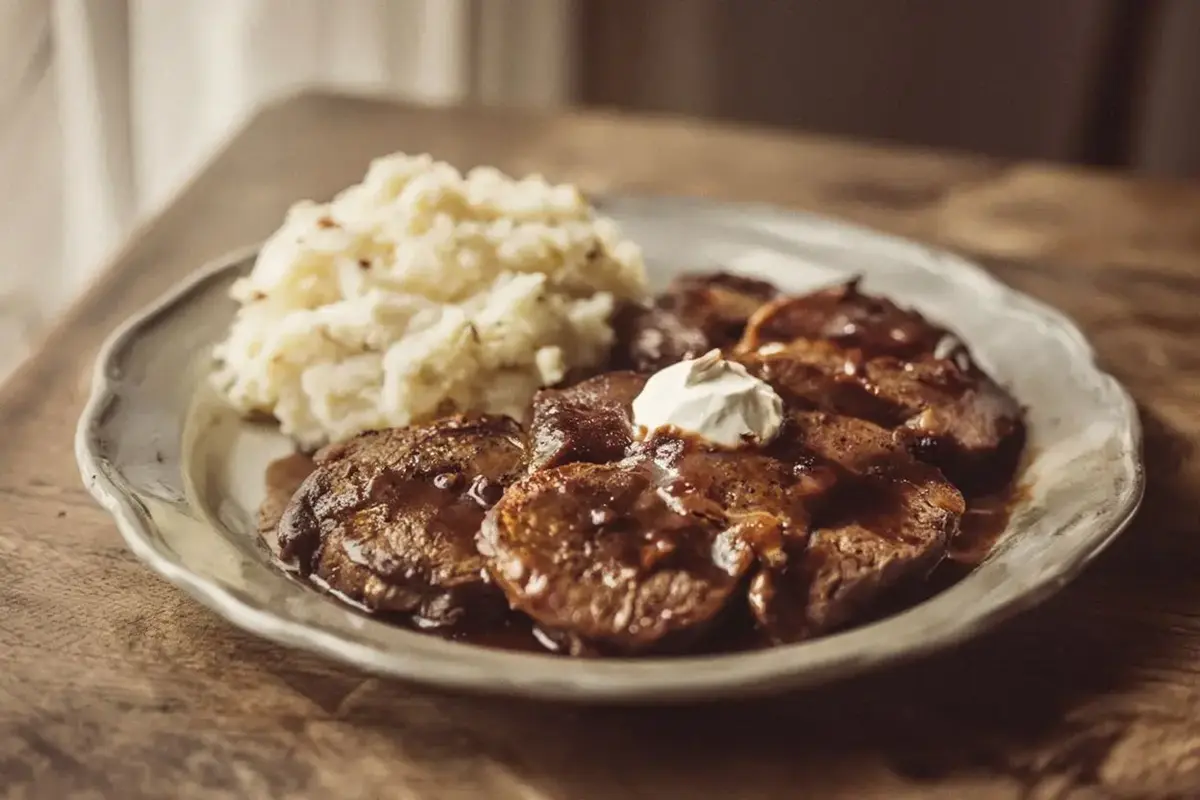
Beef Kidney with Wine
Beef kidney marinated in red wine, braised with herbs, finished with sour cream. Tender, rich, and deeply flavored.
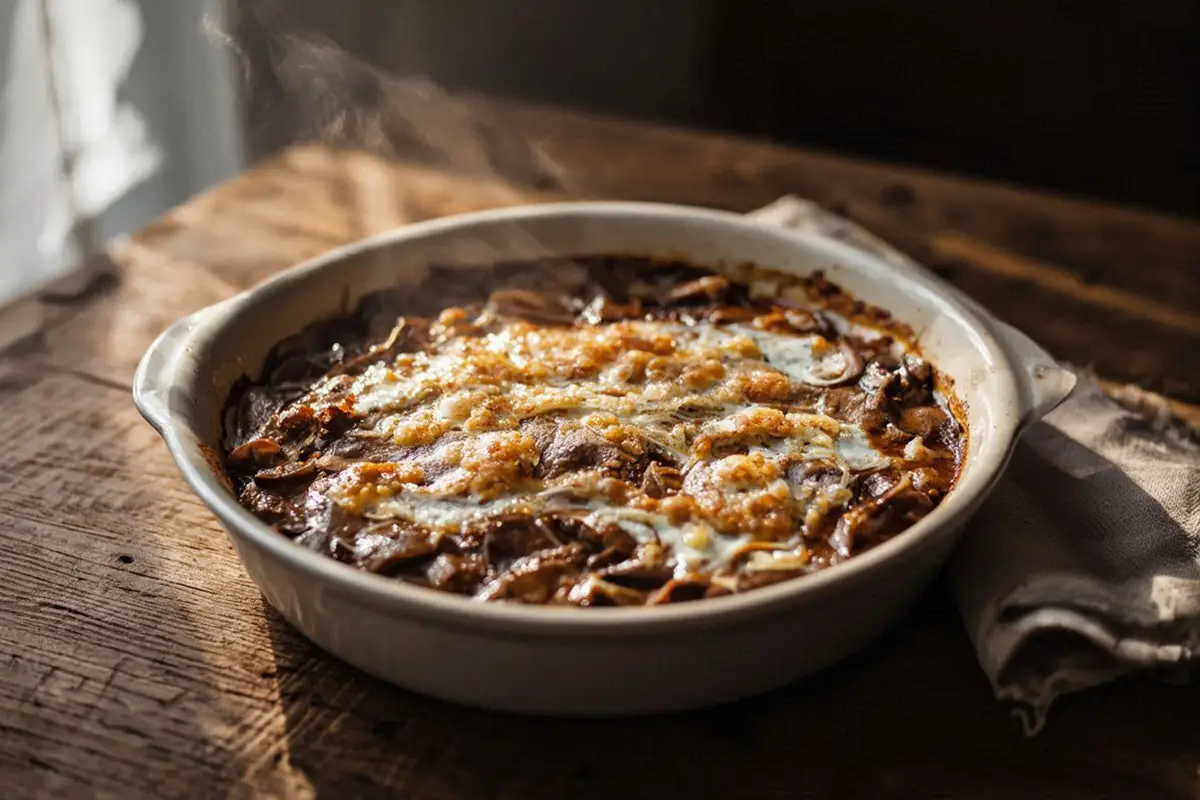
Beef Tongue in Mushroom Sauce
Tender sliced beef tongue layered in a rich dark mushroom sauce, finished with sour cream, Parmesan, and a golden oven crust.