Goose Liver Pudding with Cognac
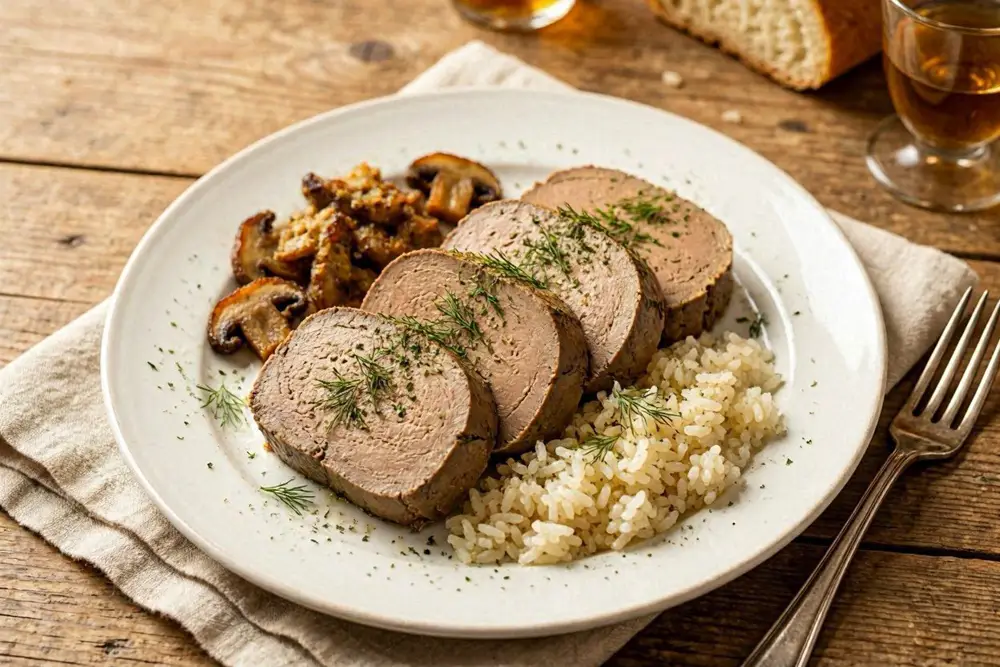
A rich steamed terrine of goose liver, bacon, and bread, flavored with cognac and dill, served with rice and fried mushrooms.
Historical recipe
Modernised adaptation of an early 20th‑century source. Not independently kitchen-tested by Attic Recipes. Quantities, temperatures, and food safety guidance have been updated for a contemporary kitchen — results may vary and errors may exist. Nutritional values, where provided, are estimates only and have not been laboratory tested. Always follow current food safety guidelines for your region. If you have a health condition, allergy, or dietary requirement, consult a qualified professional before preparing this recipe.
Use of this recipe is entirely at your own risk and subject to our Terms of Service and Privacy Policy. Attic Recipes accepts no liability for any adverse outcome.
- Eggs
- Gluten
- Dairy
- Sulphites
Additional notes
-
Warning
This terrine must reach an internal temperature of at least 71°C (160°F) during steaming to ensure the eggs and liver are fully cooked. Use a food thermometer to check before serving, particularly important for pregnant women, young children, elderly people, and immunocompromised individuals.
-
Note
This dish contains cognac, which is not fully cooked off during steaming. Pregnant women, children under 18, and anyone avoiding alcohol may wish to avoid this dish or confirm the alcohol content is acceptable for their needs.
-
Note
This dish is high in dietary cholesterol due to the combination of liver and eggs, and contains over 10g of saturated fat per serving from the bacon, cream, and liver. Individuals managing cholesterol or saturated fat intake, including pregnant women and those with cardiovascular conditions, may wish to enjoy this dish in smaller portions.
- 1
Place the goose liver and bacon in a saucepan, cover with a little water, and simmer over medium heat until tender, about 15-20 minutes.
- 2
Remove the crusts from the bread rolls and soak the rolls in the unbeaten sweet cream (100ml).
- 3
Press the cooked liver, bacon, and soaked bread rolls through a fine sieve to create a smooth, even mass.
- 4
Stir the 2 whole eggs and the additional egg yolk into the liver mixture. Add the chopped dill, cognac (45ml), salt, and pepper, and mix thoroughly.
- 5
Grease a terrine or pudding mold with butter and coat the inside with the breadcrumbs.
- 6
Pour the mixture into the prepared mold and close it tightly with its lid.
- 7
Place the mold in a steamer or a large pot with simmering water reaching partway up the sides of the mold, and steam for 4 hours, topping up the water as needed. The pudding should reach an internal temperature of at least 71°C (160°F).
- 8
Carefully unmold the finished pudding onto a large, round serving plate.
- 9
Garnish around the pudding with the cooked rice mixed with the fried mushrooms, and serve.
Nutrition Information per 1 portion (approx. 200g, including rice and mushroom garnish)
Nutritional values are approximate estimates and may vary based on specific ingredients used, preparation methods, and portion sizes.
Serving Suggestions
Slice and serve warm or at room temperature, accompanied by the rice and fried mushroom garnish. A simple green salad or pickled vegetables can help balance the richness.
About This Recipe
This is a far more elaborate dish than a simple liver pudding — a true terrine, built from goose liver, bacon, and bread pressed together into a smooth, rich mass, then enriched with eggs, cream, and a measure of cognac. The long steaming time, a full four hours, might seem excessive by modern standards, but it’s exactly what gives the terrine its dense, sliceable texture without any risk of the eggs curdling or the mixture separating.
Served on a large plate with rice and fried mushrooms arranged around it, this would have been a centerpiece dish — something for a special occasion rather than an everyday meal, reflecting both the cost and effort involved in its preparation.
Why It Works
Simmering the liver and bacon together before pressing them through a sieve removes any toughness and creates a uniformly smooth base. Soaking bread in cream adds both moisture and a binding starch component, helping the terrine hold together once set. The very slow, gentle heat of steaming — as opposed to baking — allows the egg proteins in the mixture to set gradually without overcooking, which is essential for a terrine that needs to slice cleanly rather than crumble or weep liquid. The cognac contributes both flavor and a subtle aromatic lift that cuts through the richness of the liver and bacon.
Modern Kitchen Tips
A fine-mesh sieve or a food processor followed by a sieve will give the smoothest texture; don’t skip this step, as any remaining lumps of liver or bacon will be noticeable in the finished terrine. Check the water level in the steamer periodically during the long cooking time, topping up with hot water as needed so it doesn’t run dry. The terrine can be made a day ahead and served cold or gently reheated, which also makes slicing easier.
A classic of early 20th century home cooking, preserved and adapted for the modern kitchen.
The Story Behind This Recipe
Historical Context
Early 20th century recipes for this dish typically called for goose liver sourced from force-fed geese, a common practice of the period that produced larger, fattier livers prized for their rich flavor. Home cooks of the era pressed the cooked liver, bacon, and bread through a sieve to create a smooth terrine, enriched with eggs, cream, and a generous amount of cognac, then steamed it slowly for several hours to set. This long, gentle steaming was a standard technique for achieving a firm yet tender terrine texture without the risk of curdling that direct high heat would cause.
Modern Kitchen Adaptation
Force-feeding of geese to produce enlarged livers is now banned or heavily restricted in most countries due to animal welfare concerns, and goose liver from this method is no longer widely available. This recipe can be made with conventionally raised goose liver, or substituted with duck liver, which is more widely accessible; the texture and richness will vary slightly but the technique remains the same. The quantity of liver was not specified with a plausible figure in the original and has been estimated at 250g, proportional to the other ingredients. The cognac quantity was originally given as a much larger volume than would be practical for this size of mixture and has been reduced to 45ml, sufficient to flavor the terrine without overwhelming it. The quantities of cream, bread rolls, dill, rice, and mushrooms were not specified and have been estimated based on standard proportions for a terrine of this size.
This recipe is an independent modern adaptation developed from historical sources in the public domain. It is provided for informational and educational purposes only and does not constitute professional dietary, nutritional, or medical advice. Food preparation involves inherent risks. The reader assumes full responsibility for safe food handling, ingredient sourcing, and adherence to current local food safety guidelines. The site operator accepts no liability for outcomes resulting from the preparation or consumption of this recipe.
One recipe.
Every week.
You Might Also Like
More recipes from the same category

Almond Cream Biscuit Torte
A light sponge layered with almond buttercream and finished with a poured chilled custard sauce — a classic of early 20th century Central European pastry.
Baked Duck with Sage and Onion Stuffing and Apple Sauce
A whole roast duck stuffed with sage and onion, basted with pan drippings, and served with a warm apple sauce — a classic Central European Sunday roast.
Chicken Stuffed with Crab Meat and Peas
Whole roasted chicken stuffed with crayfish, peas, asparagus and buttered bread — a festive Central European Easter centerpiece.