Meat Dumplings with Rice
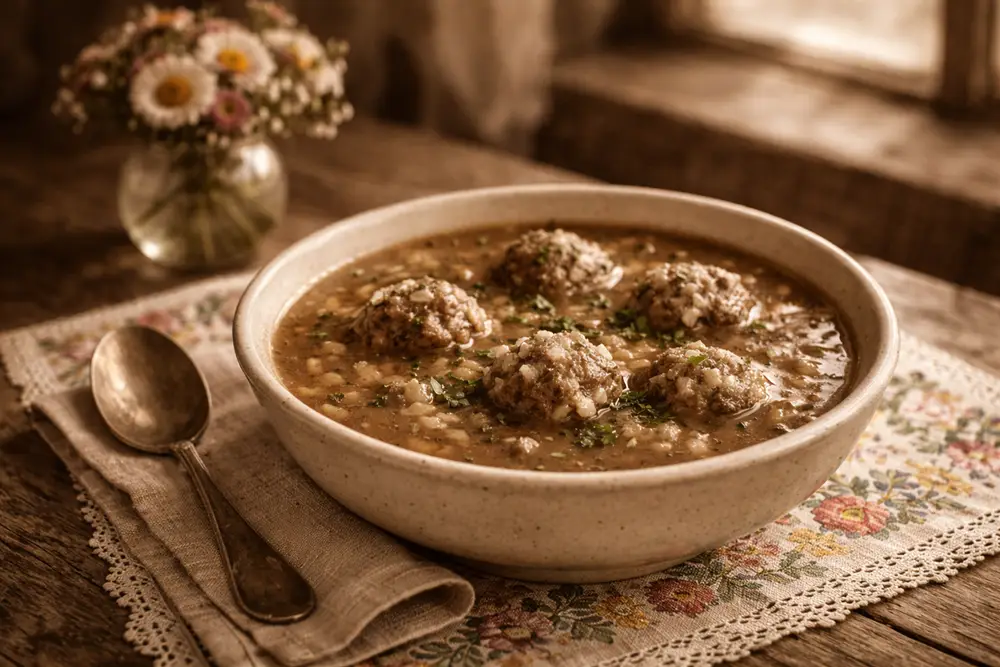
Small dumplings of minced beef, rice, and fresh parsley, simmered until tender and added to hearty soups with a thick gravy.
Historical recipe
Modernised adaptation of an early 20th‑century source. Not independently kitchen-tested by Attic Recipes. Quantities, temperatures, and food safety guidance have been updated for a contemporary kitchen — results may vary and errors may exist. Nutritional values, where provided, are estimates only and have not been laboratory tested. Always follow current food safety guidelines for your region. If you have a health condition, allergy, or dietary requirement, consult a qualified professional before preparing this recipe.
Use of this recipe is entirely at your own risk and subject to our Terms of Service and Privacy Policy. Attic Recipes accepts no liability for any adverse outcome.
- Eggs
- Gluten
Additional notes
-
Warning
These dumplings contain raw beef, raw rice, and raw egg before cooking. They must be simmered until the rice is completely tender and the dumplings reach an internal temperature of at least 71°C (160°F), particularly important for pregnant women, young children, elderly people, and immunocompromised individuals.
- 1
Melt the lard (15g) in a saucepan and fry the finely chopped onion (50g) until soft and translucent. Let it cool slightly.
- 2
In a large bowl, combine the minced beef (500g), fried onion, egg, raw rice (70g), and chopped parsley (8g).
- 3
Add the salt (1 tsp) and pepper (1/4 tsp), and mix thoroughly until the mixture holds together.
- 4
Shape the mixture into walnut-sized dumplings and roll each one lightly in the flour (30g) to coat the outside.
- 5
Drop the dumplings into boiling water or a meatless broth. Simmer gently for 20-25 minutes, until the rice inside is completely tender and the dumplings reach an internal temperature of at least 71°C (160°F).
- 6
Add the cooked dumplings directly into a thick, savory soup with a hearty gravy, and serve hot.
Nutrition Information per 1 dumpling (approx. 30g)
Nutritional values are approximate estimates and may vary based on specific ingredients used, preparation methods, and portion sizes.
Serving Suggestions
Add the cooked dumplings to a thick vegetable or tomato-based soup just before serving, allowing them to warm through in the broth for a few minutes.
About This Recipe
These small dumplings belong to a broad family of soup additions found across early 20th century Central European kitchens — small shaped pieces of dough, meat, or grain mixtures, simmered separately and then added to a finished soup to make it heartier. Unlike a standard noodle or pasta shape, these are little balls of minced beef bound with rice and egg, closer in spirit to a small meatball than a noodle, despite the name they were given at the time.
The rice inside isn’t pre-cooked — it cooks through during the simmering step, which is what gives these dumplings their slightly soft, tender bite once finished. They’re designed to be a finishing touch, dropped into a thick, savory soup just before serving rather than served on their own.
Why It Works
Frying the onion before mixing it into the meat softens its texture and mellows its flavor, so it blends smoothly into the dumpling mixture rather than adding raw bite. The raw rice acts as both a binder and a textural element, swelling and softening as the dumplings simmer, while the egg helps hold everything together so the dumplings keep their shape. Rolling the shaped dumplings in flour gives the outside a very light coating that helps them hold together as they cook and gives the broth a subtle thickening effect as they simmer.
Modern Kitchen Tips
Keep the dumplings on the smaller side — true walnut-sized — since larger dumplings will take longer for the rice in the center to cook through fully. A gentle simmer rather than a vigorous boil helps the dumplings hold their shape and prevents them from breaking apart in the pot. These can be made ahead and stored in the refrigerator for a day or two, then reheated directly in the soup until warmed through.
A classic of early 20th century home cooking, preserved and adapted for the modern kitchen.
The Story Behind This Recipe
Historical Context
Early 20th century recipes for this dish referred to these small dumplings as a kind of meat noodle, a soup component similar in role to other small dumplings or pasta shapes traditionally added to broths. Home cooks of the period measured the rice using a small coffee cup, a common informal household measure of the era, rather than a standard cup.
Modern Kitchen Adaptation
The quantities of fat, onion, rice, parsley, salt, and pepper were not specified with precise figures in the original and have been estimated based on standard proportions for this size of dumpling mixture. The small coffee cup of rice referenced in the original has been converted to approximately 70g, reflecting the smaller capacity of a traditional coffee cup compared to a modern measuring cup. Lard is retained as the historically correct fat; butter or a neutral oil in an equivalent quantity may be substituted. The cooking time was not specified in the original and has been set at 20-25 minutes, sufficient for the raw rice inside the dumplings to become fully tender and for the meat to reach a safe internal temperature.
This recipe is an independent modern adaptation developed from historical sources in the public domain. It is provided for informational and educational purposes only and does not constitute professional dietary, nutritional, or medical advice. Food preparation involves inherent risks. The reader assumes full responsibility for safe food handling, ingredient sourcing, and adherence to current local food safety guidelines. The site operator accepts no liability for outcomes resulting from the preparation or consumption of this recipe.
One recipe.
Every week.
You Might Also Like
More recipes from the same category
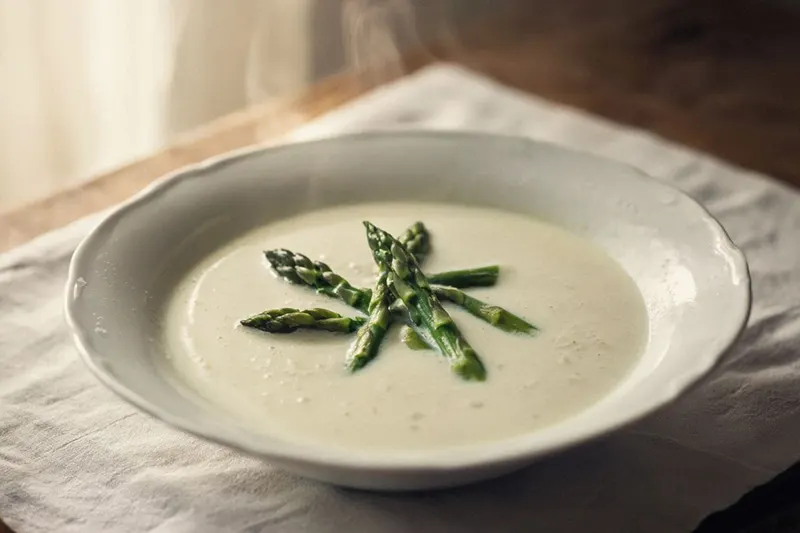
Asparagus Tip Soup
A silky, cream-enriched asparagus soup built on a white roux and finished with tempered egg yolks — an elegant first course from early 20th century cooking.
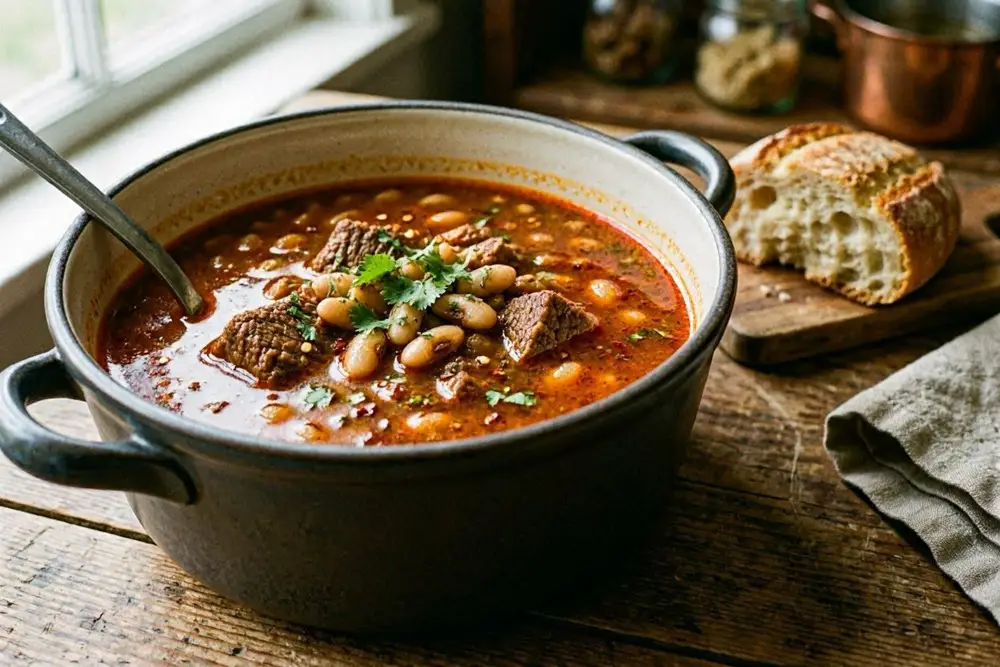
Bean Soup Cooked with Beef
White beans and beef shoulder slow-simmered with a bouquet garni, finished in the oven with a paprika-spiced pan roux. A deeply satisfying one-pot meal.
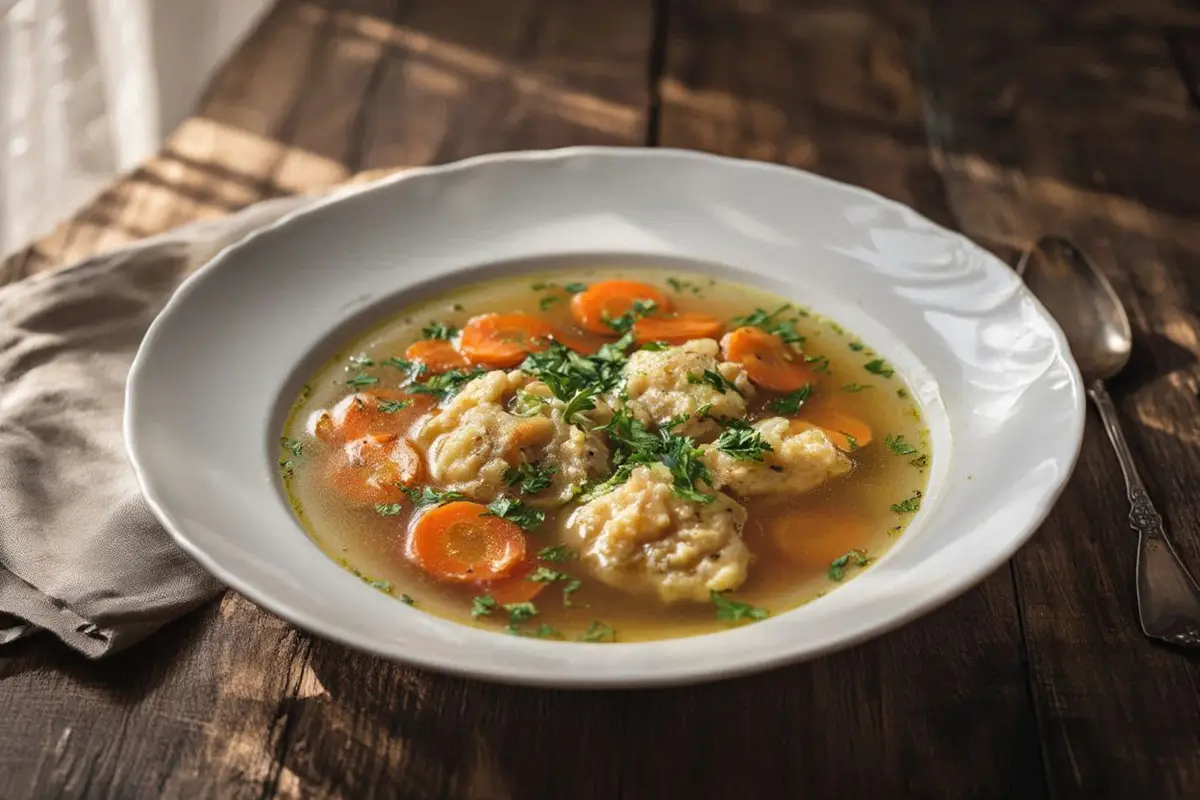
Beef Soup with Carrot-Colored Broth
A rich, golden Central European beef soup with carrot-colored broth, served with semolina or liver dumplings. Hearty, clear, and deeply flavorful.