Beef Soup with Carrot-Colored Broth
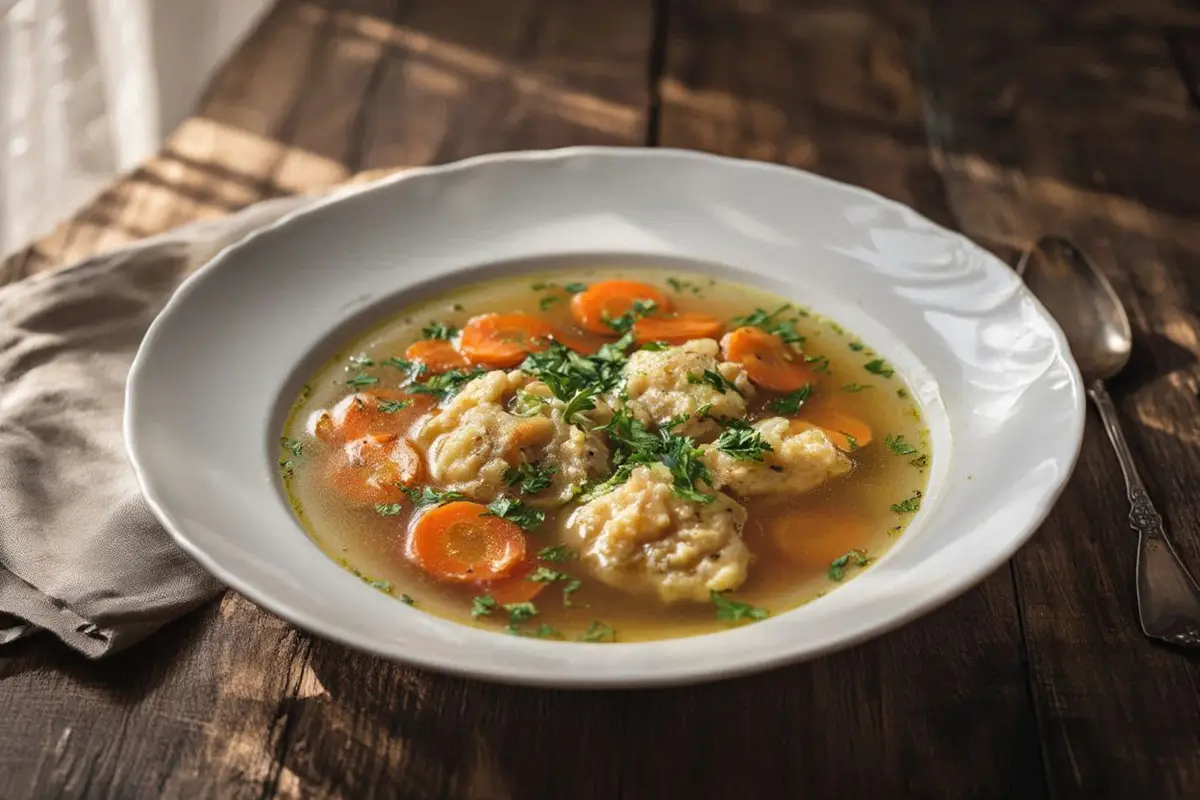
A rich, golden Central European beef soup with carrot-colored broth, served with semolina or liver dumplings. Hearty, clear, and deeply flavorful.
Quick Summary
Beef Soup with Carrot-Colored Broth is a Central European soup of beef bones, chuck, and root vegetables simmered slowly. It takes about 200 minutes, with fried grated carrot giving the broth a warm amber color and subtle sweetness.
Historical recipe
Modernised adaptation of an early 20th‑century source. Not independently kitchen-tested by Attic Recipes. Quantities, temperatures, and food safety guidance have been updated for a contemporary kitchen — results may vary and errors may exist. Nutritional values, where provided, are estimates only and have not been laboratory tested. Always follow current food safety guidelines for your region. If you have a health condition, allergy, or dietary requirement, consult a qualified professional before preparing this recipe.
Use of this recipe is entirely at your own risk and subject to our Terms of Service and Privacy Policy. Attic Recipes accepts no liability for any adverse outcome.
- Celery
- Dairy
- Eggs
Additional notes
-
Warning
The optional finishing step (Step 8) uses raw egg yolks. Do not serve the egg yolk version to pregnant women, children under 5, elderly individuals, or immunocompromised persons.
Use the semolina or rice thickening method instead — fully cooked and safe for all groups.
-
Caution
Bone marrow and beef fat are high in saturated fat. Those with cardiovascular conditions should skim visible fat from the broth before serving.
Refrigerate the finished broth overnight and lift off the solidified fat layer cleanly before reheating.
-
Note
Eggs and dairy appear only in the optional cloudy-broth finishing step (Step 8). The base recipe without Step 8 is egg-free and dairy-free. Celeriac (celery family) is present in the base recipe.
- 1
Rinse the beef bones and meat under cold water. Place in a large pot (minimum 5L) and cover with 3L of cold water. Starting with cold water is essential — it draws out proteins and impurities gradually, producing a clearer broth.
Tip Do not use hot water. Hot water seals the surface proteins immediately and produces a cloudier result that is difficult to correct. - 2
Place the pot over medium heat. As the water heats, foam will form on the surface. Skim it off carefully with a spoon or ladle. This is the key step for a clear soup — be patient and thorough. Most foam appears in the first 20 minutes.
- 3
Once the water reaches a gentle simmer and foam has been removed, add the 2 whole carrots, parsnip, celeriac, halved onion, parsley, bay leaves, peppercorns, and salt.
- 4
Reduce heat to low. The broth should barely simmer — small bubbles breaking the surface only. Cover partially and cook for 2.5 to 3 hours, until the meat is completely tender and pulls away from the bone.
Tip A rolling boil will make the soup cloudy and toughen the meat. Low and slow is the rule for the entire cooking time. - 5
While the soup finishes, prepare the carrot coloring. Heat 1 tablespoon of lard or oil in a small pan over medium heat. Add the finely grated carrot and fry, stirring frequently, until the fat turns a deep reddish-orange — about 8 to 10 minutes.
Tip This step gives the broth its characteristic golden-amber color. The caramelized carrot pigments transfer into the hot liquid and add a subtle sweetness alongside the color. - 6
When the meat is tender, ladle the soup through a fine-mesh strainer into a clean pot. Leave the meat submerged in a small amount of broth — do not drain it completely. This keeps the meat moist until serving.
- 7
Stir the fried carrot mixture into the strained broth. Bring to a brief boil, then reduce heat and let the soup settle for 10 to 15 minutes before serving. Taste and adjust salt.
- 8
OPTIONAL — cloudy broth finish: Whisk together 2 egg yolks and 3 tablespoons of sour cream. Ladle a small amount of hot soup into the mixture while whisking constantly to temper it, then stir back into the pot. Do not boil after adding. Alternatively, simmer with 2 tbsp of semolina or rice for 15 minutes for a fully cooked, dairy-free and egg-free fix.
Tip The egg yolk and sour cream method clarifies and enriches simultaneously. The semolina method is simpler and safe for all dietary groups.
Nutrition Information per approx. 350ml broth + meat (without optional finish)
Nutritional values are approximate estimates and may vary based on specific ingredients used, preparation methods, and portion sizes.
Serving Suggestions
Serve in deep bowls with semolina dumplings or liver dumplings cooked directly in the broth. A few slices of the cooked beef and a softened carrot from the broth make a complete, honest bowl. Fresh flat-leaf parsley on top. Dark rye bread on the side.
About This Recipe
Beef soup — the kind that simmers for hours on the back of the stove — is one of the oldest and most reliable dishes in Central European home cooking. This version follows an early 20th century approach: cold-water start, long low simmer, patient skimming, and a distinctive finishing technique of frying grated carrot in fat to give the broth its warm amber color. The result is a deeply savory, clear broth with tender meat that holds together without drying out.
Unlike veal, which produces a paler, more delicate broth, beef gives a soup with real color and body. The carrot-coloring step bridges that gap and adds a subtle sweetness that rounds the flavor.
Why It Works
The cold-water start is not optional — it is the mechanism that produces a clear soup. Cold water draws proteins and impurities out slowly, allowing them to rise as foam before they bind into the broth. Once skimmed, they are gone. A hot-water start cooks the surface proteins immediately, trapping them in suspension and producing a cloudy result.
The carrot-coloring technique works because caramelization of the carrot’s natural sugars in hot fat releases pigments that transfer readily into hot liquid. It is a simple, effective fix for a broth that looks washed out — and a standard tool in Central European kitchens long before store-bought color enhancers existed.
Keeping the meat submerged in broth until the moment of serving is one of those small details that separates a good bowl from a dry, fibrous one. Cooked beef dries out fast once removed from liquid.
Fillings
The original recipe suggests liver dumplings or semolina dumplings as fillings, cooked directly in the hot broth just before serving. Recipes for both will be published separately.
Troubleshooting
Cloudy broth: Most common with younger beef. Options: the egg yolk and sour cream finish (Step 8), simmering with 2 tbsp semolina or rice for 15 minutes, or simply accepting the cloudiness — the flavor is unaffected.
Tough meat after 3 hours: Chuck and short rib become tender in this time. Leaner cuts like round may need another 30 to 45 minutes. Test by pressing with a fork — it should yield without resistance.
Weak flavor: Add more bones next time. Marrow bones are the primary flavor carriers. Salt at the end, not the beginning.
A classic of early 20th century home cooking, preserved and adapted for the modern kitchen.
The Story Behind This Recipe
Historical Context
Clear meat broths have been central to Central European home cooking since at least the 19th century, valued both as everyday nourishment and as restorative food for the sick. The technique of coloring beef broth with carrots fried in fat was a practical solution in an era before commercial stock — home cooks used what they had. Early 20th century household cookbooks from this region treat the clear soup as a baseline skill, with fillings and finishing techniques marking a cook's refinement. The original recipe gives no quantities, written for experienced cooks who measured by instinct rather than by weight.
Modern Kitchen Adaptation
Quantities here are a modern reconstruction for a standard home kitchen — the original gave none. The ratio scales reliably: approximately 200g of meat and bones per person, plus 500ml of water per serving with extra for evaporation. Cooking time in the source is described relative to a morning start, reflecting a wood-fired stove where low heat was the only option. In a modern kitchen, 2.5 to 3 hours over the lowest gas or electric setting produces an equivalent result. The carrot-coloring step is preserved exactly as written — it remains genuinely effective and adds flavor alongside color.
This recipe is an independent modern adaptation developed from historical sources in the public domain. It is provided for informational and educational purposes only and does not constitute professional dietary, nutritional, or medical advice. Food preparation involves inherent risks. The reader assumes full responsibility for safe food handling, ingredient sourcing, and adherence to current local food safety guidelines. The site operator accepts no liability for outcomes resulting from the preparation or consumption of this recipe.
One recipe.
Every week.
You Might Also Like
More recipes from the same category
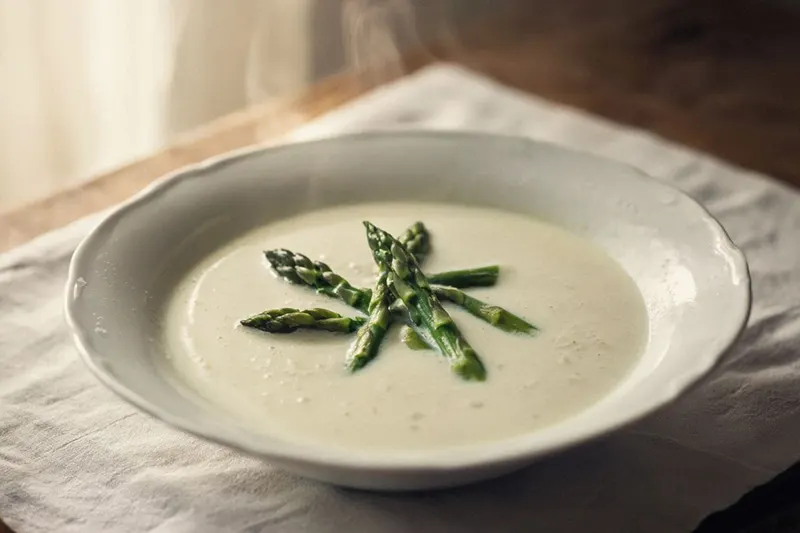
Asparagus Tip Soup
A silky, cream-enriched asparagus soup built on a white roux and finished with tempered egg yolks — an elegant first course from early 20th century cooking.
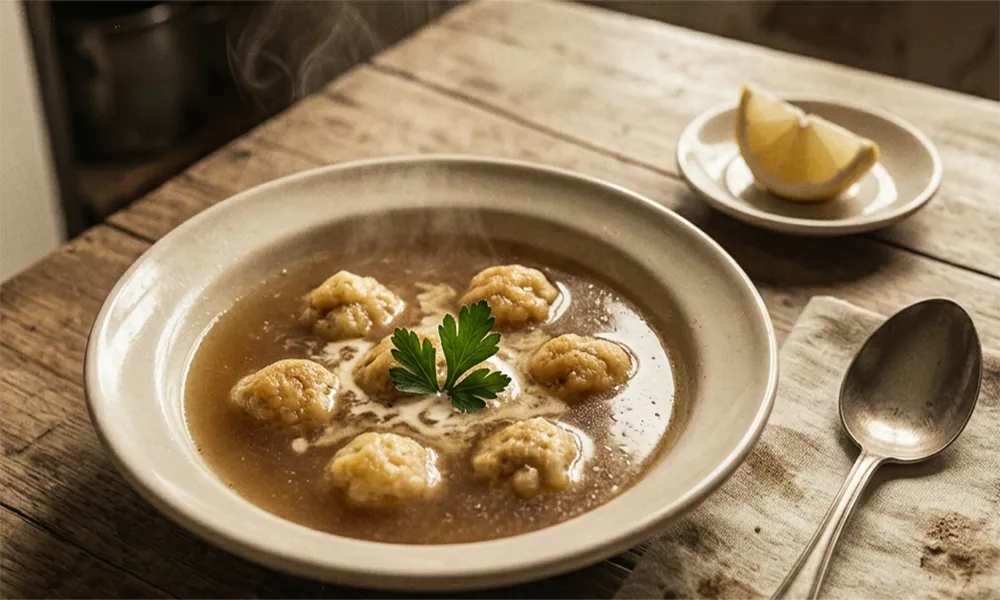
Beef Broth with Stuffed Dough Dumplings
Rich beef bone broth simmered with golden pan-fried dumplings stuffed with seasoned ground beef, finished with a light roux and fresh lemon juice.
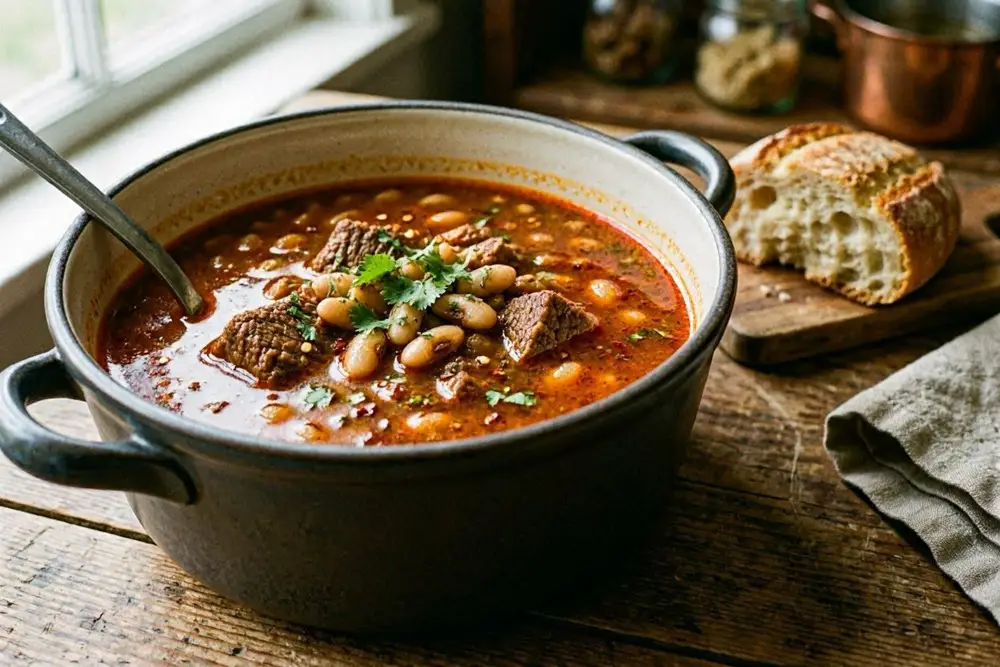
Bean Soup Cooked with Beef
White beans and beef shoulder slow-simmered with a bouquet garni, finished in the oven with a paprika-spiced pan roux. A deeply satisfying one-pot meal.