Beer Soup
A frugal Central European staple — beer and water enriched with egg yolks and sugar, finished with crisp fried bread. A technique that still works.

Quick Summary
Beer Soup is a Central European staple made from beer and water enriched with egg yolks and sugar, topped with fried bread cubes. It takes about 25 minutes, with tempered yolks creating a smooth texture that balances the beer’s bitterness.
Historical recipe
Modernised adaptation of an early 20th‑century source. Not independently kitchen-tested by Attic Recipes. Quantities, temperatures, and food safety guidance have been updated for a contemporary kitchen — results may vary and errors may exist. Nutritional values, where provided, are estimates only and have not been laboratory tested. Always follow current food safety guidelines for your region. If you have a health condition, allergy, or dietary requirement, consult a qualified professional before preparing this recipe.
Use of this recipe is entirely at your own risk and subject to our Terms of Service and Privacy Policy. Attic Recipes accepts no liability for any adverse outcome.
- Dairy
- Eggs
- Gluten
- Sulphites
Additional notes
-
Warning
This recipe uses raw egg yolks. To eliminate the risk of foodborne illness, the soup must reach 74°C / 165°F during the second boil (Step 5). Verify with a food thermometer. Do not skip this step or remove from heat before the target temperature is confirmed. Not suitable for pregnant women, children under 5, elderly, or immunocompromised individuals unless commercially pasteurized eggs are used.
Commercially pasteurized eggs may be substituted to reduce risk, particularly when cooking for vulnerable groups.
-
Note
Contains eggs, gluten (bread), sulphites (beer), and dairy if butter is used as the bread-frying fat. Contains alcohol — beer is the primary liquid. Not suitable for those avoiding alcohol. Check beer labels for sulphite content if sulphite sensitivity is a concern.
- 1
In a large pot, combine the 500ml beer with 500ml water. Bring to a boil over medium heat.
- 2
While the liquid heats, whisk the 2 egg yolks with the sugar until smooth and pale.
- 3
Once the beer-water mixture boils, ladle a small amount into the egg yolk mixture, whisking constantly to temper the yolks.
Tip Add the hot liquid very slowly — a tablespoon at a time at first. This raises the yolks' temperature gradually and prevents scrambling. - 4
Gradually pour the tempered yolk mixture back into the pot, stirring continuously.
- 5
Return the soup to a full boil, stirring constantly. Once it reaches 74°C / 165°F, remove from heat immediately.
Tip Use a food thermometer — this step pasteurizes the egg yolks and slightly thickens the soup. It is not optional. Remove from heat the moment it reaches temperature — overcooking will break the emulsion. - 6
Cut the bread into 1–2cm cubes. Fry in lard over medium-high heat until golden and crisp on all sides — about 3–4 minutes, turning regularly.
Tip Fry until genuinely crisp. The cubes soften quickly in hot liquid and need to hold texture for a few minutes in the bowl. - 7
Serve immediately with fried bread cubes on top or alongside. This soup does not reheat well — prepare fresh and serve at once.
Nutrition Information per 1 bowl (approx. 250ml + bread cubes)
Nutritional values are approximate estimates and may vary based on specific ingredients used, preparation methods, and portion sizes.
Pro Tips
- Temper egg yolks carefully — add the hot liquid slowly and whisk throughout
- Dark beer produces a richer, deeper soup; light beer gives a milder, more delicate result
- Fry bread cubes until genuinely crisp — they soften quickly in hot liquid
- Serve immediately — this soup loses its character if left to stand
Serving Suggestions
Serve hot immediately after cooking. Pairs well with smoked meats or cured sausage. Functions as a warming starter on cold evenings or — as period sources describe — as a substantial breakfast alongside strong black coffee.
About This Recipe
Beer soup is one of those dishes that reads as strange on paper and makes complete sense at the table. Across Central and Northern Europe in the early twentieth century it was unremarkable everyday food — inexpensive, warming, and built from what was always on hand. The egg yolk enrichment gives the broth a silky body; the fried bread cubes provide texture; the sugar pulls the beer’s bitterness into something close to balance.
The underlying technique predates this recipe by centuries. Enriching a hot liquid with tempered egg yolks is the same principle behind classical French veloutés. Whoever documented this in the 1930s understood what they were doing — they applied a professional method to a domestic ingredient.
Why It Works
Tempering the yolks prevents scrambling by raising their temperature gradually before they meet the full volume of hot liquid. Add the hot beer slowly, whisk throughout, and the process is straightforward. The second boil serves two functions: it pasteurizes the egg yolks to food-safe temperature (74°C / 165°F) and thickens the soup slightly as the proteins set. Remove from heat the moment it reaches temperature — overcooking will break the emulsion.
Beer selection changes the dish substantially. A malty dark lager or porter produces a rich, almost caramel-edged soup. A pale lager makes something lighter and more bitter. Both are valid — they produce different results.
A Note on the Bread
The period source specifies bread fried in lard. Lard produces a particular savory quality that butter does not quite replicate, though butter works well and gives a cleaner result. Either way: fry until the cubes are genuinely crisp on all sides. They soften quickly in hot liquid, and you want them to hold their texture for at least a few minutes in the bowl.
A classic of early 20th century home cooking, preserved and adapted for the modern kitchen.
The Story Behind This Recipe
Historical Context
Beer soup appears consistently across Central and Northern European household sources from the early 20th century — German, Austrian, Czech, and Polish domestic manuals all include versions of it. It was cold-weather food: inexpensive, calorie-dense, and built from what was always available. The egg yolk liaison is a technique borrowed from classical French cookery, applied here to lift a modest ingredient into something genuinely satisfying. Period sources occasionally describe it as a substantial breakfast alongside strong black coffee — a detail that speaks to the era's relationship with fermented grain.
Modern Kitchen Adaptation
Lard produces a particular savory quality when frying the bread that butter does not quite replicate, though butter works well and gives a cleaner result. Neutral oil is a lighter alternative. Adjust sugar to the beer — a bitter or hoppy ale needs more sweetness than a malt-forward dark lager. A pinch of cinnamon or nutmeg integrates well for a spiced version. Serve in warmed bowls to extend the soup's heat at the table.
This recipe is an independent modern adaptation developed from historical sources in the public domain. It is provided for informational and educational purposes only and does not constitute professional dietary, nutritional, or medical advice. Food preparation involves inherent risks. The reader assumes full responsibility for safe food handling, ingredient sourcing, and adherence to current local food safety guidelines. The site operator accepts no liability for outcomes resulting from the preparation or consumption of this recipe.
One recipe.
Every week.
You Might Also Like
More recipes from the same category
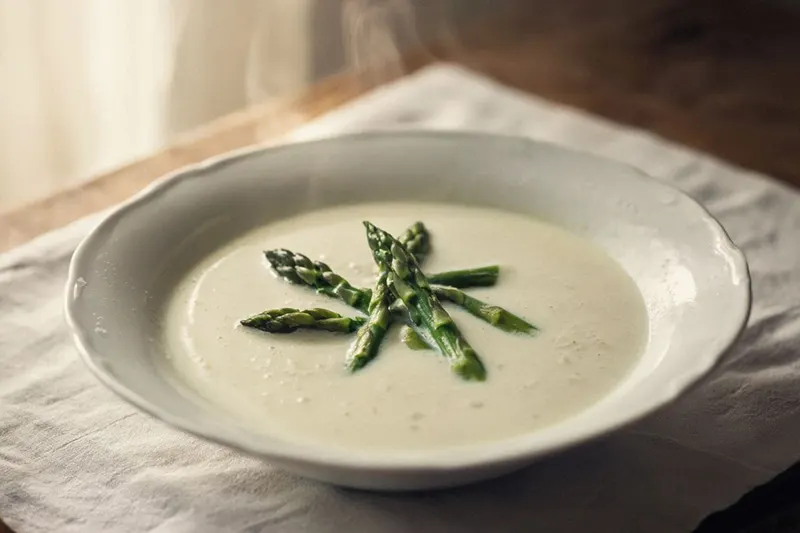
Asparagus Tip Soup
A silky, cream-enriched asparagus soup built on a white roux and finished with tempered egg yolks — an elegant first course from early 20th century cooking.
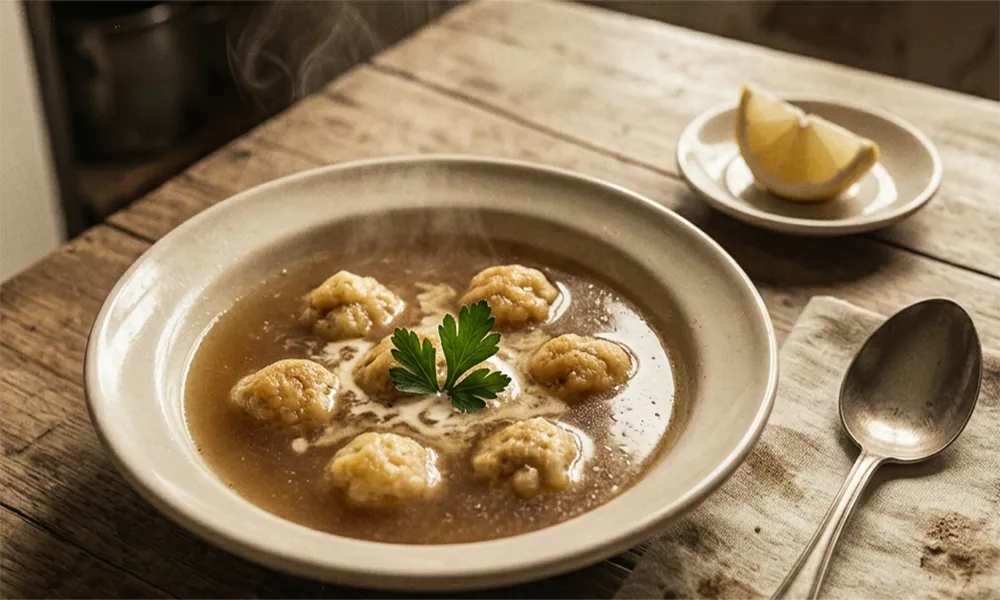
Beef Broth with Stuffed Dough Dumplings
Rich beef bone broth simmered with golden pan-fried dumplings stuffed with seasoned ground beef, finished with a light roux and fresh lemon juice.
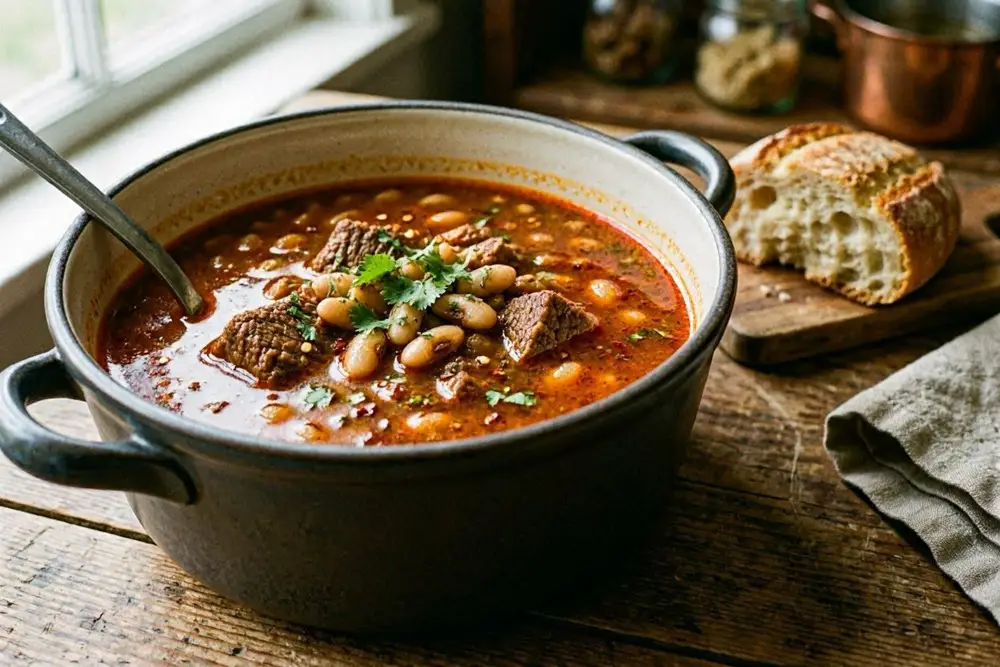
Bean Soup Cooked with Beef
White beans and beef shoulder slow-simmered with a bouquet garni, finished in the oven with a paprika-spiced pan roux. A deeply satisfying one-pot meal.