Melon and Apple Pekmez (Fruit Butter)
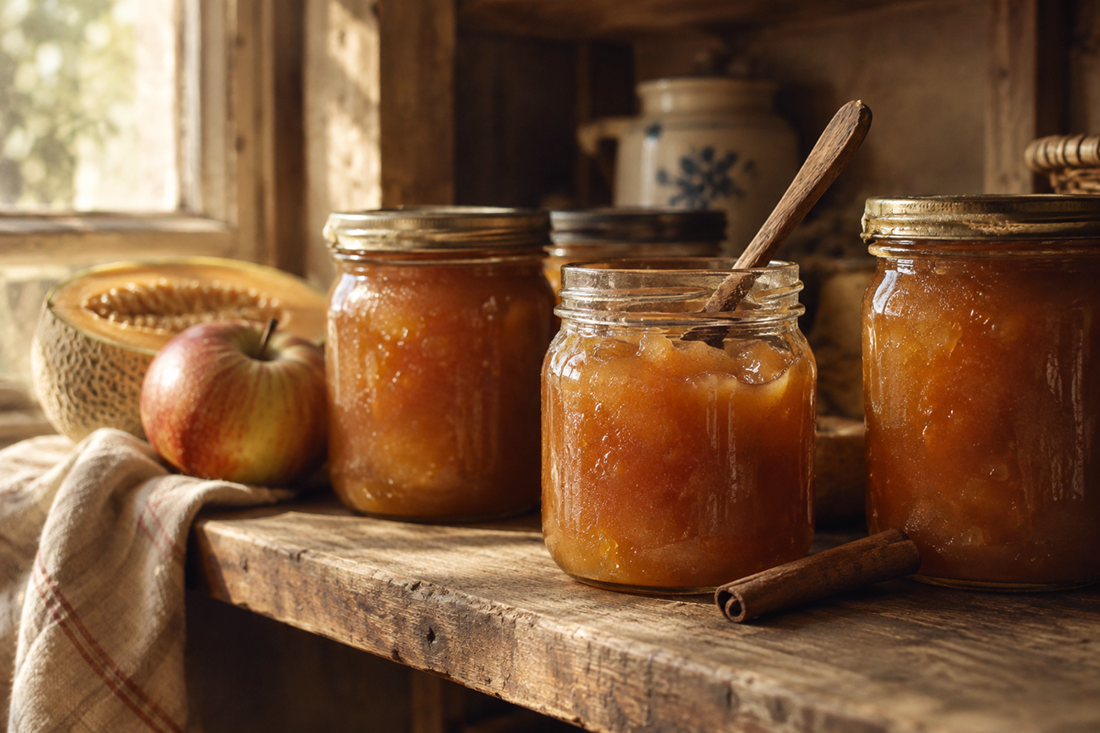
A slow-cooked melon and apple fruit butter (pekmez), lightly spiced with cinnamon and canned for shelf-stable keeping.
Quick Summary
This fruit butter combines puréed melon and sour apples, cooked down slowly with sugar and cinnamon until thick and spreadable. It's a smaller, shelf-stable version of a traditional large-batch preserve, canned properly so it keeps well in the pantry for months.
Historical recipe
Modernised adaptation of an early 20th‑century source. Not independently kitchen-tested by Attic Recipes. Quantities, temperatures, and food safety guidance have been updated for a contemporary kitchen — results may vary and errors may exist. Nutritional values, where provided, are estimates only and have not been laboratory tested. Always follow current food safety guidelines for your region. If you have a health condition, allergy, or dietary requirement, consult a qualified professional before preparing this recipe.
Use of this recipe is entirely at your own risk and subject to our Terms of Service and Privacy Policy. Attic Recipes accepts no liability for any adverse outcome.
Additional notes
-
Warning
Melon is a low-acid fruit, so hot-filling into jars alone isn't a reliable way to make this shelf-stable. Sterilize jars and lids, fill while the fruit butter is still hot, and process in a boiling water bath for at least 10-15 minutes before storing at room temperature. This matters especially for anyone canning at home who isn't already familiar with low-acid produce and safe canning practices — when in doubt, refrigerate or freeze instead of shelf-storing.
- 1
Wash the 600g of apples; don't peel them. Slice them and remove the cores and seeds.
- 2
Put the apples in a pot with a splash of water and cook over medium heat until very soft.
- 3
Pass the cooked apples through a sieve or food mill to purée them.
- 4
Peel and cube the 1400g of melon, then cook it the same way — with a splash of water until soft — and pass it through the sieve as well.
- 5
Combine the apple and melon purées in a pot and cook over medium heat, stirring frequently.
- 6
Once the mixture has reduced by about half, add the 1200g of sugar and the cinnamon stick.
- 7
Continue cooking, stirring constantly, until the mixture is thick and holds its shape on a spoon, about 45-60 more minutes.
Tip It scorches easily once thickened — keep the heat moderate and don't step away for long. A good test: a spoonful on a cold plate should mound and hold its shape rather than spread out. - 8
Remove the cinnamon stick. Ladle the hot fruit butter into sterilized jars, leaving about 1cm of headspace, and seal with sterilized lids.
- 9
Process the sealed jars in a boiling water bath for at least 10-15 minutes (adjusting for altitude) to ensure a safe seal.
Tip This step matters here specifically because melon is a low-acid fruit — hot-filling alone isn't a reliable seal for it the way it might be for a more acidic fruit. - 10
Let the jars cool completely, check that the lids have sealed (they shouldn't flex when pressed), and store in a cool, dark place.
Nutrition Information per 1 tablespoon (about 20g)
Nutritional values are approximate estimates and may vary based on specific ingredients used, preparation methods, and portion sizes.
Serving Suggestions
Spread on bread or toast, swirl into yogurt or oatmeal, or serve alongside a cheese board. A small spoonful also works well stirred into hot tea.
About This Recipe
This fruit butter pairs two very different fruits: sour apples, which bring acidity and a bit of natural pectin, and melon, which is sweet, watery, and otherwise a poor keeper. Cooked separately, puréed, then combined and reduced slowly with sugar and cinnamon, the two become a thick, spreadable preserve that bears little resemblance to either fruit on its own.
This version has been scaled down considerably from a traditional large batch meant to use up a whole late-summer melon harvest — a household today is far more likely to want a few jars than a full shelf’s worth.
Why It Works
Melon’s natural acidity is low, which is exactly why the sugar ratio and processing method here matter more than they might for a more acidic fruit preserve. A high enough sugar concentration, combined with proper heat processing, is what keeps a low-acid fruit like this safe to store at room temperature — cutting either corner is where a preserve like this can go wrong. The long, slow reduction also does double duty: it drives off excess water and concentrates flavor at the same time.
Modern Kitchen Tips
- Cook the apples and melon separately before combining — trying to cook them together from the start makes it harder to judge when each is soft enough to purée.
- Don’t rush the final reduction; a thin fruit butter won’t set properly even with the higher sugar content.
- If you’re new to water bath canning, it’s worth reading up on the basics before working with a low-acid fruit like melon specifically.
- This freezes well too, if you’d rather skip canning altogether — just leave headspace in the container for expansion.
A classic of early 20th century home cooking, preserved and adapted for the modern kitchen.
The Story Behind This Recipe
Historical Context
Pekmez was a practical way to use up abundant late-summer fruit before it spoiled, relying on hours of slow cooking to concentrate natural fruit sugars rather than on a large amount of added sugar — a style distinct from Western-style high-sugar jam. Pairing apple with melon let a household stretch a large melon harvest, which doesn't keep well on its own, into something shelf-stable. The traditional approach finished the jars with a spell in a cooling oven and tied paper covers rather than sealed lids, since dedicated canning equipment wasn't always on hand.
Modern Kitchen Adaptation
This version keeps the original apple-to-melon ratio but scales the whole recipe down to a 2kg batch (about 600g apples and 1.4kg melon) instead of the traditional 13kg. The sugar has been increased well beyond the traditional ~115g per kilogram of fruit, up to 600g per kilogram, since melon is a low-acid fruit and the traditional lower-sugar version pairs uneasily with unrefrigerated, shelf-stable storage. Sterilized jars processed in a boiling water bath replace the traditional oven-and-tied-paper finish, since melon's low acidity means both a validated heat-processing step and a higher sugar concentration matter for safe pantry storage. The cinnamon amount is a rough fraction of the original, since 'a piece of cinnamon bark' was already an imprecise measure to begin with.At this sugar level, the result sits closer to a fruit butter than to pekmez in the strictest sense — true pekmez relies on reduction alone, with little to no added sugar, even though the name is kept here for its traditional, vernacular usage.
This recipe is an independent modern adaptation developed from historical sources in the public domain. It is provided for informational and educational purposes only and does not constitute professional dietary, nutritional, or medical advice. Food preparation involves inherent risks. The reader assumes full responsibility for safe food handling, ingredient sourcing, and adherence to current local food safety guidelines. The site operator accepts no liability for outcomes resulting from the preparation or consumption of this recipe.
One recipe.
Every week.
You Might Also Like
More recipes you'll enjoy
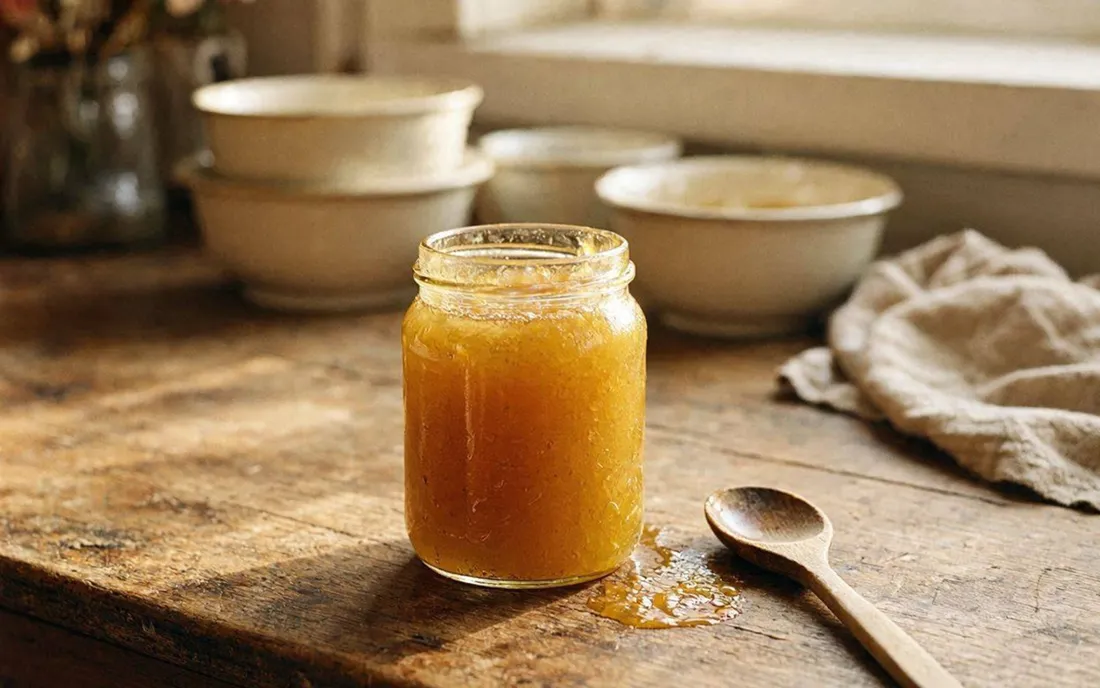
Slow-Cooked Melon Preserve
A fragrant, golden melon preserve slow-cooked with sugar until thick and spreadable, updated with a food processor and safe modern canning steps.
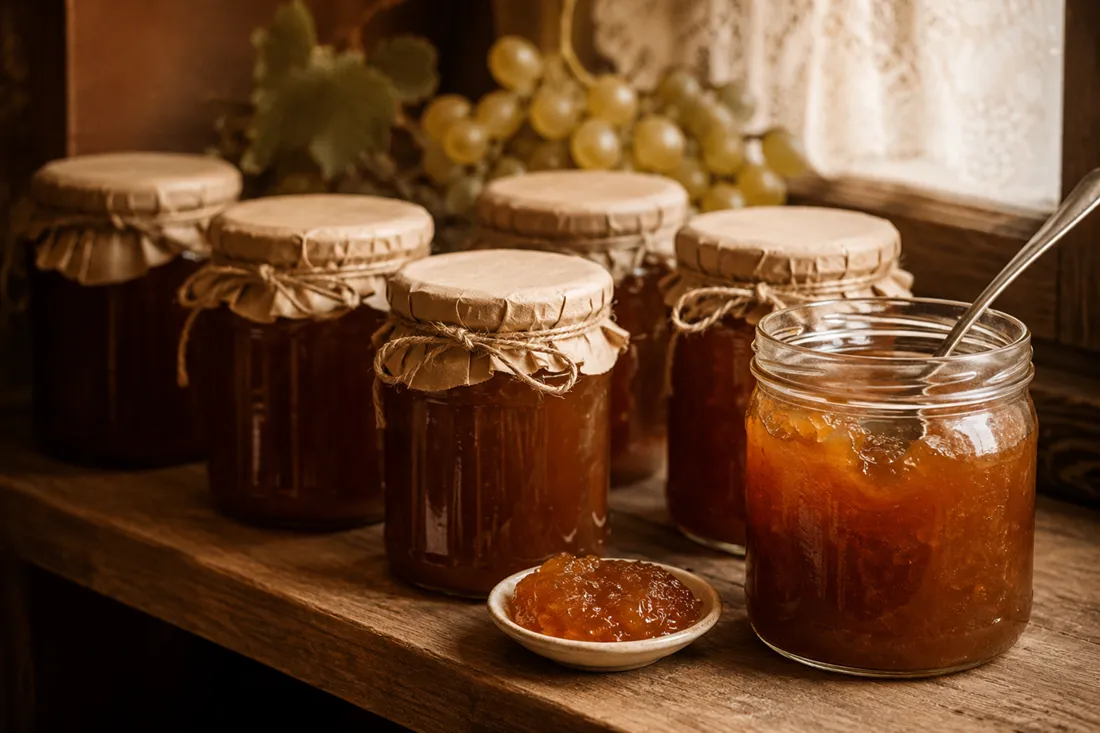
Grape and Quince Jam
White grape juice and pureed quince are simmered with sugar into a thick, spreadable jam, then jarred for keeping through the winter.
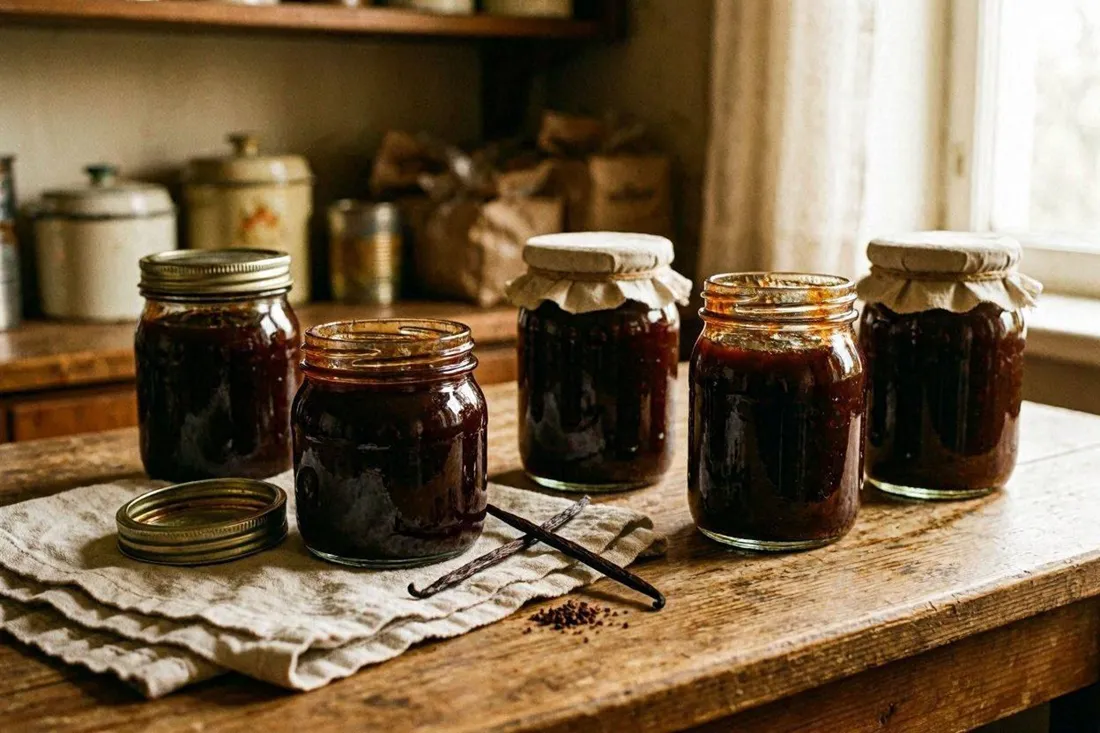
Mixed Fruit and Green Tomato Pekmez
A thick, slow-simmered fruit butter made from grapes, plums, apples, and unripe tomatoes, sweetened lightly and scented with vanilla.