Piquant Mixed Vegetable Pickle
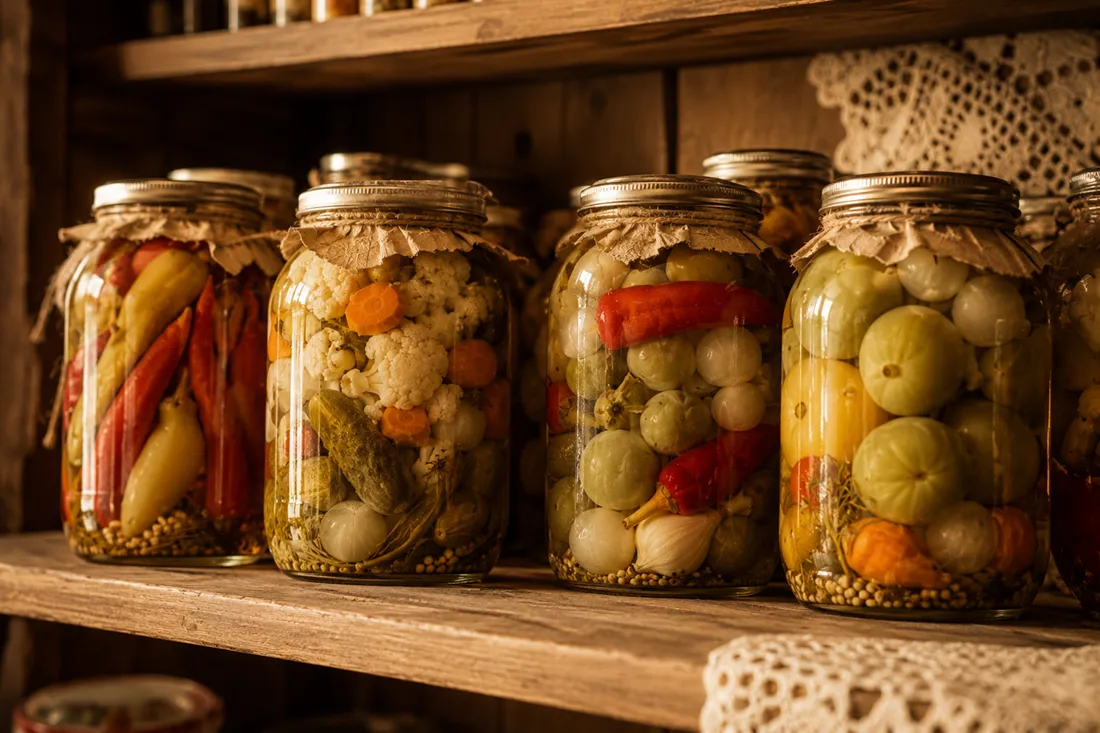
A colorful mix of blanched vegetables, gherkins, green tomatoes, and hot peppers is packed into jars and covered with a tangy vinegar brine.
Quick Summary
Young vegetables are blanched separately, then packed into jars in colorful layers with gherkins, green tomatoes, hot peppers, and pearl onions. A vinegar brine poured over the top and processed for shelf stability makes this a tangy, spicy winter pickle.
Historical recipe
Modernised adaptation of an early 20th‑century source. Not independently kitchen-tested by Attic Recipes. Quantities, temperatures, and food safety guidance have been updated for a contemporary kitchen — results may vary and errors may exist. Nutritional values, where provided, are estimates only and have not been laboratory tested. Always follow current food safety guidelines for your region. If you have a health condition, allergy, or dietary requirement, consult a qualified professional before preparing this recipe.
Use of this recipe is entirely at your own risk and subject to our Terms of Service and Privacy Policy. Attic Recipes accepts no liability for any adverse outcome.
Additional notes
-
Warning
The original method of topping the jars with plain salted water and tying them shut is not a safe way to preserve low-acid vegetables and can risk botulism. This version uses a proper vinegar brine and boiling water bath processing instead — don't skip either step, and confirm your vinegar is labeled at 5% acidity.
- 1
Wash and prepare all the vegetables: trim the asparagus, peel and slice the carrots, cut the cauliflower into small florets, clean the mushrooms, trim the green beans, peel and cube the kohlrabi, and trim the brussels sprouts.
- 2
Bring the blanching water, vinegar, and salt to a boil. Blanch each vegetable separately until just tender-crisp, testing with a fork. Drain and immediately plunge into cold water to stop the cooking, then drain again.
Tip Blanching each vegetable on its own, rather than all together, keeps faster-cooking types like mushrooms from turning mushy while firmer ones like kohlrabi are still cooking. - 3
Prepare the raw-pack vegetables: halve the gherkins if large, quarter the green tomatoes, and trim the hot peppers, pepperoncini, and pearl onions.
- 4
Wash the jars in hot, soapy water, then sterilize them by boiling in a large pot of water for 10 minutes or running them through a hot dishwasher cycle. Let them air-dry before filling.
- 5
Pack the jars with a colorful mix of the blanched and raw-pack vegetables, layering by color for visual variety and leaving about 2cm of headspace at the top.
- 6
Combine the vinegar, water, and salt for the final brine in a pot and bring to a boil.
Tip Use a vinegar labeled at 5% acidity — this is what makes the finished pickle safe to store at room temperature. - 7
Pour the hot brine over the packed vegetables, making sure everything is fully submerged, and wipe the jar rims clean.
- 8
Seal the jars and process in a boiling water bath for 15 minutes.
- 9
Let the jars cool completely, check that the lids have sealed, then label and store in a cool, dark place. Refrigerate after opening.
Nutrition Information per 1 portion (approx 50g mixed vegetables)
Nutritional values are approximate estimates and may vary based on specific ingredients used, preparation methods, and portion sizes.
Serving Suggestions
Serve as a tangy, spicy relish alongside cold cuts, cheese, or grilled meats, or add a few pieces to a sandwich or charcuterie board.
About This Recipe
This preserve is really an assortment of small decisions repeated many times over: each vegetable blanched on its own to its own correct texture, then everything layered together by color into jars for a mix that’s as much about how it looks as how it tastes. The hot peppers, pepperoncini, and pearl onions tucked in alongside the milder vegetables give the whole jar its bite, while the gherkins and green tomatoes add the tang that a plain vegetable mix would otherwise be missing.
It’s the kind of preserve built for using up whatever a late-season garden still has to offer, all captured together in one jar instead of scattered across several.
Why It Works
Blanching each vegetable separately, rather than cooking everything together in one pot, means a quick-cooking item like mushrooms doesn’t turn to mush by the time a slower one like kohlrabi is properly tender. Packing the jars with a genuine vinegar brine, rather than plain salted water, is what actually makes this preserve safe to store outside the refrigerator — the acidity keeps harmful bacteria from developing in a way that salt alone cannot, no matter how tightly the jar is sealed.
Modern Kitchen Tips
Cut the vegetables into similarly sized pieces so they blanch evenly and pack neatly into the jars. Don’t skip the boiling water bath processing step — it’s what makes the difference between a truly shelf-stable jar and one that needs to live in the refrigerator regardless of the brine. If you’d rather skip the water bath altogether, that’s fine, but treat the finished jars as refrigerator pickles with a shorter shelf life rather than a pantry staple.
A classic of early 20th century home cooking, preserved and adapted for the modern kitchen.
The Story Behind This Recipe
Historical Context
Preserving a wide mix of young vegetables together, layered by color and rounded out with small pickled add-ins like gherkins, green tomatoes, and hot peppers, was a way to use up a garden's variety at the end of the growing season in one colorful jar rather than several single-vegetable ones. Blanching each vegetable separately before combining them kept every type at its own ideal texture, since cooking times for something like asparagus and something like kohlrabi are very different.
Modern Kitchen Adaptation
This is a significant food-safety revision, not a minor tweak: the original method topped the jars with plain salted water and simply tied them shut for room-temperature storage, which is not a safe way to preserve low-acid vegetables like cauliflower, carrots, kohlrabi, and brussels sprouts — that combination (low acidity, a sealed jar, no real heat processing) is exactly the set of conditions that can allow botulism to develop. This version replaces the salted water with a proper vinegar brine (using vinegar at 5% acidity) and adds a boiling water bath processing step, both of which are necessary for the jars to be safely shelf-stable; neither should be skipped or substituted with the original method. The source also gives no quantities for any of the vegetables, just a list of suggestions, so all amounts here are estimated for a batch of about 4-5 jars — feel free to substitute or adjust the vegetable mix based on what's fresh and available, as long as the total volume and the vinegar-to-water ratio in the brine stay about the same.
This recipe is an independent modern adaptation developed from historical sources in the public domain. It is provided for informational and educational purposes only and does not constitute professional dietary, nutritional, or medical advice. Food preparation involves inherent risks. The reader assumes full responsibility for safe food handling, ingredient sourcing, and adherence to current local food safety guidelines. The site operator accepts no liability for outcomes resulting from the preparation or consumption of this recipe.
One recipe.
Every week.
You Might Also Like
More recipes you'll enjoy
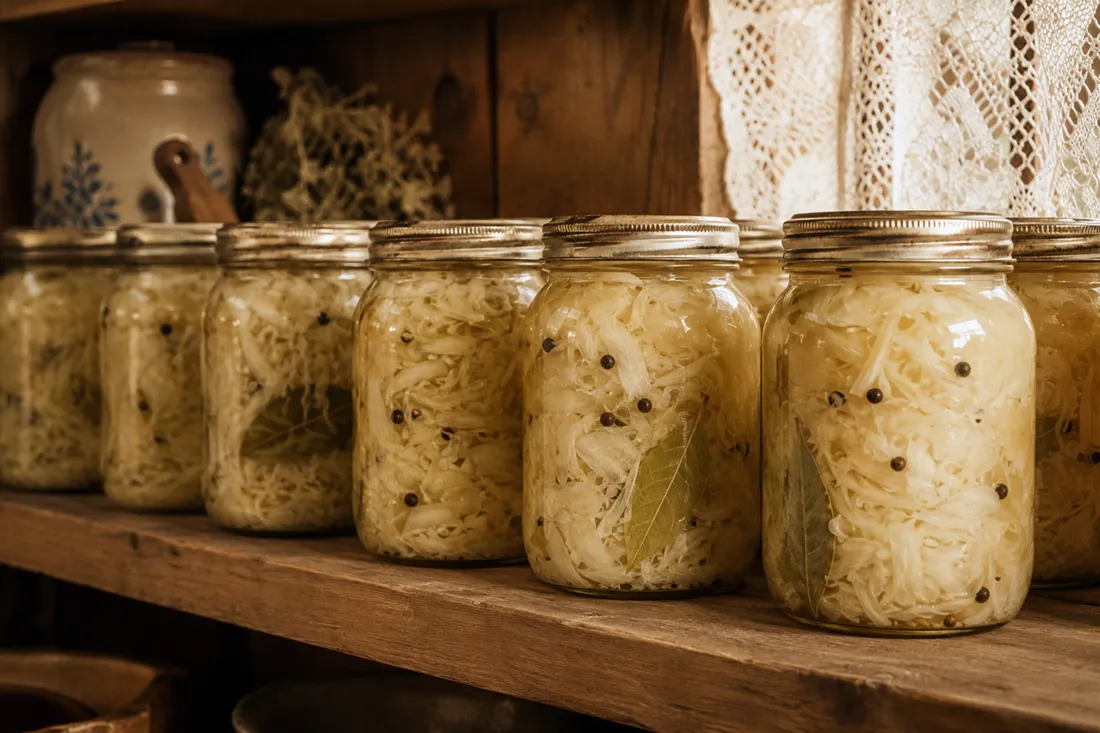
Marinated Cabbage in Vinegar Brine
Shredded cabbage is salted, drained, and packed into jars, then covered with a cooled wine vinegar brine flavored with bay leaf and allspice.
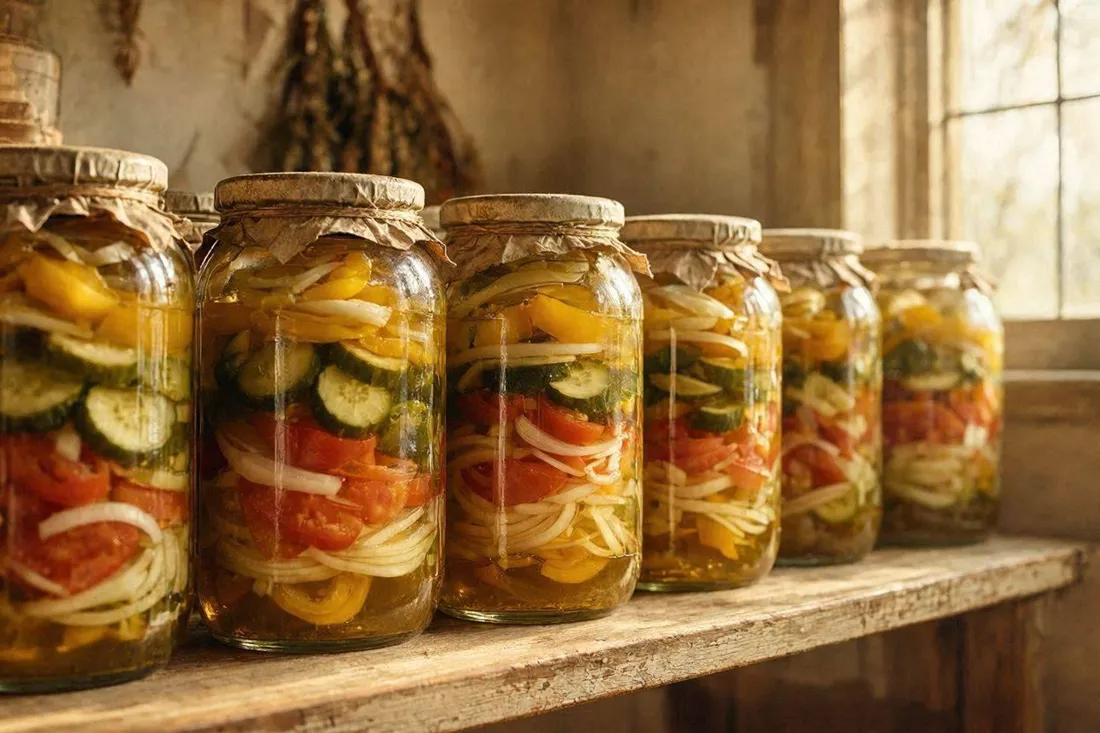
Mixed Vegetable Preserve in Sweet-Sour Brine
A mix of onion, green tomato, cucumber, and bell pepper in a sweet-sour vinegar brine, canned for winter storage — a Central European preserving classic.
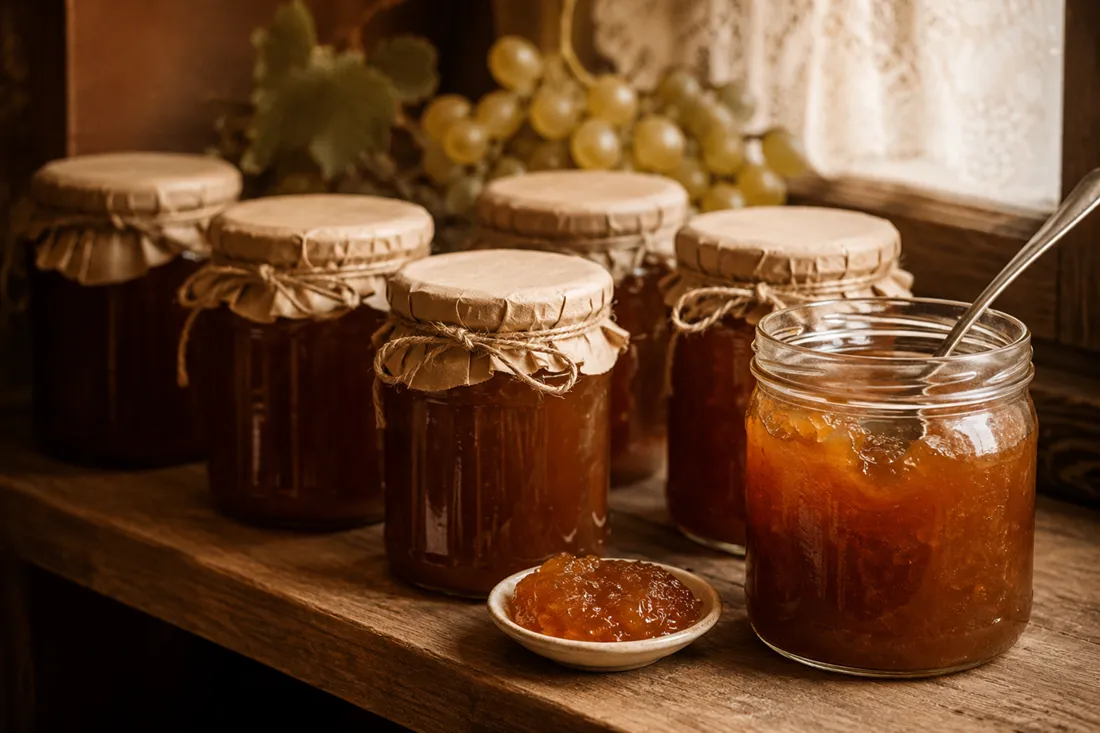
Grape and Quince Jam
White grape juice and pureed quince are simmered with sugar into a thick, spreadable jam, then jarred for keeping through the winter.