Roasted Wild Duck on Potatoes
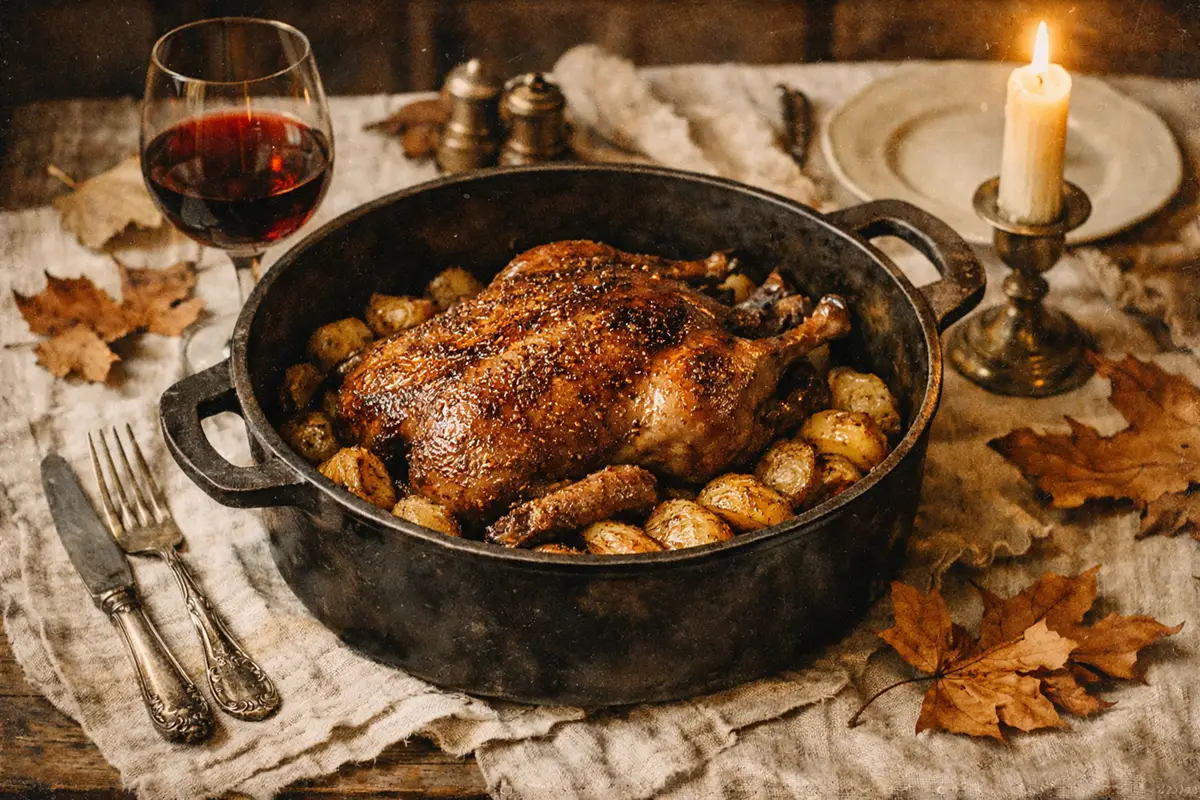
Whole wild duck slow-roasted in its own fat, finished on a bed of potatoes that absorb every drop of the cooking juices — a Central European classic.
Quick Summary
Whole wild duck slow-roasted in its own fat, finished on a bed of potatoes that absorb every drop of the cooking juices — a Central European classic.
Historical recipe
Modernised adaptation of an early 20th‑century source. Not independently kitchen-tested by Attic Recipes. Quantities, temperatures, and food safety guidance have been updated for a contemporary kitchen — results may vary and errors may exist. Nutritional values, where provided, are estimates only and have not been laboratory tested. Always follow current food safety guidelines for your region. If you have a health condition, allergy, or dietary requirement, consult a qualified professional before preparing this recipe.
Use of this recipe is entirely at your own risk and subject to our Terms of Service and Privacy Policy. Attic Recipes accepts no liability for any adverse outcome.
Additional notes
-
Warning
Wild duck and all poultry must reach a safe internal temperature before serving. The thickest part of the thigh (not touching the bone) must reach 82°C (180°F). Do not rely on colour of juices or visual cues alone — a meat thermometer is the only reliable method.
A basic instant-read meat thermometer removes all guesswork. Insert into the thickest part of the thigh, away from the bone, for an accurate reading.
-
Caution
Wild duck sourced from hunters or game suppliers should be inspected for shot pellets before cooking and serving. Run your fingers along the flesh before roasting and warn guests if the bird's origin is unclear.
Farmed duck from a butcher or supermarket carries no shot risk and is a straightforward substitute.
- 1
Check the duck's age by pressing the tip of the breastbone. If the cartilage yields and feels pliable, the bird is young and will roast in approximately 2 hours. If it is firm and bone-hard, the duck is older — plan for a longer roasting time and baste more frequently.
Tip A young duck is significantly more forgiving than an older one. If you cannot determine the age, treat it as older and add 30 minutes to the cooking time. - 2
Season the duck generously inside and out with salt and pepper. Heat lard or duck fat in a heavy roasting pot on the stovetop and brown the duck on all sides over medium-high heat until the skin begins to colour.
- 3
Add a splash of warm stock, cover loosely, and transfer to the oven at 180°C / 160°C fan (355°F). Roast for approximately 60 minutes, basting every 20 minutes with the cooking juices and adding stock as needed to keep the pot from drying out.
Tip Baste frequently — this is not optional. A duck that is not basted will dry out. - 4
After approximately 60 minutes, remove the duck from the pot. Spoon off and reserve a portion of the rendered fat from the pot, leaving enough to coat the base.
- 5
Add the pre-roasted potatoes to the fat remaining in the pot, turning to coat them well. Place the half-roasted duck on top of the potatoes.
Tip The potatoes should already be partially cooked at this point — raw potatoes will not finish in time. - 6
Return the pot to the oven, uncovered, and continue roasting for a further 45–60 minutes until the duck is fully cooked and the potatoes are golden and have absorbed the cooking fat.
- 7
Use a meat thermometer to verify doneness: the thickest part of the thigh (away from the bone) must read 82°C (180°F). Rest the duck for 10 minutes before carving.
- 8
Carve the duck into pieces and arrange them back over the potatoes in the roasting dish, positioned to resemble the whole bird. Heat the reserved fat, pour it over the duck and potatoes, and bring the dish directly to the table.
Tip This dish must be served very hot and generously juicy. If it looks dry, add a little of the reserved fat or warm stock before serving.
Nutrition Information per 1 portion (approx. 400g with potatoes)
Nutritional values are approximate estimates and may vary based on specific ingredients used, preparation methods, and portion sizes.
About This Recipe
One bird, one pot, one idea: roast the duck in its own fat, use that fat to finish the potatoes, and bring the whole thing to the table in the dish it was cooked in. There is nothing wasted and nothing extraneous. This is the kind of cooking that early 20th century households did without thinking about it — economy and flavour arriving at the same answer.
The technique splits the roasting into two stages. The duck goes in first, alone, for the initial hour. Then it comes out, the potatoes go into the rendered fat at the base of the pot, the duck goes back on top, and everything finishes together. The potatoes absorb the cooking juices and fat from above; the duck gets the dry heat it needs to colour properly.
A Holiday Centerpiece Worth Considering
Wild duck season runs October through January across Europe and North America — which puts this dish squarely in holiday territory. In Central Europe it has long been the centrepiece of Saint Martin’s Day tables (November 11th), where roasted poultry marks the end of the harvest season. For Christmas and Thanksgiving it makes a compelling alternative to turkey or goose: smaller, richer, more flavourful, and far less common on modern tables.
If you are looking for something beyond the expected holiday roast, this is it.
Why It Works
Duck renders a significant amount of fat as it roasts — more than chicken, more than most birds. Cooking the potatoes in that rendered fat, rather than in neutral oil, is what gives this dish its character. The fat carries the flavour of everything the duck released during the first hour: the browned skin, the seasoning, the basting liquid. The potatoes become something entirely different from potatoes roasted on their own.
The two-stage method also solves the classic problem of roasted duck: the legs need more time than the breast. Starting the bird in a covered pot with liquid and basting keeps the breast from drying out during the long cooking time the legs require.
On Reading the Bird
Pressing the tip of the breastbone to judge a bird’s age was everyday practical knowledge in a time when birds came from markets and farms rather than standardised packaging. A young bird roasts in around 2 hours. An older bird needs more time and more frequent basting or it will be tough. If you are buying from a butcher, ask — they will know.
Serving
This dish must arrive at the table hot and generously sauced with its own juices. If the pot has reduced too much during roasting, add a splash of warm stock before serving and heat briefly on the stovetop. The reserved fat, heated and poured over just before serving, restores everything.
A classic of early 20th century home cooking, preserved and adapted for the modern kitchen.
The Story Behind This Recipe
Historical Context
Roasting whole birds in heavy pots on the stovetop before finishing in the oven was standard practice in early 20th century Central European kitchens, where oven temperatures were unpredictable and the stovetop gave more control over the initial stage. Wild duck was a seasonal table bird, and the technique of reading the breastbone cartilage to judge age — and therefore adjust cooking time — was practical knowledge every household cook was expected to know. The method of resting the bird on a bed of potatoes for the second roasting phase meant the potatoes cooked in the duck's own rendered fat, producing a side dish of considerable quality from what would otherwise be discarded cooking fat.
Modern Kitchen Adaptation
Stock gives significantly better flavour than water as a basting liquid and is the recommended modern substitution. Wild duck is available from specialist butchers and game suppliers, particularly in autumn and winter. Farmed duck (such as Pekin or Barbary) can be used year-round and follows the same method, though farmed birds tend to have more fat and may need the first basting fat skimmed before adding potatoes. A meat thermometer is essential — visual cues alone are not sufficient for safe poultry cookery. Serve directly from the roasting dish with the potatoes and cooking juices. A simple braised red cabbage or pickled cucumber salad alongside cuts through the richness of the duck fat. Dark rye bread to soak up the juices is traditional.
This recipe is an independent modern adaptation developed from historical sources in the public domain. It is provided for informational and educational purposes only and does not constitute professional dietary, nutritional, or medical advice. Food preparation involves inherent risks. The reader assumes full responsibility for safe food handling, ingredient sourcing, and adherence to current local food safety guidelines. The site operator accepts no liability for outcomes resulting from the preparation or consumption of this recipe.
One recipe.
Every week.
You Might Also Like
More recipes from the same category
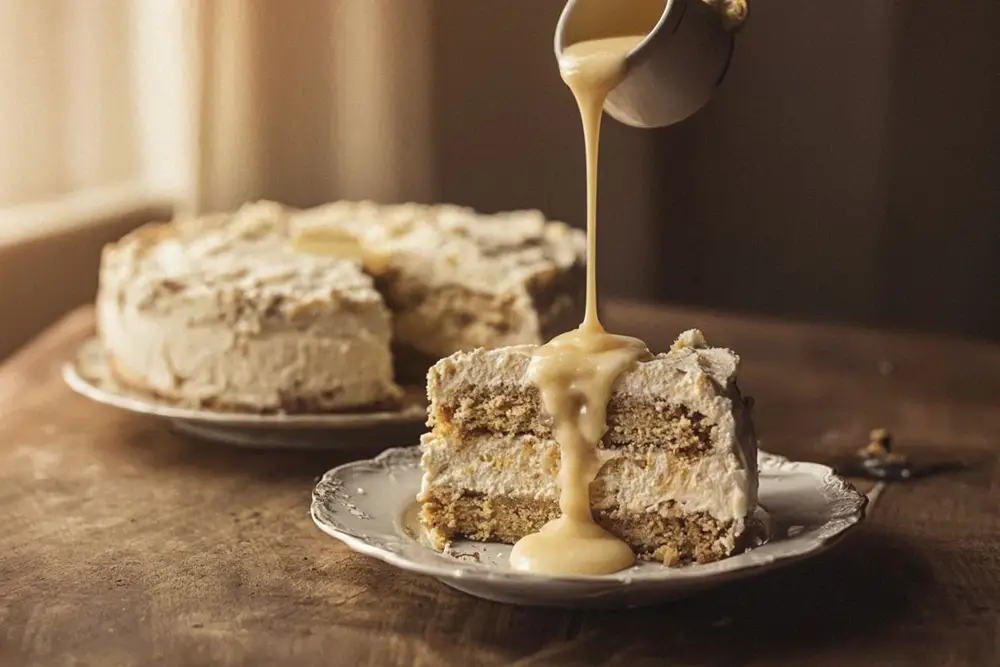
Almond Cream Biscuit Torte
A light sponge layered with almond buttercream and finished with a poured chilled custard sauce — a classic of early 20th century Central European pastry.
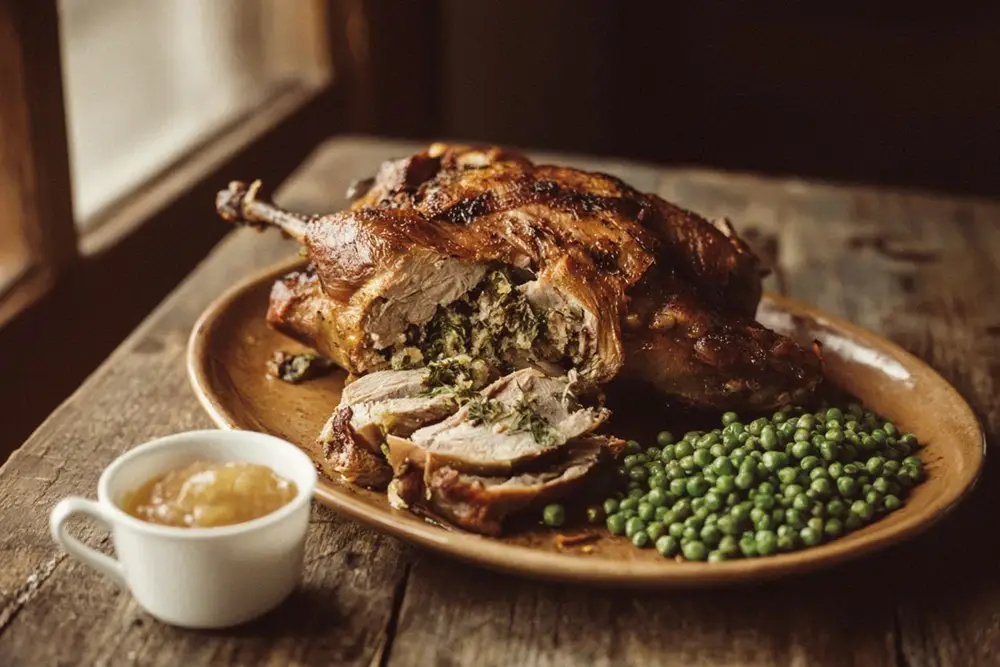
Baked Duck with Sage and Onion Stuffing and Apple Sauce
A whole roast duck stuffed with sage and onion, basted with pan drippings, and served with a warm apple sauce — a classic Central European Sunday roast.
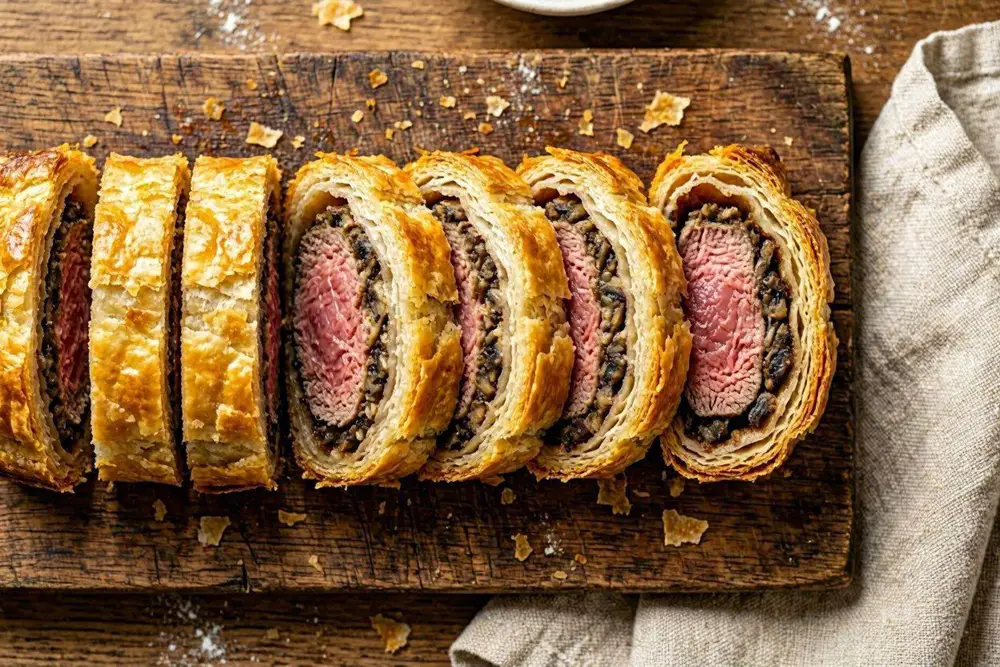
Beef Wellington
Aged beef tenderloin coated in a mushroom and caper paste, wrapped in golden puff pastry — a celebration roast from the early 20th century.