Spinach Roulade with Scrambled Egg Filling
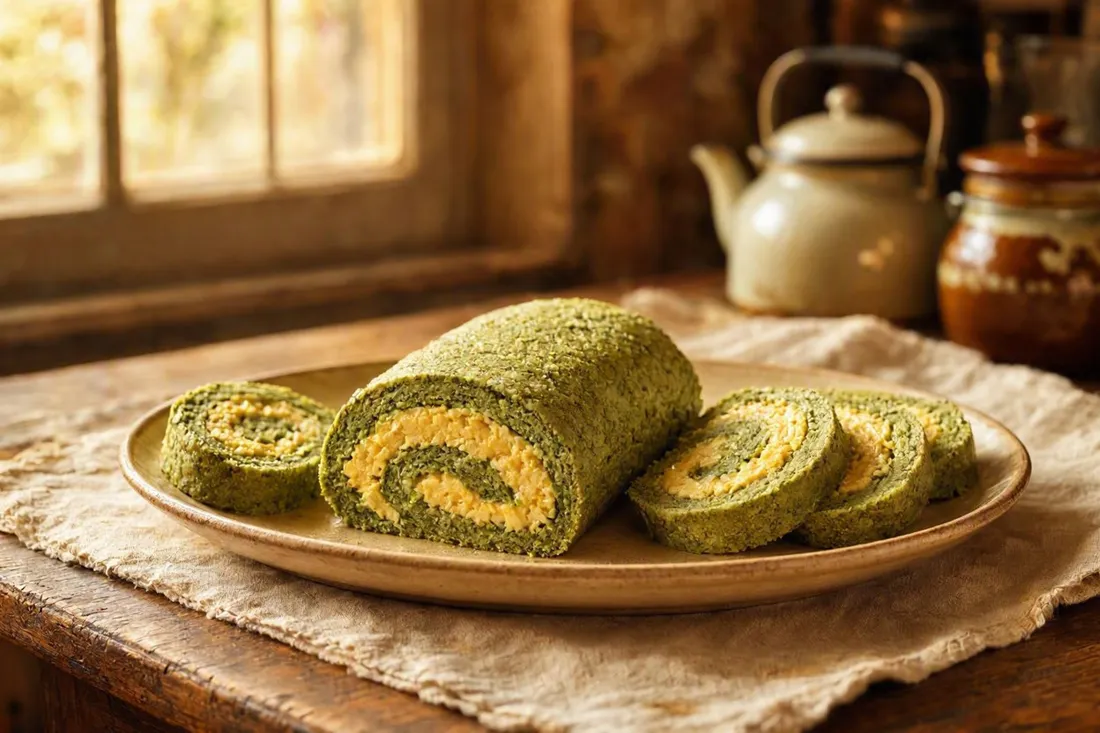
A baked spinach and egg roulade, rolled around a soft scrambled egg filling. A rich, savory appetizer or accompaniment to meat from early 20th century kitchens.
Quick Summary
This Central European roulade bakes a lightened spinach and egg batter into a tender sheet, rolled around a soft scrambled egg filling. Taking 70 minutes to prepare, it forms a rich, savory dish served warm as an appetizer or side.
Historical recipe
Modernised adaptation of an early 20th‑century source. Not independently kitchen-tested by Attic Recipes. Quantities, temperatures, and food safety guidance have been updated for a contemporary kitchen — results may vary and errors may exist. Nutritional values, where provided, are estimates only and have not been laboratory tested. Always follow current food safety guidelines for your region. If you have a health condition, allergy, or dietary requirement, consult a qualified professional before preparing this recipe.
Use of this recipe is entirely at your own risk and subject to our Terms of Service and Privacy Policy. Attic Recipes accepts no liability for any adverse outcome.
- Eggs
- Dairy
- Gluten
Additional notes
-
Warning
The scrambled egg filling must be cooked until fully set, even though it should remain soft — undercooked egg carries a food safety risk. This is especially important for pregnant women, young children, older adults, and immunocompromised individuals.
Using pasteurized eggs throughout the recipe reduces this risk margin without changing the texture or cooking method.
-
Caution
This roulade is rich in egg and dairy throughout. If not serving within an hour or two of baking, wrap and refrigerate rather than holding it warm, and refrigerate any leftovers promptly.
-
Note
This dish is high in cholesterol and saturated fat due to the number of eggs and the amount of butter used. Those managing cholesterol or saturated fat intake may want to keep portions moderate.
- 1
Wash and trim the spinach. Cook in salted water until wilted and tender, about 5-7 minutes. Drain thoroughly, pressing out as much water as possible.
- 2
Tear the bread rolls into pieces and soak in the {0003} until softened, about 5-10 minutes. Squeeze out any excess milk.
- 3
Combine the drained spinach and softened rolls in a food processor and pulse until finely and evenly ground.
Tip This replaces the meat grinder used in the original method — a food processor gives the same fine, even texture in far less time. - 4
In a separate bowl, beat the {0004} with the {0005} until pale and well combined. Season with the {0006}.
- 5
Fold the spinach-bread mixture into the yolk-butter mixture until evenly combined.
- 6
Whip the {0007} to stiff peaks. Gently fold into the spinach mixture along with the {0008}, being careful not to deflate the whites.
- 7
Grease a sheet pan with the {0009} and dust with the {0010}. Spread the mixture evenly across the pan.
- 8
Bake at {ovenTemp} for 20-25 minutes, until set and lightly golden, and the top springs back when touched.
- 9
While the base bakes, make the filling: melt the {0012} in a pan over low heat, add the {0011} beaten with the {0013}, and cook gently, stirring, until softly set but not runny.
Tip The filling should be soft, not firm — but make sure it's fully cooked through, not left wet or undercooked. - 10
Once the base is baked, turn it out onto a clean cloth or sheet of parchment while still warm. Spread evenly with the scrambled egg filling.
- 11
While still warm, roll up into a log, using the cloth or parchment to guide the roll. Keep warm until ready to serve.
Tip This roulade contains egg and dairy throughout — if you're not serving within an hour or two, wrap and refrigerate it rather than holding it warm indefinitely. - 12
Slice and serve warm, as an appetizer or as an accompaniment to a meat course.
Nutrition Information per 1 slice (approx 210g)
Nutritional values are approximate estimates and may vary based on specific ingredients used, preparation methods, and portion sizes.
Serving Suggestions
Serve warm, sliced into rounds, either on its own as a savory appetizer or alongside a roasted or braised meat course. It holds its shape well enough to serve on a shared platter for a small gathering.
About This Recipe
There’s a lot going on in this one for something that started, historically, as a way to make spinach feel like an occasion. Cooked spinach and soaked bread are ground fine, folded into a rich mixture of egg yolks and butter, then lightened with stiffly whipped whites before baking into a flat, tender sheet — a technique that borrows more from cake-making than from vegetable cookery.
Once baked, the sheet gets rolled around a filling of soft scrambled eggs while everything is still warm and pliable, the same principle used for a Swiss roll, just applied to a savory dish. The result is a roulade with a fine, almost soufflé-like crumb on the outside and a soft, custardy center.
It’s the kind of dish that takes real attention at each stage — whipping whites, timing the bake, cooking the filling just enough — but none of the individual steps are difficult on their own. It rewards a cook who’s willing to work through a few components rather than one who wants a single fast dish.
Why It Works
Whipped egg whites do the structural work here, the same way they do in a soufflé: air trapped in the foam expands in the oven’s heat, giving the dense spinach-and-bread base enough lift to bake into a rollable sheet rather than a dense loaf. Folding them in gently, right before baking, matters because the structure is fragile — overmixing collapses the air pockets before they ever reach the oven.
Rolling the sheet while it’s still warm is what keeps it from cracking. Once it cools, the proteins in the egg-based batter firm up and lose flexibility, which is why the filling goes on and the roll gets shaped immediately after baking, not after it rests.
Modern Kitchen Tips
If the sheet cracks slightly while rolling, don’t worry — it will still hold together and the cracks won’t be visible once it’s sliced and plated. A silicone baking mat or well-buttered parchment makes turning the baked sheet out much easier than trying to lift it straight from a bare pan.
A classic of early 20th century home cooking, preserved and adapted for the modern kitchen.
The Story Behind This Recipe
Historical Context
Recipes of this style relied on a meat grinder to turn cooked spinach and soaked bread into a fine, even paste — a standard piece of kitchen equipment in the period, doing a job now handled by a food processor in seconds. The technique of folding whipped egg whites into a heavier yolk-and-butter base to lighten a savory dish appears across many dishes of this era, not just sweet ones. The traditional approach specified salt only as 'to taste,' leaving the amount to the cook's judgment.
Modern Kitchen Adaptation
Salt quantities for both the batter and the filling are estimated here, since the original gives no amount for either. The amount of milk for soaking the bread rolls is also estimated, along with the butter and breadcrumbs used to prepare the pan, none of which the original specifies. The meat grinder called for in the original method is replaced here with a food processor, which achieves the same fine texture more quickly and with equipment most kitchens already have. The filling should be cooked until fully set, even though it's kept soft — undercooked egg should be avoided, particularly for pregnant women, young children, older adults, and immunocompromised individuals. Pasteurized eggs are a good option throughout this recipe, given how many eggs it uses and how soft the filling stays — they reduce the risk margin without changing how the dish is cooked or tastes.
This recipe is an independent modern adaptation developed from historical sources in the public domain. It is provided for informational and educational purposes only and does not constitute professional dietary, nutritional, or medical advice. Food preparation involves inherent risks. The reader assumes full responsibility for safe food handling, ingredient sourcing, and adherence to current local food safety guidelines. The site operator accepts no liability for outcomes resulting from the preparation or consumption of this recipe.
One recipe.
Every week.
You Might Also Like
More recipes you'll enjoy
Baked Zucchini with Eggs and Sour Cream
Boiled zucchini layered with sour cream and breadcrumbs, topped with hard-boiled eggs, baked until lightly browned. A simple, old-fashioned vegetable appetizer.
Stuffed Green Tomatoes with Pork and Rice
Green tomatoes stuffed with a pork and rice filling, baked under lard and a light roux, finished with a baked egg-and-sour-cream custard on top.
Almond Hazelnut Date Torte
A flourless torte of ground almonds, hazelnuts, and dates, sliced into layers and coated in a chocolate and butter filling.