Veal and Macaroni Skillet with Peppers and Tomatoes
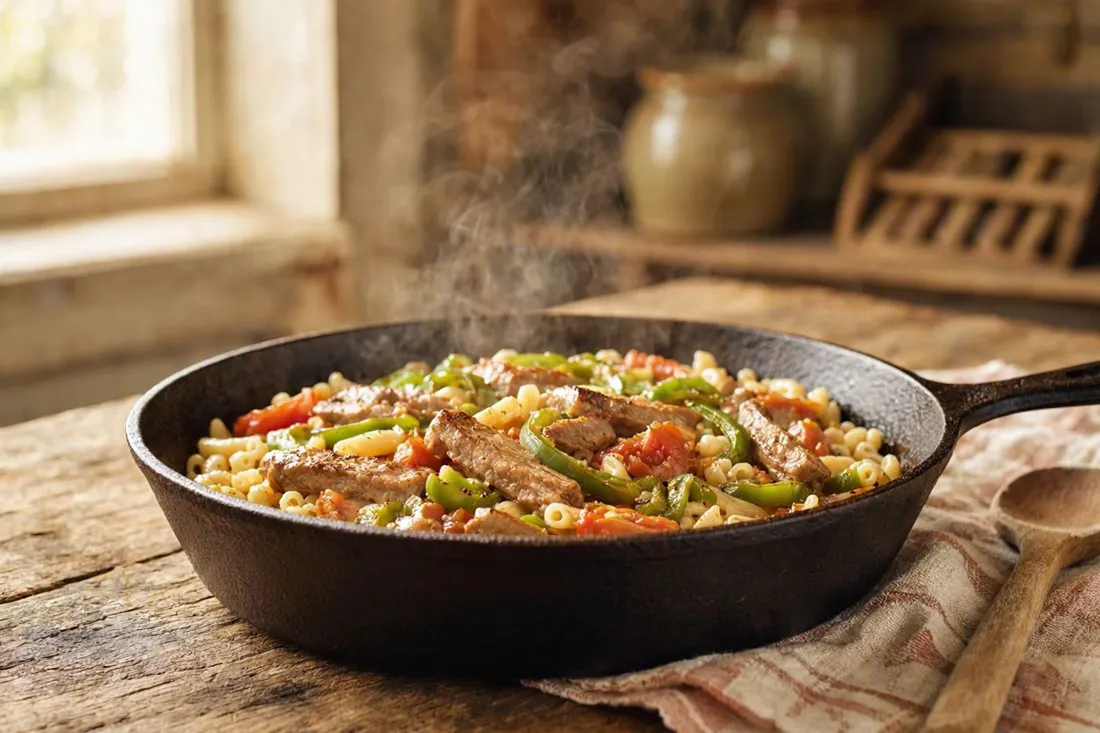
Seared veal strips are simmered with peppers, tomatoes, and macaroni in one pan — a hearty, thrifty dinner from simple pantry ingredients.
Quick Summary
Pan-seared veal is cut into strips and simmered with peppers and tomatoes, then tossed with cooked macaroni in the same pan. A hearty, thrifty Central European skillet dinner ready in under an hour.
Historical recipe
Modernised adaptation of an early 20th‑century source. Not independently kitchen-tested by Attic Recipes. Quantities, temperatures, and food safety guidance have been updated for a contemporary kitchen — results may vary and errors may exist. Nutritional values, where provided, are estimates only and have not been laboratory tested. Always follow current food safety guidelines for your region. If you have a health condition, allergy, or dietary requirement, consult a qualified professional before preparing this recipe.
Use of this recipe is entirely at your own risk and subject to our Terms of Service and Privacy Policy. Attic Recipes accepts no liability for any adverse outcome.
- Dairy
- Gluten
Additional notes
-
Warning
Searing the veal in hot fat can cause splattering and burns. Keep children away from the stove and use caution when frying at high heat.
- 1
Pound the veal cutlets thin and season with about half the salt. Sear quickly in hot butter on both sides until browned and cooked through. Remove from the pan.
Tip Because the cutlets are pounded thin, a quick sear on high heat is usually enough to cook them through — check that no pink remains before removing them. - 2
Once the veal has cooled slightly, cut it into thin strips.
- 3
In the same fat left in the pan, add the green peppers and cook briefly.
- 4
Add the tomatoes and the remaining salt. Cook until the peppers and tomatoes have softened.
- 5
Stir in the cooked, drained macaroni and mix well with the pepper-tomato mixture.
- 6
Add the veal strips back into the pan, mix thoroughly, and simmer everything together for a few more minutes to heat through and blend the flavors.
Nutrition Information per 1 portion (approx 420g, based on 5 servings)
Nutritional values are approximate estimates and may vary based on specific ingredients used, preparation methods, and portion sizes.
Serving Suggestions
Serve on its own as a complete one-pan dinner, with crusty bread on the side to catch the pan juices.
About This Recipe
This dish takes a familiar move — pan-frying a thin cutlet — and turns it into something that stretches much further than a single serving of meat usually would. Once the veal is seared, it’s sliced into strips rather than served whole, and the same pan goes on to build a soft, savory base of peppers and tomatoes that soaks up whatever flavor was left behind from the meat. Tossed through cooked macaroni, the whole thing becomes a single hearty pan of dinner instead of a plate with a cutlet on the side.
It’s an efficient, no-waste way of cooking: one pan, one round of frying fat, and a modest amount of meat turned into a meal that comfortably feeds a family.
Why It Works
Searing the veal first and cooking the vegetables in the same fat afterward means the peppers and tomatoes pick up the browned bits and rendered flavor left in the pan, rather than starting from a completely neutral base. Slicing the veal into strips after cooking, rather than serving it as a whole cutlet, distributes the meat evenly through the dish so every forkful gets some, and the final simmer with the macaroni lets everything come together into one cohesive dish rather than separate components on a plate.
Modern Kitchen Tips
Use a fat with a high smoke point — clarified butter, ghee, or a neutral oil — for the initial sear, since regular butter can burn before the veal has a chance to brown properly at high heat. Boil the macaroni while the veal and vegetables are cooking so everything comes together at roughly the same time, and don’t overcook the peppers and tomatoes — they should soften but still hold some shape before the pasta goes in.
A classic of early 20th century home cooking, preserved and adapted for the modern kitchen.
The Story Behind This Recipe
Historical Context
Frying meat and then building a vegetable base in the same fat was a common way to stretch a modest amount of protein across a full meal, since the fat carried the flavor of the seared meat into the peppers and tomatoes that followed. Slicing the cooked veal into strips and folding it through pasta rather than serving it whole made a single portion of meat go further across a family-sized dinner.
Modern Kitchen Adaptation
The original recipe gives no quantity for the frying fat or the salt, so both are estimated here (butter for the fat, with a note that a higher smoke-point fat performs better for a quick sear); the number of tomatoes is also estimated, since the source only says 'several.' Because the veal is pounded thin, the quick sear described in the source is generally enough to cook it through, but it's worth checking that no pink remains before setting it aside.
This recipe is an independent modern adaptation developed from historical sources in the public domain. It is provided for informational and educational purposes only and does not constitute professional dietary, nutritional, or medical advice. Food preparation involves inherent risks. The reader assumes full responsibility for safe food handling, ingredient sourcing, and adherence to current local food safety guidelines. The site operator accepts no liability for outcomes resulting from the preparation or consumption of this recipe.
One recipe.
Every week.
You Might Also Like
More recipes you'll enjoy
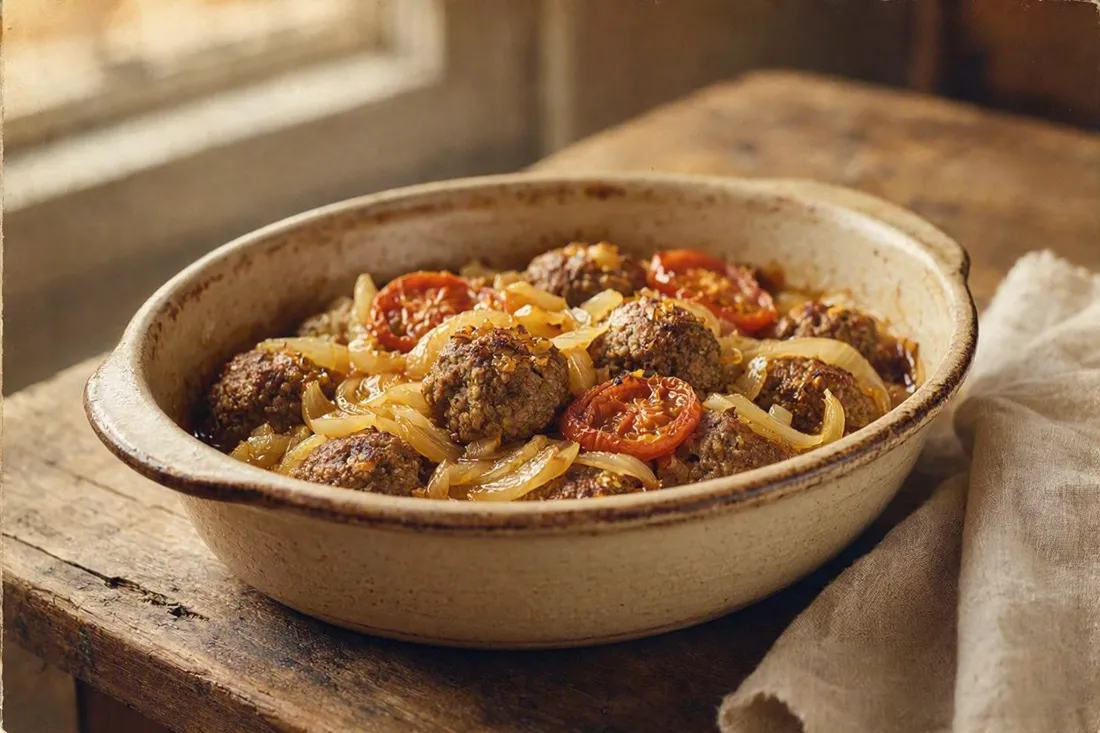
Baked Meatballs on Fried Onion with Tomatoes
Beef and pork meatballs baked over softened onion and sliced tomatoes in a light braising liquid — a comforting one-dish oven bake.
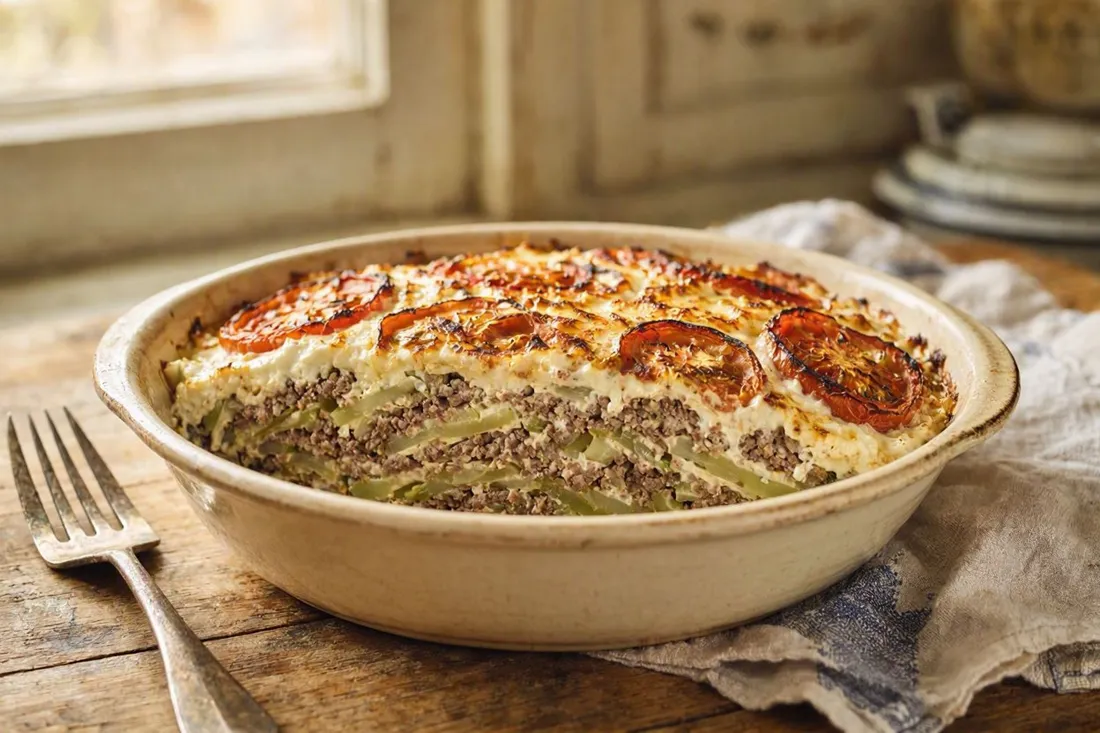
Kohlrabi and Veal Musaka
A layered casserole of braised kohlrabi and seasoned ground veal, baked under sour cream and tomato - a comforting vintage Central European dish.
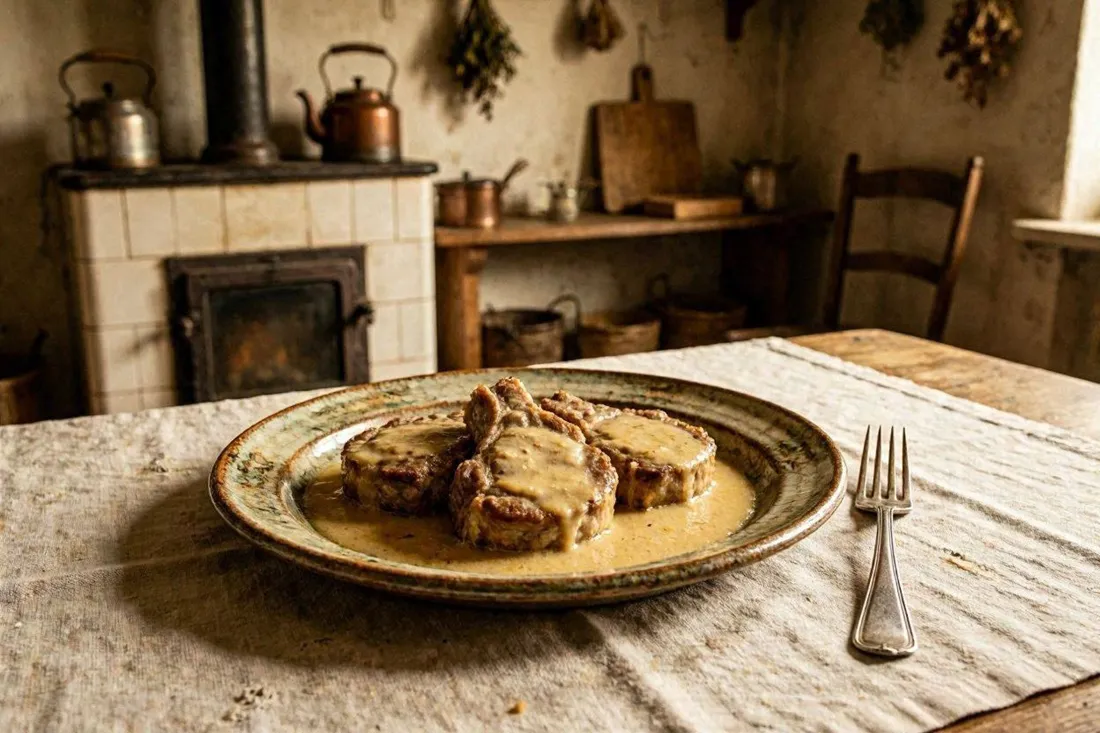
Braised Pork Chops in White Wine and Sour Cream Sauce
Pork loin chops braised with onion, carrot, parsley root, and celery root in white wine, then finished with a strained sour cream sauce.