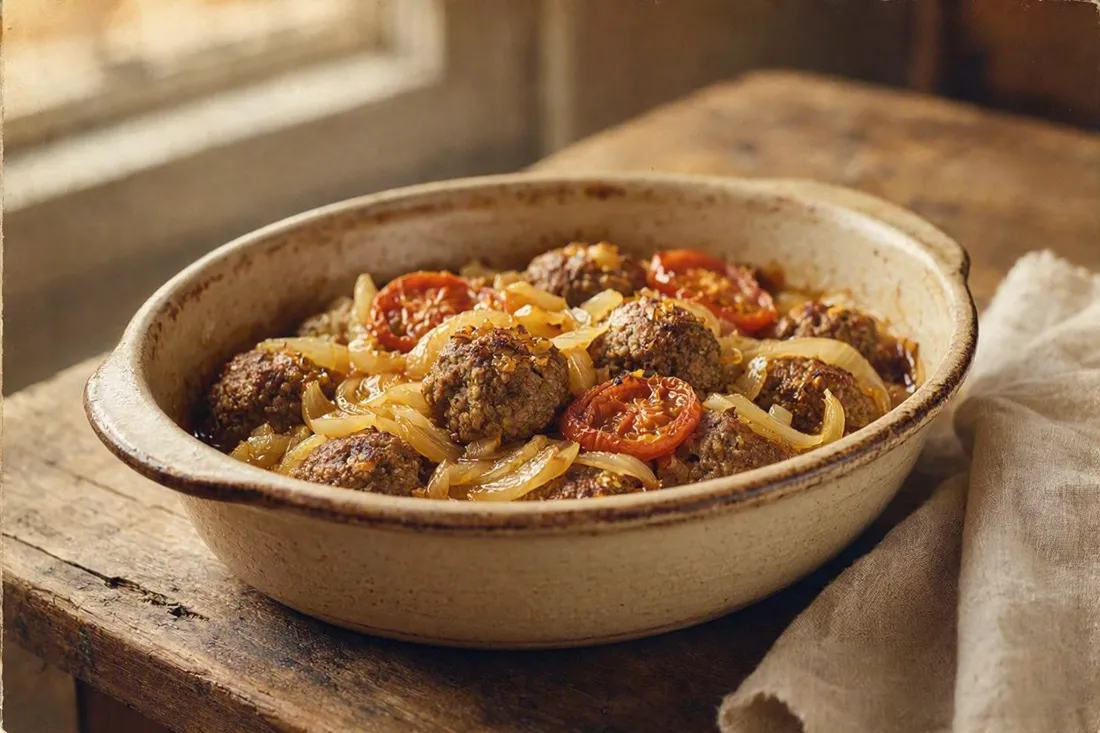
Baked Meatballs on Fried Onion with Tomatoes
Beef and pork meatballs baked over softened onion and sliced tomatoes in a light braising liquid — a comforting one-dish oven bake.
Quick Summary
Ground beef and pork, bound with soaked bread and egg, rest before being shaped into meatballs and baked over a bed of soft fried onion, a light broth, and sliced tomatoes. A hearty one-dish oven bake that takes at least an hour to finish cooking through.
Historical recipe
Modernised adaptation of an early 20th‑century source. Not independently kitchen-tested by Attic Recipes. Quantities, temperatures, and food safety guidance have been updated for a contemporary kitchen — results may vary and errors may exist. Nutritional values, where provided, are estimates only and have not been laboratory tested. Always follow current food safety guidelines for your region. If you have a health condition, allergy, or dietary requirement, consult a qualified professional before preparing this recipe.
Use of this recipe is entirely at your own risk and subject to our Terms of Service and Privacy Policy. Attic Recipes accepts no liability for any adverse outcome.
- Gluten
- Eggs
- 1
Peel the onions and soak them whole in cold water briefly to mellow their sharpness. Slice them thinly, the way you would for a paprikash.
- 2
Heat 2 tbsp of the oil in a large pot. Add the sliced onion and cook over medium heat, stirring occasionally.
- 3
After a few minutes, once the onion has softened slightly, remove about half an onion's worth, chop it a little finer, and set it aside to cool for the meat mixture. Continue cooking the rest of the onion, stirring often, until fully soft and golden.
- 4
In a deep bowl, combine the ground beef and ground pork.
- 5
Add the soaked and squeezed bread, the reserved chopped onion, the egg, the salt, the pepper, and the parsley. Mix well by hand until you have a compact, cohesive mixture.
- 6
Cover and refrigerate the meat mixture for at least 30 minutes before shaping.
Tip Chilling firms the fat back up and gives the salt time to bind with the meat proteins, so the mixture holds together far better once shaped and baked. - 7
Once the onion in the pot is fully soft and golden, stir in the paprika and the salt for the onion, then remove from the heat.
- 8
Shape the chilled meat mixture into balls, about the size of a small apricot. Roll each one in the flour.
- 9
Spread the fried onion evenly in the baking dish. Arrange the raw meatballs over the onion, side by side.
- 10
Pour the broth or lukewarm water into the pot the onion was fried in, stir in the salt and the remaining 1 tbsp of oil, and pour this over the meatballs so they're partly submerged in liquid.
- 11
Arrange the tomato slices over the meatballs.
- 12
Bake in a preheated oven at 180°C (350°F) for at least 1 hour, until the meatballs are fully cooked through and the dish isn't too watery.
Tip The tomatoes release a fair amount of liquid as they bake — a deeper dish keeps things from bubbling over.
Nutrition Information per 1 portion (approx 280g, about 3-4 meatballs with onion, tomato, and liquid)
Nutritional values are approximate estimates and may vary based on specific ingredients used, preparation methods, and portion sizes.
Serving Suggestions
Serve hot, straight from the baking dish, with crusty bread or mashed potatoes to soak up the braising liquid.
About This Recipe
This is a meatball dish built almost entirely around timing: while a generous batch of onion slowly softens and turns golden in the pot, the meat mixture comes together, rests, and firms up in the cold. By the time the meatballs are shaped, the onion is ready to become their bed, and by the time they’ve baked for an hour under sliced tomatoes, everything has had time to meld into one braised, saucy dish.
It’s a good example of a technique that shows up across older home cooking: rather than pan-frying meatballs and serving them with a sauce on the side, the meatballs go in raw and cook entirely in the oven, absorbing flavor from the onion and tomato around them as they go.
Why It Works
Resting the mixed meat in a cold place before shaping does more than just make it easier to handle. Chilling firms the fat back up after it’s been softened by grinding and hand-mixing, so the meatballs hold their shape instead of turning greasy as they warm in the oven. The rest also gives the salt time to work into the meat proteins and the soaked bread time to fully bind in, so the mixture goes into the oven as a genuinely cohesive mass rather than a loose one that might fall apart during the long bake.
Baking the meatballs raw, directly over the onion and under the tomato, lets them cook gently in the liquid they’re surrounded by rather than drying out, which is also why the dish needs a full hour or more — that’s the time it takes for raw ground meat to cook through fully by braising rather than searing.
Modern Kitchen Tips
- Soak the bread well ahead of time so you’re not waiting on it once the meat is ready to mix.
- Don’t skip the chilling step, even if you’re short on time — a shorter 20-minute rest in the freezer works in a pinch.
- Check the liquid level partway through baking; if it’s reducing too fast, add a splash more broth or water so the dish doesn’t dry out.
A classic of early 20th century home cooking, preserved and adapted for the modern kitchen.
The Story Behind This Recipe
Historical Context
Soaking stale bread and squeezing it dry before working it into ground meat was a standard way to stretch a smaller amount of meat while keeping the finished meatballs tender rather than dense. The original recipe adjusted the number of tomatoes by season — fewer in winter, more in summer — reflecting a period when fresh tomatoes were only reliably available for part of the year.
Modern Kitchen Adaptation
The original recipe calls for lard (mast) both to fry the onion and in the braising liquid; this version uses vegetable oil instead, though lard remains the more traditional choice if you prefer it. The original varies its tomato quantity by season (2 tomatoes in winter, 6 in summer); since tomatoes are now available year-round, this version uses 6 throughout. Because the tomatoes give off noticeably more liquid as they bake, a deeper oven-safe dish is recommended even though the original just calls for a standard đuveč. Quantities for the bread, salt, pepper, parsley, paprika, coating, and braising liquid are estimated, since the original describes them only in general terms ('a piece of bread,' 'a knife-tip's worth,' 'salt to taste'). The oven temperature is also estimated, as the original specifies only a minimum bake time.
This recipe is an independent modern adaptation developed from historical sources in the public domain. It is provided for informational and educational purposes only and does not constitute professional dietary, nutritional, or medical advice. Food preparation involves inherent risks. The reader assumes full responsibility for safe food handling, ingredient sourcing, and adherence to current local food safety guidelines. The site operator accepts no liability for outcomes resulting from the preparation or consumption of this recipe.
One recipe.
Every week.
You Might Also Like
More recipes you'll enjoy
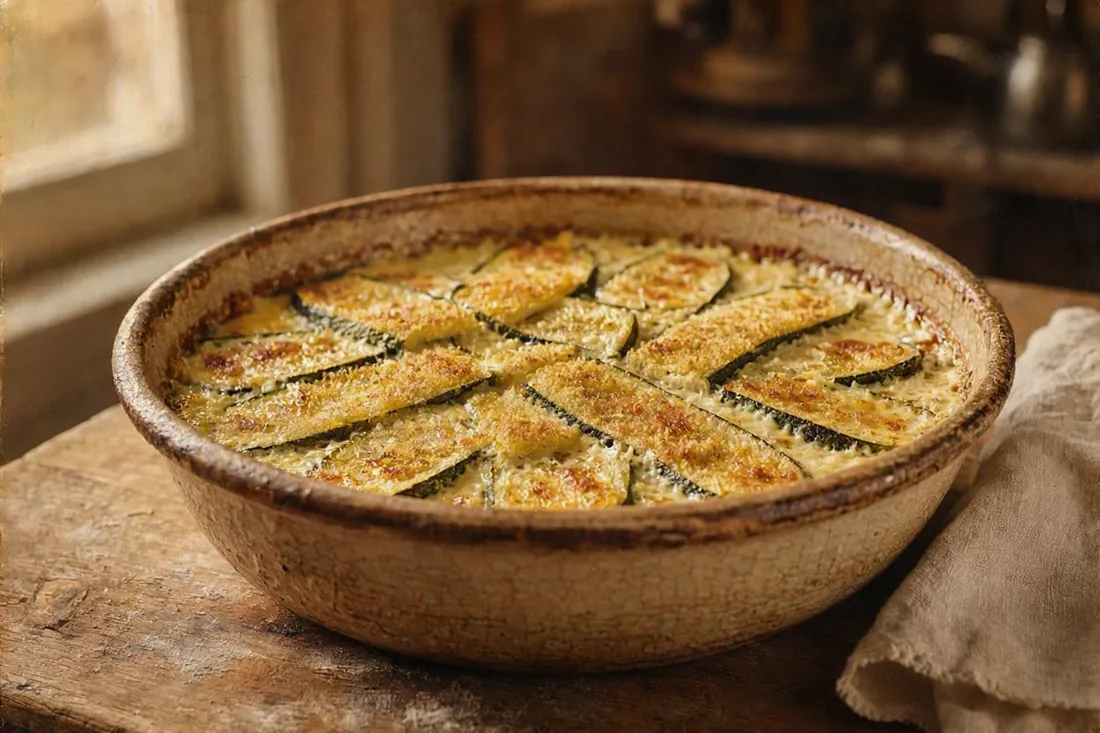
Breaded Zucchini Bake with Sour Cream Topping
Breaded, pan-fried zucchini slices layered crisscross and baked under a rich sour cream and egg topping.
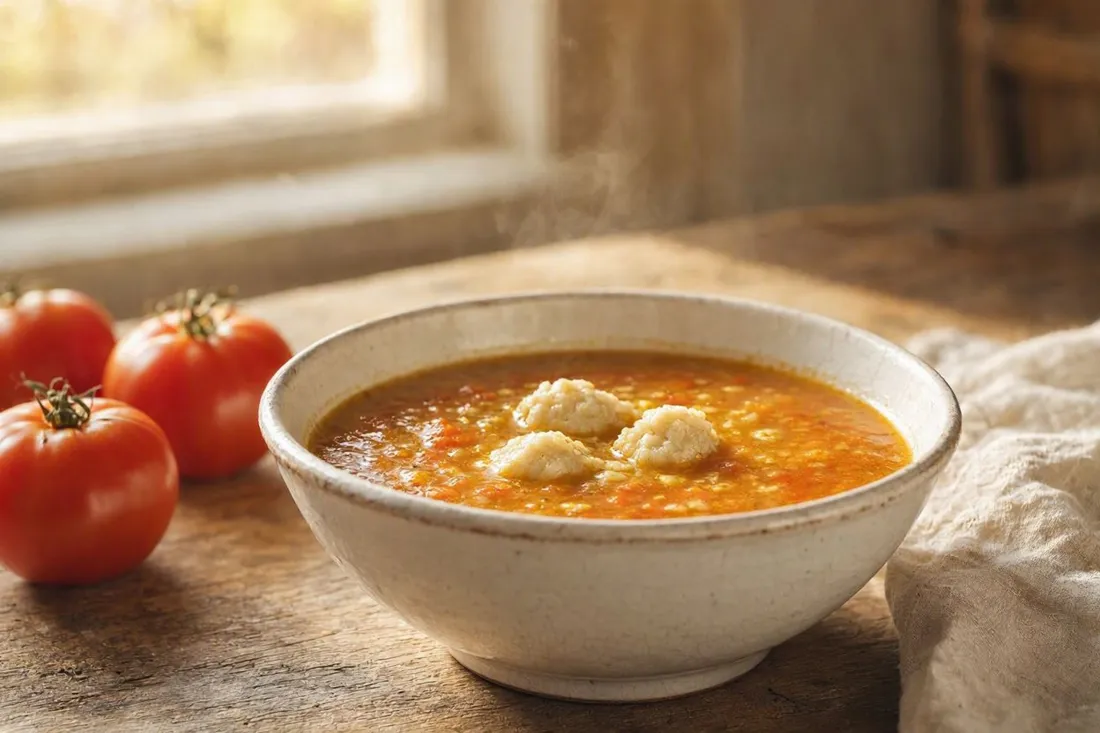
Summer Tomato Soup with Meatless Dumplings
A silky summer tomato soup finished with a light roux and small flour dumplings — a simple, meatless one-pot dish.
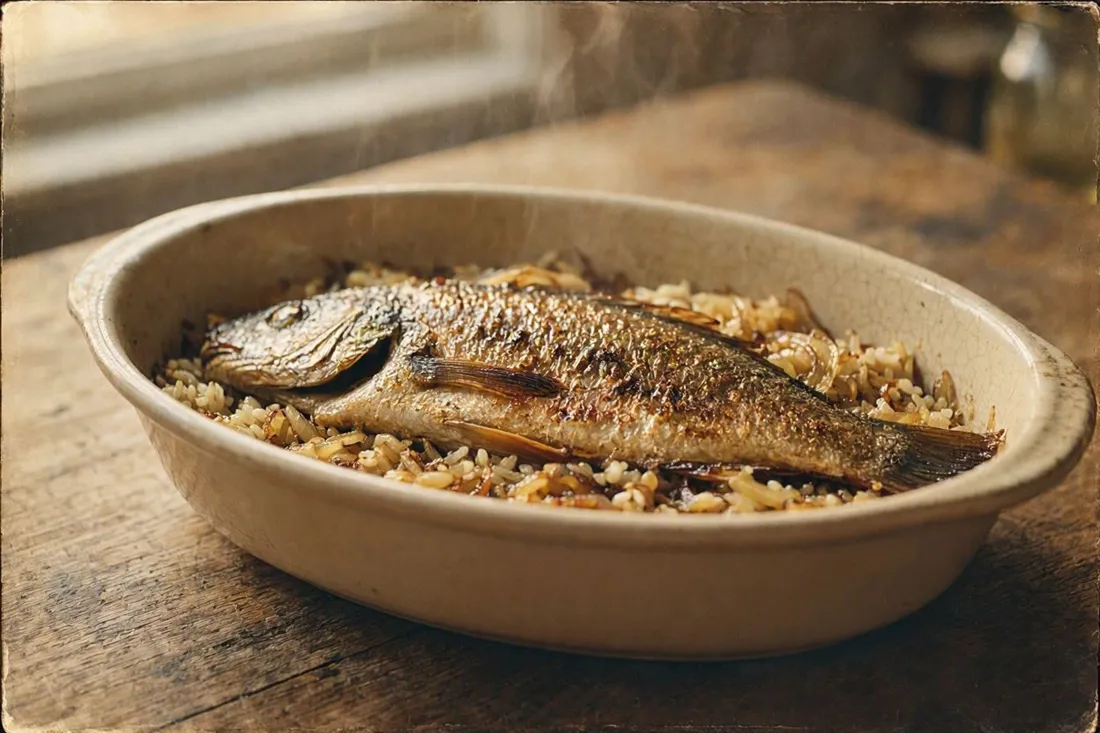
Fish Baked Over Onions
Whole fish baked over a thick bed of paprika onions and rice — a rustic, one-pan Central European dish traditionally served with potato or green salad.