Summer Tomato Soup with Meatless Dumplings
A silky summer tomato soup finished with a light roux and small flour dumplings — a simple, meatless one-pot dish.
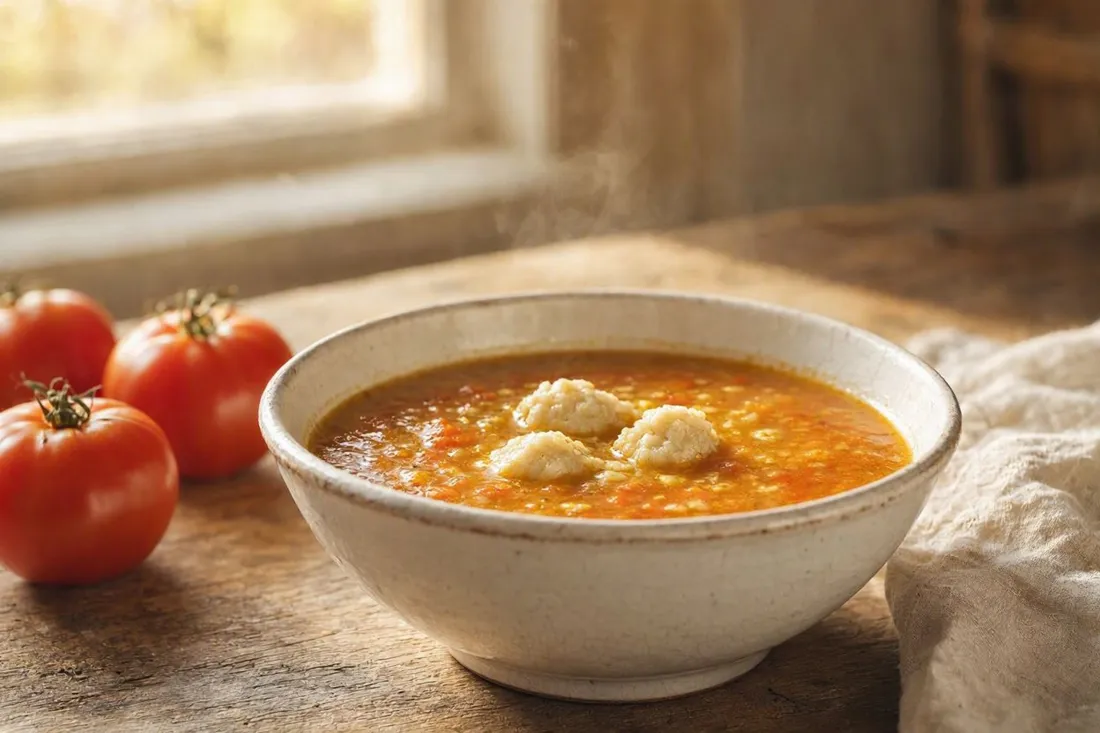
Quick Summary
A light tomato soup made from fresh summer tomatoes, enriched with a soup-greens broth and thickened with a simple oil-and-flour roux, then finished with small torn flour dumplings. A meatless, one-pot dish ready in about 80 minutes, suited to a simple midday meal.
Historical recipe
Modernised adaptation of an early 20th‑century source. Not independently kitchen-tested by Attic Recipes. Quantities, temperatures, and food safety guidance have been updated for a contemporary kitchen — results may vary and errors may exist. Nutritional values, where provided, are estimates only and have not been laboratory tested. Always follow current food safety guidelines for your region. If you have a health condition, allergy, or dietary requirement, consult a qualified professional before preparing this recipe.
Use of this recipe is entirely at your own risk and subject to our Terms of Service and Privacy Policy. Attic Recipes accepts no liability for any adverse outcome.
- Gluten
- 1
Wash the tomatoes and cut them into quarters.
- 2
In a large pot, heat 100g of the vegetable oil over medium heat. Add the chopped onion and cook briefly until softened, then add the quartered tomatoes.
- 3
In a separate pot, boil the bundled soup greens in the water for about 15 minutes, until the water is fragrant. Remove and discard the greens, reserving the broth.
Tip The greens' role here is purely flavor — no need to salt this broth separately. - 4
Pour the reserved broth over the tomatoes and onion. Simmer uncovered until the tomatoes are completely soft, about 20-25 minutes.
- 5
Pass the mixture through a fine sieve back into the pot, pressing well to extract the pulp and liquid; discard the skins and solids left behind. Stir in the salt.
- 6
In a small pan, warm the remaining 30g of oil and whisk in the 2 tbsp flour to make a light roux. Cook for 1-2 minutes until pale golden, without letting it darken.
Tip A roux this pale is meant to thicken lightly, not add color — pull it before it browns. - 7
Whisk the roux into the strained soup and bring back to a gentle simmer for about 5 minutes, until slightly thickened.
- 8
Meanwhile, make the dumpling dough: in a bowl, combine the flour, oil, and salt for the dumplings. Add the water gradually, mixing until a firm, non-sticky dough forms.
- 9
About 30 minutes before serving, tear small, pea-sized pieces of dough directly into the simmering soup. Cook until the dumplings float and are cooked through, about 8-10 minutes.
- 10
Serve hot.
Nutrition Information per 1 portion (approx 350g)
Nutritional values are approximate estimates and may vary based on specific ingredients used, preparation methods, and portion sizes.
Serving Suggestions
Serve hot as a light lunch, with crusty bread on the side.
About This Recipe
This is a soup built the way summer kitchens once ran on abundance and thrift at the same time: a full kilogram of ripe tomatoes, simmered down with nothing more than oil, onion, and a bundle of soup greens for depth. There’s no meat, no dairy, no egg — just vegetables and flour doing all the work, which made it equally at home on a fasting-day table or an ordinary weekday one.
What makes it interesting technically is the two-stage build: the tomatoes are cooked and then pushed through a sieve to become a smooth base, which is only afterward thickened with a light roux. That order matters — thickening raw pulp instead of a strained base would leave the soup grainy rather than silky.
The small torn dumplings, dropped in raw and simmered right in the pot, are what turn a thin tomato broth into something substantial enough to call a meal.
Why It Works
Straining the cooked tomato and greens mixture before thickening removes the seeds, skins, and fibrous bits that would otherwise make the roux cling unevenly, so the finished soup thickens smoothly instead of turning lumpy or stringy. The roux itself is kept pale — cooked just long enough to lose its raw-flour taste — because a soup this light doesn’t need the deeper flavor of a dark roux, only the body it provides.
The dumplings rely on a simple ratio of flour, oil, and water worked into a firm dough; without egg to bind it, the dough needs to be firm rather than soft, or the torn pieces will disintegrate before they finish cooking in the simmering soup.
Modern Kitchen Tips
- Tear the dumplings small — roughly pea-sized — so they cook through in the 8-10 minutes given; larger pieces will stay doughy in the center.
- If the dumpling dough feels sticky, work in a little extra flour rather than adding more water.
- The soup thickens slightly as it sits; thin it with a splash of hot water if reheating leftovers.
- A sieve works well here, but an immersion blender saves time if you don’t mind a slightly less refined texture.
A classic of early 20th century home cooking, preserved and adapted for the modern kitchen.
The Story Behind This Recipe
Historical Context
Meatless soups like this one were a staple of everyday home cooking, not only during periods of religious fasting but simply as an economical way to stretch a meal when meat was scarce or costly. Home cooks of the period made a summer version with fresh tomatoes and a winter version with preserved tomato pulp. Small flour dumplings, made without egg or dairy, added bulk and heartiness to an otherwise light vegetable soup.
Modern Kitchen Adaptation
The original recipe called only for 'a bunch of greens' boiled for broth; this version specifies the standard mix of parsley root, celery root, and carrot. The roux and dumpling dough were originally described only as 'a little oil, salt, flour, and enough water' — quantities here are estimated to give a repeatable, properly thickened soup and a firm, workable dough. The soup base itself was never salted in the original; a modest amount of salt has been added here for balanced seasoning. For a smoother texture, the tomato mixture can be blended with an immersion blender instead of pushed through a sieve, though sieving stays closer to the original method.
This recipe is an independent modern adaptation developed from historical sources in the public domain. It is provided for informational and educational purposes only and does not constitute professional dietary, nutritional, or medical advice. Food preparation involves inherent risks. The reader assumes full responsibility for safe food handling, ingredient sourcing, and adherence to current local food safety guidelines. The site operator accepts no liability for outcomes resulting from the preparation or consumption of this recipe.
One recipe.
Every week.
You Might Also Like
More recipes you'll enjoy
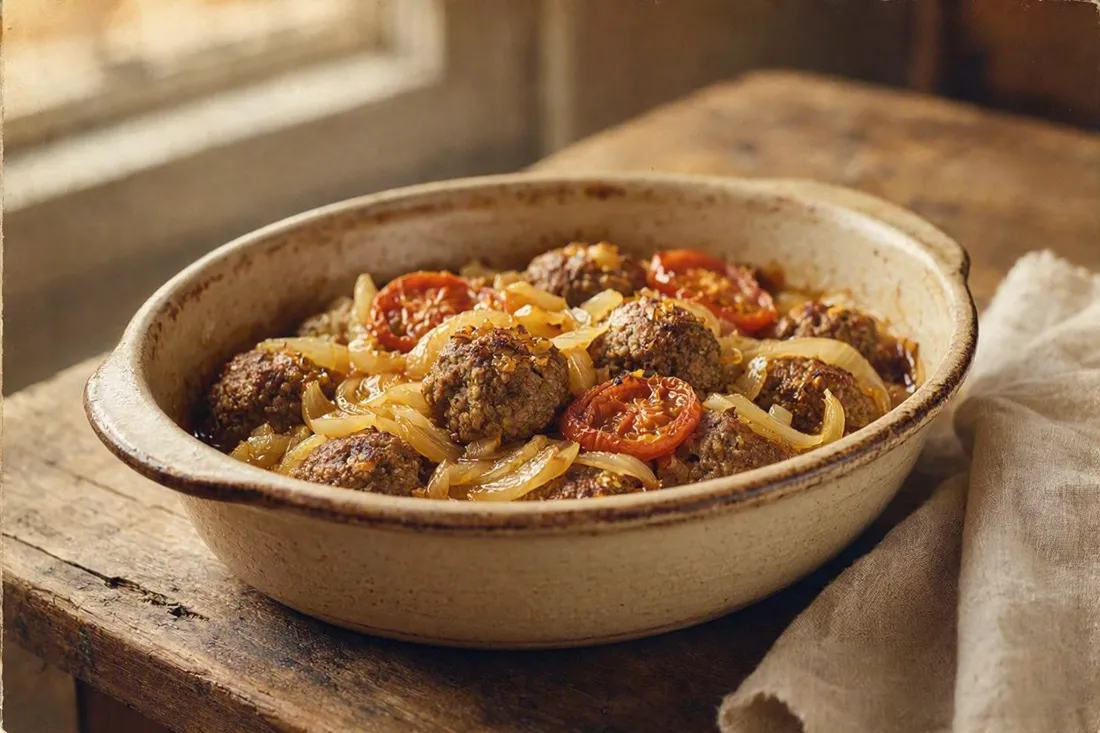
Baked Meatballs on Fried Onion with Tomatoes
Beef and pork meatballs baked over softened onion and sliced tomatoes in a light braising liquid — a comforting one-dish oven bake.
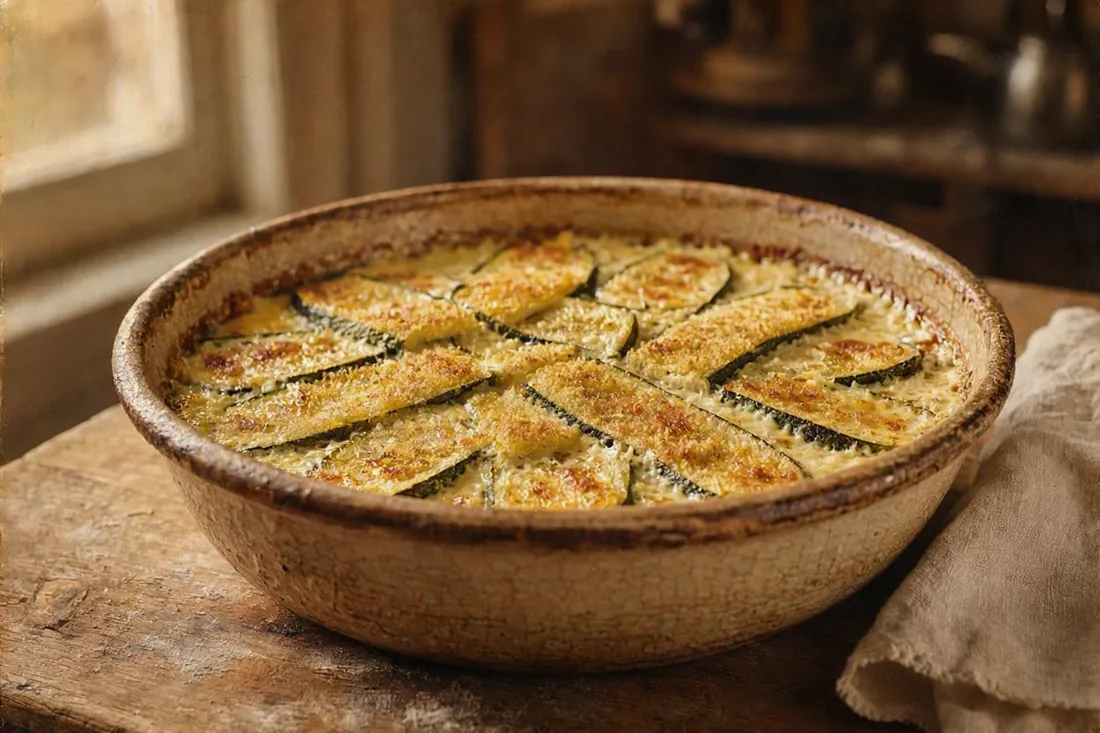
Breaded Zucchini Bake with Sour Cream Topping
Breaded, pan-fried zucchini slices layered crisscross and baked under a rich sour cream and egg topping.
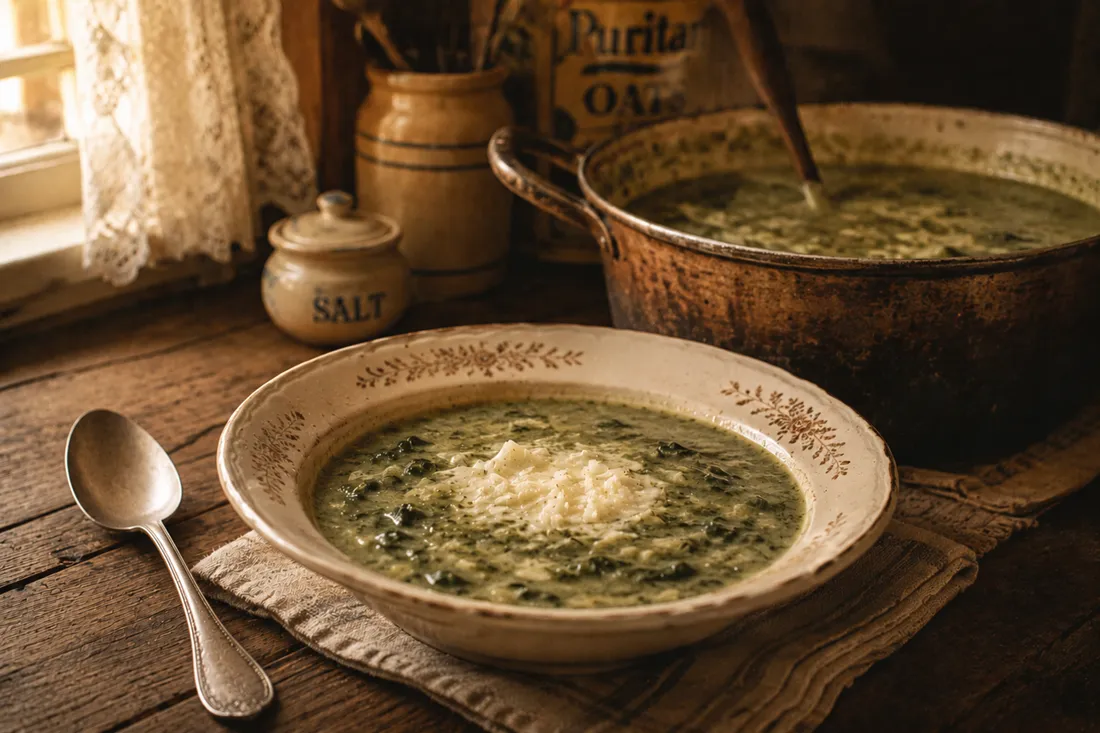
Cheese and Spinach Soup
A hearty soup of leek, spinach, and aged sheep's cheese, thickened with a paprika roux and finished with carefully tempered eggs.