Veal Scrolls with Tartar Sauce
Cold appetizer of blanched veal leg, sliced thin, shaped into scrolls, and filled with a rich tartar sauce of egg yolks, ham, and capers.
Quick Summary
Cold appetizer of blanched veal leg, sliced thin, shaped into scrolls, and filled with a rich tartar sauce of egg yolks, ham, and capers.
Historical recipe
Modernised adaptation of an early 20th‑century source. Not independently kitchen-tested by Attic Recipes. Quantities, temperatures, and food safety guidance have been updated for a contemporary kitchen — results may vary and errors may exist. Nutritional values, where provided, are estimates only and have not been laboratory tested. Always follow current food safety guidelines for your region. If you have a health condition, allergy, or dietary requirement, consult a qualified professional before preparing this recipe.
Use of this recipe is entirely at your own risk and subject to our Terms of Service and Privacy Policy. Attic Recipes accepts no liability for any adverse outcome.
- Eggs
- Fish
- Mustard
Additional notes
-
Warning
This recipe uses raw egg yolks in the tartar sauce. Raw eggs may contain Salmonella. Pregnant women, children under 18, elderly individuals, and immunocompromised persons should use pasteurized eggs or replace the raw yolk component with store-bought mayonnaise.
Replace the 2 raw egg yolks with 4 tablespoons of good-quality mayonnaise. Keep the mashed hard-boiled yolks — they provide body and texture to the sauce.
-
Note
This recipe contains sardines (fish). Persons with a fish or shellfish allergy should omit the sardines or replace them with an extra tablespoon of capers.
- 1
Place the veal leg in a large pot, cover with cold water, and add the salt. Bring to a boil and blanch over moderate heat for 20–25 minutes, until the meat has whitened and softened. This step denatures surface proteins and removes myoglobin, giving the meat its characteristic pale, clean colour.
Tip The meat should be firm but yielding when tested with a knife — do not cook until falling apart. You will be roasting it further in the next step. - 2
Remove the meat from the water and pat dry thoroughly with paper towels. Season with salt and place in a roasting pan with the lard over medium heat. Roast uncovered, turning frequently.
Tip The goal here is not a crust — the meat must stay pale and moist. Lard gives a richer flavour; neutral oil is a suitable modern substitute. Keep the heat moderate throughout. - 3
While roasting, baste the meat every 5–7 minutes with a mixture of 100 ml water and 100 ml whole milk. Turn frequently. Roast for a total of 40–50 minutes, until the meat is fully cooked through to an internal temperature of 71°C (160°F). The surface must remain pale — no golden crust.
- 4
Remove the meat from the pan and leave to cool completely at room temperature, then transfer to the refrigerator for at least 1 hour. Cold meat is essential for clean, thin slicing.
- 5
Prepare the tartar sauce: in a bowl, whisk together the 2 raw egg yolks, Dijon mustard, and sugar until smooth. Add the 5 mashed hard-boiled egg yolks and mix well to combine.
Tip If you are not using pasteurized eggs, substitute the 2 raw yolks with 4 tablespoons of good-quality store-bought mayonnaise. Fold in the mashed hard-boiled yolks as usual — the texture and flavour are nearly identical, with no food safety risk. - 6
Add the neutral vegetable oil to the yolk mixture drop by drop, whisking constantly, until the sauce thickens into a smooth emulsion. Gradually stir in the juice of both lemons to thin the sauce to a pipeable, spoonable consistency.
- 7
Fold in the finely chopped ham, gherkin, capers, and sardine fillets. Dice the reserved hard-boiled egg whites finely and fold in last. Cover and refrigerate until needed.
- 8
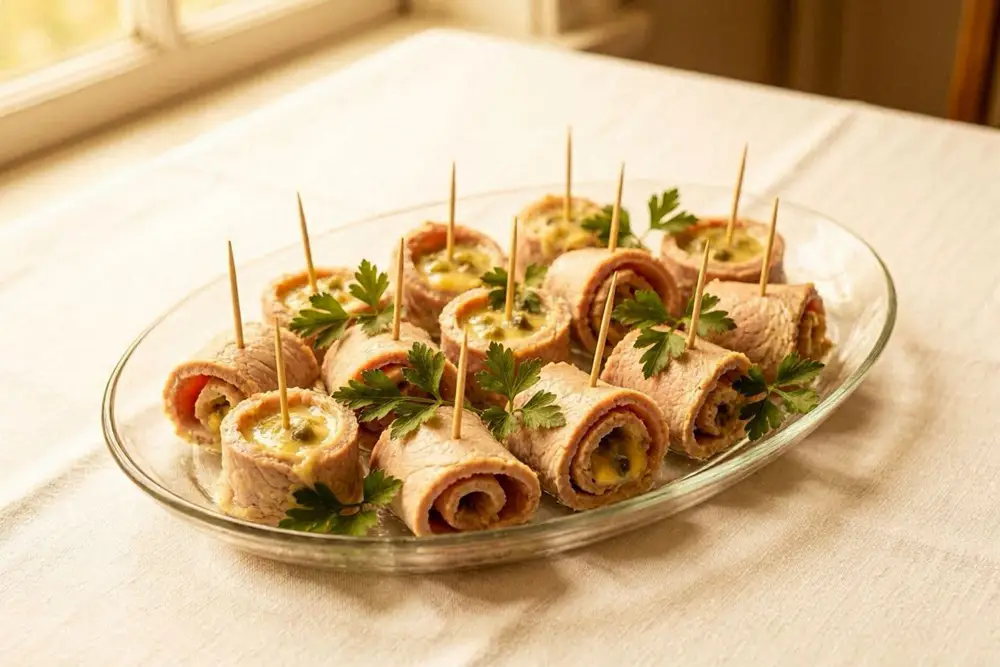
Slice the cold meat as thinly and as long as possible — use a sharp knife with a long blade and cut in a single smooth stroke without pressing. Shape each slice into a loop or scroll resembling a small fish and secure with a toothpick.
- 9
Arrange the scrolls side by side on a glass platter or serving dish. Spoon or pipe tartar sauce into the centre of each one and place a small sprig of flat-leaf parsley in the middle of the sauce. Serve immediately or keep refrigerated until serving.
Nutrition Information per 1 serving (approx. 130g)
Nutritional values are approximate estimates and may vary based on specific ingredients used, preparation methods, and portion sizes.
Serving Suggestions
Serve as part of a cold formal appetizer spread alongside pickled gherkins, radishes, or endive. A ham variation can be made using the same technique: roll thin slices of cooked ham into the same scroll shape and fill with grated horseradish coloured with a little beetroot juice for a decorative pink effect.
About This Recipe
Veal fishcakes — fišeci od teletine — are one of those recipes that reveal just how visually ambitious formal entertaining was in the early 20th century. A whole veal leg is first blanched, then roasted without browning, cooled, and sliced into long, thin strips. Each strip is shaped into a scroll or loop that vaguely resembles a small fish, secured with a toothpick, and filled with a rich tartar sauce of egg yolks, ham, capers, and sardines. The result is an appetizer that looks like it demands the precision of a pastry chef but rests entirely on patience and a sharp knife.
The name fišeci — from the Turkish word for a cartridge or scroll — describes the shape: a tight roll that, from a distance, suggests a fish body or a curled ribbon. The same technique applied to cooked ham was a quicker variation: thin ham slices filled with horseradish coloured with beetroot juice, a vivid pink substitute for the more laborious veal version.
What sets this recipe apart from a simple cold meat platter is its roasting logic. The meat must not brown. The constant basting with milk and water keeps the surface pale and moist while the interior cooks through — the goal is a clean, neutral base that will hold its own when cold, sliced thin, and paired with the assertive flavours of the sauce.
Why It Works
Blanching the veal leg in salted water denatures surface proteins and removes myoglobin, which is what gives the meat its characteristic pale, almost white colour — a deliberate aesthetic effect typical of Viennese cold platters. The roasting that follows is not about Maillard flavour. The milk in the basting mixture contains proteins that would caramelize at lower temperatures than sugar alone, but the constant moisture prevents that reaction from taking hold, keeping the surface pale throughout. Water evaporates and cools; milk shields. The combination produces meat that is tender, sliceable, and structurally stable cold.
The tartar sauce here is not mayonnaise — it is closer to a hollandaise without butter. Raw yolks emulsified with mashed hard-boiled yolks produce a denser, slightly rougher texture than pure mayonnaise, and that texture holds its shape better inside the scroll. The acidity of lemon juice stabilizes the emulsion and cuts through the richness of the yolks. Sardines and capers add umami that does not dominate but deepens the whole mixture.
Modern Kitchen Tips
The meat must be completely cold before you begin slicing — ideally straight from the refrigerator. Warm or tepid meat tears rather than slices cleanly and will not hold the scroll shape. Use a knife with a long, straight blade and cut in a single uninterrupted stroke without pressing down.
For the tartar sauce: add the oil truly drop by drop at the start. Once the emulsion catches — you will feel it as a sudden thickening — you can pour in a thin stream. If the sauce breaks (fat separates), add a tablespoon of cold water and whisk vigorously; it usually comes back together.
The fishcakes can be assembled the day before and kept in the refrigerator covered with cling film. Add the sauce and parsley just before serving.
A classic of early 20th century home cooking, preserved and adapted for the modern kitchen.
The Story Behind This Recipe
Historical Context
Cold meat appetizers shaped into decorative forms were a standard feature of formal entertaining in early 20th century Central European households. The technique of blanching veal then roasting it with a water-and-milk baste — specifically to prevent browning — is characteristic of the Viennese and Hungarian tradition of preparing white meats for cold platters, where appearance was as important as flavour. Tartar sauce of the period was built on an emulsion of raw and hard-boiled egg yolks rather than commercial mayonnaise, which was not yet widely available in home kitchens. Boiled tongue was a common addition to such sauces, used as a delicacy ingredient in middle-class households of the era. Coloured aspic was the traditional garnish for cold presentation platters of this type.
Modern Kitchen Adaptation
The original recipe does not specify the roasting fat — in a period domestic kitchen this was almost certainly lard, which remains the historically accurate option and is listed in the ingredients. As a modern substitute, 2 tablespoons of neutral vegetable oil produce an equivalent result with lower saturated fat. For the tartar sauce: the original method uses an emulsion of raw egg yolks. To eliminate the risk of Salmonella, pasteurized eggs are recommended, or the raw yolk component can be replaced with 4 tablespoons of good-quality store-bought mayonnaise, with the mashed hard-boiled yolks folded in — the texture and flavour are nearly identical. Boiled tongue (30g in the original sauce) has been omitted as it is difficult to source today; an additional 30g of cooked ham or thinly sliced mortadella can be used in its place. The coloured aspic garnish from the original has been omitted; plain flat-leaf parsley is used instead.
This recipe is an independent modern adaptation developed from historical sources in the public domain. It is provided for informational and educational purposes only and does not constitute professional dietary, nutritional, or medical advice. Food preparation involves inherent risks. The reader assumes full responsibility for safe food handling, ingredient sourcing, and adherence to current local food safety guidelines. The site operator accepts no liability for outcomes resulting from the preparation or consumption of this recipe.
One recipe.
Every week.
You Might Also Like
More recipes from the same category
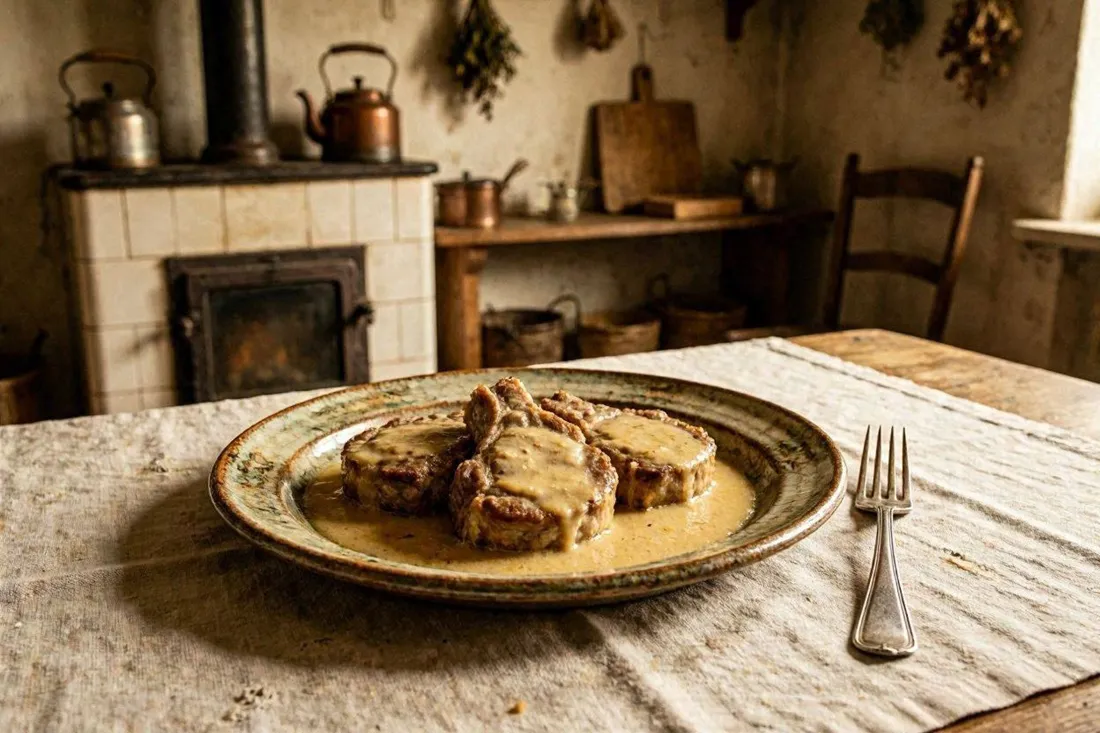
Braised Pork Chops in White Wine and Sour Cream Sauce
Pork loin chops braised with onion, carrot, parsley root, and celery root in white wine, then finished with a strained sour cream sauce.
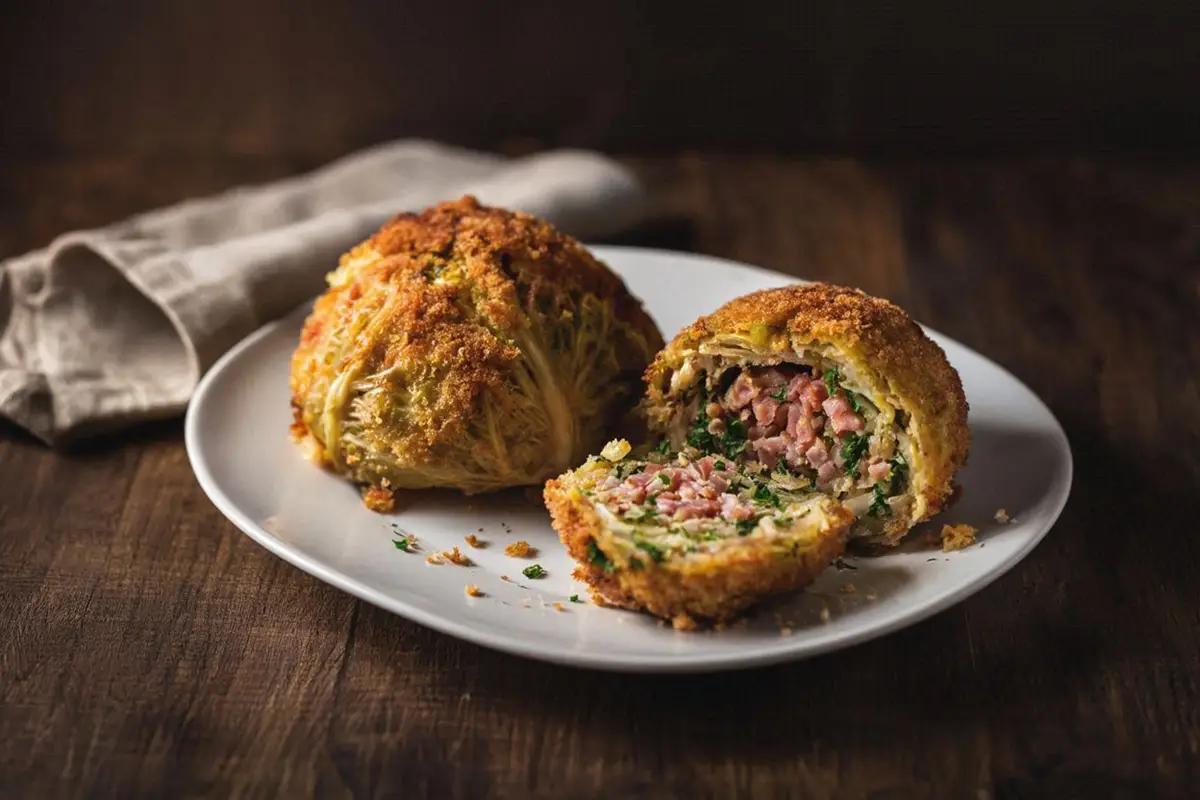
Breaded Savoy Cabbage Stuffed with Ham
Tender young savoy cabbage heads filled with ground ham, fried onion, and herbs, breaded and pan-fried until golden. A hearty Central European classic.
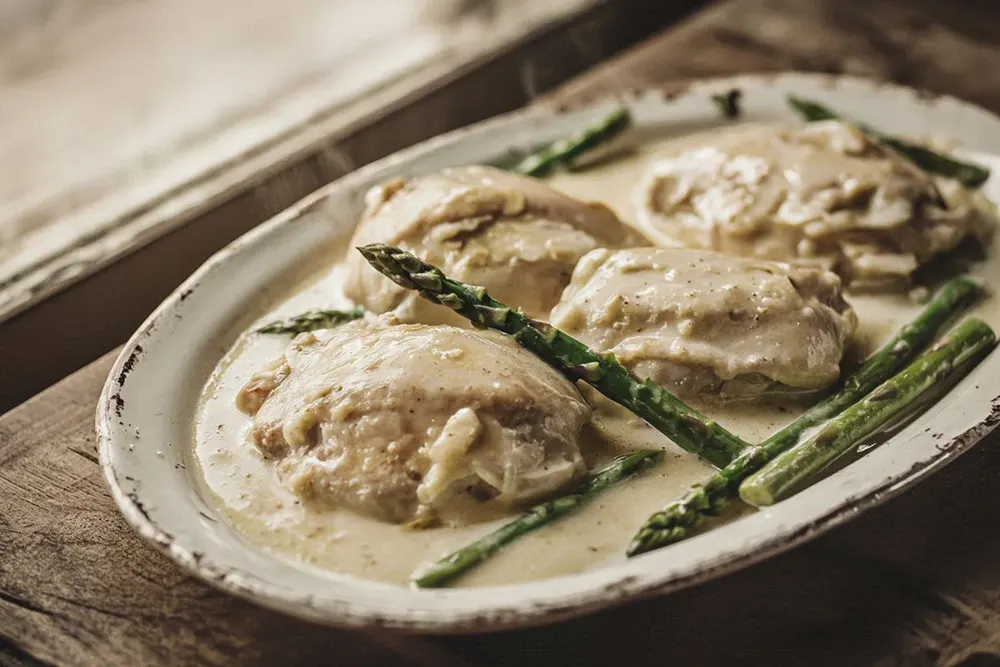
Chicken in Asparagus Sauce
A whole chicken poached in spiced broth, then finished in a silky velouté enriched with egg yolks and cream, garnished with tender asparagus tips.