Walnut and Chocolate Rum Pastry
A two-crust pastry with a walnut, chocolate, and rum filling, encased in a buttery rum-scented dough — a rich Central European baking classic.
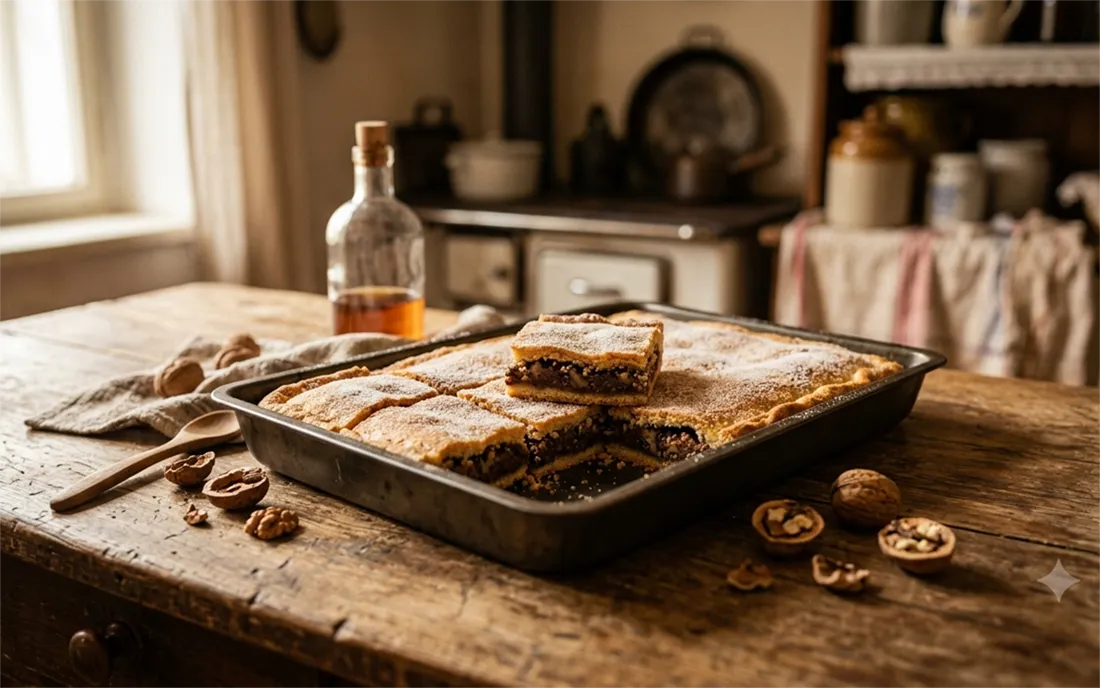
Quick Summary
A two-crust pastry filled with ground walnuts, chocolate, and rum-laced egg yolk custard, folded into a buttery rum dough. The dough rests an hour before filling and baking, about two hours total from start to finish.
Historical recipe
Modernised adaptation of an early 20th‑century source. Not independently kitchen-tested by Attic Recipes. Quantities, temperatures, and food safety guidance have been updated for a contemporary kitchen — results may vary and errors may exist. Nutritional values, where provided, are estimates only and have not been laboratory tested. Always follow current food safety guidelines for your region. If you have a health condition, allergy, or dietary requirement, consult a qualified professional before preparing this recipe.
Use of this recipe is entirely at your own risk and subject to our Terms of Service and Privacy Policy. Attic Recipes accepts no liability for any adverse outcome.
- Eggs
- Dairy
- Gluten
- Tree Nuts
Additional notes
-
Note
This pastry contains rum in both the dough and the filling. Baking reduces but does not fully eliminate the alcohol content. Not recommended for pregnant women, children under 18, or anyone avoiding alcohol.
-
Warning
The filling contains a large quantity of egg yolk and whipped egg white baked inside a sealed pastry. Confirm the center reaches at least 71°C (160°F) before removing from the oven to ensure the eggs are fully cooked, particularly important for pregnant women, young children, the elderly, and immunocompromised individuals.
- 1
On a board or in a large bowl, combine the 300g flour, 250g cold cubed butter, 1 egg yolk, 3 tbsp sugar, 30ml rum, 8g vanilla sugar, and 1 tsp lemon zest.
- 2
Work the mixture into a dough, adding the milk gradually, a little at a time, only as much as needed for the dough to come together smoothly.
- 3
Wrap the dough and let it rest in a cool place for 1 hour before filling.
- 4
For the filling, place the 6 egg yolks and 6 tbsp sugar in a bowl and beat until pale, thick, and doubled in volume, about 30 minutes by hand or 5-8 minutes with an electric mixer.
Tip The long beating time in the traditional method aerates the yolks without a mixer — an electric mixer on medium-high speed achieves the same result much faster. - 5
Fold the 35g grated chocolate, 30ml rum, and 200g ground walnuts into the beaten egg yolks.
- 6
Whip the 6 egg whites to stiff peaks and gently fold them into the walnut mixture, keeping as much volume as possible.
- 7
Divide the rested dough into two portions. Roll out one portion and line the bottom of a buttered 30x20cm baking pan.
- 8
Spread the walnut filling evenly over the dough in the pan.
- 9
Roll out the second portion of dough and lay it over the filling, sealing the edges lightly.
- 10
Bake at 180°C (350°F) / 160°C fan for 35-40 minutes, until the top is golden and the filling is fully set.
Tip Because the filling contains egg, check that the center reaches at least 71°C (160°F) before removing from the oven, particularly if your oven runs cool. - 11
As soon as the pastry comes out of the oven, dust the top with the 2 tbsp vanilla sugar while still warm.
- 12
Cool completely in the pan before cutting into 20 squares.
Nutrition Information per 1 square (1/20 of pastry)
Nutritional values are approximate estimates and may vary based on specific ingredients used, preparation methods, and portion sizes.
Serving Suggestions
Serve at room temperature, cut into small squares, alongside coffee or tea. The pastry keeps well for several days in an airtight container and the rum flavor deepens slightly by the second day.
About This Recipe
This pastry belongs to a family of two-crust bakes where a rich, nut-heavy filling is sandwiched between two thin layers of a buttery, slightly sweet dough — closer in spirit to a tart than a cake. What sets this version apart is the rum, worked into both the dough and the filling, and the long beating of the egg yolks and sugar, a technique that was standard before electric mixers made quick work of aeration.
It’s a straightforward bake once the components are assembled, but it does reward a little patience: the dough needs its full resting hour, and the filling benefits from being properly whipped rather than just stirred together.
Why It Works
Beating the egg yolks and sugar until pale and thickened incorporates air into the mixture, which lightens what would otherwise be a very dense, nut-heavy filling. Folding in whipped egg whites at the end adds a second layer of lift, so the baked filling sets with a soft, slightly spongy texture rather than becoming compact and heavy. Resting the dough for an hour relaxes the gluten developed during mixing, which makes it easier to roll thinly and prevents it from shrinking back in the pan during baking.
Modern Kitchen Tips
An electric mixer turns the traditional half-hour hand-beating step into five to eight minutes on medium-high speed — look for a pale, thick mixture that falls in a slow ribbon off the whisk. If the dough feels too soft to roll after its rest, a few extra minutes in the refrigerator will firm it up without affecting the final texture. Let the pastry cool completely before cutting; slicing it warm tends to compress the filling layer.
A classic of early 20th century home baking, preserved and adapted for the modern kitchen.
The Story Behind This Recipe
Historical Context
Early 20th century recipes for this pastry typically called for beating the egg yolks and sugar by hand for an extended period, sometimes half an hour, to achieve volume without the aid of an electric mixer. Chocolate was commonly measured by the segment, or štangla, into which a standard bar was divided rather than by weight — a period habit that predates the more precise gram measurements used today. The traditional approach did not specify an oven temperature or pan size, both judged by the home baker's experience.
Modern Kitchen Adaptation
The oven temperature (180°C / 350°F), pan size (30x20cm), and lemon zest quantity are estimated, since the traditional approach specified none of these precisely. The chocolate quantity (35g) is calculated from two segments of a standard 100g bar divided into 5-6 pieces, following the period convention of measuring chocolate by segment rather than weight. Because the filling contains a large quantity of egg baked inside a sealed pastry, checking for a center temperature of at least 71°C (160°F) is recommended to ensure the eggs are fully cooked through.
This recipe is an independent modern adaptation developed from historical sources in the public domain. It is provided for informational and educational purposes only and does not constitute professional dietary, nutritional, or medical advice. Food preparation involves inherent risks. The reader assumes full responsibility for safe food handling, ingredient sourcing, and adherence to current local food safety guidelines. The site operator accepts no liability for outcomes resulting from the preparation or consumption of this recipe.
One recipe.
Every week.
You Might Also Like
More recipes from the same category
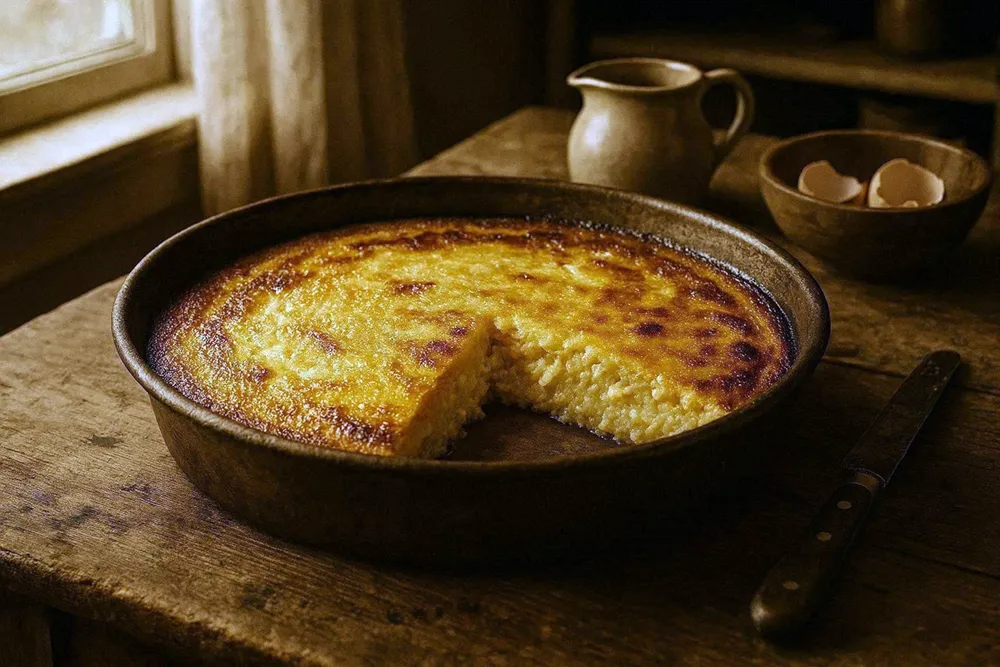
Baked Cornmeal Custard with Kajmak and Cheese
Known as razlevuša, this rustic bake pours a loose cornmeal, kajmak, cheese, and egg batter into a pan and bakes it until golden — a hearty, standalone dish.
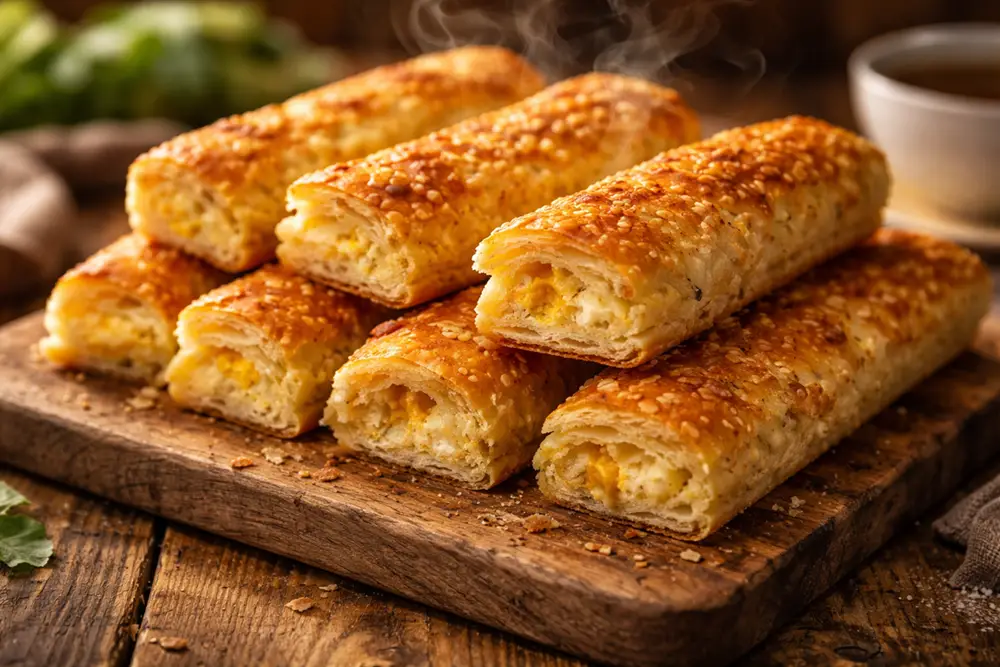
Emmental Cheese Bars
Flaky millet pastry strips with Emmental, kajmak, egg yolks, and red pepper—savory tea snack from early 1900s Central Europe.
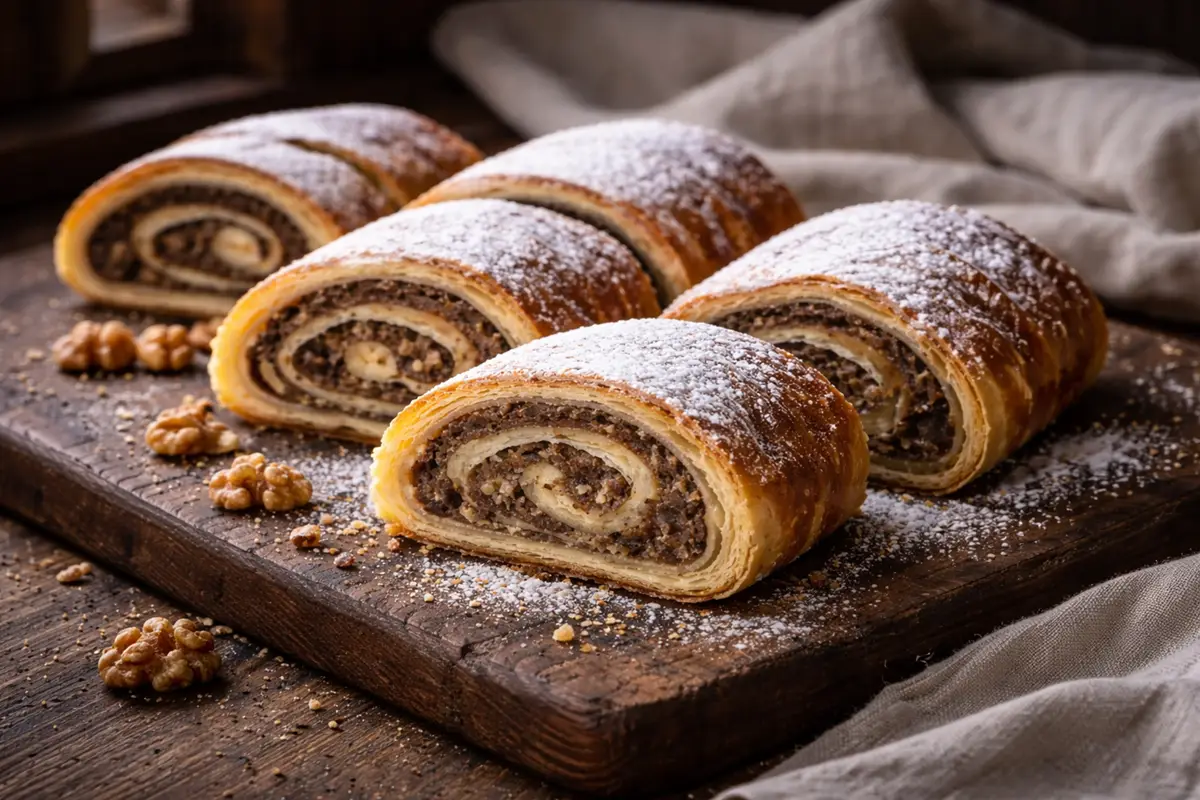
Fatback Walnut Roll
Flaky yeasted pastry laminated with raw pork fatback, filled with milk-cooked walnuts, raisins, and lemon zest. Sliced and dusted with sugar.