What Archaeology Tells Us About What People Actually Ate
Bones, teeth, and ancient cooking vessels reveal a diet that looks nothing like what we assume. Here is what the evidence actually shows — and what it does not.
What Recipes Cannot Tell Us
Recipes are instructions written for people who already know how to eat. They assume a cultural context, an available ingredient set, and a kitchen practice that existed long before the recipe was written down. The oldest written recipes are at most a few thousand years old. The history of human eating extends back at least two million years.
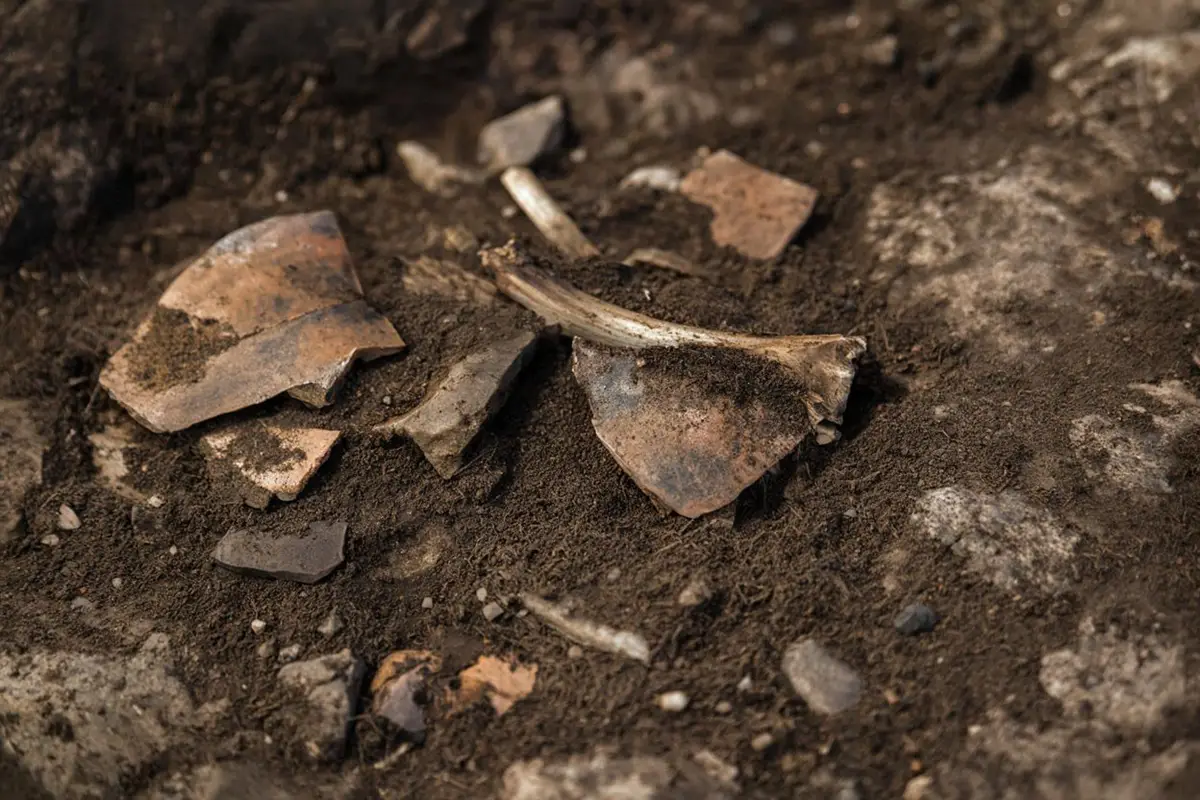
For most of that history, there are no recipes. There is only physical evidence — preserved in bone, in teeth, in ceramic residues, in the carbonized remains of ancient meals — waiting to be interpreted by archaeologists and biochemists who have developed increasingly precise tools for reading it.
What they have found consistently challenges the simplified narratives that popular dietary culture tends to produce. The past was neither the carnivore paradise nor the plant-based idyll that competing modern ideologies sometimes project onto it. It was messier, more variable, and more interesting than either story allows.
Reading Diet From Bone: Stable Isotope Analysis
Bone is not static tissue. It turns over continuously during life, incorporating minerals and proteins from the diet into its structure. This means that the chemical composition of bone reflects what an individual ate over the years before death — not a single meal, but a long-term dietary pattern.
Stable isotope analysis reads this record. The ratio of carbon isotopes (¹³C to ¹²C) in bone collagen reflects whether an individual’s diet was based primarily on plants using the C3 photosynthetic pathway (most European plants, including wheat, barley, and most vegetables) or C4 plants (maize, millet, sorghum) or marine resources. The ratio of nitrogen isotopes (¹⁵N to ¹⁴N) reflects trophic level — how high up the food chain an individual ate. Higher ¹⁵N indicates more animal protein consumption.1
This method has been applied to thousands of skeletons across Europe and beyond. The results consistently show mixed diets — populations eating combinations of plant and animal foods in proportions that varied by geography, season, social status, and historical period. Purely carnivorous populations appear only in extreme northern latitudes where plant foods were genuinely unavailable for much of the year. Purely plant-based populations are essentially absent from the archaeological record in pre-modern Europe.2
A large-scale isotope study of European Mesolithic and Neolithic populations found that the shift from hunter-gatherer to agricultural subsistence produced a measurable change in diet — less animal protein, more plant carbohydrate — but that animal foods never disappeared from the diet even in heavily agricultural societies.3
Dental Calculus: The Most Detailed Record
Dental calculus — hardened dental plaque — is one of the most information-dense materials in the archaeological record. It forms continuously during life, trapping food particles, proteins, plant microfossils (phytoliths and starch granules), lipids, and microbial DNA in its layers. When calcified, it can preserve this material for hundreds of thousands of years.
The analysis of ancient dental calculus has produced some of the most surprising findings in the archaeology of diet.
Starch granules — including gelatinized starch, which indicates cooking rather than raw consumption — have been found in Neanderthal dental calculus dating to approximately 40,000 years ago, and in early Homo sapiens material considerably older. This is direct physical evidence that starchy plant foods, cooked, were part of the hominin diet long before agriculture.4 The popular claim that pre-agricultural humans ate no or minimal starch is not supported by this evidence.
A systematic proteomic study of 100 archaeological dental calculus samples spanning the Iron Age to the post-medieval period identified dairy proteins alongside peptides matching oats, peas, and cruciferous vegetables.5 The diversity of plant foods detected — across multiple sites and time periods — suggested diets considerably more varied than simplified narratives allow.
Protein residues in dental calculus can identify specific animal foods consumed. Milk proteins, including beta-lactoglobulin, have been identified in dental calculus from multiple periods and geographic contexts, providing direct evidence of individual dairy consumption.6
Ceramic Residue Analysis: What Was in the Pot
Ceramic vessels absorb lipids from the foods cooked in them. These absorbed residues can survive for thousands of years in the ceramic matrix, and gas chromatography can identify specific compounds — distinguishing animal fats from plant oils, identifying specific plant species, and even differentiating between dairy fat and body fat from the same animal species.
Residue analysis of Neolithic ceramics from across Europe has found evidence of dairy processing — milk, butter, and cheese production — dating to approximately 6,000 BCE, soon after cattle domestication.7 This is several thousand years earlier than some historical accounts suggested dairy use began.
Analysis of Bronze Age and Iron Age vessel residues across Central and Northern Europe consistently finds evidence of mixed animal and plant foods cooked together — meat with roots and grains, fat with plant material. The combination of animal and plant foods in a single pot, which appears throughout old recipe collections as an assumed baseline, turns out to be ancient practice.
Fermented products leave characteristic residue profiles. Evidence of fermented beverages — including what appear to be early forms of beer and wine — has been identified in ceramic residues from multiple sites across Europe and the Near East, dating the practice of fermentation much earlier than written records indicate.8
Animal Bone Assemblages: What Was Butchered and Eaten
The animal bones found at archaeological sites tell a different story than the bones that survive. Taphonomy — the study of what happens to materials after death — shows that some bones preserve better than others, and that human butchery leaves specific cut marks that can be distinguished from carnivore damage or natural weathering.
Analysis of butchery marks on animal bones from archaeological sites consistently shows that humans exploited whole animals, not selected cuts. Marrow extraction marks appear on virtually every long bone assemblage — marrow was a high-calorie, fat-dense resource that was systematically recovered.9 Skull fragments with cut marks indicate brain extraction. Foot and lower leg bones with processing marks indicate the extraction of every usable resource from even the least meaty parts of the animal.
This pattern — whole-animal use including organ meats, marrow, fat, and low-meat bones — is what old recipes from the early twentieth century still reflect. Early 20th century Central European recipes that call for feet, liver, kidney, and marrow bones were not being eccentric. They were operating within a food culture that had not yet forgotten what archaeologists later confirmed: that whole-animal use was the historical norm, not the exception.
The shift to muscle-meat-only eating is recent, driven by mid-twentieth century industrialization of meat processing and changing economic conditions that made “premium” cuts cheap and organ meats unfashionable.
What the Evidence Does Not Show
Archaeological diet reconstruction has significant limitations, and responsible interpretation requires acknowledging them.
Isotope analysis reflects long-term average diet, not variation within a season or a life. It cannot identify specific foods, only broad categories. It is affected by preservation conditions — poorly preserved collagen produces unreliable isotope ratios.
Dental calculus preserves some foods better than others. Soft, quickly digested foods leave less residue than fibrous plant material or animal proteins. The record is biased toward certain food types and cannot be treated as a complete inventory of diet.
Ceramic residue analysis can only identify foods that left absorbed lipids. Water-based preparations, lean meats, and most vegetables leave no recoverable residue. The absence of a food in ceramic residue analysis does not mean it was not eaten.
None of these methods can tell us about flavoring, preparation method in detail, or the social and cultural dimensions of eating. They can tell us what was consumed. They cannot tell us how it tasted, who prepared it, or what it meant.
What This Changes About Reading Old Recipes
The archaeological evidence places old cookbooks in a longer context. A recipe from the 1930s for braised liver with onions is not a period curiosity — it is a continuation of whole-animal food use that the physical evidence traces back through centuries and millennia of European food practice.
The vegetables that appear in those recipes — roots, tubers, legumes — are the same categories of plant foods that show up in dental calculus and ceramic residues from prehistoric sites. The combination of animal fat with plant material in a single pot is not a regional European convention; it is a pattern documented across the archaeological record of human cooking wherever ceramics have been found and analyzed.
Understanding this does not make old recipes more nutritious or more correct. But it does situate them accurately — as documents of a food culture that was continuous with a much longer human practice, rather than as quaint artifacts of a specific historical moment.
The disruption is not in the past. It is in the present, and it is recent.
Practical Takeaways
Three things the evidence consistently shows: most pre-modern populations ate mixed diets combining animal and plant foods; whole-animal use was the historical norm across time and geography; and the diversity of plant foods consumed — including cooked starchy foods — was considerably greater than simplified dietary narratives suggest. The simplest dietary ideologies, whether carnivore or plant-based, find little support in the physical record.
This post reflects current scientific understanding as of the publication date. Where methods have known limitations, these are noted in the text. Archaeological diet reconstruction is an active field and findings continue to be refined.
Sources
Footnotes
-
Ambrose, S.H. & Norr, L. (1993). Experimental evidence for the relationship of the carbon isotope ratios of whole diet and dietary protein to those of bone collagen and carbonate. Prehistoric Human Bone: Archaeology at the Molecular Level. Springer. https://doi.org/10.1007/978-3-662-02894-0_1 ↩
-
Hedges, R.E.M. & Reynard, L.M. (2007). Nitrogen isotopes and the trophic level of humans in archaeology. Journal of Archaeological Science, 34(8), 1240–1251. https://doi.org/10.1016/j.jas.2006.10.015 ↩
-
Papathanasiou, A. et al. (2019). Isotopic palaeodietary reconstruction of Neolithic and Bronze Age populations. Journal of World Prehistory, 32, 1–42. https://doi.org/10.1007/s10963-019-09128-9 ↩
-
Hardy, K. et al. (2015). The importance of dietary carbohydrate in human evolution. The Quarterly Review of Biology, 90(3), 251–268. https://doi.org/10.1086/682587 ↩
-
Hendy, J. et al. (2018). Proteomic evidence of dietary sources in ancient dental calculus. Proceedings of the Royal Society B, 285(1883), 20180977. https://doi.org/10.1098/rspb.2018.0977 ↩
-
Warinner, C. et al. (2014). Direct evidence of milk consumption from ancient human dental calculus. Scientific Reports, 4, 7104. https://doi.org/10.1038/srep07104 ↩
-
Salque, M. et al. (2013). Earliest evidence for cheese making in the sixth millennium BC in northern Europe. Nature, 493, 522–525. https://doi.org/10.1038/nature11698 ↩
-
McGovern, P.E. et al. (2004). Fermented beverages of pre- and proto-historic China. Proceedings of the National Academy of Sciences, 101(51), 17593–17598. https://doi.org/10.1073/pnas.0407921102 ↩
-
Marean, C.W. & Assefa, Z. (1999). Zooarcheological evidence for the faunal exploitation behavior of Neandertals and early modern humans. Evolutionary Anthropology, 8(1), 22–37. <https://doi.org/10.1002/(SICI)1520-6505(1999)8:1<22::AID-EVAN6>3.0.CO;2-6> ↩
Frequently Asked Questions
01How do archaeologists know what ancient people ate if food decomposes?▶
Through multiple lines of evidence: stable isotope analysis of bones (which reflects diet over years), ancient dental calculus (which preserves plant and animal residues, proteins, and even ancient DNA), residue analysis of ceramic vessels, animal bone assemblages at sites, and occasionally preserved food remains in exceptional conditions. Soft ingredients like leafy greens or liquid-based preparations leave almost no trace unless charred or preserved in waterlogged soil — which is why we tend to know more about the durable parts of a diet than the delicate ones.
02Can archaeology reconstruct an exact recipe from the past?▶
Rarely. Archaeology identifies ingredients that were present — remnants of grains, animal bones, seeds found in vessels — but rarely tells us exact proportions or method. Think of it as finding the grocery list, but having to guess the chef's specific touch.
03Does finding an ingredient mean it was a staple of the diet?▶
Not necessarily. Finding exotic spices or rare animal bones might represent a celebratory feast, a trade good, or a ritual offering rather than everyday food. Archaeologists look for the frequency of a find across many sites to distinguish between daily staples and special occasion luxuries.
04Did prehistoric people eat mostly meat or mostly plants?▶
It depended heavily on geography, season, and time period. Isotope studies consistently show that most populations ate a mixed diet — purely carnivorous or purely plant-based populations were the exception, not the rule. The balance shifted significantly by latitude: northern populations relied more on animal protein, tropical populations more on plant foods.
05What does dental calculus reveal about ancient diet?▶
Calculus — hardened dental plaque — traps and preserves food particles, proteins, plant microfossils, and even ancient DNA for thousands of years. Analysis has revealed specific plant species consumed, evidence of dairy use, and cooking methods — the presence of gelatinized starch indicates cooked rather than raw food.
06Is the modern paleo diet based on accurate archaeology?▶
Only partially. The broad principle — that pre-agricultural humans ate whole, unprocessed foods — is supported. But specific claims about meat dominance, absence of starchy foods, or dairy avoidance are not consistently supported by the evidence. Starch granules have been found in dental calculus from Neanderthals; dairy use precedes many archaeological assumptions.
07What is the difference between archaeobotany and zooarchaeology?▶
These are the two main lenses of food archaeology: archaeobotany focuses on the plant world — seeds, pollen, charcoal, and crop remains — while zooarchaeology studies animal remains such as bones, teeth, and shells to understand hunting, husbandry, and the role of protein in the ancient diet.