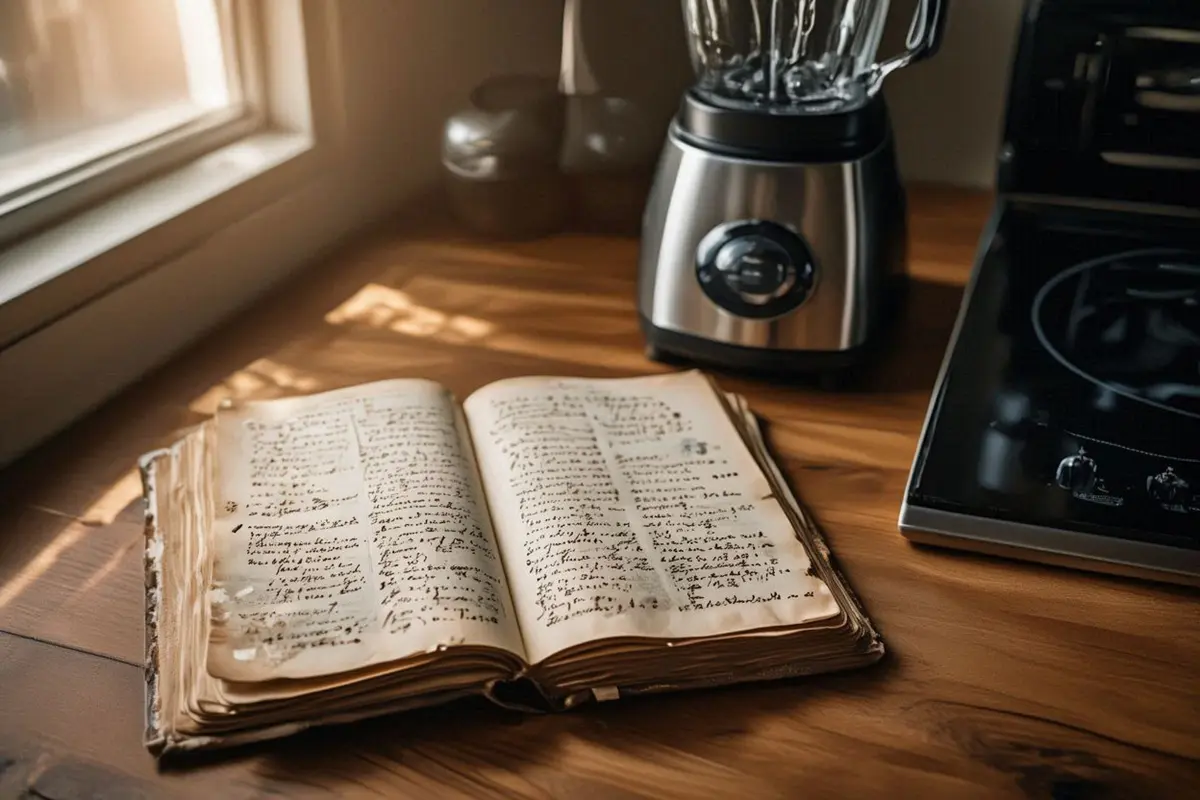
Why Old Cookbooks Still Matter Today
Early 20th-century cookbooks were practical manuals shaped by scarcity and ingenuity — and the techniques they documented still hold up in modern kitchens.
Introduction
Old cookbooks are often treated as curiosities: brittle pages, odd measurements, unfamiliar cuts of meat. But for the people who wrote them, these books were not sentimental objects.
They were instruction manuals for working kitchens.
Every recipe reflected real constraints — limited fuel, unreliable refrigeration, seasonal shortages, and an absolute requirement to waste nothing. Reading a cookbook from the interwar period, you are not just reading instructions. You are reading applied problem-solving under pressure.
Written for Kitchens That Could Not Afford Mistakes
Early 20th-century home cooking across Central Europe was shaped by economic instability, inconsistent food supply, and limited access to the standardized industrial ingredients that define modern pantries. Recipes had to work reliably, using whatever tools and animals and seasonal produce were at hand.
There was no room for trend-driven cooking. Failure was not an inconvenience. It was a shortage.
This pressure produced something modern recipe culture often lacks: methods that were robust by necessity. A technique that only works with a specific brand of butter or a calibrated oven was not a useful technique in 1930. Techniques that worked across variable conditions, variable equipment, and variable ingredients — those survived.
Why Vague Measurements Were Not a Flaw
“Cook until done.” “Add flour as needed.” “Bake in a moderate oven.”
Modern readers see imprecision. Cooks of the period saw situational awareness.
Ovens varied enormously — wood-fired, coal, early gas — and temperature calibration was done by feel or by hand. Ingredients changed with the season, the region, and what was available that week. Recipes of the era trained cooks to observe and adjust, not to follow a fixed sequence.
It is worth noting that standardized home measuring equipment — the cups and tablespoons now considered basic — only became widespread in domestic kitchens during the mid-20th century. Vague measurements were not carelessness. They reflected the reality of how kitchens actually operated.
This kind of adaptive judgment is largely missing from contemporary recipe culture, where failure is routinely blamed on the cook rather than on methods that assume perfect conditions.
Scarcity as a Design Constraint
When ingredients are limited, technique becomes critical. Waste becomes unacceptable. Every part of an animal, every vegetable peel, every rendered fat is a resource.
This is why older recipes tend to excel at things that modern cooking shortcuts around: rendering fat cleanly, thickening sauces without commercial additives, extracting flavor from bones and scraps, preserving without refrigeration. These were not stylistic choices. They were engineering responses to specific problems.
The irony is that many of these techniques are now treated as specialty skills — the domain of restaurants or enthusiasts — when they were once simply what cooking meant.
What Modern Kitchens Gained and Lost
Modern cooking gained consistency, convenience, and access to ingredients that would have been unimaginable in the 1920s. These are genuine improvements.
But something was also displaced. Ultra-specific recipes written for standardized ingredients and controlled conditions replaced adaptable methods. Ingredient literacy — knowing how fat behaves at different temperatures, how starch thickens differently depending on liquid acidity, how to tell by touch or smell whether something is ready — became optional.
Pre-war cookbooks assumed cooks had developed this knowledge through repetition. They did not explain it because it did not need explaining. Reading those books now, the gap is visible.
Why Revisiting This Matters
Rising food costs, sustainability concerns, and a renewed interest in whole-animal and whole-plant cooking have made these older approaches relevant again — not as nostalgia, but as practical responses to familiar pressures.
The techniques are not exotic. They are already documented, in detail, in books that were written to be used until they fell apart.
How These Recipes Are Adapted Here
This site is not reenactment cooking. Historical recipes are presented with their original logic intact, but every adaptation on this site accounts for the gaps between then and now — particularly around food safety, where older guidance on temperatures, preservation times, and storage conditions does not always meet current standards.
Where a historical method carries safety considerations, those are noted explicitly. The goal is to preserve what was worth preserving, and to be clear about what has changed.
Practical Takeaways
Early 20th-century cookbooks reward careful reading rather than literal following. The techniques are often sound; the safety context sometimes needs updating. The measurements assume experience that modern recipes do not require you to have — which means developing that experience is part of what makes these recipes work.
Reading them is not an exercise in nostalgia. It is a way of understanding why food tastes the way it does, and why certain methods outlasted everything that replaced them.
Attic Recipes — digitizing and adapting Central European home cooking from the early twentieth century.
Frequently Asked Questions
01Why do old recipes have such vague measurements?▶
Two reasons. First, these recipes were written for cooks who already knew how to cook — phrases like 'a wineglass of' or 'a knob of butter' assumed practical knowledge passed down through observation, not instruction. Second, standardized measuring cups and spoons only became widespread in home kitchens during the mid-20th century. Before that, cooks calibrated by feel, sight, and experience. The vagueness was not carelessness — it was the assumed baseline of the original audience.
02Can I actually cook from a 100-year-old recipe?▶
Often yes, but with adjustments. Flour, butter, and eggs behaved differently a century ago — strains, fat content, and processing methods have all changed. Ovens were less consistent, and cooking times reflected that. Treating an old recipe as a starting point rather than a precise formula tends to produce better results than following it literally. Always apply current temperature and hygiene practices, particularly with preservation and fermentation.
03Why did early 20th-century recipes rely so heavily on preservation techniques?▶
Refrigeration was not widely available in home kitchens until the mid-20th century, and even then it spread unevenly across regions and income levels. Pickling, salting, smoking, fermenting, and potting were not culinary preferences — they were the primary tools for making food last through winter. Many techniques now fashionable in modern kitchens were simply ordinary necessity a hundred years ago.
04Why do old recipes use so few ingredients?▶
Because ingredients were expensive, seasonal, and locally sourced. Economy was not a style choice — it was a constraint that shaped every recipe. The ingenuity of old cooking came directly from limitation: how to make something satisfying from whatever was available and affordable.
05What can modern cooks actually learn from old cookbooks?▶
Quite a lot. Pre-industrial recipes were built around constraints — limited fuel, seasonal ingredients, nothing wasted — and those constraints produced genuinely efficient techniques. Slow braises, whole-animal cooking, extended fermentation, and nose-to-tail use of ingredients were not trends but defaults. The methods hold up because the logic behind them was sound.
06Were old cookbooks written for professional or home cooks?▶
Both existed, and the distinction matters when reading them. Professional manuals assumed brigade kitchen logistics and bulk quantities. Home cookbooks — especially those from the early 20th century — were often written for middle-class households managing with one or two domestic staff, or increasingly for women cooking without any help at all. The assumed audience shapes everything: the vocabulary, the portion sizes, and what knowledge the author thought was too obvious to explain.
07Are old cookbook techniques connected to modern food trends?▶
More directly than most people realize. The current enthusiasm for fermentation, sourdough, bone broth, preserved lemons, and charcuterie is largely a rediscovery of techniques that were standard practice before industrial food processing made them unnecessary. Old cookbooks did not anticipate these trends — they documented the baseline that those trends are returning to.