What Wine Goes with Crab? A Guide to Pairing by Character, Not by Label
How to choose wine for crab and seafood dishes by understanding acidity, body, and tannins — without memorizing a single brand name.
The Problem with Most Wine Pairing Advice
Most wine pairing guides tell you to buy a specific bottle — a specific producer, a specific region, sometimes a specific vintage. This is useful if you live near that producer or recognize the label in a shop. It is not useful if you are standing in front of an unfamiliar wine list in a coastal town, or looking at a shelf of bottles you have never heard of.
This guide takes a different approach. Instead of naming bottles, it describes characteristics — what to look for in the glass, why those characteristics work with crab and seafood, and what to avoid. Once you understand the principles, you can make a reasonable choice anywhere, with any bottle in front of you.
The principles are not complicated. The chemistry behind them is worth understanding.
The One Rule That Covers Everything
Before anything else: tannins and seafood are a reliable mismatch.
Tannins are the compounds in red wine — derived primarily from grape skins, seeds, and oak — that create that drying, mouth-coating sensation. They are what makes a big red wine feel structured and age-worthy. They are also what tends to clash with seafood, producing a metallic or bitter aftertaste that diminishes both the wine and the food.
The exact mechanism behind this reaction is still debated among food scientists — proposed explanations include interactions between tannins and iron-containing compounds in seafood, reactions involving aldehydes produced when polyunsaturated fatty acids oxidize, and tannin-protein interactions. The details remain unsettled. The practical outcome, however, is consistent and well-documented: heavy tannins and most seafood do not work well together.
This is why white wine dominates seafood pairing. Most white wines contain negligible tannins. Dry rosé has very low tannins. A small number of light reds — made from thin-skinned grapes with minimal skin contact — have soft enough tannins to work alongside richer seafood preparations. But the starting point is always: avoid heavy tannins.
Everything else follows from this.
White Wine: The Natural Choice
White wine works with most crab and seafood dishes because it tends to share several qualities with the food itself: acidity, lightness, and often a saline or mineral quality that echoes the sea.
Acidity is the key characteristic to look for. Acidity in wine does what lemon juice does on a plate — it cuts through richness, refreshes the palate, and makes each bite feel clean. A white wine with low acidity will sit heavily alongside seafood rather than lifting it.
Body matters almost as much. A light-bodied white — pale in color, crisp, with a clean finish — matches the delicacy of crab meat. A heavy, heavily oaked white overwhelms it. For crab specifically, lighter and drier is almost always the better direction.
Minerality — that flinty, saline, slightly chalky quality found in wines from coastal or volcanic soils — has a natural affinity with seafood. It echoes the oceanic character of the crab rather than contrasting with it. Wines grown close to the sea, in sea-influenced climates, tend to develop this quality.
What to look for: Dry. Unoaked or lightly oaked. Good acidity. From a coastal or limestone region. These descriptors will steer you toward a workable family of wine regardless of where you are buying.
What to avoid: Heavily oaked whites with buttery or vanilla notes — they overwhelm delicate crab. Intensely aromatic whites with strong floral or spiced perfume — they compete with the food. Off-dry or semi-sweet whites — sweetness clashes directly with the acidity in tomato-based sauces.
The Complication: Crab in Tomato Sauce
Crab served simply — steamed, cold, with bread — pairs easily with almost any crisp dry white. Crab cooked in a sauce changes the calculation.
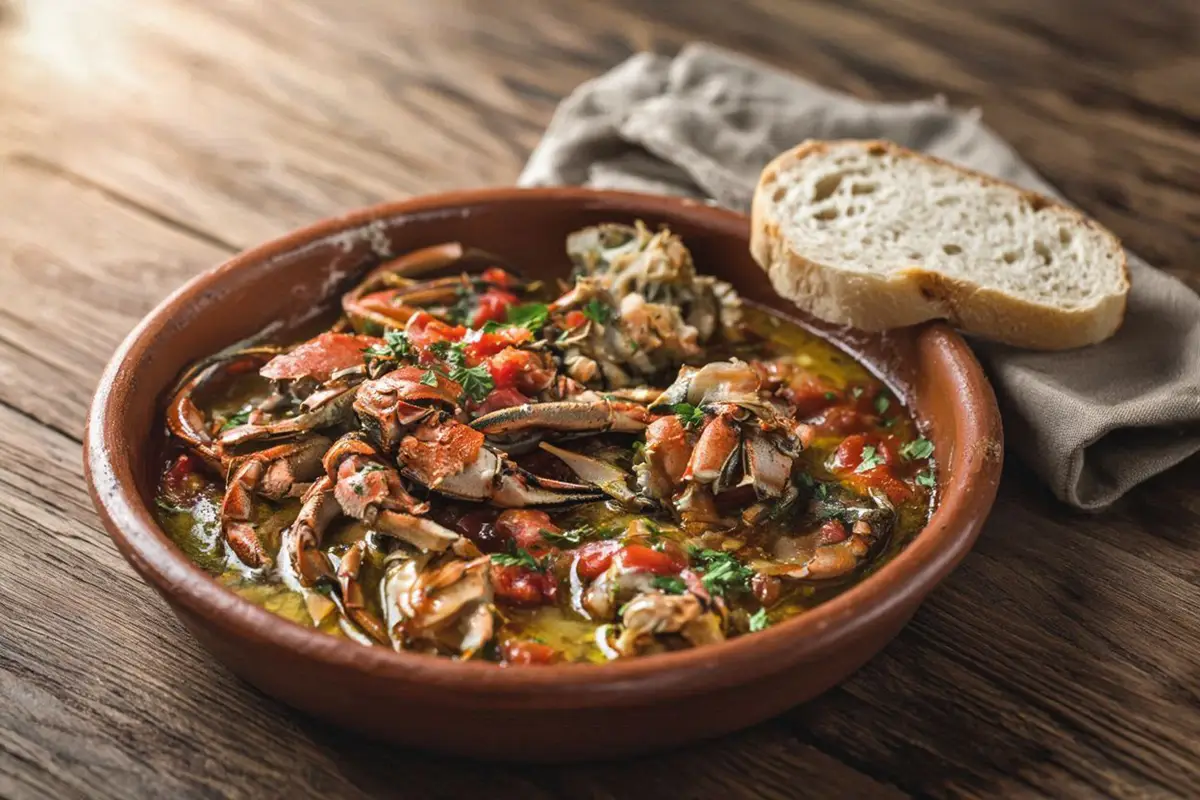
The preparation in the linked recipe adds two significant variables: tomato and white wine already in the dish. Tomato is highly acidic. The wine in the sauce reduces and concentrates. The final dish is richer, more savory, and more assertive than plain crab.
This is where dry rosé becomes relevant.
Rosé occupies a useful position between white and red — it carries white wine’s acidity alongside some of red wine’s fruitiness and body, making it versatile for dishes with medium-weight sauces. For tomato-based seafood dishes, a dry rosé with good acidity is one of the most reliable choices.
The key word is dry. A rosé with any perceptible sweetness will clash with the tomato acidity in the same way an off-dry white would. Look for pale, bone-dry rosé — almost salmon in color rather than deep pink — from a warm coastal climate. These wines tend to have the crisp acidity and restrained fruit the dish needs.
When Red Wine Works
Red wine with seafood is not an absolute prohibition — it is a tannin question. Light reds with genuinely soft tannins, served slightly chilled, can work alongside crab in tomato sauce because the sauce has enough weight and savory depth to support a little red fruit character.
The practical test: if you can serve the red at around 14–16°C and it tastes fresh and fruity rather than heavy and drying, it will likely work alongside the dish. If it tastes tannic or rich at that temperature, a white or rosé will serve better.
What to look for: Light body. Good acidity. Soft, almost imperceptible tannins. Red berry fruit rather than dark fruit or oak influence. Ideally from a warm Mediterranean climate where grapes ripen fully without developing aggressive tannins.
What to avoid: Anything described as full-bodied, powerful, structured, or aged in oak. These wines will produce the metallic effect with seafood regardless of their quality in other contexts.
The Coastal Connection
There is a heuristic in wine pairing sometimes summarized as “what grows together, goes together.” It is not a universal rule — there are plenty of regional cuisines whose local wines do not suit their local food — but it holds with particular consistency for coastal cooking.
Wines grown in maritime climates — close to the sea, in soils of limestone, chalk, or volcanic rock — tend to develop a natural minerality and saline quality that suits seafood. This is partly a function of the same geological and climatic conditions that define coastal landscapes: the same terroir that shapes the wine shapes the character of the seafood.
For the preparation in the linked recipe, wines from the eastern Adriatic coast — grown on limestone karst, influenced by strong seasonal winds, in a climate defined by long dry summers and cool maritime nights — have this quality in notable measure. The wines tend to be dry, mineral, and moderately acidic, which suits the Adriatic crab. This is why the recipe specifies this style of wine for both cooking and serving: not regional preference but culinary coherence.
The same principle applies in other coastal wine regions. Atlantic whites from the Iberian coast, wines from the volcanic islands of southern Italy, whites from limestone regions around the Adriatic hinterland — all tend to express versions of this minerality. When serving seafood and uncertain which wine to choose, a coastal or limestone-region white is rarely a wrong direction.
Sparkling Wine: The Underused Option
Sparkling wine is rarely the first thought for a cooked crab dish — but it deserves consideration, particularly for crab served cold as an appetizer, or for fried seafood preparations.
The high acidity and effervescence of a dry sparkling white function in a similar way to carbonation alongside fried food: the bubbles cut through fat, the acidity refreshes the palate, and the combination feels lighter than it might otherwise. For cold fried fish, a dry sparkling white can be a genuinely well-matched pairing.
The same rule applies as with still wines: bone dry, unoaked, high acidity. Any sweetness in a sparkling wine is amplified by the carbonation and will clash with both tomato acidity and the savory character of the crab.
A Simple Decision Guide
Crab served simply — steamed, cold, or with butter: → Crisp, dry, unoaked white. High acidity, light body, mineral if possible.
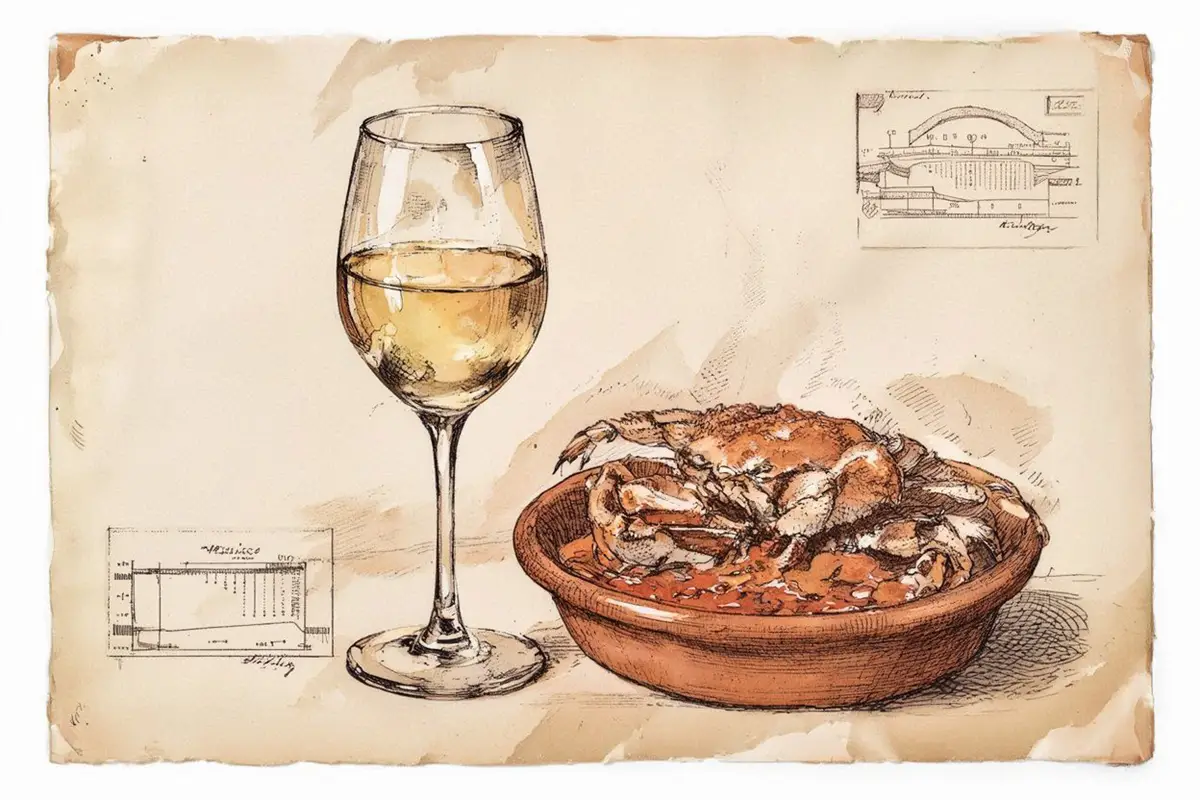
Crab in white wine and tomato sauce: → Dry rosé with good acidity, or a crisp dry white from a coastal region. The same wine used in cooking is a reliable choice for serving alongside.
Crab as part of a richer dish — with cream or heavier sauce: → A fuller-bodied white, possibly with light oak, that can match the weight of the sauce.
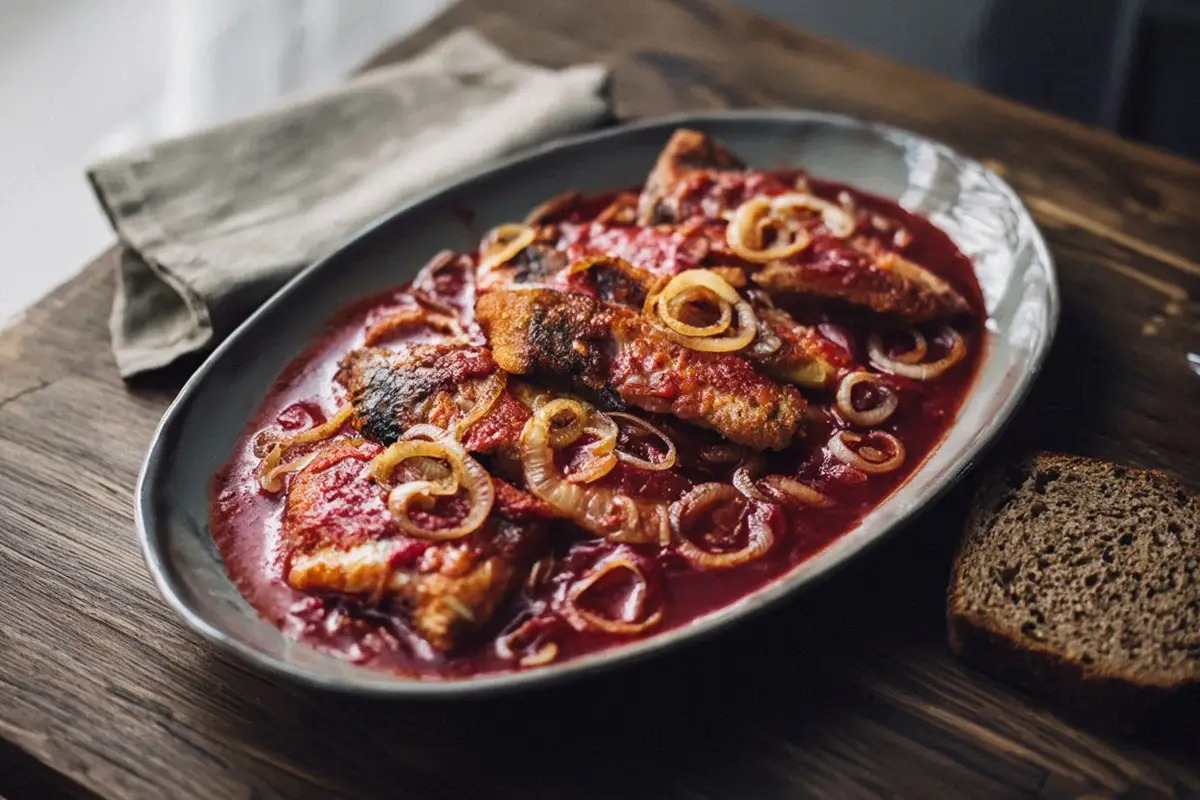
Cold fried fish with tomato sauce: → Dry rosé, or a dry sparkling white. The acidity cuts through both the oil and the tomato.
If you are unsure: → Open the driest, most acidic white available. The classic principle — when in doubt, choose acidity — exists because it holds across most preparations.
A Note on Serving Temperature
White and rosé wines for seafood are best served cold — around 8–10°C for lighter whites, 10–12°C for fuller whites and rosé. A white wine that is too warm loses its acidity and begins to taste flat, which works against exactly the quality you want.
If you have stored white wine at room temperature, around thirty minutes in the refrigerator is usually sufficient. If it is already refrigerated, take it out ten minutes before serving — very cold temperatures suppress aromatics.
A light red intended for seafood can be served slightly chilled, around 14–16°C. This is cooler than the standard serving temperature for red wine and will bring forward its freshness over its structure.
A Note on Alcohol in Cooked Dishes
Wine added during cooking does not lose all its alcohol, particularly in shorter preparations. Studies on alcohol retention in cooking suggest that a dish simmered for five to ten minutes retains a significant portion of the alcohol originally present — estimates vary, but the reduction is far from complete at short cooking times. Those who avoid alcohol entirely for health, religious, or other reasons can substitute with a good fish stock combined with a small amount of white wine vinegar to approximate the acidity.
This applies to the linked recipe and to any preparation where wine is used as a cooking medium rather than simmered for an extended period.
Practical Takeaways
Wine pairing with crab is governed by one primary consideration — avoid heavy tannins — and two secondary ones: match the acidity of the wine to the acidity of the preparation, and match the body of the wine to the weight of the sauce.
For most crab and seafood dishes, a dry, unoaked, high-acid white wine is the reliable choice. For crab in tomato sauce, dry rosé bridges the gap between the delicacy of the seafood and the assertiveness of the sauce. Light reds work only when their tannins are genuinely soft and they can be served slightly chilled.
The best wine for a crab dish cooked with wine is, almost always, the same wine that went into the pot.
Attic Recipes — digitizing and adapting Central European home cooking from the early twentieth century.
Frequently Asked Questions
01Why does red wine taste metallic with seafood?▶
Tannins in red wine can react with compounds in seafood, creating a metallic or bitter aftertaste. The exact science is debated, but the effect is well known. Wines with little or no tannin — most whites, dry rosés, and a few very light reds — avoid this problem.
02Can I use the same wine for cooking and serving?▶
Yes. Using the same style of wine in the sauce and in the glass creates harmony. Keep in mind that wine added during cooking does not lose all its alcohol, especially in quick preparations. For those avoiding alcohol, fish stock with a splash of white wine vinegar is a good substitute.
03Does the sweetness of the wine matter?▶
Very much. Off-dry or semi-sweet wines clash with the acidity of tomato-based sauces, leaving both wine and food unbalanced. For crab in tomato and wine sauce, a bone-dry wine with bright acidity is the reliable choice.
04What is minerality in wine and why does it matter with seafood?▶
Minerality describes flavors often called flinty, saline, or chalky, found in wines from limestone, volcanic, or coastal soils. These wines pair naturally with seafood because they echo the briny character of the food. Coastal and island vineyards produce such wines most consistently.
05Is sparkling wine a good choice with fried seafood?▶
Absolutely. The high acidity and lively bubbles of a dry sparkling wine cut through fried batter, refreshing the palate between bites. A bone-dry, unoaked sparkling white is the traditional match for fried fish and shellfish in many European coastal cuisines.
06Does oak aging affect seafood pairings?▶
Yes. Wines with strong oak influence — vanilla, smoke, or heavy toast — often overpower the delicate flavors of seafood. Unoaked styles are usually safer choices.
07Is serving temperature important?▶
Yes. Whites and rosés should be well chilled to highlight freshness, while light reds are best served slightly cool, avoiding harshness.