Boiled Zucchini Salad
A simple salad of boiled young zucchini, peeled and seeded, tossed warm with fresh parsley, oil, and vinegar.
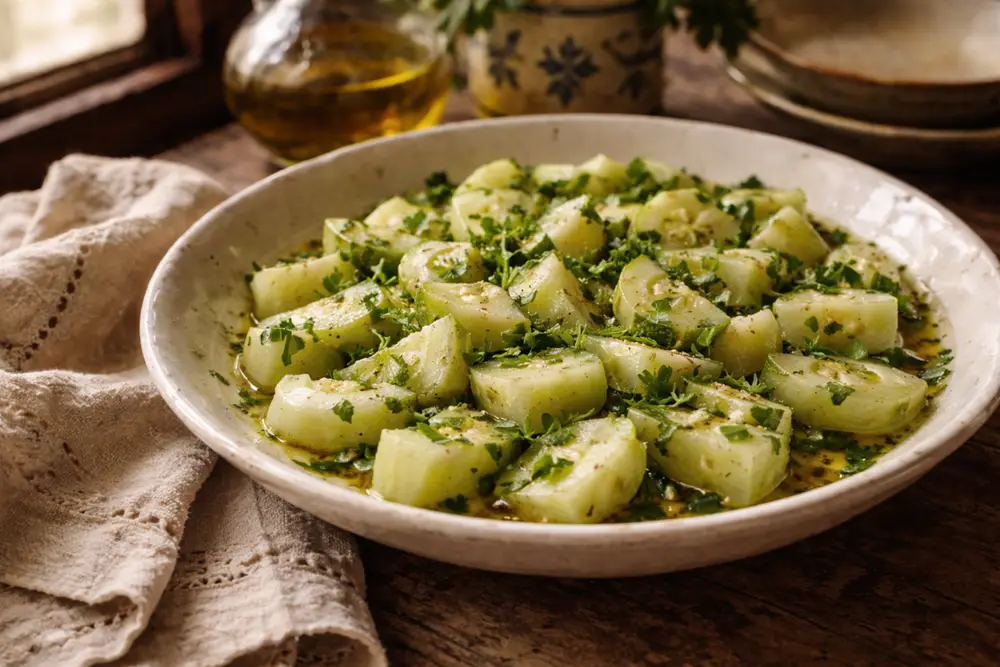
Historical recipe
Modernised adaptation of an early 20th‑century source. Not independently kitchen-tested by Attic Recipes. Quantities, temperatures, and food safety guidance have been updated for a contemporary kitchen — results may vary and errors may exist. Nutritional values, where provided, are estimates only and have not been laboratory tested. Always follow current food safety guidelines for your region. If you have a health condition, allergy, or dietary requirement, consult a qualified professional before preparing this recipe.
Use of this recipe is entirely at your own risk and subject to our Terms of Service and Privacy Policy. Attic Recipes accepts no liability for any adverse outcome.
- 1
Peel the zucchini (600g) and cut them lengthwise to remove the central seed core. Cut the remaining flesh into slices.
- 2
Bring a pot of water to a boil and add the salt (1 tsp). Add the zucchini slices and boil for about 6 minutes, until fork-tender but not falling apart.
- 3
Drain the zucchini well in a colander, then pat dry gently with a clean kitchen towel to remove excess water.
- 4
Transfer the warm zucchini to a bowl. Add the chopped parsley (15g), salt (1/4 tsp), pepper (1/4 tsp), oil (45ml), and vinegar (15ml).
- 5
Mix everything together gently and serve warm as a salad.
Nutrition Information per 1 portion (approx. 150g)
Nutritional values are approximate estimates and may vary based on specific ingredients used, preparation methods, and portion sizes.
Serving Suggestions
Serve warm as a light side salad, or chill briefly in the refrigerator to let the flavors marinate before serving.
About This Recipe
This is a wonderfully simple dish — young zucchini, peeled and seeded, boiled briefly until tender, then tossed warm with parsley, oil, and a touch of vinegar. It’s the kind of light, fresh side that lets the delicate flavor of young zucchini take center stage, with just enough seasoning to bring it to life without overpowering it.
Served warm, this salad makes a fitting accompaniment to richer main courses, offering a clean, acidic counterpoint to heavier dishes.
Why It Works
Peeling and seeding the zucchini before boiling removes the parts most likely to become watery or mushy, leaving only the tender flesh to cook. Boiling briefly keeps the zucchini fork-tender while preserving some structure, and draining and patting it dry afterward prevents the dressing from becoming diluted. Tossing the zucchini while still warm allows it to absorb the oil and vinegar more readily than if it were cold, giving the salad a more rounded flavor throughout.
Modern Kitchen Tips
Don’t skip patting the zucchini dry after draining — this single step makes the biggest difference in keeping the salad from becoming watery. If you prefer a tangier salad, a squeeze of lemon juice can be added alongside or instead of the vinegar. This salad can also be served chilled; let it rest in the refrigerator for about 30 minutes to allow the flavors to meld.
A classic of early 20th century home cooking, preserved and adapted for the modern kitchen.
The Story Behind This Recipe
Historical Context
Early 20th century recipes for this dish called for young zucchini, peeled and seeded before boiling, tossed simply with parsley, oil, and vinegar. Home cooks of the period did not specify exact quantities for the parsley, oil, vinegar, or seasoning, relying instead on taste.
Modern Kitchen Adaptation
The quantity of zucchini, parsley, oil, vinegar, and seasoning were not specified with precise figures in the original and have been estimated based on standard proportions for a salad of this size. The cooking time was not specified and has been set at approximately 6 minutes, sufficient for the zucchini to become fork-tender without falling apart.
This recipe is an independent modern adaptation developed from historical sources in the public domain. It is provided for informational and educational purposes only and does not constitute professional dietary, nutritional, or medical advice. Food preparation involves inherent risks. The reader assumes full responsibility for safe food handling, ingredient sourcing, and adherence to current local food safety guidelines. The site operator accepts no liability for outcomes resulting from the preparation or consumption of this recipe.
One recipe.
Every week.
You Might Also Like
More recipes from the same category
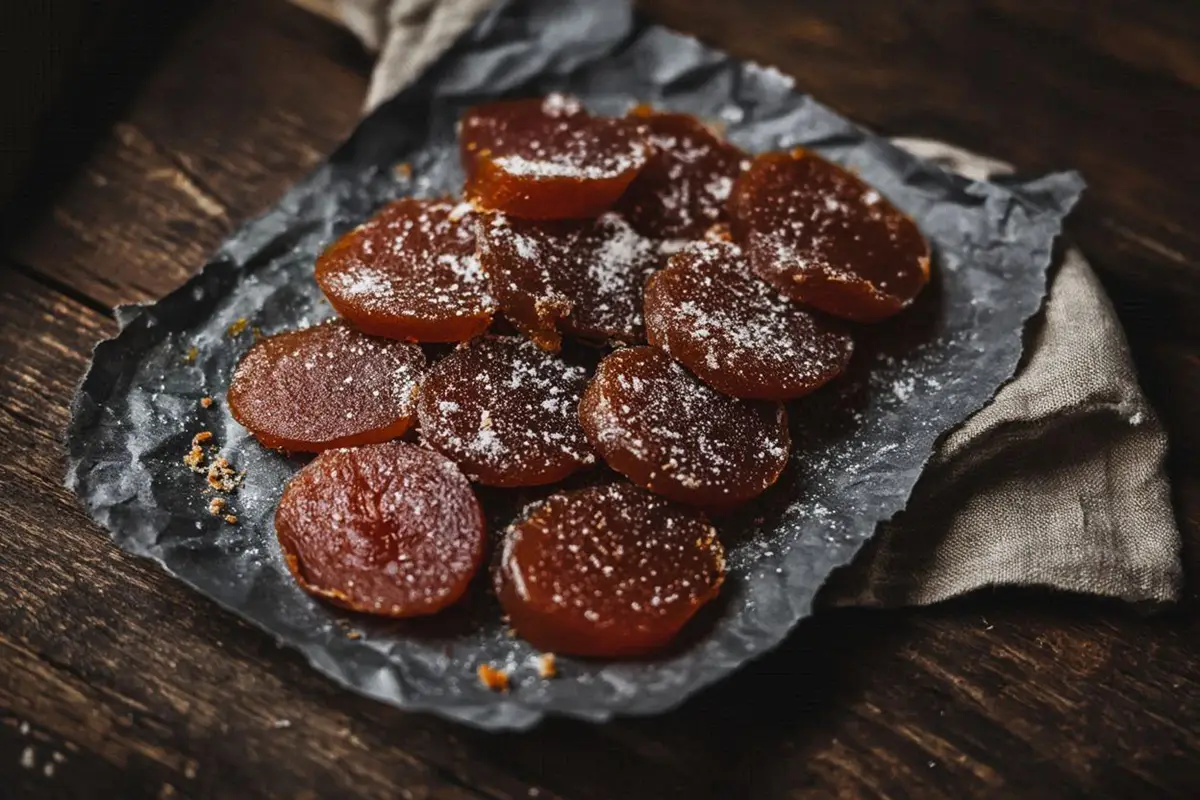
Apricot Fruit Paste
Sieved ripe apricots cooked with equal weight sugar and lemon juice, poured into molds and air-dried — from early 20th century Central European kitchens.
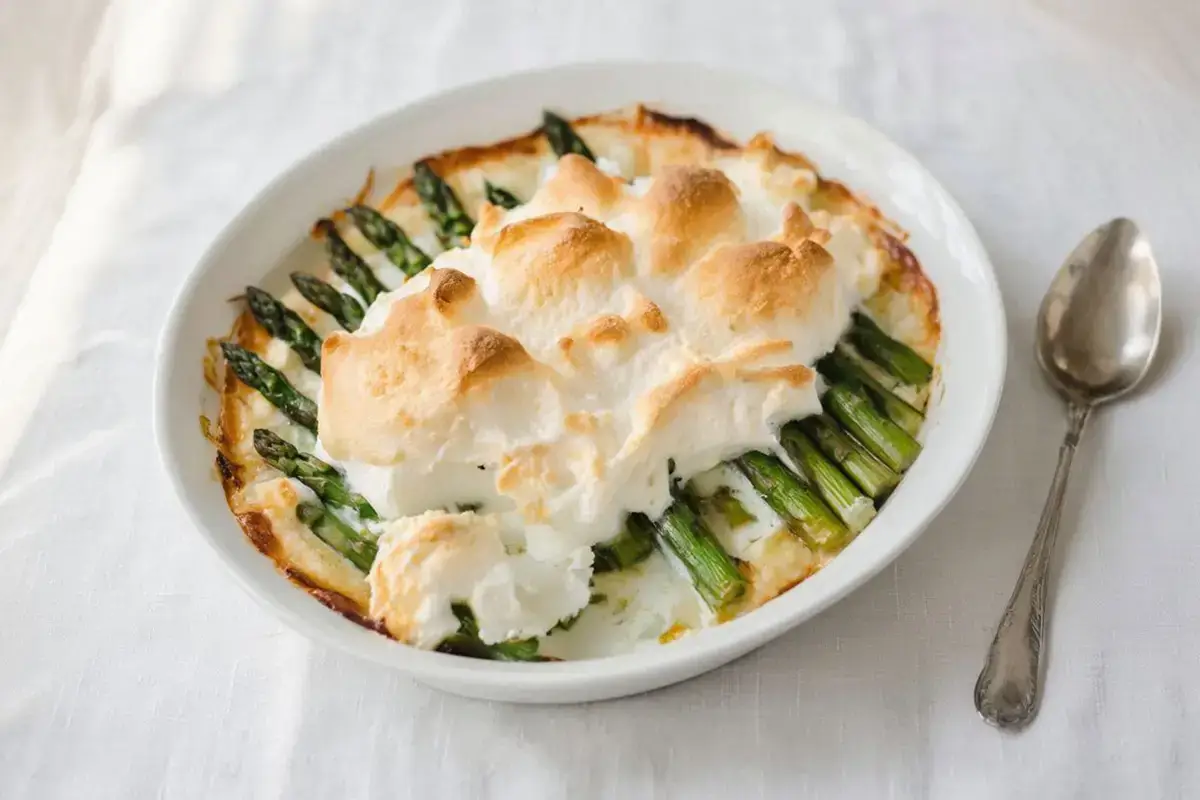
Asparagus Venetian Style
Fresh asparagus baked under a rich egg yolk cream sauce and a golden meringue-cheese topping. An elegant Central European appetizer.
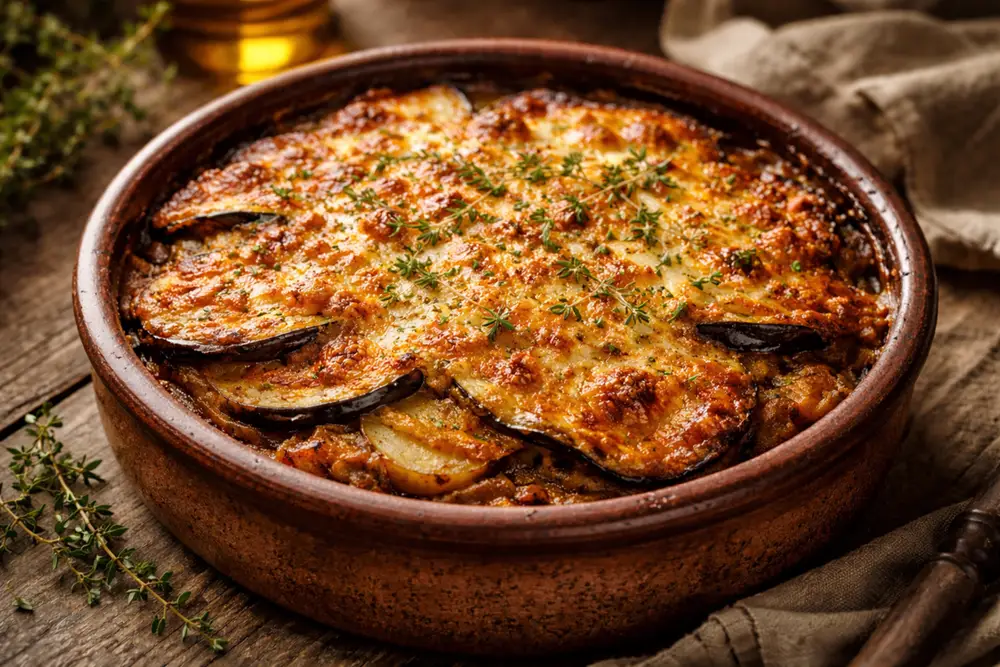
Baked Eggplant with Potatoes
A slow-baked layered casserole of eggplant, parboiled potatoes, golden fried onion, and melted cheese.