Apricot Fruit Paste
Sieved ripe apricots cooked with equal weight sugar and lemon juice, poured into molds and air-dried — from early 20th century Central European kitchens.
Quick Summary
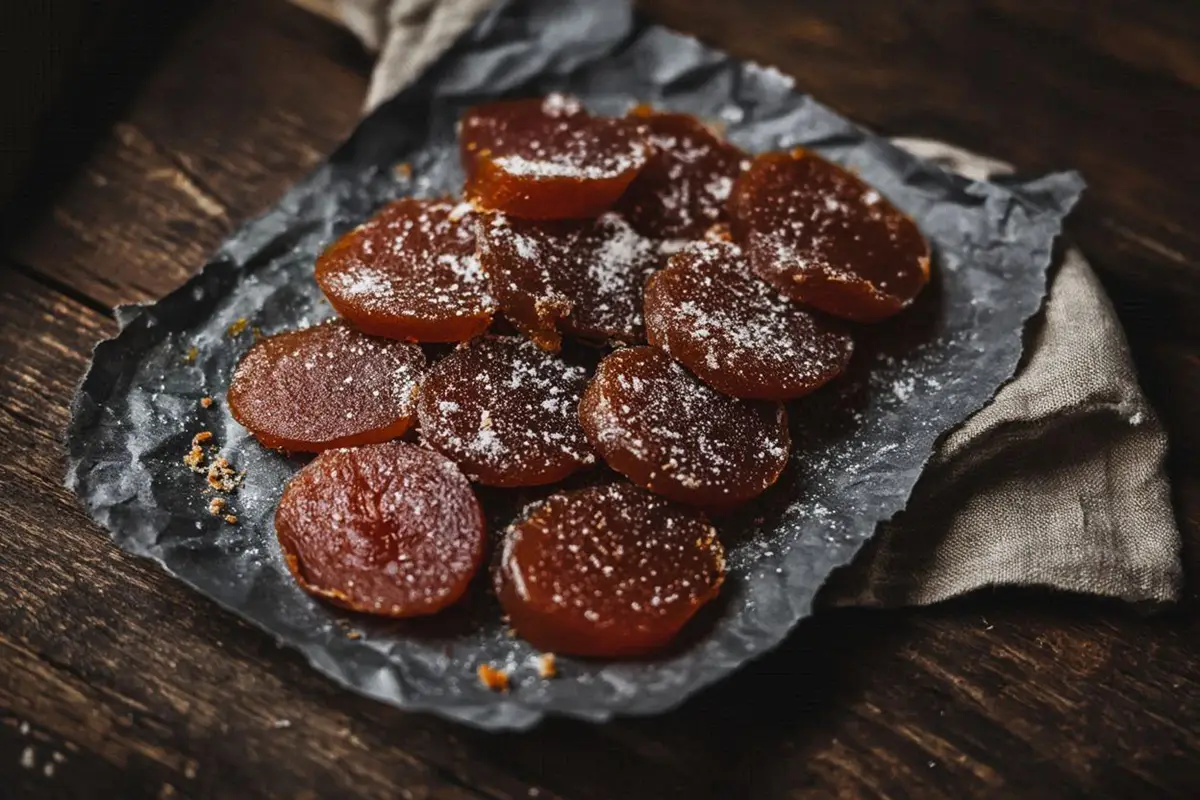
Apricot Fruit Paste is a Central European preserve made by cooking sieved fruit with equal sugar and lemon juice. After about 75 minutes plus drying, it sets into a firm, sliceable confection—made without added pectin.
Historical recipe
Modernised adaptation of an early 20th‑century source. Not independently kitchen-tested by Attic Recipes. Quantities, temperatures, and food safety guidance have been updated for a contemporary kitchen — results may vary and errors may exist. Nutritional values, where provided, are estimates only and have not been laboratory tested. Always follow current food safety guidelines for your region. If you have a health condition, allergy, or dietary requirement, consult a qualified professional before preparing this recipe.
Use of this recipe is entirely at your own risk and subject to our Terms of Service and Privacy Policy. Attic Recipes accepts no liability for any adverse outcome.
Safety note
Boiling fruit paste at high sugar concentration reaches temperatures well above 100°C and causes severe burns on skin contact. Stir carefully with a long-handled spoon and keep children away from the stove at all times during cooking.
Use a long-handled wooden spoon and a deep, wide pot to minimize splashing.
Additional notes
-
Warning
Very high sugar content (70g per 50g serving). Not suitable for those managing diabetes or insulin sensitivity.
Serve in very small portions as a confectionery treat — a 20–25g portion is typical when served with coffee.
-
Caution
Ensure the paste is thoroughly dry before wrapping for storage — any residual moisture will cause mold to form. Do not store in sealed airtight containers until fully dry.
If surface mold appears during drying, trim generously and continue drying in better ventilation. If mold penetrates the interior of the paste, discard the batch.
-
Note
Do not leave the pot unattended during cooking. Burning sugar adheres to the pot surface and is very difficult to remove.
- 1
Peel the apricots and remove the stones. Pass the flesh through a fine sieve or food mill to produce a smooth, lump-free pulp. Weigh the pulp after sieving — this is the weight you match with sugar.
Tip A food processor can replace the sieve, but a fine sieve produces a silkier, more refined texture with no skin fragments. - 2
Combine the sieved apricot pulp, an equal weight of sugar, and the lemon juice in a wide, heavy-bottomed pot. A wide pot encourages faster evaporation and reduces the time spent stirring over high heat.
- 3
Cook over high heat, stirring constantly with a long-handled wooden spoon. Do not leave the pot unattended — the high sugar concentration will burn quickly if stirring stops even briefly. Scrape the bottom and sides of the pot regularly.
- 4
Continue cooking until the mass thickens substantially and begins to pull away cleanly from the spoon and the sides of the pot. A spoonful dropped onto a cold plate should set firmly within one minute. Total active cooking time is typically 30–45 minutes, depending on the water content of the fruit.
Tip A candy thermometer simplifies the doneness test — the paste is ready at approximately 105–107°C (221–225°F), the standard jam-setting point. - 5
Wet the molds or a shallow baking dish with cold water to prevent sticking. Pour the hot paste in immediately and smooth the surface with a wet spatula.
- 6
Leave the molds to cool completely at room temperature. Do not refrigerate at this stage — the paste needs to set slowly.
- 7
The next day, turn the paste out onto clean wooden boards. Place in a well-ventilated spot — near an open window, in a light draught, or in a shaded outdoor location — to dry for 1–3 days, turning once or twice, until the surface is no longer tacky to the touch.
Tip Moving air prevents surface mold from forming as the paste loses moisture. Do not cover while drying. - 8
Once fully dry, slice into portions of approximately 50g. Wrap each piece in parchment paper and store in a cool, dry place. Optionally roll in granulated or powdered sugar before wrapping for a confectionery finish.
Nutrition Information per 1 slice (approx. 50g)
Nutritional values are approximate estimates and may vary based on specific ingredients used, preparation methods, and portion sizes.
Serving Suggestions
Slice thin and serve on a cheese board alongside aged hard cheeses — Manchego, Pecorino, or sharp Cheddar. Serve as a traditional sweet after coffee or tea, cut into small cubes. Sandwich between two thin butter cookies. Pair with fresh white cheese or ricotta. Crumble over vanilla ice cream or yogurt.
About This Recipe
Not all preserves end in a jar — this one ends in a slice. Apricot fruit paste is somewhere between confectionery and preserve: firm enough to slice, sweet enough to serve after coffee, complex enough to sit on a cheese board next to aged hard cheese. The process is simple but demands attention — forty-five minutes of constant stirring over high heat, then two days of patient drying. What you get in return keeps for months.
Why It Works
Equal weights of fruit pulp and sugar, cooked to jam-setting point, create a mass so concentrated that it sets solid as it cools. The lemon juice does two things: it provides the acidity that activates the fruit’s natural pectin, and it cuts through the heavy sweetness of the sugar. The wide pot is not incidental — more surface area means faster water evaporation, which means less time stirring over high heat.
On Kitnikez
The word kitnikez traditionally referred to quince paste — the fruit with the highest natural pectin of any common variety, which sets firmly without effort. Apricot paste requires more careful cooking to reach the same firmness, which is why the original recipe specifies cooking until the mass pulls cleanly from the spoon. This is the same doneness test used by confectioners across Central Europe and the Mediterranean for centuries — and one that requires no thermometer to understand.
Drying and Storage
The drying stage is as important as the cooking. Moving air — a draught, an open window, a shaded spot outdoors — prevents surface mold from forming as the paste loses moisture. Do not cover the paste while it dries and do not refrigerate until it is completely dry and no longer tacky to the touch. Once dry, wrap tightly in parchment and store in a cool place. It keeps for up to 3 months.
A classic of early 20th century home preserving, made with nothing but fruit, sugar, and time.
The Story Behind This Recipe
Historical Context
Fruit pastes — known as kitnikez or voćni sir across Central Europe — belong to a confectionery tradition shared across the Mediterranean and Western Europe, related to Spanish membrillo and French pâte de fruit. In early 20th century households, kitnikez most commonly referred to quince paste, which has the highest natural pectin content of any common fruit and sets firmly with minimal effort. Apricot paste required more careful cooking to achieve the same firmness. The instruction to dry the paste in a draught reflects pre-refrigeration food safety: moving air prevents surface mold. The word 'prečišćen' (purified) in the Serbian original refers to the sieving step — producing a smooth, seed-free pulp was considered the mark of a refined preparation.
Modern Kitchen Adaptation
A sugar thermometer simplifies the doneness test — the paste is ready at approximately 105–107°C (jam-setting point). If the apricots are low in pectin, add the juice of a second lemon or stir in 1–2 teaspoons of powdered pectin for a firmer set. The finished paste keeps well wrapped in parchment in a cool, dry place; refrigerate for longer storage and consume within 3 months. A light rolling in granulated sugar before wrapping helps prevent slices from sticking together.
This recipe is an independent modern adaptation developed from historical sources in the public domain. It is provided for informational and educational purposes only and does not constitute professional dietary, nutritional, or medical advice. Food preparation involves inherent risks. The reader assumes full responsibility for safe food handling, ingredient sourcing, and adherence to current local food safety guidelines. The site operator accepts no liability for outcomes resulting from the preparation or consumption of this recipe.
One recipe.
Every week.
You Might Also Like
More recipes from the same category
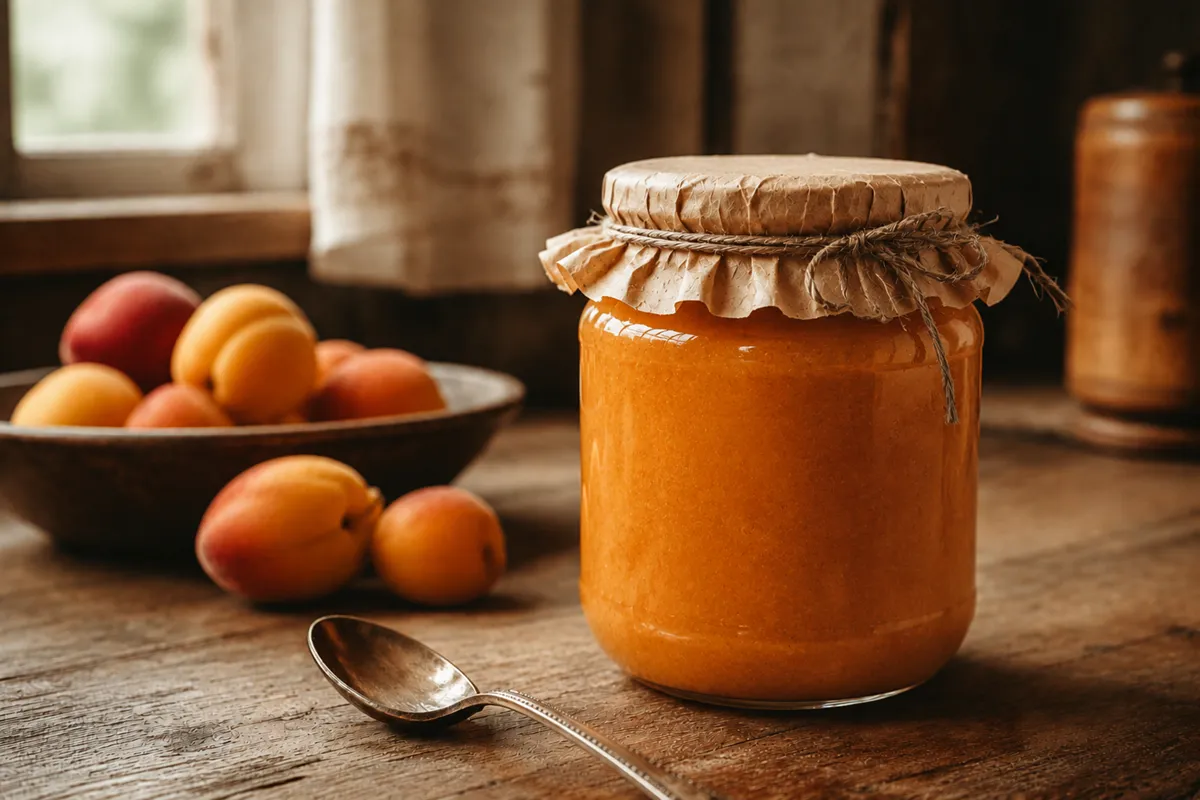
Whipped Apricot or Peach Preserve (No-Cook)
A silky, pale fruit spread made by whipping raw apricot or peach puree with sugar - no cooking required.
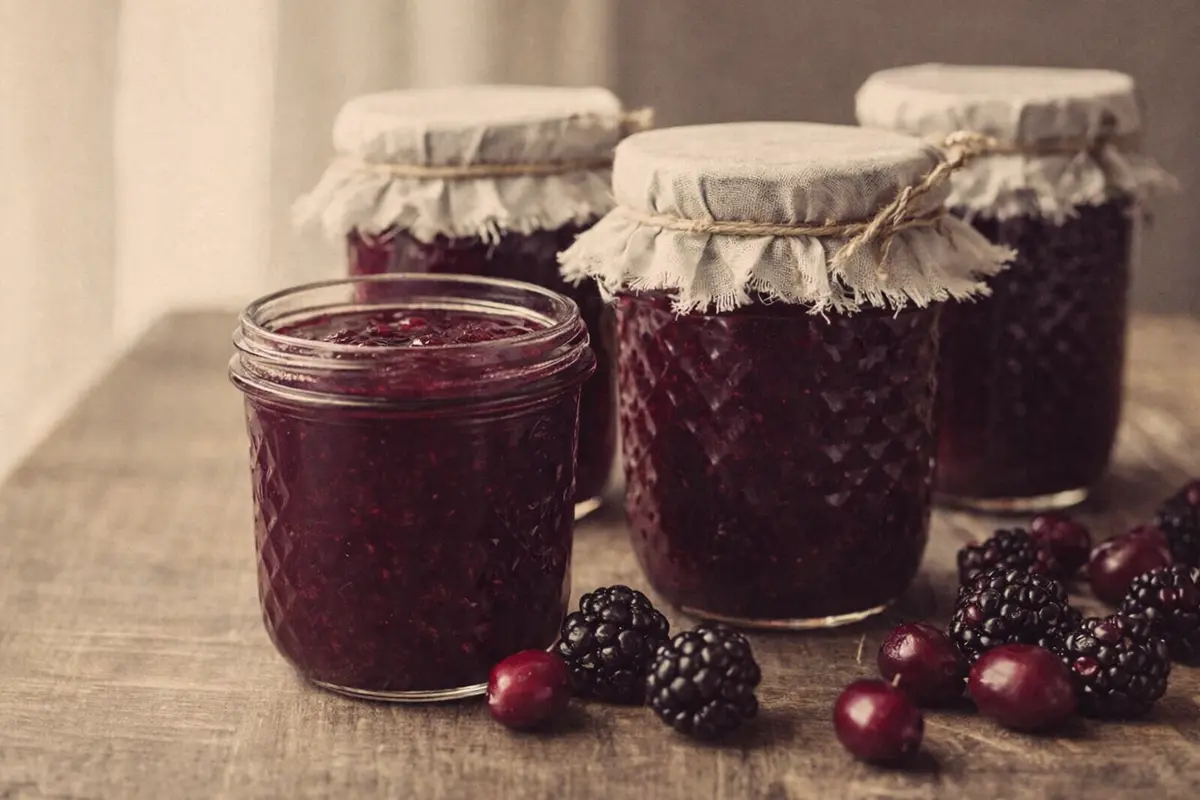
Blackberry and Cornelian Cherry Marmalade
Rich preserve combining tart cornelian cherries with sweet blackberries, cooked to thick consistency with a traditional two-fruit method.
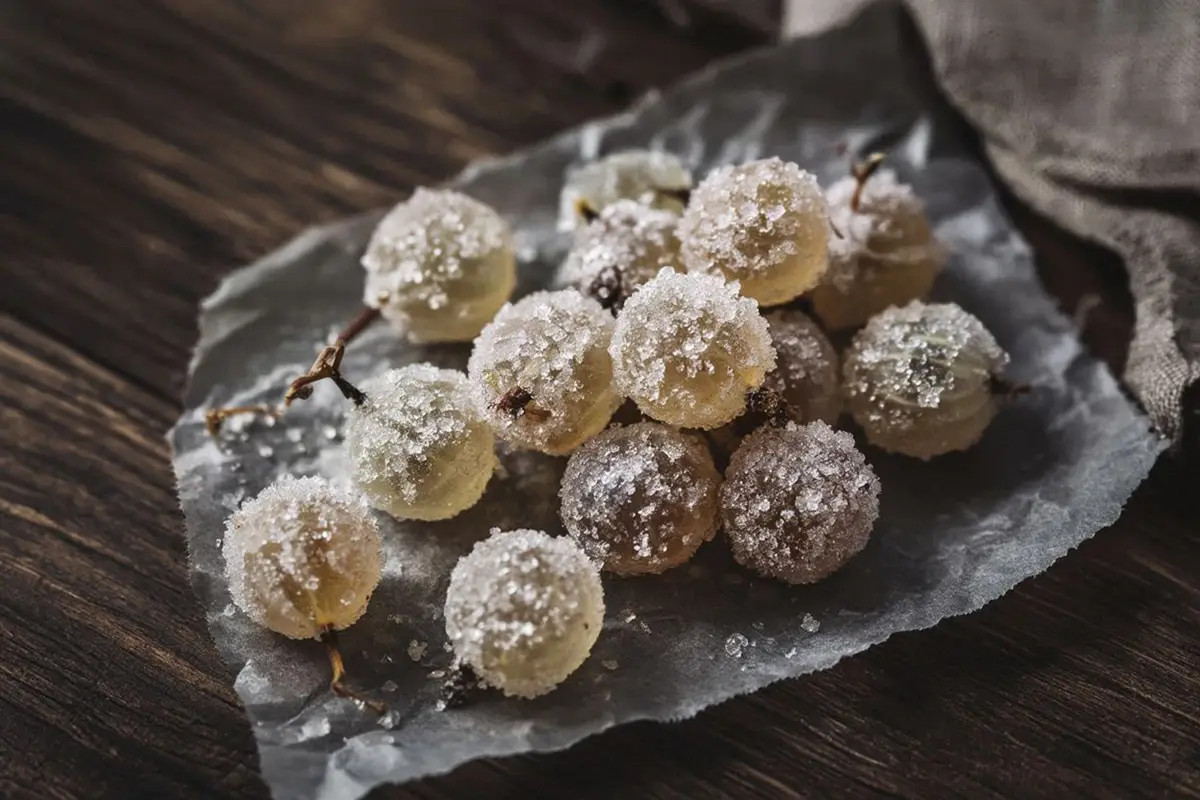
Candied Gooseberries
Gooseberries cooked twice in heavy sugar syrup, sun-dried, and rolled in powdered sugar — a patient old confectionery technique for winter storage.