Asparagus Venetian Style
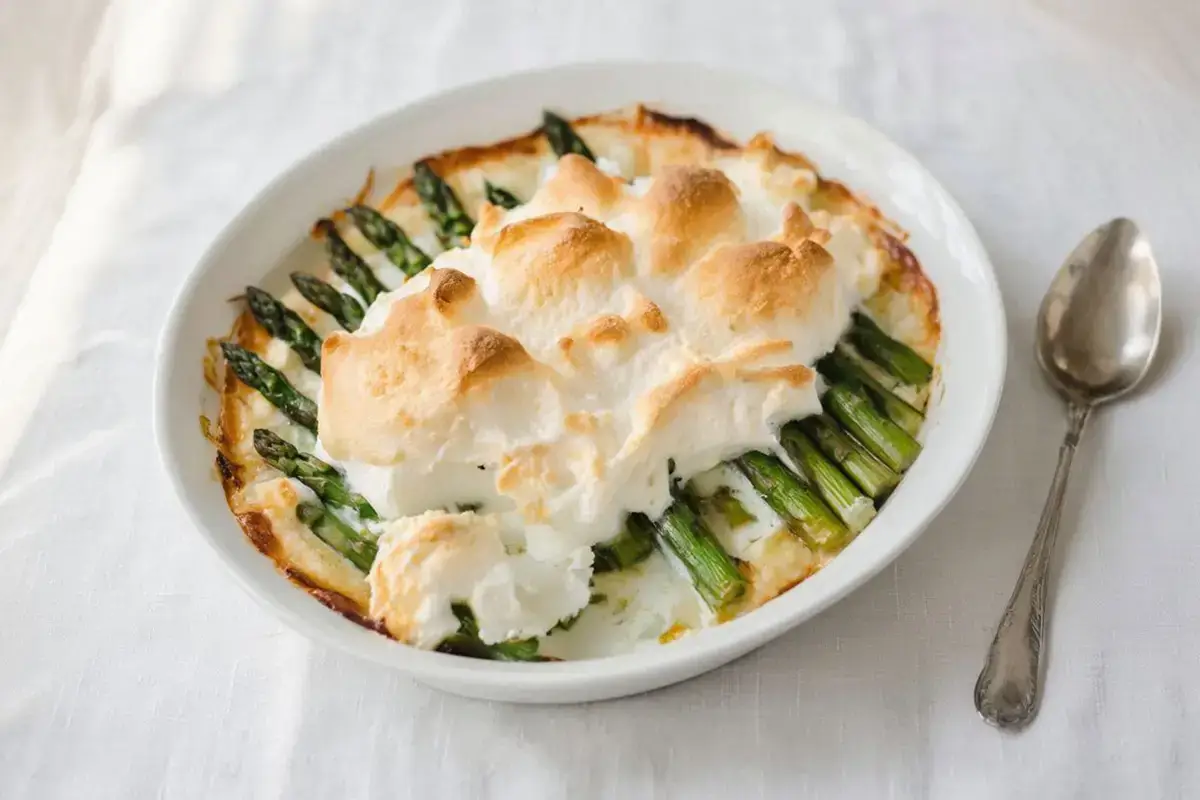
Fresh asparagus baked under a rich egg yolk cream sauce and a golden meringue-cheese topping. An elegant Central European appetizer.
Quick Summary
Asparagus Venetian Style is a Central European appetizer of tender boiled asparagus served with a rich egg-yolk cream sauce and a savory parmesan meringue. Ready in about 70 minutes, it stands out for its whipped egg whites and hard cheese forming a crisp, puffed topping.
Historical recipe
Modernised adaptation of an early 20th‑century source. Not independently kitchen-tested by Attic Recipes. Quantities, temperatures, and food safety guidance have been updated for a contemporary kitchen — results may vary and errors may exist. Nutritional values, where provided, are estimates only and have not been laboratory tested. Always follow current food safety guidelines for your region. If you have a health condition, allergy, or dietary requirement, consult a qualified professional before preparing this recipe.
Use of this recipe is entirely at your own risk and subject to our Terms of Service and Privacy Policy. Attic Recipes accepts no liability for any adverse outcome.
- Dairy
- Eggs
- Gluten
Additional notes
-
Warning
The cream sauce is made with egg yolks cooked over a double boiler. The yolks may not reach a fully safe internal temperature of 74°C (165°F). Do not serve to pregnant women, children under 5, elderly individuals, or immunocompromised persons.
Use pasteurized egg yolks for the sauce, or verify with a kitchen thermometer that the sauce reaches 74°C (165°F) before pouring over the asparagus.
-
Caution
The meringue topping is made from raw egg whites baked briefly in the oven. The interior may not reach a fully safe temperature. The same vulnerable groups listed above should avoid this dish or ensure the meringue is baked through completely.
Use pasteurized egg whites for the meringue topping.
-
Note
Contains dairy (milk, butter, cheese), eggs, and gluten (flour). Not suitable for those with relevant allergies or intolerances.
- 1
Clean the asparagus. Snap or cut off the woody ends — bend each spear near the base and it will break naturally at the right point. For green asparagus, peeling is optional; for white asparagus, peel the lower two thirds of each spear with a vegetable peeler.
- 2
Combine the milk, water, sugar, and salt in a large pot and bring to a gentle boil. Add the asparagus and cook until completely tender — 8 to 12 minutes for green, 15 to 20 minutes for white. Test by inserting a knife at the thickest point: it should pass through without resistance.
Tip The sugar in the cooking liquid draws out bitterness from the asparagus — a classic technique for both white and green varieties. - 3
Remove the asparagus carefully and lay on a clean cloth or paper towels to drain thoroughly. Reserve 300ml of the cooking liquid for the sauce.
- 4
Arrange the drained asparagus side by side in a single layer in a heatproof serving dish. Set aside.
- 5
In a bowl, whisk together the egg yolks, flour, and melted butter until smooth and combined.
Tip The butter must be melted but not hot — adding it too hot will begin to cook the yolks before you reach the double boiler. - 6
Heat the reserved 300ml of cooking liquid in a saucepan until just below boiling. Very slowly pour the hot liquid into the egg yolk mixture, whisking constantly. Add just a spoonful at a time at first to temper the yolks without scrambling them.
- 7
Transfer the mixture to a double boiler — a heatproof bowl set over a pot of barely simmering water, not touching the water. Stir constantly with a wooden spoon or spatula until the sauce thickens to a smooth, pourable cream, about 8 to 12 minutes. Do not allow the water underneath to boil hard.
Tip The sauce is ready when it coats the back of a spoon and a line drawn through it holds its shape. If it starts to look grainy, remove from heat immediately and whisk vigorously. - 8
Pour the cream sauce evenly over the arranged asparagus.
- 9
Preheat the oven to 190°C / 375°F (conventional) or 170°C / 340°F (fan-assisted). In a perfectly clean, grease-free bowl, beat the egg whites to stiff, glossy peaks. Gently fold in the grated cheese with a spatula, working carefully to preserve the volume.
Tip A trace of yolk or grease in the bowl will prevent the whites from reaching stiff peaks. Wipe the bowl and beaters with a little lemon juice before starting. - 10
Spread the cheese meringue evenly over the cream-covered asparagus, covering all the way to the edges of the dish to prevent shrinkage. Place in the preheated oven and bake for 10 to 15 minutes, until the top is puffed and golden brown.
- 11
Serve immediately, directly from the dish. The meringue will begin to deflate within minutes of leaving the oven — have your guests seated before the dish goes in.
Nutrition Information per approx. 200g (1/6 of dish)
Nutritional values are approximate estimates and may vary based on specific ingredients used, preparation methods, and portion sizes.
Serving Suggestions
Serve immediately from the baking dish as a first course at a sit-down lunch or dinner where timing can be controlled. A dry white wine from the Veneto region complements the dish well. The cream sauce and asparagus can be prepared up to one hour ahead; beat the egg whites and bake only at the last possible moment.
About This Recipe
One kilogram of fresh asparagus, boiled in sweetened milk and water until tender, arranged in a heatproof dish, covered in a rich egg yolk cream sauce made from the cooking liquid, then finished under a savory meringue of beaten egg whites and grated cheese, baked until puffed and golden. It is an elaborate, technically demanding dish that rewards the effort with something genuinely impressive at the table.
This is not weeknight cooking. It is the kind of dish that requires full attention, good timing, and a willingness to commit — but the result is a Central European appetizer with real elegance.
Why It Works
Three distinct components, each doing a specific job. The milk and sugar in the cooking liquid draw out bitterness from the asparagus while keeping it tender. The egg yolk cream sauce — built from the same liquid, thickened over a double boiler — binds the dish and carries the flavor of the asparagus through every bite. The cheese meringue on top provides contrast: light against rich, golden against pale, crisp against creamy.
The double boiler for the sauce is not optional. Direct heat and egg yolks produce scrambled eggs. The gentle, indirect heat of a water bath gives you the time and control to bring the sauce to exactly the right consistency without disaster.
On the Asparagus
The recipe uses green asparagus as the default, but white asparagus is the more historically likely original. White asparagus has been cultivated across northern Italy and Central Europe since at least the 16th century and was the prestige variety in continental European cooking well into the 20th century — more delicate in flavor, more labor-intensive to produce, and considerably more expensive. If you can find it, white asparagus produces a more refined result with the cream sauce and meringue topping. It requires peeling and a longer cooking time (15 to 20 minutes versus 8 to 12 for green), but the flavor is exceptional.
Green asparagus is easier to source globally and works very well here. The choice is yours.
Equipment You Will Need
A large pot for boiling the asparagus, a heatproof bowl or double boiler insert for the sauce, a heatproof serving dish large enough to hold the asparagus in a single layer, and an electric hand mixer or stand mixer for beating the egg whites. A kitchen thermometer is strongly recommended for both the sauce (74°C safety threshold) and the meringue.
Timing Guide
This dish requires coordination. A practical order of operations:
- Boil and arrange the asparagus — up to 1 hour ahead
- Make the cream sauce — up to 1 hour ahead, keep warm over hot water
- Pour sauce over asparagus — just before beating the egg whites
- Beat egg whites, fold in cheese, spread, and bake — at the last moment only
Have your guests seated before the dish goes into the oven. The meringue must go from oven to table in under 5 minutes.
Troubleshooting
Sauce scrambles in the double boiler: The water underneath was boiling too hard, or the bowl was touching the water. Keep the water at a gentle simmer and ensure the bowl sits above it. If the sauce starts to look grainy, remove from heat immediately and whisk vigorously.
Egg whites will not reach stiff peaks: There is grease or yolk in the bowl or on the beaters. Start again with a clean, dry bowl wiped with a little lemon juice or vinegar.
Meringue deflates before serving: This is normal and unavoidable. Serve immediately — there is no fix for a waited meringue.
A classic of early 20th century home cooking, preserved and adapted for the modern kitchen.
The Story Behind This Recipe
Historical Context
The Venetian culinary tradition influenced cooking across the eastern Adriatic and into Central Europe for centuries, carried along trade routes and through the lasting cultural presence of the Venetian Republic. By the early 20th century, Venetian-style asparagus preparations had become part of the refined home cooking repertoire across Central Europe, appearing in household cookbooks as a sophisticated appetizer for formal lunches. The technique of finishing vegetables under a savory meringue — egg whites beaten to snow and baked until browned — was considered an elegant preparation requiring both skill and careful timing.
Modern Kitchen Adaptation
The original recipe specifies 12 liters of milk for cooking the asparagus — almost certainly a scanning or printing error for ½ liter (0.5L), which combined with 1 liter of water gives 1.5 liters of cooking liquid, a logical quantity for 1kg of asparagus. This correction is used throughout. No oven temperature appears in the original; 190°C (375°F) produces a properly browned meringue without overcooking the sauce underneath. Use pasteurized eggs if serving to vulnerable groups — see safety notes.
This recipe is an independent modern adaptation developed from historical sources in the public domain. It is provided for informational and educational purposes only and does not constitute professional dietary, nutritional, or medical advice. Food preparation involves inherent risks. The reader assumes full responsibility for safe food handling, ingredient sourcing, and adherence to current local food safety guidelines. The site operator accepts no liability for outcomes resulting from the preparation or consumption of this recipe.
One recipe.
Every week.
You Might Also Like
More recipes from the same category
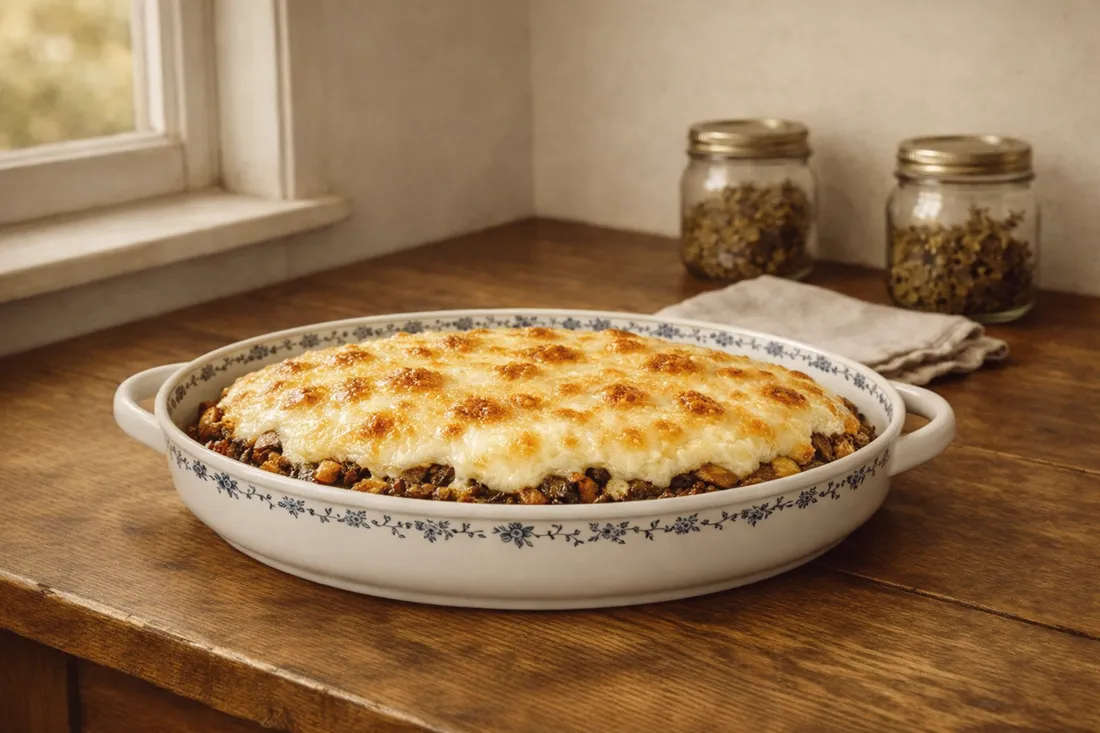
Baked Mushrooms with Hard Cheese and Eggs
Layers of sliced hard-boiled eggs and grated cheese topped with sautéed mushrooms, baked under a rich egg-enriched sour cream topping.
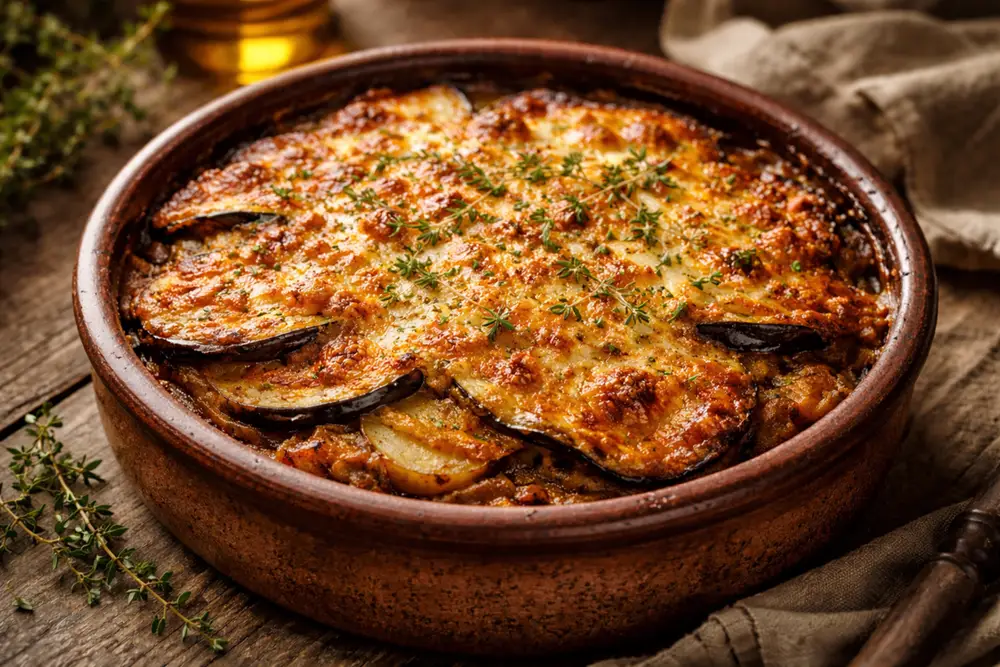
Baked Eggplant with Potatoes
A slow-baked layered casserole of eggplant, parboiled potatoes, golden fried onion, and melted cheese.
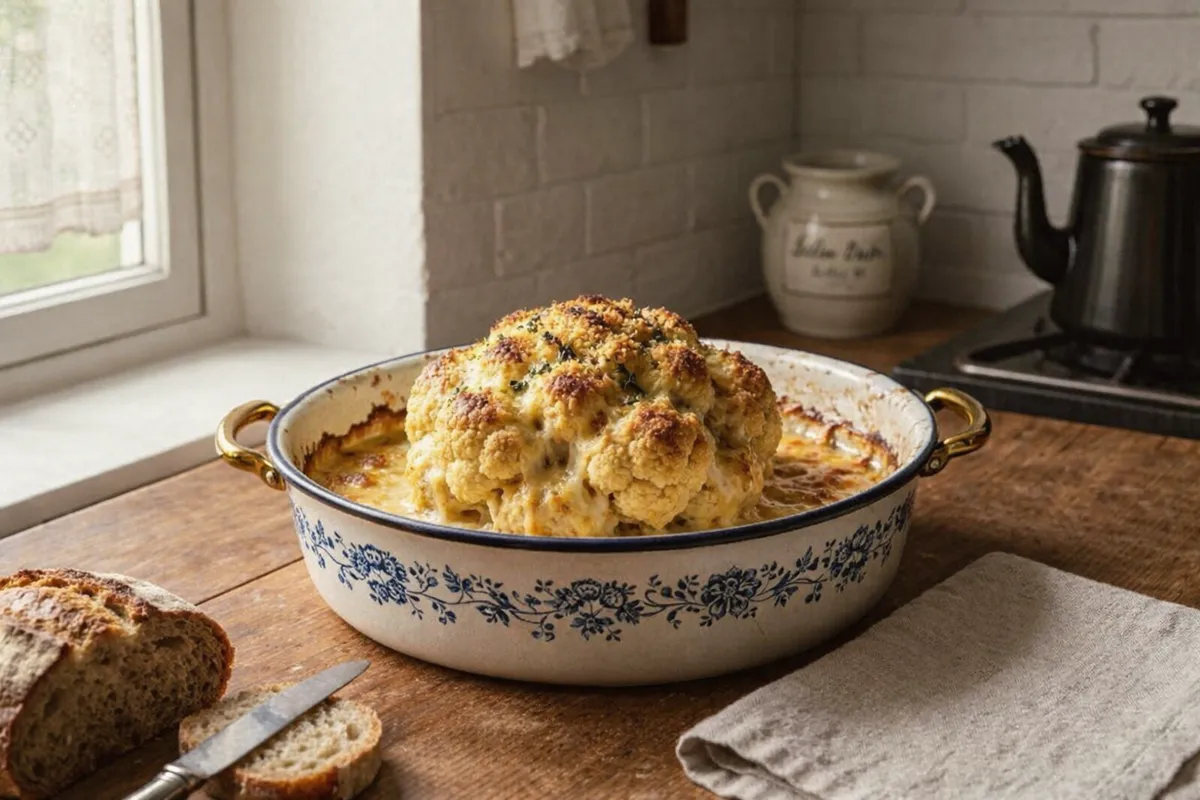
Baked Cauliflower with Cheese Béchamel
A whole head of tender boiled cauliflower coated in a rich egg-enriched cheese béchamel, topped with breadcrumbs and baked until golden.