Bean Moussaka Without Meat
A hearty Central European vegetarian moussaka of pureed white beans layered with hard-boiled eggs, kashkaval cheese, and a sour cream custard topping.
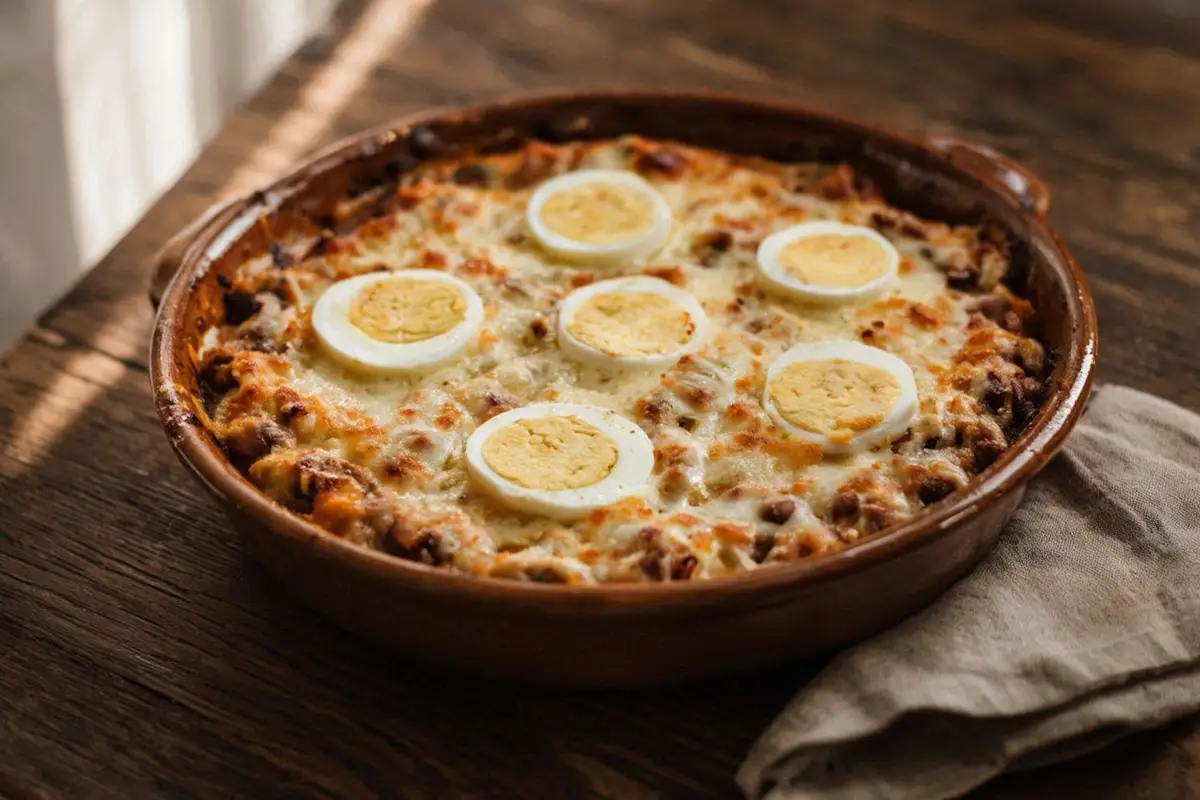
Quick Summary
Bean Moussaka Without Meat is a Central European vegetarian casserole of pureed white beans layered with hard-boiled eggs, kashkaval cheese, and sour cream custard. It takes about 60 minutes, with a creamy structure that absorbs rich cheese flavor while baking..
Historical recipe
Modernised adaptation of an early 20th‑century source. Not independently kitchen-tested by Attic Recipes. Quantities, temperatures, and food safety guidance have been updated for a contemporary kitchen — results may vary and errors may exist. Nutritional values, where provided, are estimates only and have not been laboratory tested. Always follow current food safety guidelines for your region. If you have a health condition, allergy, or dietary requirement, consult a qualified professional before preparing this recipe.
Use of this recipe is entirely at your own risk and subject to our Terms of Service and Privacy Policy. Attic Recipes accepts no liability for any adverse outcome.
- Dairy
- Eggs
Additional notes
-
Warning
High cholesterol: 7 eggs total (5 hard-boiled + 2 in custard) across 4 servings yields approximately 335mg cholesterol per portion — at the upper limit of the recommended daily intake. Individuals with cardiovascular disease or elevated cholesterol should limit portion size.
Reduce hard-boiled eggs to 3 and use 1 egg in the custard. Replace the missing custard volume with an extra tablespoon of sour cream.
-
Caution
Contains raw eggs in the custard topping. Baking at 180°C will fully cook the custard — ensure the centre is set and firm before removing from the oven. Not recommended for pregnant women, children under 5, elderly, or immunocompromised individuals without verifying the internal temperature reaches 71°C (160°F).
Use pasteurised eggs for the custard topping if serving to vulnerable groups.
-
Note
Contains dairy (sour cream, butter, kashkaval) and eggs. No gluten — naturally gluten-free as written.
Replace sour cream with full-fat coconut cream or dairy-free sour cream. Replace butter with olive oil. Replace kashkaval with a dairy-free hard cheese alternative.
- 1
Prepare the beans: If using dried beans, soak overnight in cold water, drain, and boil in fresh unsalted water for 60–90 minutes until completely tender. Drain well and purée until smooth using a food mill, potato masher, or immersion blender. Season generously with salt. If using canned beans, drain, rinse thoroughly, and mash or blend until smooth — season with salt.
Tip The purée should be thick and spreadable, not watery. If it seems loose, return to a pan and stir over low heat for a few minutes to dry it out. Watery purée will cause the moussaka to collapse when cut. - 2
Hard-boil the eggs: Place 5 eggs in cold water, bring to a boil, and cook for 10 minutes. Transfer immediately to cold water. Peel and slice into rings.
- 3
Assemble the first layer: Grease a medium ceramic or enamel baking dish with butter or lard. Spread half the bean purée evenly across the bottom in a smooth, even layer.
- 4
Add the egg layer: Arrange the hard-boiled egg rings over the bean purée in a single overlapping layer. Scatter the 55g of grated kashkaval evenly over the eggs. Drizzle the 30g of melted butter or lard over the top.
Tip The melted fat carries the cheese flavor down into the bean layer below during baking — do not skip this step. - 5
Add the second layer: Spread the remaining bean purée over the egg and cheese layer as evenly as possible.
- 6
Make the custard topping: Whisk together the 2 raw eggs, 200ml sour cream, and 60ml milk until smooth. Season with a pinch of salt. Pour evenly over the top of the moussaka.
Tip The custard should be pourable but not thin — it will set into a firm golden top during baking. - 7
Bake: Place in a preheated oven at 180°C / 350°F (conventional) or 160°C / 325°F (fan-assisted). Bake for 30–40 minutes until the top is golden, set, and slightly puffed. The moussaka is ready when the custard is firm to a gentle press in the centre. Allow to rest for 5 minutes before serving.
Tip For food safety, ensure the custard centre reaches 71°C (160°F) using a probe thermometer, especially if serving to vulnerable groups. - 8
Serve directly from the baking dish with a simple green salad or pickles alongside.
Nutrition Information per 1 portion (approx. 280g)
Nutritional values are approximate estimates and may vary based on specific ingredients used, preparation methods, and portion sizes.
Serving Suggestions
Serve hot directly from the baking dish. A sharp cucumber and vinegar salad or a bowl of pickled vegetables alongside cuts through the richness of the custard and cheese. Leftover moussaka reheats well at 160°C for 15 minutes — the custard firms further and the edges crisp slightly.
About This Recipe
This is the moussaka that sustained households through lean winters, fasting periods, and meatless Fridays. The structure is identical to the meat version — layers, cheese, a baked custard top — but the protein comes from white beans and hard-boiled eggs instead of minced meat. It is not a compromise. The bean purée has a creaminess that eggplant cannot match, the eggs add a richness that anchors the layers, and the kashkaval melted into the middle makes the whole thing deeply satisfying. It has been almost entirely forgotten, which is a genuine culinary loss.
Why It Works
The two-layer bean structure is not merely organizational — it serves a technical purpose. The bottom layer of purée absorbs fat and moisture from the egg and cheese layer above it, becoming richer and more flavorful during baking. The top layer of purée acts as a base for the custard, which sets into a firm golden crust that seals the dish. Each layer does something different, and the result is more than the sum of its parts.
The custard topping — raw eggs, sour cream, and milk — is the same basic technique as the topping on a Central European savory bake. It sets firm enough to slice cleanly but remains creamy inside.
Dried vs. Canned Beans
Dried white beans, soaked overnight and cooked from scratch, produce a purée with significantly more flavor and a firmer, more cohesive texture than canned. The cooking liquid from dried beans can be reserved and used to thin the purée if needed — it carries flavor that plain water does not.
Two cans of white beans (800g total, drained) is a completely valid shortcut that reduces preparation to under an hour. Rinse the canned beans thoroughly before mashing — the canning liquid adds a metallic note that is worth removing.
The Cheese
Kashkaval is the correct cheese for this recipe — a firm, slightly salty, aged cow’s milk cheese used across Central Europe. It melts cleanly into the egg layer and contributes a savory depth that milder cheeses cannot replicate. It is available in Eastern European grocery stores and specialty cheese shops.
If kashkaval is unavailable, a young Pecorino or firm Gruyère are the closest substitutes. Parmesan grated directly at the table over a hot portion is an excellent addition — its sharpness plays well against the mild bean base.
Troubleshooting
Bean purée too loose: Return to a saucepan and stir over low heat for 3–4 minutes to evaporate excess moisture. Watery purée will make the moussaka collapse when cut.
Custard not set after 40 minutes: Cover loosely with foil and bake for a further 10 minutes. The centre should be firm to a gentle press before removing.
Edges browning too fast: Reduce oven to 170°C and extend baking time by 10 minutes.
A classic of early 20th century home cooking, preserved and adapted for the modern kitchen.
The Story Behind This Recipe
Historical Context
Bean moussaka without meat was a practical and economical dish in early 20th century Central European households — particularly during lean periods, religious fasting days, or the end of winter when meat was scarce. The layered structure mirrors the classic meat moussaka but replaces the protein with the pairing of white beans and hard-boiled eggs, providing a comparable nutritional profile from plant and dairy sources alone. The use of kashkaval — a firm, slightly salty aged cow's milk cheese common across Central Europe — as the internal flavoring layer is characteristic of the region's approach to meatless cooking: generous with dairy, structured in layers, and baked until golden. White beans are an excellent source of plant-based protein, complex carbohydrates, iron, and folate — combined with eggs and cheese, this dish provides a nutritionally complete meatless main.
Modern Kitchen Adaptation
Dried white beans produce the best flavor and texture, but canned beans (2 × 400g tins, drained and rinsed) are a completely valid shortcut that reduces preparation to under an hour. Rinse canned beans thoroughly before mashing — the canning liquid adds a metallic note worth removing. Kashkaval is available in Eastern European delis and specialty cheese shops. The closest substitutes are young Pecorino, firm Gruyère, or Manchego — any firm, slightly salty cheese that melts well. Parmesan grated at the table over a hot portion adds a sharp accent that works well against the mild bean base.
This recipe is an independent modern adaptation developed from historical sources in the public domain. It is provided for informational and educational purposes only and does not constitute professional dietary, nutritional, or medical advice. Food preparation involves inherent risks. The reader assumes full responsibility for safe food handling, ingredient sourcing, and adherence to current local food safety guidelines. The site operator accepts no liability for outcomes resulting from the preparation or consumption of this recipe.
One recipe.
Every week.
You Might Also Like
More recipes from the same category
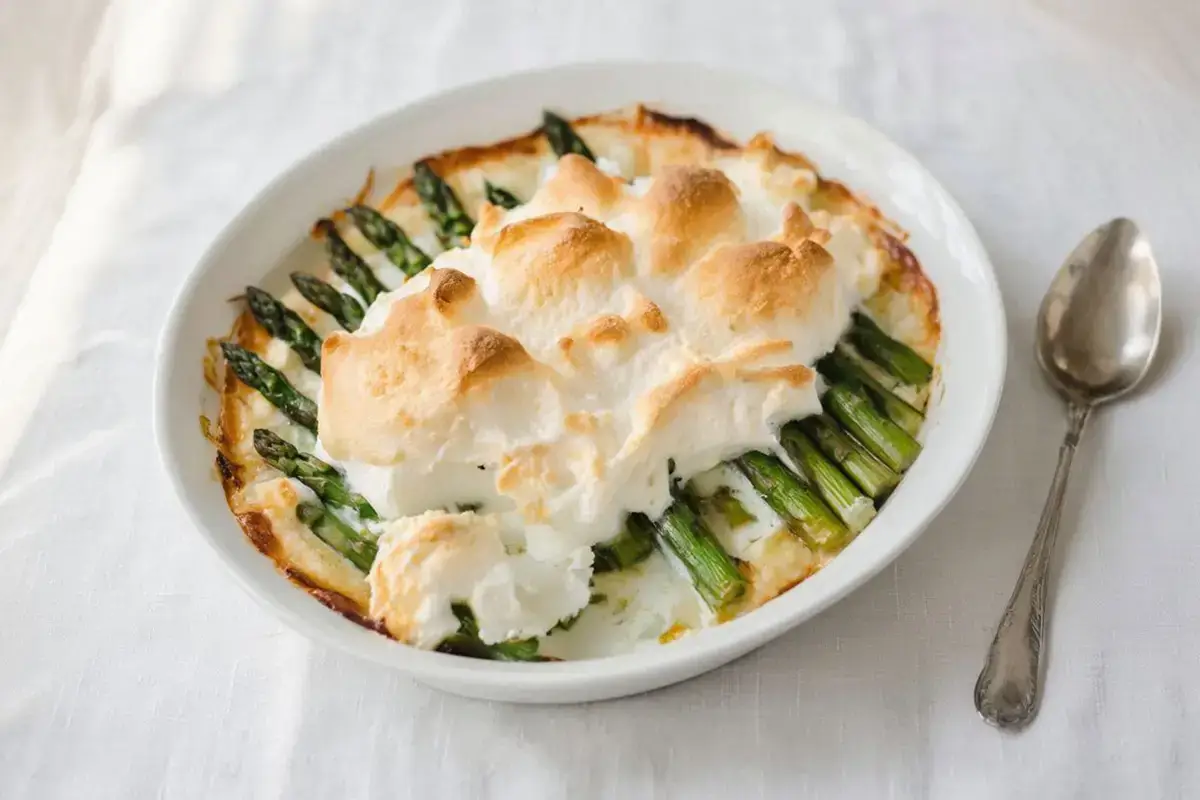
Asparagus Venetian Style
Fresh asparagus baked under a rich egg yolk cream sauce and a golden meringue-cheese topping. An elegant Central European appetizer.
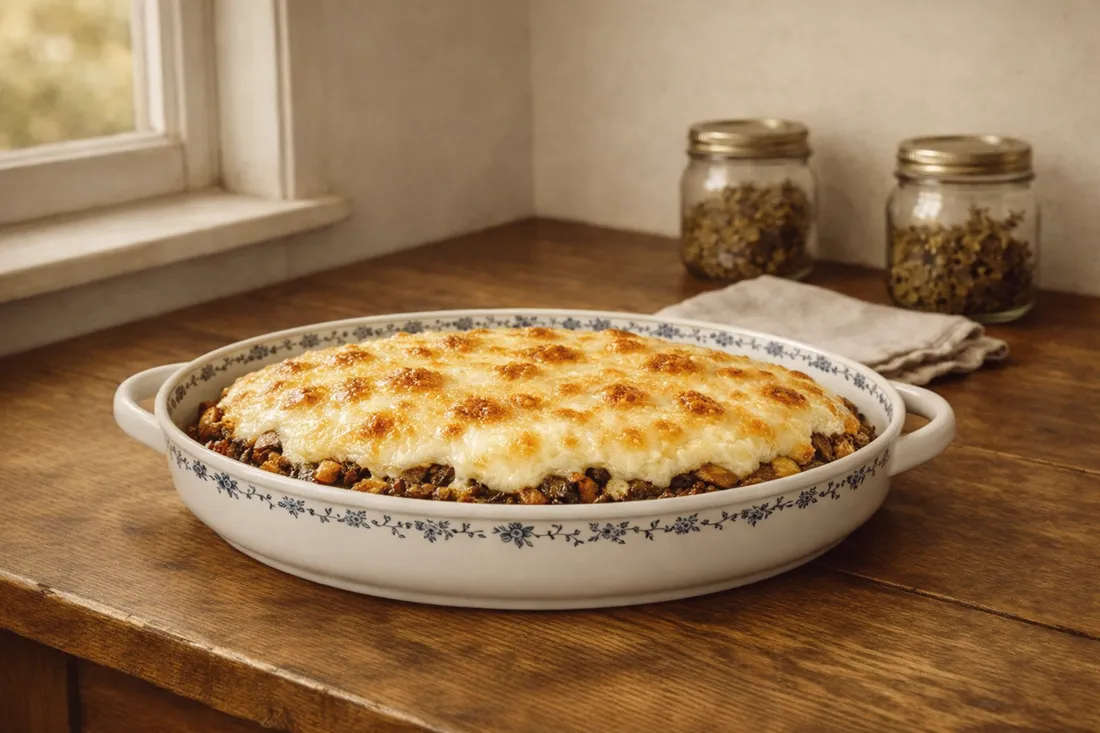
Baked Mushrooms with Hard Cheese and Eggs
Layers of sliced hard-boiled eggs and grated cheese topped with sautéed mushrooms, baked under a rich egg-enriched sour cream topping.
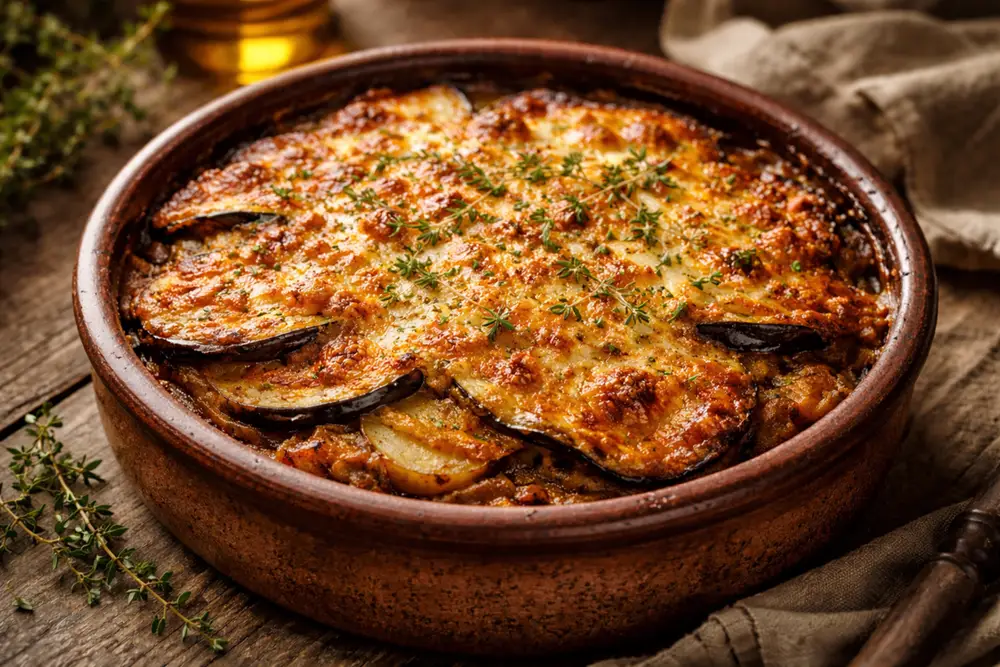
Baked Eggplant with Potatoes
A slow-baked layered casserole of eggplant, parboiled potatoes, golden fried onion, and melted cheese.