Bulgarian Spring Snail Soup
A traditional Bulgarian spring delicacy — garden snails slow-cooked with onion and olive oil into a delicate, clear broth.
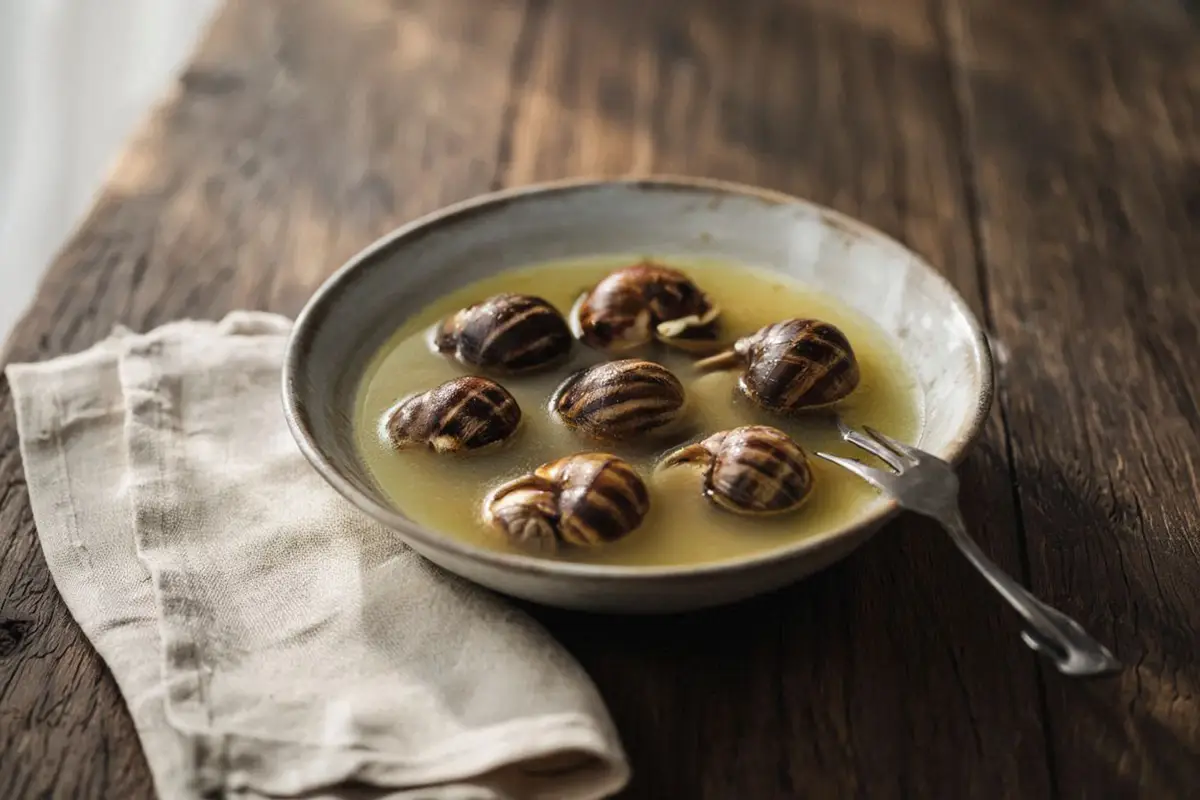
Quick Summary
Bulgarian Spring Snail Soup is a traditional Bulgarian soup of snails slow-cooked with onions, olive oil, and a light flour slurry. It takes about 160 minutes, with long simmering and chilling giving the broth a delicate, clean flavor.
Historical recipe
Modernised adaptation of an early 20th‑century source. Not independently kitchen-tested by Attic Recipes. Quantities, temperatures, and food safety guidance have been updated for a contemporary kitchen — results may vary and errors may exist. Nutritional values, where provided, are estimates only and have not been laboratory tested. Always follow current food safety guidelines for your region. If you have a health condition, allergy, or dietary requirement, consult a qualified professional before preparing this recipe.
Use of this recipe is entirely at your own risk and subject to our Terms of Service and Privacy Policy. Attic Recipes accepts no liability for any adverse outcome.
- Gluten
- Molluscs
Safety note
Only closed, sealed snails with an intact shell membrane should be used. Open, cracked, or foul-smelling snails must be discarded immediately — consuming dead or improperly stored snails can cause serious food poisoning.
Purchase live snails from a reputable supplier or use pre-purged farmed snails. Never use snails of unknown provenance or condition.
Additional notes
-
Warning
This soup is served cold. Improper cooling of cooked molluscs is a significant food safety risk. The soup must be cooled to below 4°C (40°F) within 4 hours of cooking. Cool actively in a sink of ice water before refrigerating — do not leave the pot to cool passively on the counter.
Place the pot in a sink filled with cold water and ice and stir occasionally until cooled to room temperature, then refrigerate immediately. Do not leave cooked snail soup at room temperature for more than 2 hours.
-
Warning
Wild-foraged snails may have consumed toxic plants or been exposed to pesticides and garden chemicals. Never use snails gathered from treated gardens, roadsides, or areas near agricultural land.
Use commercially farmed snails that have been raised on a controlled diet and are certified safe for consumption.
-
Caution
Contains molluscs (snails) and gluten (flour). Molluscs are a regulated allergen under EU Regulation 1169/2011. Note that molluscs are not listed among the top-9 allergens under US FALCPA — always declare to guests with shellfish or mollusc allergies regardless of jurisdiction.
The flour thickener can be omitted or replaced with cornstarch for a gluten-free version without significantly affecting the flavour.
- 1
Select and wash the snails: Use only closed snails with a sealed shell opening — these are dormant and fresh. Wash them thoroughly under cold running water, scrubbing the shells with a stiff brush to remove dirt and debris. Discard any snails with cracked, open, or damaged shells.
Tip In the traditional practice, snails gathered after spring rain are considered the best — they are well-fed and their shells are tightly sealed. - 2
Fry the onions: In a large, heavy pot, heat the olive oil over medium heat. Add the finely chopped onions and fry until softened and golden — about 8–10 minutes.
- 3
Add snails and water: Add the washed snails to the pot with the onions. Pour in approximately 1.5 liters of water to cover the snails generously. Bring to a boil, then reduce to a steady low simmer.
- 4
Long simmer: Cook the snails at a low simmer for a minimum of 2 hours. Do not rush this step — undercooked snail meat is tough and rubbery. The broth should gradually develop a pale golden colour.
Tip Check the water level periodically and top up with hot water if needed — never cold water, which would shock the simmer. - 5
Thicken the broth: In the final 10 minutes of cooking, mix 1–2 tablespoons of sifted flour with a small amount of cold water to form a smooth slurry. Stir it into the soup and let it simmer for a further 5–8 minutes until the broth is lightly thickened. Season with salt.
- 6
Cool rapidly and serve cold: Remove from heat. To cool safely, place the pot in a sink filled with cold water and ice, stirring the soup occasionally, until it reaches room temperature — this should take no more than 30–40 minutes. Then refrigerate for at least 3–4 hours before serving. Serve cold, ladling broth and several snails into each bowl.
Tip The soup must be served genuinely cold, not merely chilled. The flavours and the texture of the broth are significantly better when fully chilled. Do not leave the cooked soup at room temperature for more than 2 hours.
Nutrition Information per 1 portion (approx. 350ml broth + 8–10 snails)
Nutritional values are approximate estimates and may vary based on specific ingredients used, preparation methods, and portion sizes.
Serving Suggestions
Serve cold in deep bowls with crusty white bread. Small seafood forks or snail picks are the traditional tool for extracting the meat from the shell. No garnish is traditional — the soup is deliberately plain. A glass of cold dry white wine alongside is an excellent modern pairing.
About This Recipe
Few recipes in the early 20th century kitchen demand more patience and offer more in return for it. Bulgarian spring snail soup is not about complexity — there are almost no ingredients — but about time, careful sourcing, and a willingness to let a single delicate flavour speak for itself. The original text is unambiguous: no spices, no garlic, no stir-fries. Just snails, onion, olive oil, water, and two hours of unhurried simmering.
Why It Works
The two-hour minimum cooking time is not optional — snail muscle is dense and collagen-rich, and it requires extended moist heat to break down to a tender, yielding texture. The same collagen that makes undercooked snails tough is what gives the broth its characteristic mild body when fully cooked. The olive oil-fried onion base provides sweetness and depth without masking the subtle flavour of the snail meat, which the original text rightly identifies as genuinely delicate — closer to a mild clam or mussel than to the garlicky preparations most people associate with French escargot. Serving cold concentrates these flavours and gives the broth a clean, slightly gelatinous texture.
Modern Kitchen Tips
- The closed shell test: A sealed shell membrane (the operculum) is the single most important quality indicator for live snails. If it is absent or damaged, discard the snail.
- Purging farmed snails: If using wild-caught snails, they should ideally be purged for 24–48 hours on a clean surface with no food source before cooking, to clear their digestive systems. Farmed snails are typically pre-purged.
- The cold serve: Chill the soup for at least 3–4 hours before serving. The flavour is markedly better fully cold than lukewarm.
- Eating technique: A snail pick, a sturdy toothpick, or a small seafood fork all work. The meat pulls away cleanly from the shell when properly cooked — if it resists, the snail needed more time.
A classic of early 20th century home cooking, preserved and adapted for the modern kitchen.
The Story Behind This Recipe
Historical Context
Snail soup occupies a specific and somewhat ceremonial place in the Bulgarian spring food calendar. The original text describes it as a blood-strengthening and purifying dish — a belief common across Central and Eastern Europe where snails were associated with restorative eating after the deprivation of winter. The instruction to use only closed, sealed snails reflects a precise foraging knowledge: a sealed shell indicates a living, dormant snail suitable for eating, while an open shell signals a dead or inactive snail that should be discarded. The deliberate avoidance of spices is unusual in a regional cuisine known for its use of paprika and garlic — a conscious decision to honour what the original text calls the 'very delicate aroma' of the snail meat.
Modern Kitchen Adaptation
Fresh wild snails can be difficult to source outside of rural areas; farmed Helix aspersa or Helix pomatia (the common garden or Roman snail) are both excellent and widely available from specialty food suppliers and some farmers' markets in spring. If using farmed snails, they are typically pre-purged and require less preparation than wild-caught. Canned snails can be used as a shortcut, though the flavour and texture are noticeably inferior — reduce the cooking time to 30 minutes if using canned.
This recipe is an independent modern adaptation developed from historical sources in the public domain. It is provided for informational and educational purposes only and does not constitute professional dietary, nutritional, or medical advice. Food preparation involves inherent risks. The reader assumes full responsibility for safe food handling, ingredient sourcing, and adherence to current local food safety guidelines. The site operator accepts no liability for outcomes resulting from the preparation or consumption of this recipe.
One recipe.
Every week.
You Might Also Like
More recipes from the same category
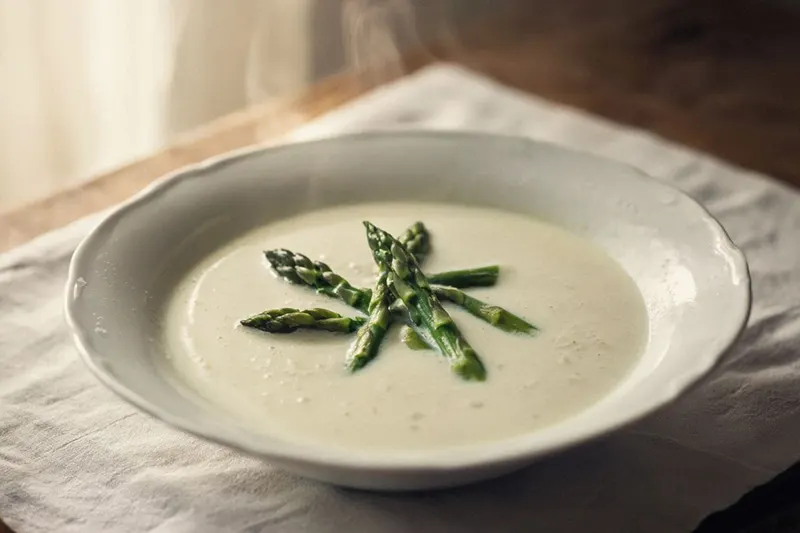
Asparagus Tip Soup
A silky, cream-enriched asparagus soup built on a white roux and finished with tempered egg yolks — an elegant first course from early 20th century cooking.
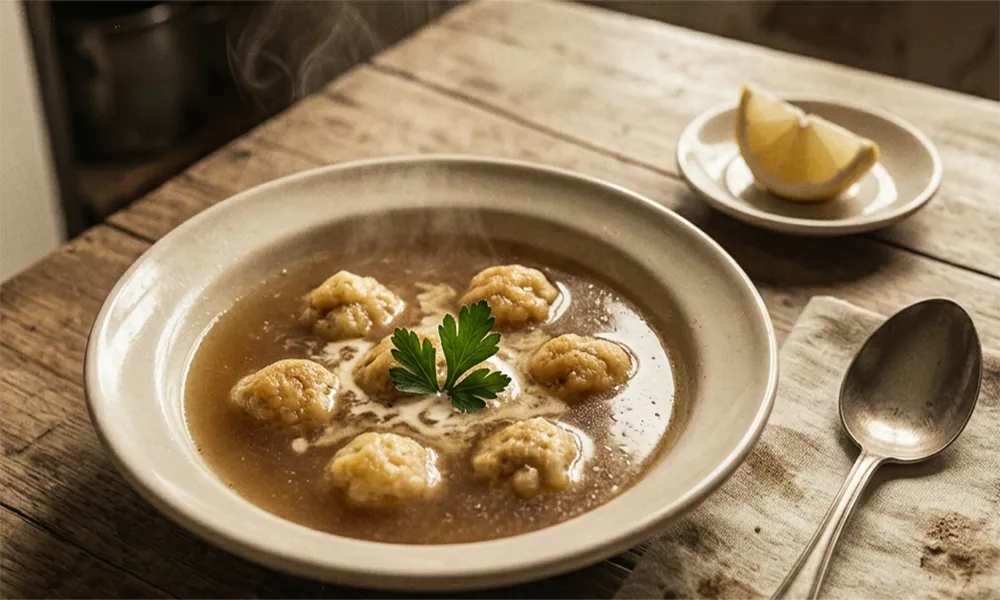
Beef Broth with Stuffed Dough Dumplings
Rich beef bone broth simmered with golden pan-fried dumplings stuffed with seasoned ground beef, finished with a light roux and fresh lemon juice.

Bean Soup Cooked with Beef
White beans and beef shoulder slow-simmered with a bouquet garni, finished in the oven with a paprika-spiced pan roux. A deeply satisfying one-pot meal.