Candied Orange Peel
Thick strips of orange peel are softened, soaked overnight in syrup, then rolled in coarse sugar for a chewy, translucent candied treat.
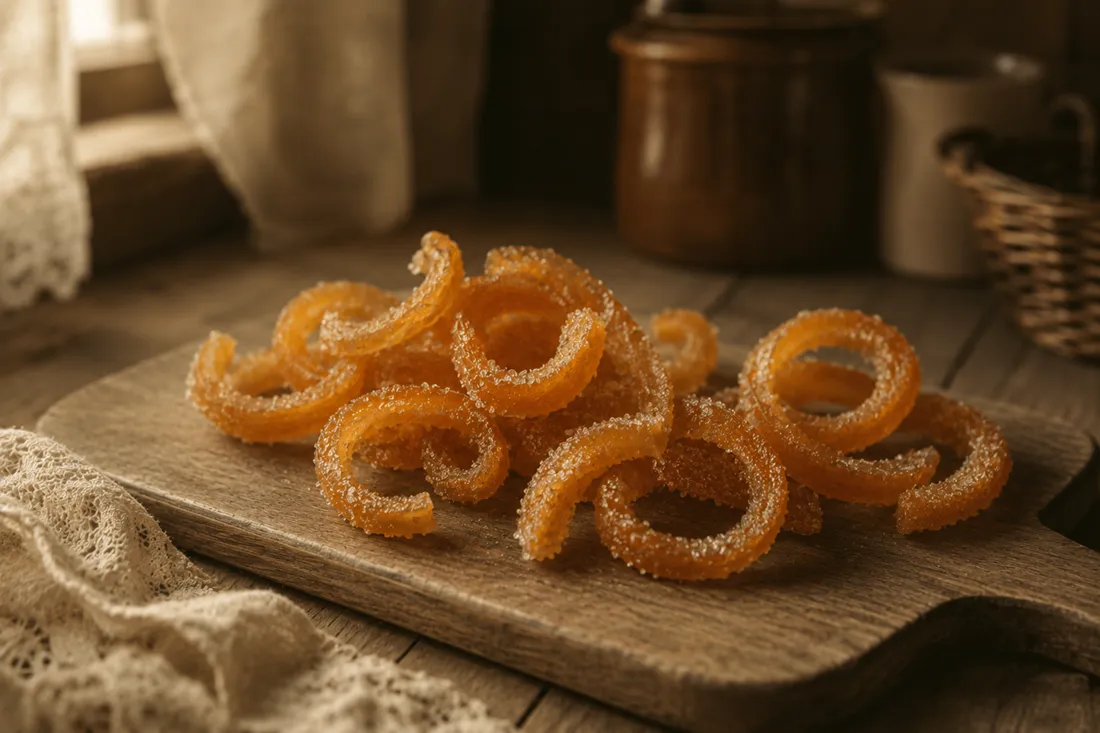
Quick Summary
Candied orange peel made by softening thick peel through blanching, soaking it overnight in sugar syrup, then coating it in coarse sugar. Active time is under an hour, spread across two days, using a modern blanching method in place of the historical potash soak.
Historical recipe
Modernised adaptation of an early 20th‑century source. Not independently kitchen-tested by Attic Recipes. Quantities, temperatures, and food safety guidance have been updated for a contemporary kitchen — results may vary and errors may exist. Nutritional values, where provided, are estimates only and have not been laboratory tested. Always follow current food safety guidelines for your region. If you have a health condition, allergy, or dietary requirement, consult a qualified professional before preparing this recipe.
Use of this recipe is entirely at your own risk and subject to our Terms of Service and Privacy Policy. Attic Recipes accepts no liability for any adverse outcome.
Additional notes
-
Warning
The syrup reaches boiling temperature and can cause serious burns if it splashes or drips on skin. Use a long-handled spoon and keep children away from the stove while the syrup is cooking.
- 1
Remove the peel from the oranges in large pieces, keeping the white pith attached. Reserve the flesh for another use.
Tip A thicker piece of peel holds together better through blanching and cutting. - 2
Blanch the peel three times to soften it and remove bitterness: place it in a pot, cover with fresh water, bring to a boil, and boil for 5 minutes. Drain, then repeat twice more with fresh water each time.
Tip This replaces the potash soak used historically — see the note below on why. - 3
Once the peel is soft, let it cool slightly, then cut it into rounds about 2cm across using a small round cutter.
- 4
Place the cut rounds briefly in cold water, then drain them on a sieve.
- 5
Combine the 400g sugar and 300ml water for the syrup in a saucepan. Bring to a boil and cook until it thickens slightly into a light syrup, about 10 minutes.
Tip Watch for a syrup that coats the back of a spoon — no need for a candy thermometer here, this stays well short of the hard crack stage. - 6
Add the peel rounds to the hot syrup, then remove the pan from the heat. Let the peel cool and soak in the syrup, ideally overnight.
- 7
The next day, bring the peel and syrup back to a boil and boil for exactly 5 minutes, timed from when it starts boiling.
- 8
Lift each round out of the syrup with a fork, letting the excess drip off briefly.
- 9
Roll each round in the coarse sugar or crushed rock candy to coat, then place it on a wire rack or parchment-lined tray to dry, away from direct heat, for 2-3 hours or until set.
- 10
Store the candied peel in an airtight container in a cool, dry place, alongside any other candied fruit.
Nutrition Information per 1 piece (about 9g)
Nutritional values are approximate estimates and may vary based on specific ingredients used, preparation methods, and portion sizes.
Serving Suggestions
Serve alongside coffee or dessert wine, chopped into fruitcake or holiday bread, or dipped halfway in melted dark chocolate.
About This Recipe
Candied orange peel is one of the simplest ways to turn what’s usually kitchen scrap into something worth keeping. The technique itself hasn’t changed much over the decades — soften the peel, sweeten it slowly, coat it — but the softening step has, since the caustic agent once used for this has no real place in a modern home kitchen when a plain blanch does the same job.
The overnight soak is what does the real work here, letting the sugar slowly replace the water in the peel rather than rushing it with high heat.
Why It Works
Blanching thick-skinned peel three times in fresh water each round pulls out the bitter compounds concentrated in the pith and outer skin, the same result the historical potash soak was aiming for, just without needing to measure a caustic ingredient by hand. The overnight soak in syrup lets sugar diffuse into the peel gradually, which is what gives candied peel its chewy, slightly translucent texture rather than a merely sugar-coated one.
Modern Kitchen Tips
If you don’t have a small round cutter, a clean apple corer or the wide end of a piping tip works just as well for cutting rounds. Save the leftover syrup — strained, it makes a good citrus simple syrup for cocktails or iced tea.
A classic of early 20th century home cooking, preserved and adapted for the modern kitchen.
The Story Behind This Recipe
Historical Context
Early 20th century recipes for candied orange peel typically softened the peel with a potash solution before cutting it into small rounds, sized with a cutter about the width of a thimble. The rounds were soaked in syrup overnight, boiled briefly a second time, then rolled in crushed candy sugar and dried near the warmth of the stove.
Modern Kitchen Adaptation
The peel is softened here with a triple blanch instead of the historical potash soak. Potash — a caustic alkaline agent — needed to be carefully measured and isn't a standard home kitchen ingredient today; repeated blanching softens the peel and removes bitterness just as effectively, without introducing an unfamiliar chemical. This is a good example of a technique worth updating rather than following as written: if a safer modern method achieves the same result, it's worth using it, even if the older method was reliable in its own time. The syrup quantity has also been corrected — the original gave a sugar ratio too small to actually cover and soak the peel overnight — and crushed rock candy or coarse sugar stands in for the period candy sugar, which isn't commonly sold today.
This recipe is an independent modern adaptation developed from historical sources in the public domain. It is provided for informational and educational purposes only and does not constitute professional dietary, nutritional, or medical advice. Food preparation involves inherent risks. The reader assumes full responsibility for safe food handling, ingredient sourcing, and adherence to current local food safety guidelines. The site operator accepts no liability for outcomes resulting from the preparation or consumption of this recipe.
One recipe.
Every week.
You Might Also Like
More recipes from the same category
Apricot Fruit Paste
Sieved ripe apricots cooked with equal weight sugar and lemon juice, poured into molds and air-dried — from early 20th century Central European kitchens.
Whipped Apricot or Peach Preserve (No-Cook)
A silky, pale fruit spread made by whipping raw apricot or peach puree with sugar - no cooking required.
Blackberry and Cornelian Cherry Marmalade
Rich preserve combining tart cornelian cherries with sweet blackberries, cooked to thick consistency with a traditional two-fruit method.