Blackberry and Cornelian Cherry Marmalade
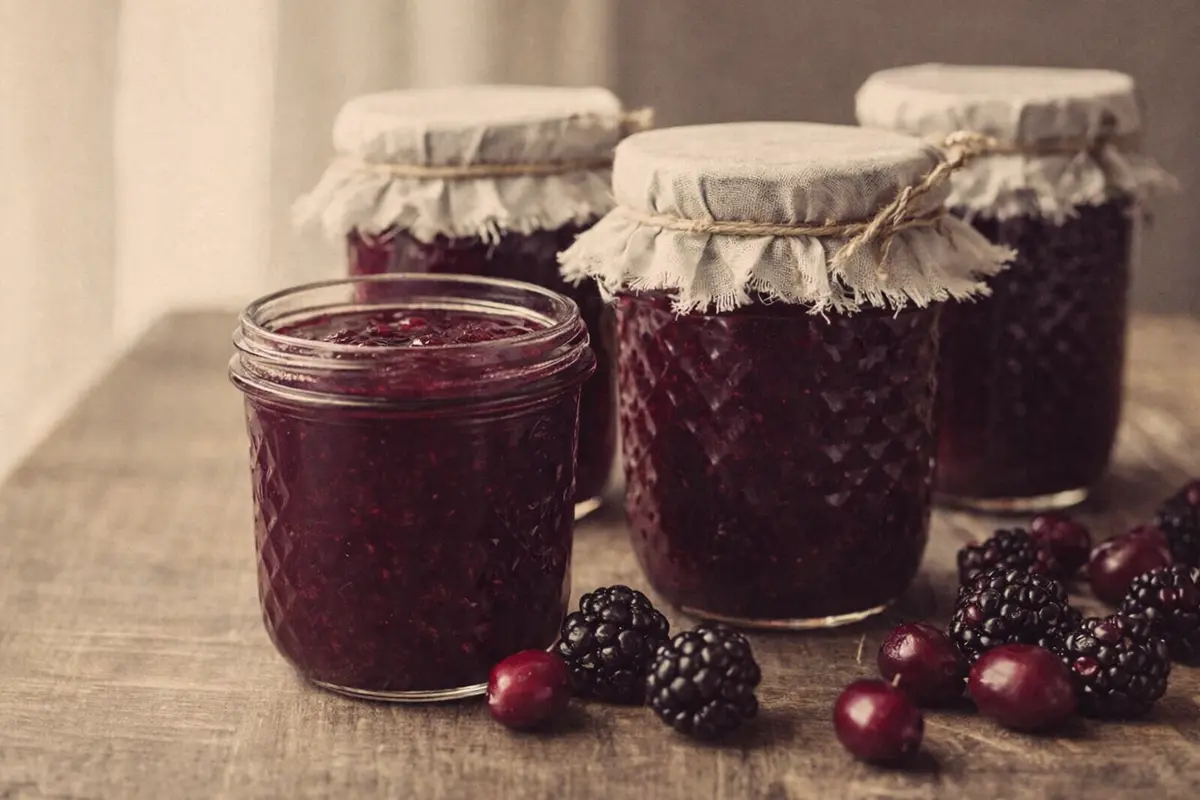
Rich preserve combining tart cornelian cherries with sweet blackberries, cooked to thick consistency with a traditional two-fruit method.
Quick Summary
Blackberry and Cornelian Cherry Marmalade is a Central European preserve of tart cornelian cherries and sweet blackberries cooked with sugar. It takes about 105 minutes, with a smooth texture and balanced tart and sweet flavor from sieved fruit.
Historical recipe
Modernised adaptation of an early 20th‑century source. Not independently kitchen-tested by Attic Recipes. Quantities, temperatures, and food safety guidance have been updated for a contemporary kitchen — results may vary and errors may exist. Nutritional values, where provided, are estimates only and have not been laboratory tested. Always follow current food safety guidelines for your region. If you have a health condition, allergy, or dietary requirement, consult a qualified professional before preparing this recipe.
Use of this recipe is entirely at your own risk and subject to our Terms of Service and Privacy Policy. Attic Recipes accepts no liability for any adverse outcome.
Safety note
The original 65°C oven-crust method does not reach temperatures required for safe preservation and carries a real risk of mold and botulism in sealed jars. Do not use this method for long-term storage.
Process sealed jars in a boiling water bath (100°C) for 10 minutes. This is the only method that guarantees shelf-stable safety. See Step 13.
Additional notes
-
Warning
Jars sealed without water bath processing (cloth and parchment method only) are not safe for pantry storage. Refrigerate immediately and consume within 4 weeks.
Use proper canning lids and water bath processing for pantry storage of 12+ months.
-
Caution
Very high sugar content — approximately 8g per tablespoon. Those managing blood sugar levels or diabetes should consume in small amounts only.
-
Note
This recipe contains no major allergens. Naturally vegan, gluten-free, and dairy-free.
- 1
Wash the cornelian cherries thoroughly. Place in a large saucepan with 250ml of water.
- 2
Cook the cornelian cherries over medium heat until completely soft and the skins begin to break down — approximately 20–25 minutes. Stir occasionally to prevent sticking.
- 3
While still hot, pass the cooked cornelian cherries through a fine sieve or food mill to produce a smooth purée. Press firmly to extract maximum pulp. Discard the pits and remaining skins. Set aside.
Tip Cornelian cherries have large pits — work in small batches through the sieve for easier extraction. - 4
Pass the fresh blackberries through the same sieve to produce a smooth purée, removing all seeds. Blackberries do not need to be cooked first.
- 5
Combine the cornelian cherry purée and blackberry purée in a large bowl. Mix thoroughly.
- 6
Weigh the combined fruit purée carefully. You should have approximately 3kg of total purée after removing pits and seeds.
- 7
Calculate the sugar: use 3/4 kg of sugar for every 1kg of fruit purée. Measure and set aside.
Tip This sugar ratio is traditional and acts as a preservative. Reducing it will produce a less sweet marmalade but shortens the shelf life significantly. - 8
Transfer the fruit purée to a very large, heavy-bottomed saucepan or preserving pot. Add all the calculated sugar. Place over medium-high heat, stirring constantly until the sugar dissolves completely and the mixture comes to a boil.
- 9
Once boiling, reduce heat to medium and continue cooking, stirring constantly to prevent scorching. The mixture will foam initially, then gradually thicken. Cook for 35–45 minutes — do not leave unattended.
Tip High sugar concentration burns very quickly if stirring stops. Use a long-handled wooden spoon to protect against steam burns. - 10
Test for doneness: place a small spoonful on a cold plate. If it wrinkles when pushed with your finger and holds its shape without running, it is ready. Alternatively, use a jam thermometer — the setting point is 105°C (221°F).
- 11
Prepare jars: wash thoroughly with hot soapy water, rinse well, and sterilize by placing in a 120°C oven for 15 minutes. Keep warm until filling.
- 12
Pour the hot marmalade into warm sterilized jars, leaving 1cm headspace. Wipe the rims clean with a damp cloth. Seal immediately with sterilized lids.
- 13
Process sealed jars in a boiling water bath (100°C) for 10 minutes for shelf-stable storage. Remove and allow to cool completely at room temperature — 12+ hours. Check that lids have sealed (they should not flex when pressed). Store in a cool, dark place.
Tip The original recipe used a 65°C oven-crust method instead of a water bath. This method does not reach safe preservation temperatures. The water bath method is used here — it takes 10 minutes and eliminates the risk of mold and botulism entirely.
Nutrition Information per 1 tbsp (approx. 20g)
Nutritional values are approximate estimates and may vary based on specific ingredients used, preparation methods, and portion sizes.
Pro Tips
- Stir constantly during cooking — high sugar content burns easily
- Use a long wooden spoon to avoid steam burns from boiling sugar
- Warm jars prevent thermal shock when adding hot marmalade
- Store opened jars in the refrigerator and consume within 1 month
Serving Suggestions
Spread on fresh bread, toast, or pastry. Use as a filling for crepes or tarts. Pairs well with soft white cheese or plain yogurt. Swirl into oatmeal or porridge. Serve alongside roasted duck or game meats.
About This Recipe
Cornelian cherries are one of those ingredients that disappeared from most modern kitchens but were once gathered from every hedgerow. Their tartness is sharper than any commercial fruit — closer to tamarind than cherry — and that intensity is exactly what makes this marmalade work. The blackberries bring sweetness and color; the cornelian cherries bring structure and a flavor that no amount of added pectin can replicate.
The technique here is straightforward: two puréed fruits, a generous sugar ratio, and patience at the stove. The 35–45 minute cooking time is not negotiable — this is what drives off enough water to hit the setting point and create a preserve that will last.
On the Sealing Method
The original recipe sealed jars with cloth and parchment after a brief stay in a low oven. This was standard practice in the 1930s and worked well enough in cool pantries with fast consumption. It is not safe for modern long-term storage — the temperature does not reach what is needed to prevent mold or botulism.
The water bath method in Step 13 takes 10 minutes and eliminates the risk entirely. The flavor and technique of the marmalade itself are unchanged. Only the sealing step needs updating.
Finding Cornelian Cherries
Cornelian cherries (Cornus mas) fruit in late summer — August to September depending on climate. They are increasingly available at farmers markets, Eastern European grocery stores, and specialty fruit suppliers. Fully ripe fruit is dark red, almost burgundy, and gives slightly when pressed. Under-ripe fruit is hard and extremely sour with little of the complex flavor that makes this recipe worth making.
If you cannot find them, sour cherries give the closest result. Cranberries work but produce a sharper, more one-dimensional flavor profile.
A classic of early 20th century home cooking, preserved and adapted for the modern kitchen.
The Story Behind This Recipe
Historical Context
This preserve reflects the resourceful use of wild and foraged fruits common across Central European households in the early 20th century. Cornelian cherries were gathered from hedgerows and forests and valued for their high pectin content and sharp flavor. Combined with blackberries, they produce a preserve with complex taste and deep color that no commercially grown fruit can replicate. The cloth-and-parchment sealing method was standard practice before modern canning equipment became widely available — a sign of how recently home preservation depended entirely on careful technique rather than equipment.
Modern Kitchen Adaptation
If cornelian cherries are unavailable, sour cherries give the closest result. Cranberries work but produce a different, more one-dimensional flavor profile. The sugar ratio can be reduced slightly for modern tastes — but below 2/3 kg sugar per 1 kg fruit, shelf life drops significantly and refrigeration becomes necessary. For long-term pantry storage, the boiling water bath method described in Step 13 is essential.
This recipe is an independent modern adaptation developed from historical sources in the public domain. It is provided for informational and educational purposes only and does not constitute professional dietary, nutritional, or medical advice. Food preparation involves inherent risks. The reader assumes full responsibility for safe food handling, ingredient sourcing, and adherence to current local food safety guidelines. The site operator accepts no liability for outcomes resulting from the preparation or consumption of this recipe.
One recipe.
Every week.
You Might Also Like
More recipes from the same category
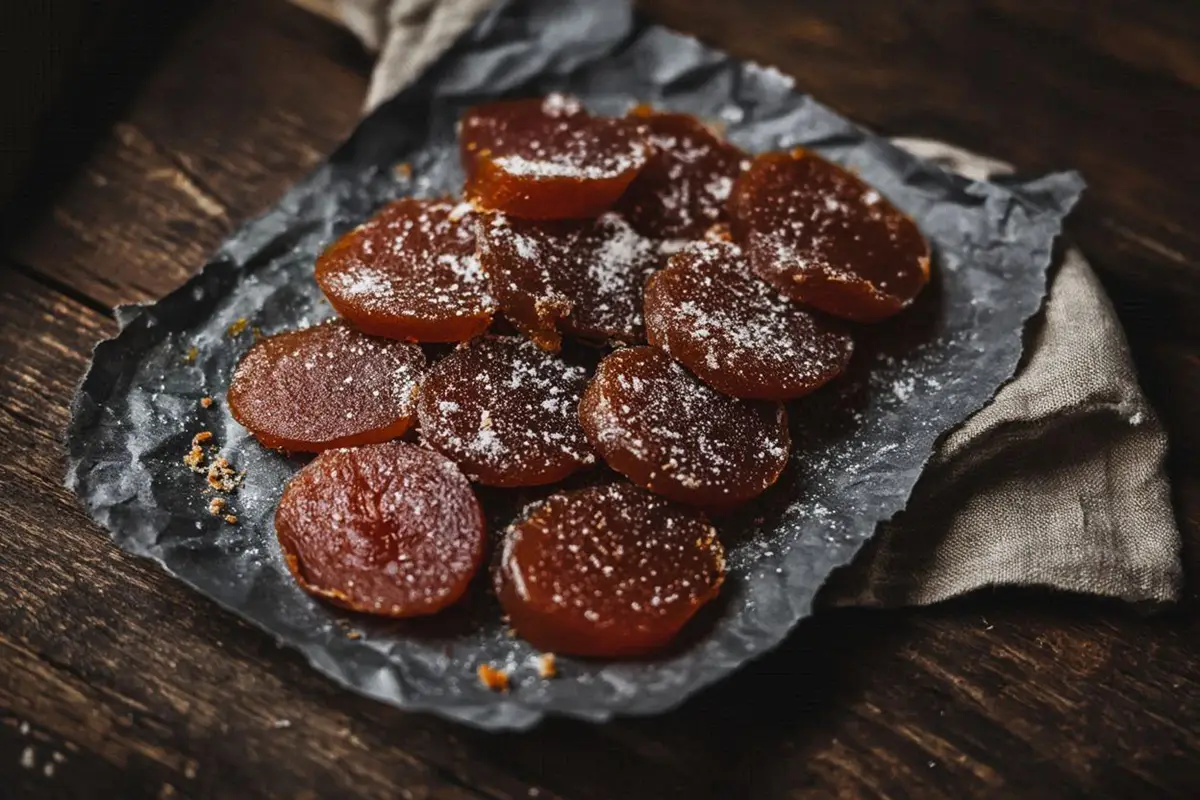
Apricot Fruit Paste
Sieved ripe apricots cooked with equal weight sugar and lemon juice, poured into molds and air-dried — from early 20th century Central European kitchens.
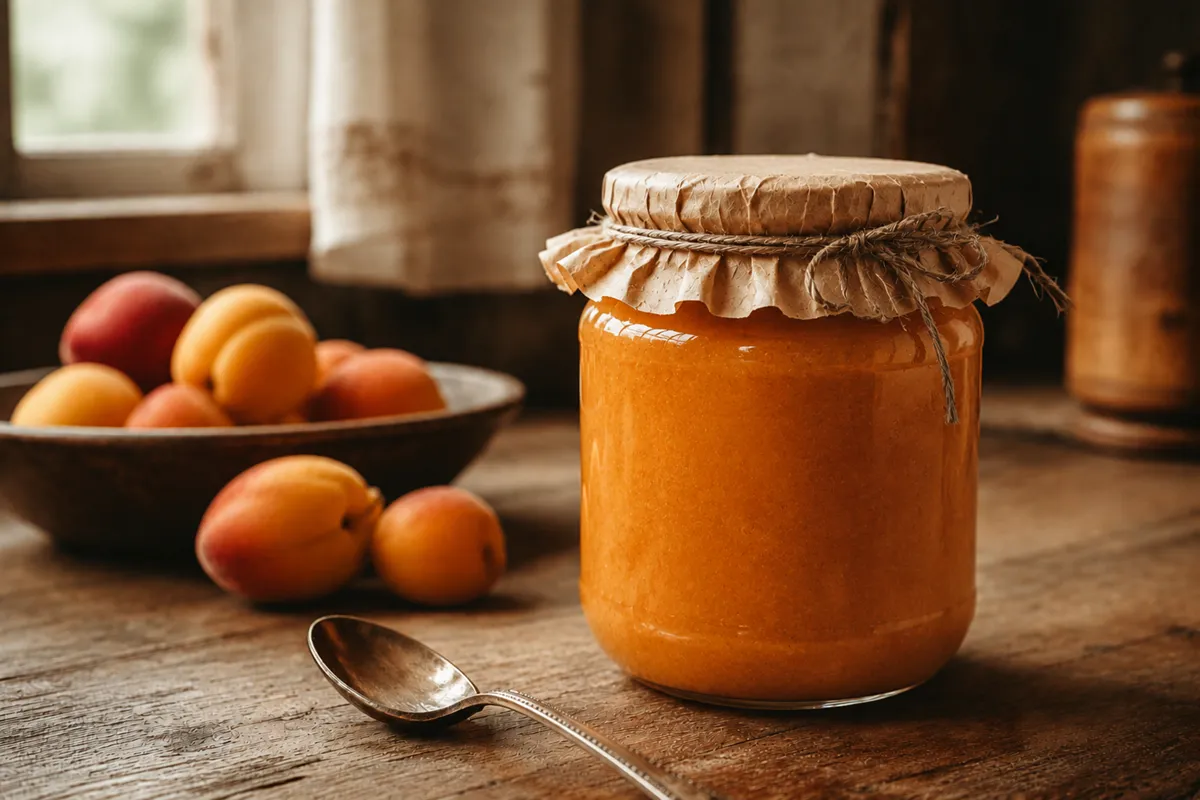
Whipped Apricot or Peach Preserve (No-Cook)
A silky, pale fruit spread made by whipping raw apricot or peach puree with sugar - no cooking required.
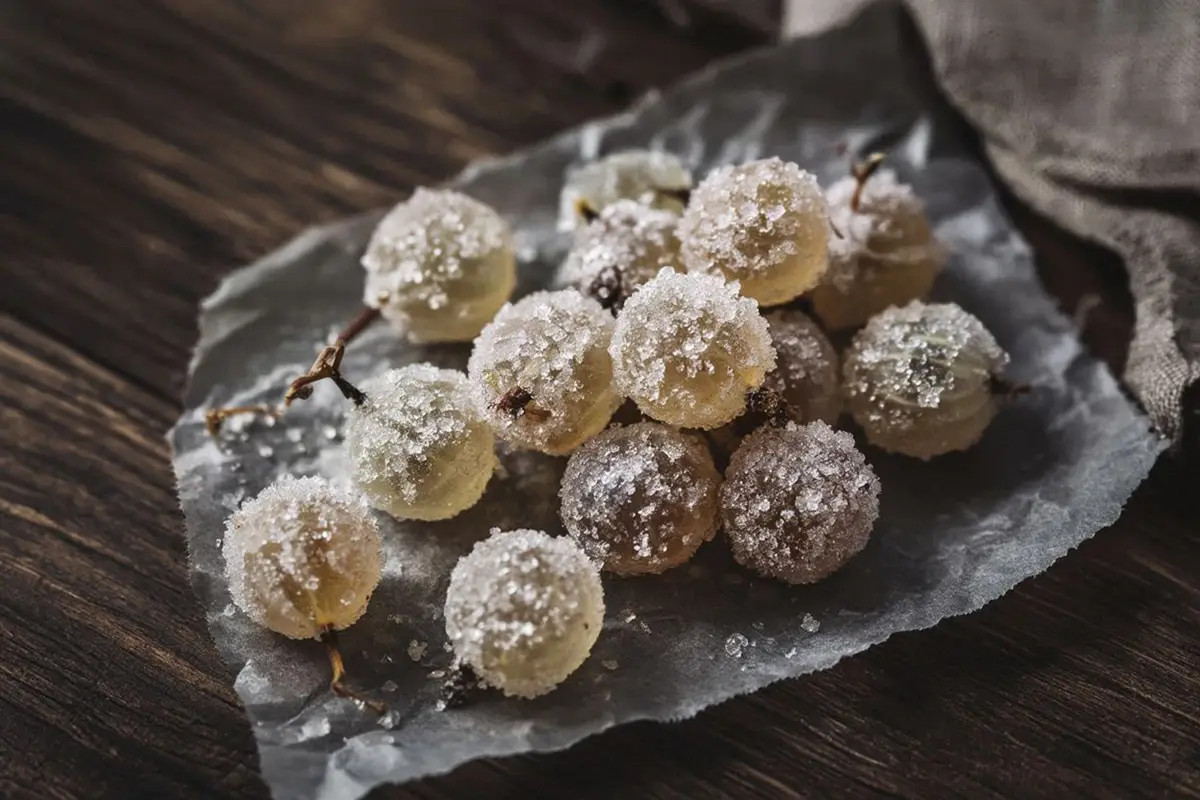
Candied Gooseberries
Gooseberries cooked twice in heavy sugar syrup, sun-dried, and rolled in powdered sugar — a patient old confectionery technique for winter storage.