Crayfish Bisque Soup
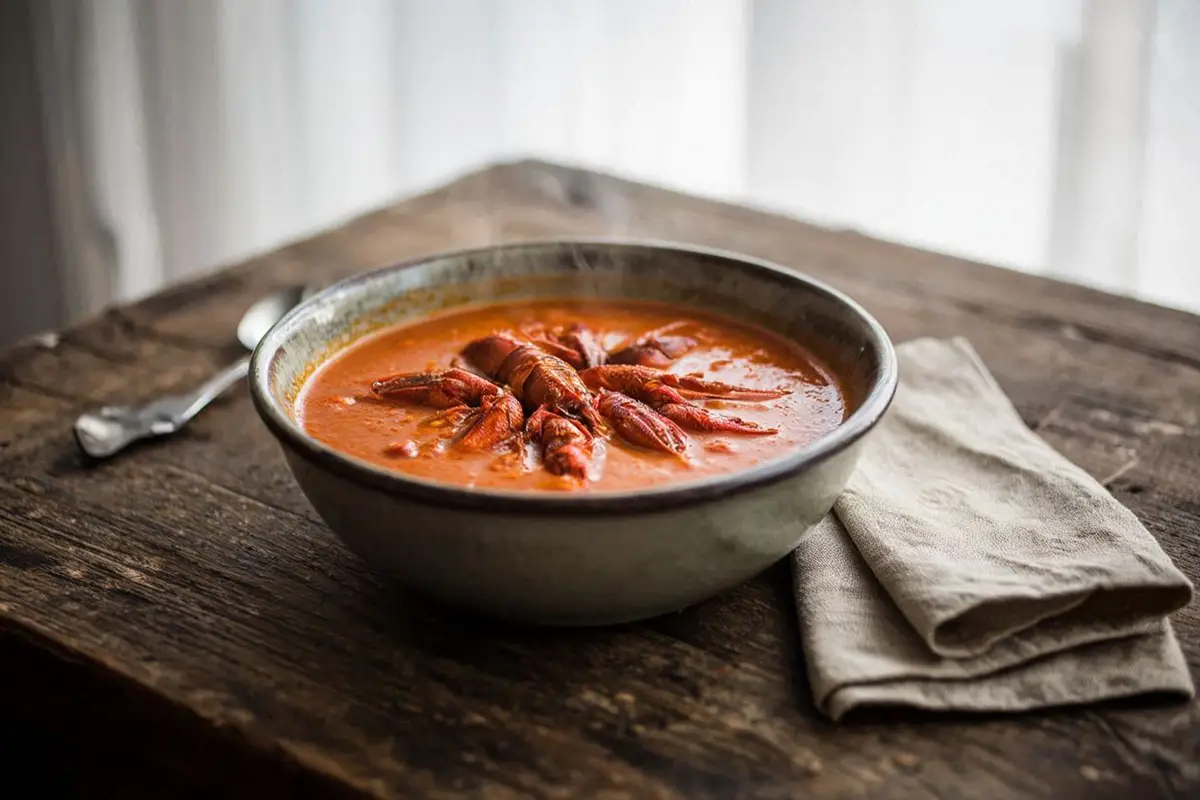
A rich river crayfish soup built on white wine broth and deep red crayfish butter — an elegant bisque for ten.
Quick Summary
A rich river crayfish soup built on white wine broth and deep red crayfish butter — an elegant bisque for ten.
Historical recipe
Modernised adaptation of an early 20th‑century source. Not independently kitchen-tested by Attic Recipes. Quantities, temperatures, and food safety guidance have been updated for a contemporary kitchen — results may vary and errors may exist. Nutritional values, where provided, are estimates only and have not been laboratory tested. Always follow current food safety guidelines for your region. If you have a health condition, allergy, or dietary requirement, consult a qualified professional before preparing this recipe.
Use of this recipe is entirely at your own risk and subject to our Terms of Service and Privacy Policy. Attic Recipes accepts no liability for any adverse outcome.
- Crustaceans
- Dairy
- Gluten
- Sulphites
Safety note
This recipe contains crayfish — a crustacean shellfish and one of the 14 major allergens under EU Regulation 1169/2011 and a FALCPA-listed allergen. Crustacean allergy can cause severe reactions including anaphylaxis within minutes of exposure. Always disclose the shellfish content when serving this dish to others. There is no in-recipe substitution that eliminates this allergen.
Do not serve to anyone with a known or suspected crustacean or shellfish allergy.
Additional notes
-
Warning
This recipe uses live crayfish. Never use crayfish that have died before cooking — dead shellfish can harbor Vibrio and other harmful bacteria that develop rapidly at room temperature. Cook immediately after purchase.
Purchase live crayfish from a reputable fishmonger on the day of cooking. Keep refrigerated and damp until use.
-
Note
Contains alcohol (250ml dry white wine in the broth, plus 1 tablespoon of rum or brandy). A small quantity distributed across 10 servings — residual alcohol per portion is minimal after cooking. Nevertheless, not suitable for those who strictly avoid alcohol.
Replace the white wine with a high-quality shellfish or vegetable stock and omit the rum for a non-alcoholic version.
-
Caution
The final soup must be strained thoroughly through cheesecloth to remove all shell fragments, which present a choking and injury hazard.
Strain at least twice and inspect the soup visually before serving.
-
Note
Live crayfish should be cooked as quickly as possible after purchase. Placing them directly into vigorously boiling liquid is the recommended method for rapid, humane dispatch. Do not leave live shellfish at room temperature.
- 1
Prep the crayfish: Wash the live crayfish in 2–3 changes of cold water, scrubbing each one thoroughly with a stiff brush. To clean the intestines, firmly grip the middle fin of the tail, twist gently, and pull it straight out — the intestinal tract will follow. Place the crayfish directly into the boiling liquid in the next step — do not leave them at room temperature.
Tip Keep the crayfish cold and damp until the moment they go into the pot. Purchase on the day of cooking from a reputable fishmonger. - 2
Build the broth: In a large, heavy pot, heat a generous splash of olive oil over medium heat. Add the chopped onion, parsley, and carrot greens. Fry until softened and fragrant, about 5 minutes. Pour in 2 liters of water and the white wine. Season with salt and bring to a rolling boil.
- 3
Cook the crayfish: Add the live crayfish to the boiling broth. Cook for 20 minutes at a steady boil. The crayfish are fully cooked when shells are vivid red throughout and the tail meat is white and opaque — internal temperature of the tail meat should reach 74°C (165°F). Remove the crayfish with a slotted spoon and set aside to cool. Strain the cooking liquid through a fine sieve and reserve it.
- 4
Extract the meat: Once cool enough to handle, pull the meat from the tails and claws of all the crayfish. Set the meat aside. Reserve 8 of the empty carcasses (shells) for the crayfish butter.
- 5
Make the crayfish butter: Pound the 8 reserved carcasses in a mortar until reduced to a coarse pulp. In a bowl, beat the 125g of butter until soft, then work in the pounded shells until the butter turns a deep, vivid red-orange. This is the flavor base of the bisque.
Tip The more thoroughly you pound the shells, the more color and flavor you will extract into the butter. - 6
Make the soup base (roux): In a clean pot, melt the red crayfish butter over medium heat. Add the tablespoon of flour and stir continuously for 1–2 minutes to cook out the raw flour taste. Gradually ladle in the reserved cooking liquid, whisking steadily to prevent lumps.
- 7
Finish the soup: Bring the soup to a gentle boil and let it thicken slightly. Strain through a double layer of cheesecloth into a clean pot to remove all shell fragments. Return to a low simmer, stir in the tablespoon of rum, and add the reserved crayfish tail and claw meat.
- 8
Serve: Ladle the hot bisque into warmed bowls and serve immediately.
Nutrition Information per 1 portion (approx. 300ml)
Nutritional values are approximate estimates and may vary based on specific ingredients used, preparation methods, and portion sizes.
Serving Suggestions
Serve in deep, warmed bowls with crusty white bread or small toasted croutons. A small swirl of cream and a few reserved whole tails make an elegant garnish. Pairs well with a chilled dry Riesling or white Burgundy.
About This Recipe
A deeply flavored, russet-colored bisque built on a foundation of crayfish butter — the rendered essence of pounded shells worked into soft butter until it blushes red. This is serious soup: rich, oceanic, and complex, with a dry white wine broth that gives it a refined depth that a modern stock-based bisque rarely achieves.
Why It Works
The technique here mirrors classical French bisque construction. By pounding the shells and incorporating them into butter, then using that butter as the base for a roux, you extract the fat-soluble flavor compounds and carotenoid pigments — the source of that vivid orange-red color — that would otherwise be discarded. The final cheesecloth strain removes all texture from the shells, leaving only their flavor behind.
Modern Kitchen Notes
- The mortar: Take your time with the pounding — five minutes of real effort on the shells makes a perceptible difference in both color and flavor.
- The wine: 250ml of dry white wine goes a long way in a bisque broth — use something you would drink. A thin or acidic wine will come through in the finished soup.
- The rum: It sounds unusual, but a splash of rum or brandy at the end is traditional in bisque-style preparations and adds a warm finish that rounds out the shellfish flavor. Don’t skip it.
A classic of early 20th century home cooking, preserved and adapted for the modern kitchen.
The Story Behind This Recipe
Historical Context
River crayfish bisques of this style were a prestige dish across Central and Eastern European households in the late 19th and early 20th centuries, when freshwater crayfish were abundant in regional rivers. The technique of pounding shells into butter to extract their color and flavor is the same foundation used in classical French bisque cookery — evidence of the deep culinary exchange across the region.
Modern Kitchen Adaptation
Wild river crayfish can be difficult to source today; farmed signal crayfish or whole langoustines are suitable substitutes. A blender can partially substitute for the mortar when making the crayfish butter, though a mortar gives better texture and color yield.
This recipe is an independent modern adaptation developed from historical sources in the public domain. It is provided for informational and educational purposes only and does not constitute professional dietary, nutritional, or medical advice. Food preparation involves inherent risks. The reader assumes full responsibility for safe food handling, ingredient sourcing, and adherence to current local food safety guidelines. The site operator accepts no liability for outcomes resulting from the preparation or consumption of this recipe.
One recipe.
Every week.
You Might Also Like
More recipes from the same category
Asparagus Tip Soup
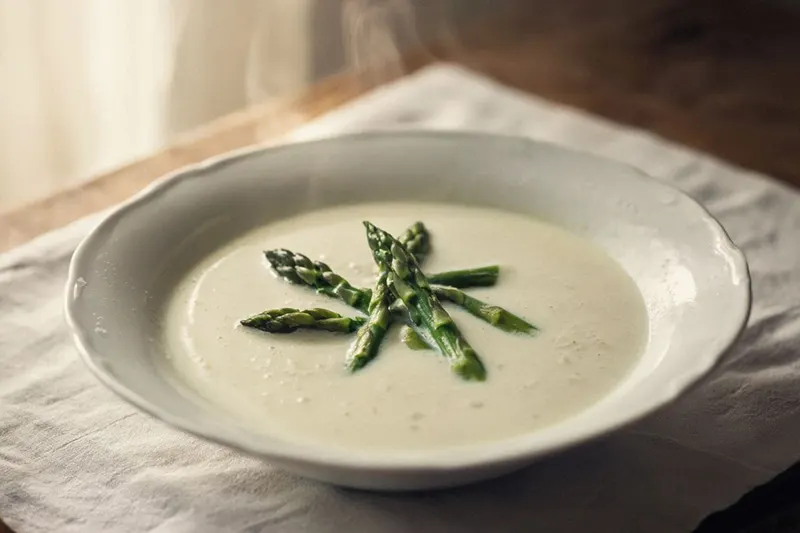
A silky, cream-enriched asparagus soup built on a white roux and finished with tempered egg yolks — an elegant first course from early 20th century cooking.
Beef Broth with Stuffed Dough Dumplings
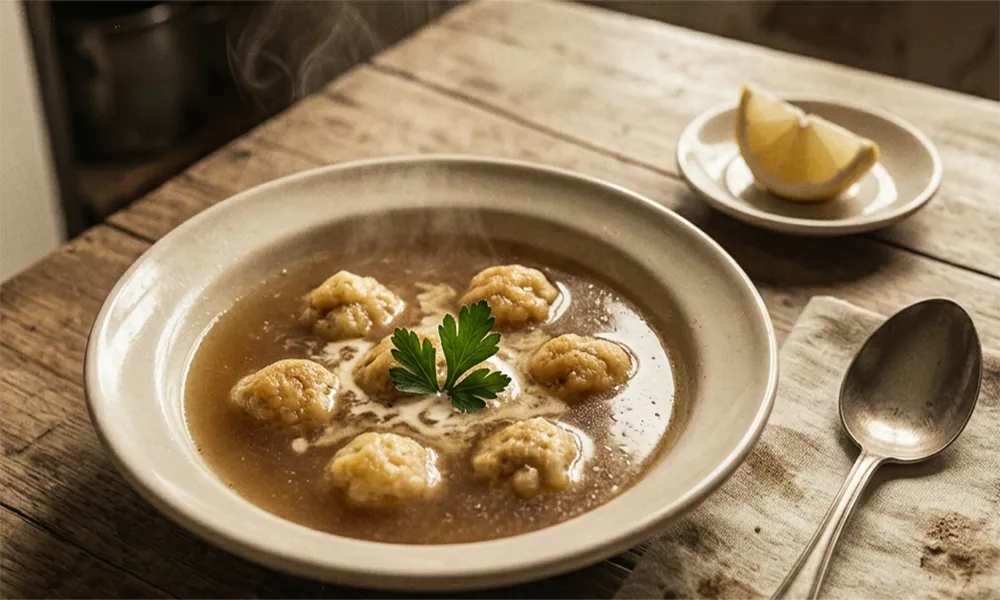
Rich beef bone broth simmered with golden pan-fried dumplings stuffed with seasoned ground beef, finished with a light roux and fresh lemon juice.
Bean Soup Cooked with Beef
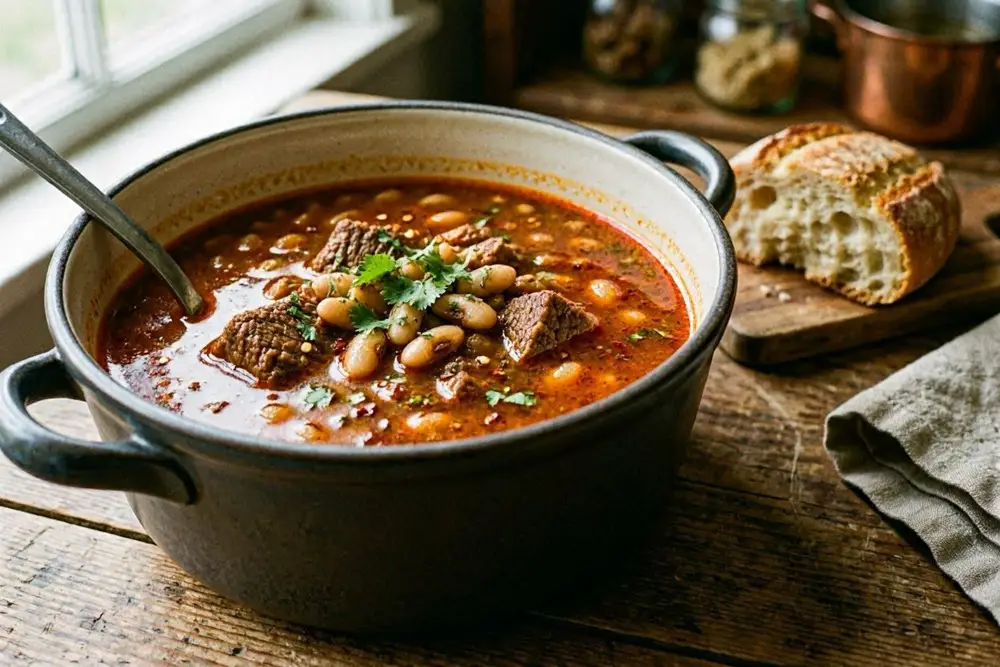
White beans and beef shoulder slow-simmered with a bouquet garni, finished in the oven with a paprika-spiced pan roux. A deeply satisfying one-pot meal.