Fried Ham Croquettes
A bread and milk panada is mixed with chopped ham, shaped into croquettes, breaded, and deep-fried until golden and crisp on the outside.

Quick Summary
A thick bread and milk panada is mixed with chopped ham, egg, salt, and pepper, then shaped into short croquettes, breaded, and deep-fried until golden. A crisp Central European appetizer, usually served with a sauce on the side.
Historical recipe
Modernised adaptation of an early 20th‑century source. Not independently kitchen-tested by Attic Recipes. Quantities, temperatures, and food safety guidance have been updated for a contemporary kitchen — results may vary and errors may exist. Nutritional values, where provided, are estimates only and have not been laboratory tested. Always follow current food safety guidelines for your region. If you have a health condition, allergy, or dietary requirement, consult a qualified professional before preparing this recipe.
Use of this recipe is entirely at your own risk and subject to our Terms of Service and Privacy Policy. Attic Recipes accepts no liability for any adverse outcome.
- Eggs
- Dairy
- Gluten
Additional notes
-
Warning
Deep frying involves hot oil that can splatter and cause burns. Keep children away from the stove, lower the croquettes into the oil carefully, and never leave the pot unattended while frying.
- 1
Soak the bread rolls in water until softened, then squeeze out the excess water thoroughly.
- 2
In a saucepan, combine the milk, butter, squeezed bread rolls, and flour. Cook over medium heat, stirring constantly, until the mixture thickens into a smooth, thick paste.
Tip Keep stirring throughout — the panada can scorch on the bottom of the pan if left unattended. - 3
Remove from the heat and let the mixture cool completely.
- 4
Once cooled, mix in one of the eggs (whisked), the chopped ham, salt, and pepper until well combined.
- 5
Shape the mixture into short, thick, sausage-shaped croquettes.
- 6
Roll each croquette first in the coating flour, then in the second beaten egg, and finally in the fine breadcrumbs, pressing gently so the coating adheres.
- 7
Heat the oil for deep frying and fry the croquettes until golden brown on all sides.
Tip Fry in batches so the oil temperature doesn't drop, and drain the croquettes on paper towels afterward. - 8
Serve warm, traditionally with a sauce or dressing on the side.
Nutrition Information per 1 croquette (approx 75g, based on 10 croquettes)
Nutritional values are approximate estimates and may vary based on specific ingredients used, preparation methods, and portion sizes.
Serving Suggestions
Serve hot with a simple sauce or dressing on the side, such as a mustard cream sauce or a light tomato sauce, as the source itself suggests.
About This Recipe
These croquettes start from an unusual base for a meat dish: bread and milk, cooked down with a little flour and butter into a thick, smooth paste. Once that paste has cooled, it’s folded together with chopped ham, egg, and seasoning until it holds together well enough to shape into short, thick croquettes. A triple coating of flour, egg, and fine breadcrumbs seals each one before it goes into hot fat, so the outside turns golden and crisp while the ham filling stays moist.
It’s a resourceful way to make a smaller amount of ham go further, turning it into a dish with real substance and a satisfying contrast of textures.
Why It Works
Cooking the soaked bread, milk, butter, and flour together into a thick paste creates what’s essentially a panada — a starchy binder that holds the ham mixture together without needing a large amount of egg or breadcrumb filler inside. Letting that base cool completely before mixing in the ham and egg keeps the mixture firm enough to shape by hand. The triple coating of flour, then egg, then fine breadcrumbs gives the frying fat something to crisp up around the outside, sealing in moisture so the inside stays soft while the crust turns golden and crunchy.
Modern Kitchen Tips
Make sure the panada is fully cooled before mixing in the ham and egg — a warm base will be too soft to hold its shape when formed into croquettes. Use very fine, dry breadcrumbs for the final coating rather than coarse ones, since a fine crumb gives a more even, crisp crust. A deep-fry or instant-read thermometer set to around 170–180°C (340–355°F) will help keep the oil at a steady frying temperature.
A classic of early 20th century home cooking, preserved and adapted for the modern kitchen.
The Story Behind This Recipe
Historical Context
Building the base of a croquette from bread soaked and cooked into a thick paste with milk and a little flour was a practical way to stretch a smaller amount of ham into a satisfying dish, while still holding its shape once shaped and fried. The triple coating — flour, then egg, then fine breadcrumbs — was the standard method of the period for a crisp, sealed crust that kept the filling moist inside.
Modern Kitchen Adaptation
The original recipe leaves several quantities unstated — the salt and pepper are only described as 'a little,' and no amount is given for the coating flour, the breadcrumbs, or the frying fat — so all of these are estimated here based on standard proportions for this style of croquette. 'Hard flour' refers to a strong, high-gluten flour; a standard bread flour is the closest modern equivalent. The source calls for hot fat for frying without specifying which; vegetable oil is used here for a neutral flavor and easier temperature control, though lard remains the more traditional choice for this style of frying.
This recipe is an independent modern adaptation developed from historical sources in the public domain. It is provided for informational and educational purposes only and does not constitute professional dietary, nutritional, or medical advice. Food preparation involves inherent risks. The reader assumes full responsibility for safe food handling, ingredient sourcing, and adherence to current local food safety guidelines. The site operator accepts no liability for outcomes resulting from the preparation or consumption of this recipe.
One recipe.
Every week.
You Might Also Like
More recipes you'll enjoy
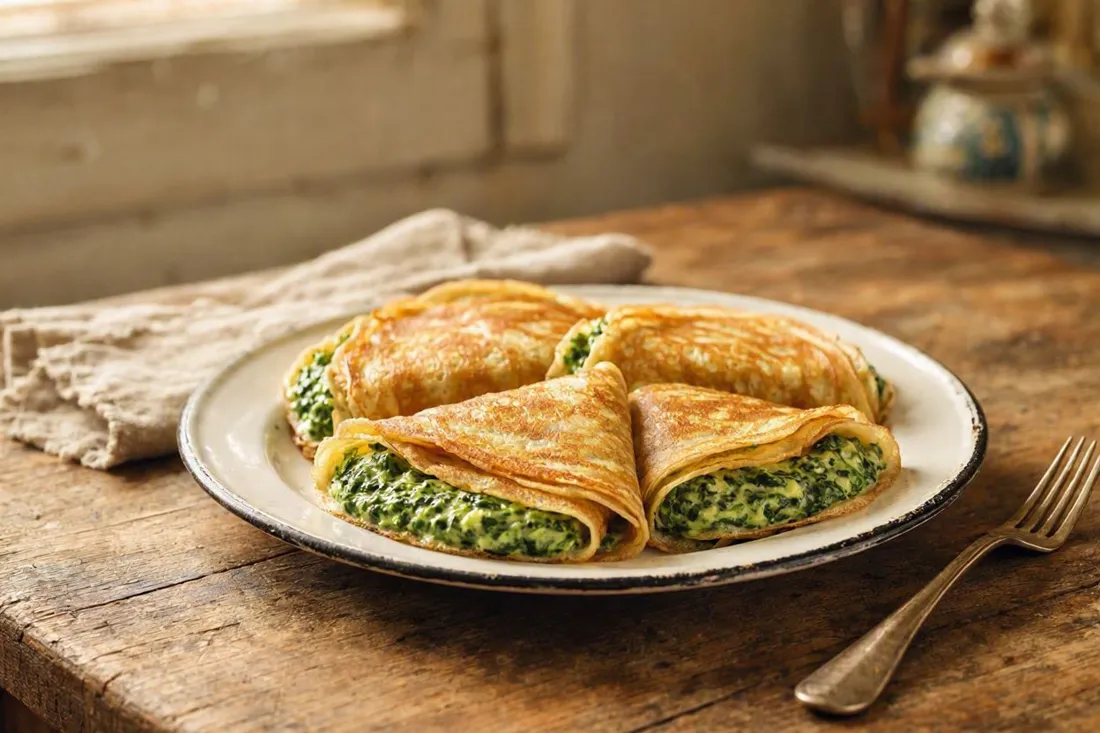
Cheese Crêpes with Creamy Spinach Filling
Cheese-enriched egg crepes are pan-fried and filled with a creamy spinach and onion filling finished with sour cream — a savory Central European dish.
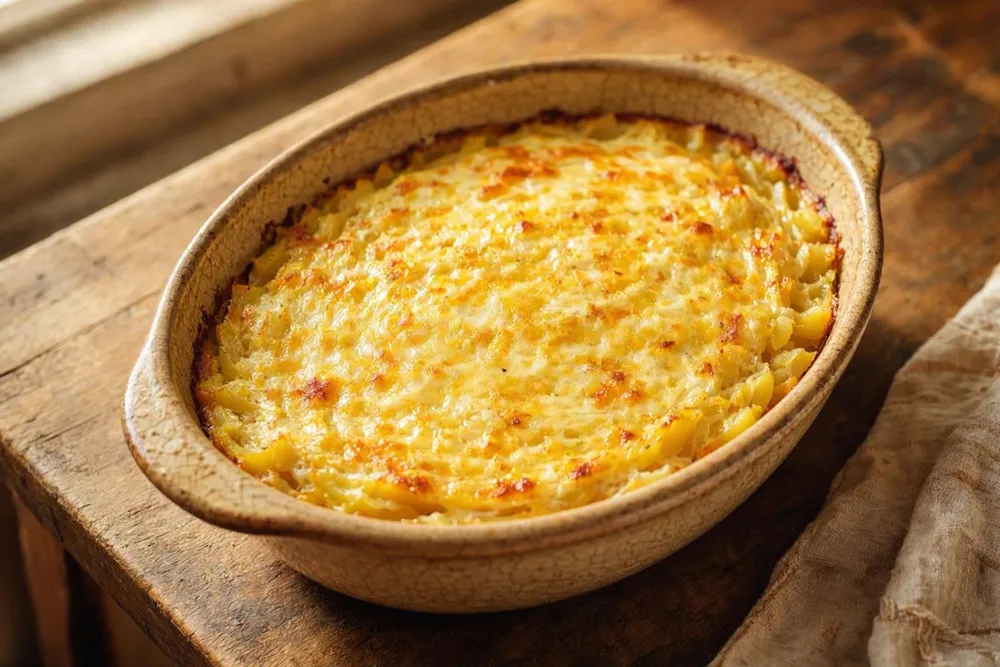
Baked Potato and Cheese Casserole
Sliced potatoes baked with crumbled cheese and butter, finished with a whisked egg and sour milk topping until set — a comforting vegetarian bake.
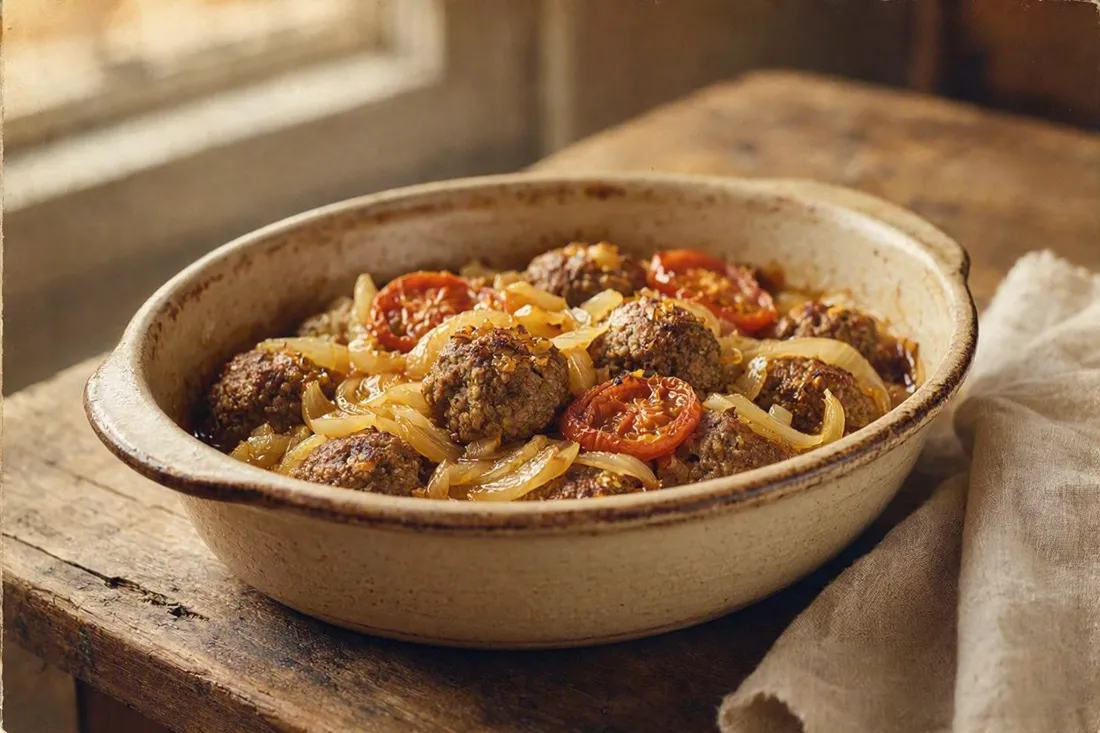
Baked Meatballs on Fried Onion with Tomatoes
Beef and pork meatballs baked over softened onion and sliced tomatoes in a light braising liquid — a comforting one-dish oven bake.