Kletzenbrot with Quince Cheese
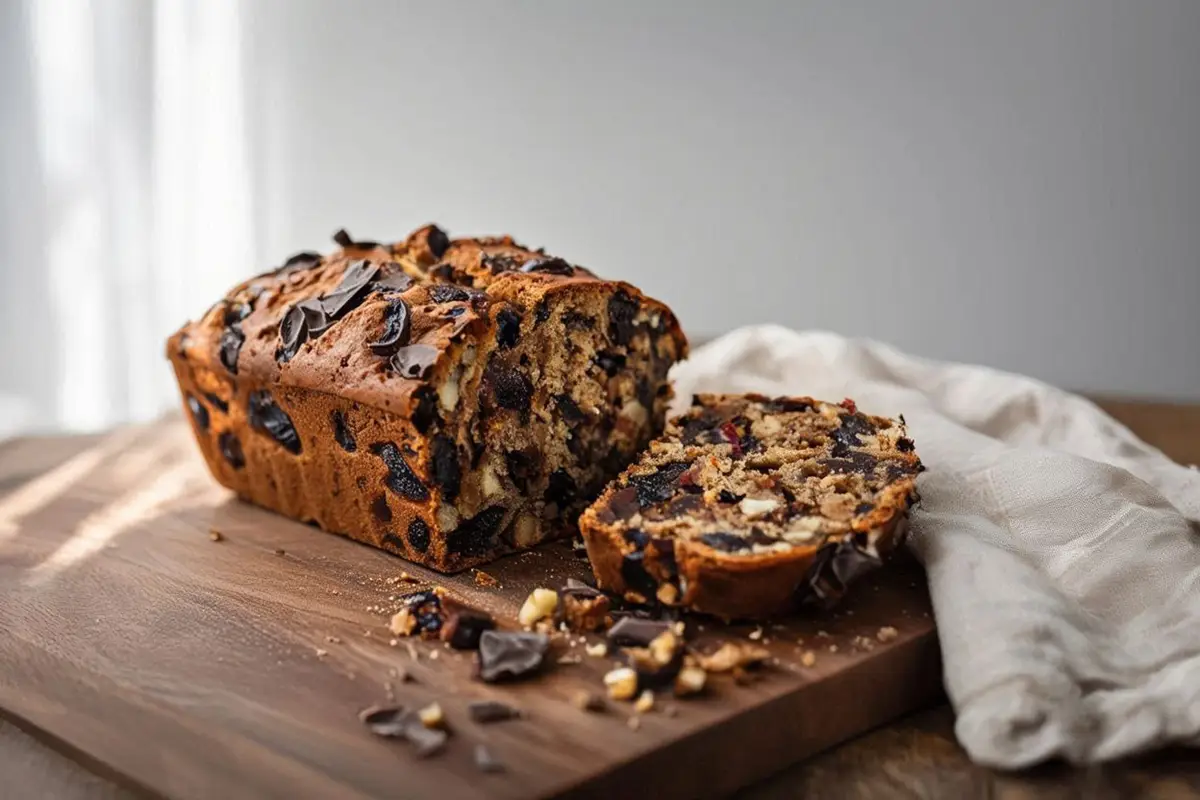
A richly fruited Central European holiday bread packed with prunes, apricots, dates, dark chocolate, nuts, and homemade quince paste.
Quick Summary
A richly fruited Central European holiday bread packed with prunes, apricots, dates, dark chocolate, nuts, and homemade quince paste.
Historical recipe
Modernised adaptation of an early 20th‑century source. Not independently kitchen-tested by Attic Recipes. Quantities, temperatures, and food safety guidance have been updated for a contemporary kitchen — results may vary and errors may exist. Nutritional values, where provided, are estimates only and have not been laboratory tested. Always follow current food safety guidelines for your region. If you have a health condition, allergy, or dietary requirement, consult a qualified professional before preparing this recipe.
Use of this recipe is entirely at your own risk and subject to our Terms of Service and Privacy Policy. Attic Recipes accepts no liability for any adverse outcome.
- Dairy
- Eggs
- Gluten
- Tree Nuts
- Sulphites
Safety note
Use sweet almonds only. Bitter almonds contain amygdalin, which the body converts to hydrogen cyanide and can cause serious poisoning even in small quantities. Bitter almonds may appear in specialty or ethnic food markets. If you are unsure whether almonds are sweet or bitter, do not use them.
Use only commercially sold sweet almonds from a supermarket or reputable supplier. When in doubt, substitute with an equal weight of extra walnuts or hazelnuts.
Additional notes
-
Warning
This recipe contains egg yolks baked into the dough. The bread must reach an internal temperature of at least 93°C (200°F) before serving — verify with an instant-read thermometer inserted into the center of the loaf. Do not serve underbaked bread to pregnant women, elderly individuals, immunocompromised persons, or children under 5.
-
Caution
Contains tree nuts (almonds, hazelnuts, walnuts) and dairy (butter, milk). Check all packaged ingredients for cross-contamination warnings if serving anyone with nut or dairy allergies.
-
Caution
High in natural sugars from dried fruit and preserved ingredients — approximately 46g sugar per slice. Individuals managing blood sugar levels should be aware.
- 1
Dissolve the fresh yeast in lukewarm milk and let stand for 5–10 minutes until slightly foamy.
Tip Milk should feel just warm to the touch — around 35–38°C. Too hot kills the yeast. - 2
In a large bowl, beat the softened butter until light and foamy. Add the egg yolks one at a time, beating well after each. Add the sugar and salt and mix to combine.
- 3
Gradually add the flour to the butter mixture, alternating with the yeasty milk. Mix well — the dough should be softer and slightly stickier than a standard bread dough. Add a splash more milk if needed.
Tip A stand mixer with a dough hook makes this much easier. The fruit added in the next step adds considerable weight. - 4
Fold in the prunes, apricots, dates, candied lemon peel, quince paste, chocolate, almonds, hazelnuts, walnuts, and cinnamon. Mix until evenly distributed throughout the dough.
Tip If the mixture feels very stiff, lightly wet your hands to help incorporate everything. - 5
Cover the bowl with a clean kitchen towel and leave to rise in a warm, draft-free spot for 1 hour.
Tip This dough will not double like a plain bread — the fruit weighs it down. A 30–50% increase in volume is perfectly normal. - 6
Preheat your oven to 175°C / 155°C fan (350°F). Lightly flour a work surface, turn out the dough and divide into two equal pieces. Shape each into a compact oval loaf and place on a parchment-lined baking sheet.
- 7
Brush the tops generously with beaten egg.
- 8
Bake for 50–55 minutes until deep golden brown and a skewer inserted in the center comes out clean. If the tops brown too quickly, loosely tent with foil after 35 minutes. Internal temperature should reach 93–95°C (200°F) for a fully baked enriched dough.
Tip Use an instant-read thermometer inserted into the center of the loaf — this is the only reliable way to confirm the bread is baked through at this density. - 9
Cool completely on a wire rack before slicing. The bread slices best when fully cooled — ideally the following day.
Nutrition Information per 1 slice (approx. 120g)
Nutritional values are approximate estimates and may vary based on specific ingredients used, preparation methods, and portion sizes.
Serving Suggestions
Slice thinly and serve as-is with coffee or tea. Also excellent lightly toasted with a thin spread of unsalted butter. This bread keeps well wrapped in foil or parchment for up to two weeks — the flavors deepen considerably after the first day.
About This Recipe
Kletzenbrot is one of the great fruit breads of Central European baking — dense, aromatic, and built to last. This version is particularly rich, studded with prunes, dried apricots, dates, candied lemon peel, quince paste, dark chocolate, and three kinds of nuts folded into an enriched yeast dough. It is less a bread and more a portable, sliceable celebration of the winter larder. The flavors mellow and deepen over the days after baking, making it one of those rare things that genuinely improves with time.
Why It Works
The high ratio of dried fruit to flour — roughly 1.5:1 by weight — means the bread relies on the natural sugars and moisture in the fruit, not on added fat or sugar, to stay tender after baking. The egg yolks add richness and a slight golden color without the excess moisture that whole eggs would introduce, which matters in a dough already carrying a significant load of wet, sugary fruit. Baking at a moderate 175°C allows the thick loaves to cook through completely before the exterior over-browns.
Homemade Quince Paste (Kitnikez)
Peel, core, and roughly chop 500g of quinces. Simmer in just enough water to cover until very soft, about 30 minutes. Drain and pass through a fine sieve or food mill. Weigh the resulting puree and combine with an equal weight of granulated sugar in a heavy-bottomed saucepan. Cook over low heat, stirring almost constantly, until the paste is thick, deep amber, and pulls cleanly away from the sides of the pan — 45 to 60 minutes. Pour into a lightly greased parchment-lined tin and cool completely before refrigerating until firm. Cut into cubes when needed. Store-bought membrillo is a reliable substitute.
Make-Ahead Notes
Wrapped tightly in foil or parchment, this bread keeps at room temperature for up to two weeks. For longer storage, wrap individual slices and freeze for up to three months — thaw at room temperature or toast directly from frozen.
A classic of early 20th century home cooking, preserved and adapted for the modern kitchen.
The Story Behind This Recipe
Historical Context
Richly fruited breads of this kind were a hallmark of Central European middle-class holiday baking. The combination of dried fruits, nuts, warm spice, and preserved ingredients reflects the autumn and winter larder of the era — ingredients that kept well without refrigeration and turned a simple yeast dough into a festive centerpiece. The inclusion of quince paste, a preserve made from quinces cooked down with sugar, points to a kitchen where nothing seasonal went to waste.
Modern Kitchen Adaptation
Dried pears — the traditional Kletzen after which this bread is named — are rarely available outside specialist shops today. Dried apricots make an excellent substitute with similar chew and sweetness. If you can find dried pears, use them in place of the apricots. For the quince paste, good-quality store-bought membrillo works perfectly and saves considerable time. Lard is not used in this recipe.
This recipe is an independent modern adaptation developed from historical sources in the public domain. It is provided for informational and educational purposes only and does not constitute professional dietary, nutritional, or medical advice. Food preparation involves inherent risks. The reader assumes full responsibility for safe food handling, ingredient sourcing, and adherence to current local food safety guidelines. The site operator accepts no liability for outcomes resulting from the preparation or consumption of this recipe.
One recipe.
Every week.
You Might Also Like
More recipes from the same category
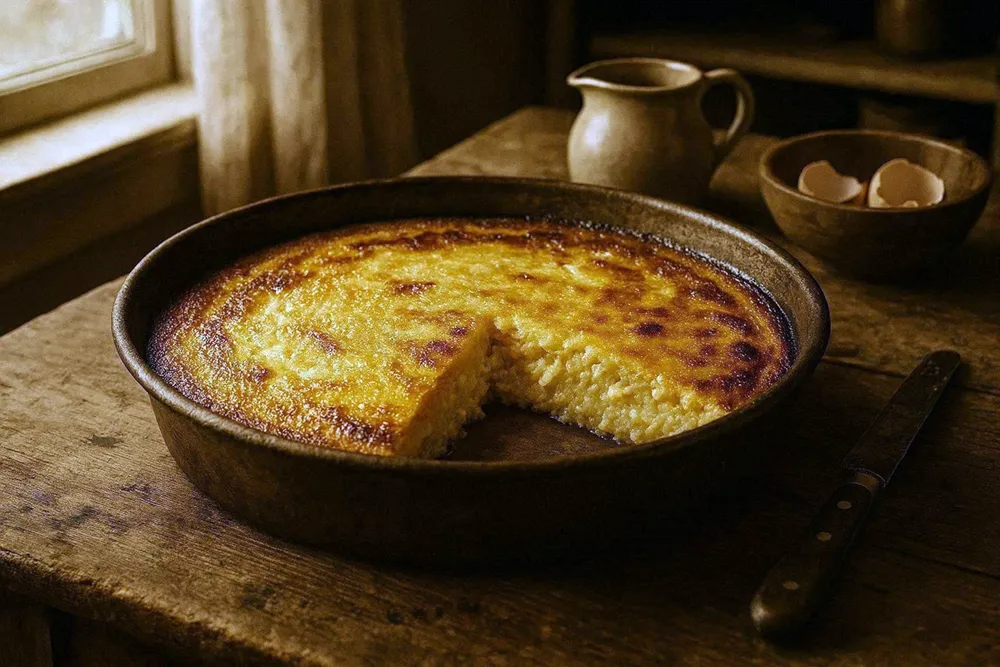
Baked Cornmeal Custard with Kajmak and Cheese
Known as razlevuša, this rustic bake pours a loose cornmeal, kajmak, cheese, and egg batter into a pan and bakes it until golden — a hearty, standalone dish.

Emmental Cheese Bars
Flaky millet pastry strips with Emmental, kajmak, egg yolks, and red pepper—savory tea snack from early 1900s Central Europe.
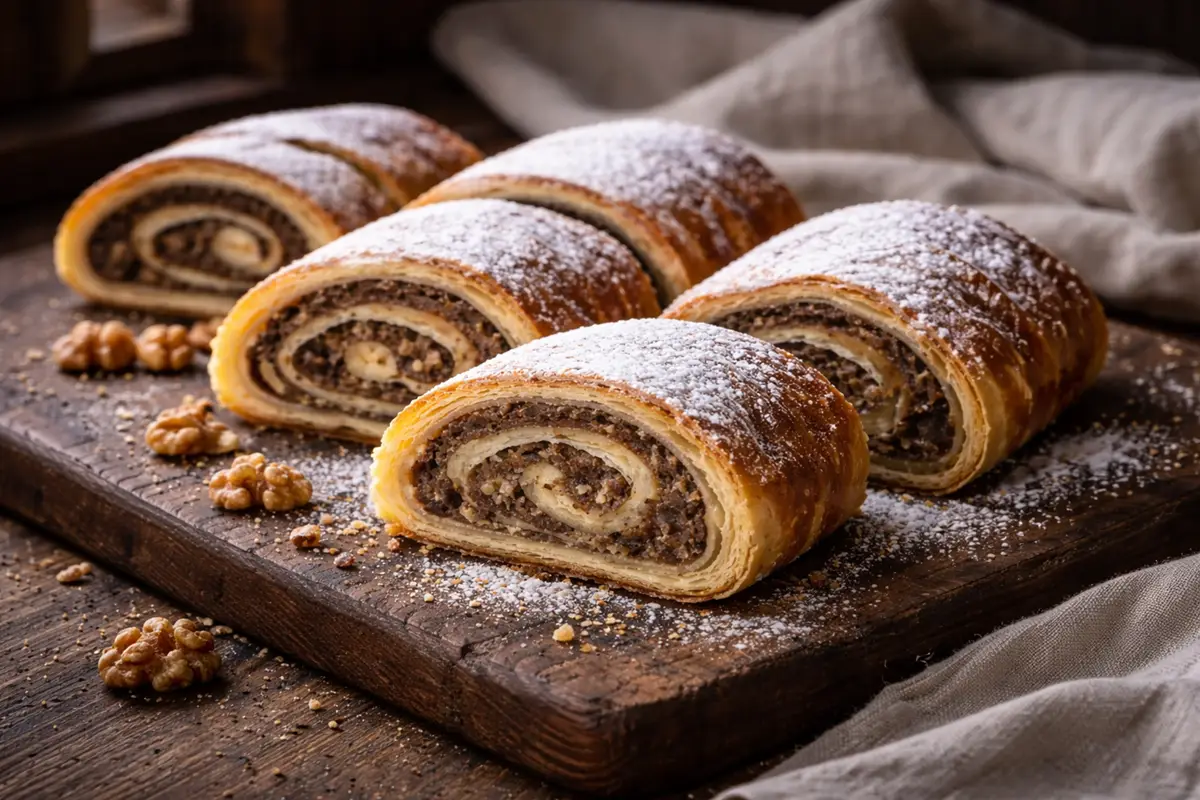
Fatback Walnut Roll
Flaky yeasted pastry laminated with raw pork fatback, filled with milk-cooked walnuts, raisins, and lemon zest. Sliced and dusted with sugar.